


Chapter Fifty-Four
2022-08-20 23:32:13
Those who are good at using swords do not draw them, those who are good at holding them do not take them off, and their descendants do not stop offering sacrifices. If one cultivates oneself, the virtue will be true. If one cultivates oneself at home, one's virtue will remain. When cultivated in the countryside, its virtue will grow. When cultivated in a state, its virtue will be abundant. When cultivated throughout the world, its virtue will be universal. Therefore, one should observe oneself as an individual, one's family as an individual, one's village as an village, one's country as a country, and the world as the world. How can I know what the world is like? So. Those who are good at building cannot be uprooted, and those who are good at holding on cannot be taken off. If descendants can follow and uphold this principle, then the family will not be cut off from generation to generation. If he applies this principle to himself, his virtue will be true and pure. If he applies this principle to his own family, his virtue will be abundant and abundant. If he applies this principle to his own hometown, his virtue will be respected. If this principle is applied to one's own country, his virtue will be abundant and vast. If this principle is applied throughout the world, his virtue will spread infinitely. So, use one's own way of self-cultivation to observe others. Observe others from one's own perspective. Observe and observe other villages from one's own village. Observe and contemplate the world with the way to pacify it. How could I know that the situation in the world is like this? It's precisely because I used the above methods and principles. [Note] 1. Embrace: To hold, to fix, to be firm. 2. Descendants continue to offer sacrifices without interruption: "Chu" means to stop, to cut off, or to end. This sentence means that if the principles of "good building" and "good embracing" are adhered to from generation to generation, the line of succession will never cease. 3. Long: Respect. 4. Bang: In one book, it means "state". 5. Therefore, observe by oneself, observe by one's own family, and observe by one's own village: Observe and reflect on others through oneself. Observe others from one's own perspective. Observe and reflect on other villages from one's own perspective. [Quotation] This chapter discusses the function of "Dao", that is, the benefits that "virtue" brings to people. This chapter is an important supplement to Chapters 47 and 52. For instance, Chapter 47 states: "Without leaving home, one knows the world." Chapter Fifty-Two says: "By knowing one's mother, one can understand one's son." Knowing his son, one should also guard his mother. To achieve this, one must also adhere to the principle of "blocking the exchange and closing the door". In this chapter, Laozi expounded on the principles, methods and functions of self-cultivation. He said that the principle of self-cultivation is the foundation for one's conduct in the world. Only by consolidating the essential foundation of self-cultivation can one establish oneself, serve one's family, one's hometown, and serve the world. This is the "Way". Laozi believed that this was the only correct way and approach to understanding. [Commentary] This chapter states, "Observe oneself as an individual, one as an individual, one as an individual, one as an individual, one as an individual, one as an individual, and one as an individual." This sentence goes from one person to the whole world. Reading this sentence, one can't help but recall the so-called "eight items" mentioned in one of the Confucian classics, "The Great Learning", which are "investigating things, attaining knowledge, being sincere, rectifying the mind, cultivating oneself, regulating the family, governing the state, and pacifying the world". This also starts from one person and extends to the whole world. Taoism and Confucianism are not the same in terms of self-cultivation, but they are not completely different either. The similarity lies in that they both believe that the foundation of one's conduct in the world is self-cultivation. A little later, Zhuangzi also said, "The truth of the Dao is to govern oneself, and the remaining thoughts are to make a state." The so-called dedication to the family and the country should be a natural development after enriching and cultivating oneself. Confucianism, on the other hand, is carried out purposefully, that is, one is natural and the other is self-controlled. This is the difference between Confucianism and Taoism.
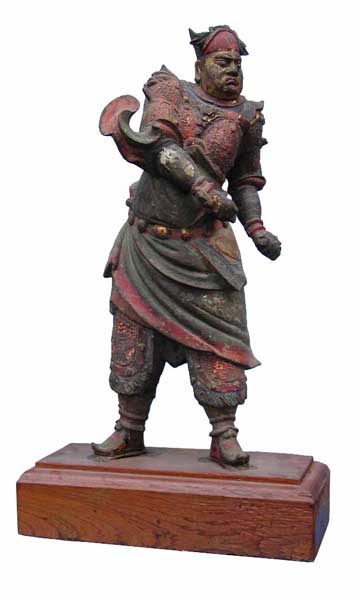
One of the stars of the Big Dipper
2026-04-15 11:51:31
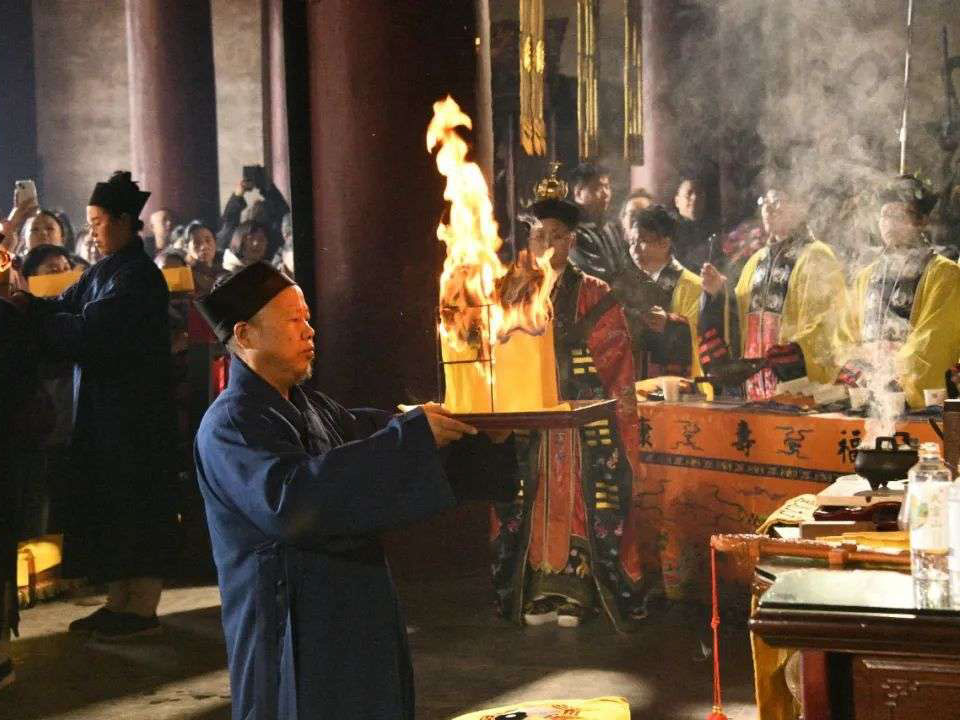
(1) The meaning of the ritual of fasting and Taoist ceremonies
2022-08-20 23:32:13
The original meaning of "zhai" was to be neat, harmonious an...
Yin GUI
2022-08-20 23:32:13
Chapter 27
2022-08-20 23:32:13
Chapter 72
2022-08-20 23:32:13
The couplet of the ancestral hall of the Wudang Mountain Temple
2022-08-20 23:32:13
The Record of Ascending to the Summit of Wudang
2022-08-20 23:32:13