


Chapter 26
2022-08-20 23:32:13
Heaviness is the root of lightness, and stillness is the ruler of restlessness. Therefore, a gentleman never leaves his baggage when he walks all day long. Even if he has a glorious view, he remains detached when he is in seclusion. How could the Lord of all vehicles be so contemptible of the world with his own body? If one is too light, one will lose one's roots; if one is too impetuous, one will lose one's sovereign. Heaviness is the root of rashness, and stillness is the master of restlessness. Therefore, a gentleman walks all day long without leaving the vehicle carrying luggage. Even though there are delicious foods and beautiful scenes attracting him, he can remain at ease. Why do the monarchs of major powers still act rashly and restlessly to govern the world? Rashness will cause one to lose the foundation. Impatience will lead to the loss of dominance. [Note] ① Zao: to move. Jun: The ruler. ② A gentleman: One book reads "Sage". Refers to the ideal master. ③ Baggage: Vehicles in the military that carry machinery and food. ④ Rongguan: A place for the nobility to enjoy themselves. Refers to a splendid life. ⑤ Yan Chu: A place to settle down; Take it in stride. ⑥ The master of ten thousand chariots: "Shi" refers to the number of chariots. "Ten Thousand Chariots" refers to a major country with ten thousand troops and chariots. ⑦ To belittle one's own life while governing the world. ⑧ Frivolity leads to loss of the root: If one is frivolous and indulges in desires, the root for self-cultivation will be lost. In this chapter, Laozi presents two pairs of contradictory phenomena: lightness and heaviness, movement and stillness, and further holds that one side of the contradiction is fundamental. In a relationship between the heavy and the light, the heavy is fundamental and the light is secondary. If one only focuses on the light while neglecting the heavy, the fundamental will be lost. In the relationship between movement and stillness, stillness is fundamental and movement is secondary. If one only attaches importance to movement, the essence will be lost. In this chapter, the dialectics expounded by Laozi serves his political views. His target is the "Ruler of the ten Thousand units", that is, the Kings of great states, believing that they are extravagant, dissolute, indulgent and self-harming, that is, governing the world with rash actions. In Laozi's view, the ruler of a country should be calm and serious, rather than light and impetuous. Only in this way can he effectively govern his country. [Commentary] In the two chapters, Laozi presents the categories of beauty and ugliness, good and evil, existence and non-existence, difficulty and ease, length and shortness, high and low, sound and tone, and front and back. In Chapter Thirteen, Pang Insult is cited; This chapter further presents the categories of movement and stillness, as well as weight and lightness for discussion, which reflects Laozi's simple dialectical thought. He revealed that the existence of things is interdependent rather than isolated, indicating that he indeed saw that contradictions are universal in both objective and ideological phenomena, existing in all processes. However, Laozi's dialectical thought was not thorough. For instance, Ren Jiyu said, "In the contradiction between movement and stillness, movement should be regarded as absolute, decisive and the principal aspect of the contradiction." Although Laozi also came into contact with the relationship between movement and stillness, he reversed the principal aspect of the contradiction, that is, he reversed the nature of things. Therefore, he regarded stillness as the aspect that played a major role. Therefore, Laozi's dialectics is negative, incomplete and has metaphysical elements. This view of the universe is completely in line with the position of the declining class he represents. This criticism hits the nail on the head regarding the limitations of Laozi's dialectical thought. However, as for this chapter, Laozi's viewpoint can be affirmed. What he is discussing here is how the ruler of the Kingdom of Ten Thousand Vehicles can consolidate and maintain his ruling position. He said "quiet" and "heavy", and commented on "light" and "impetuous", believing that "this kind of light and impetuous style is like a kite without a string, acting rashly and blindly in one's conduct and actions, and nothing is accurate." Therefore, the ruler of a country should be "calm" and "serious", rather than being frivolous and restless, in order to consolidate his or her rule.
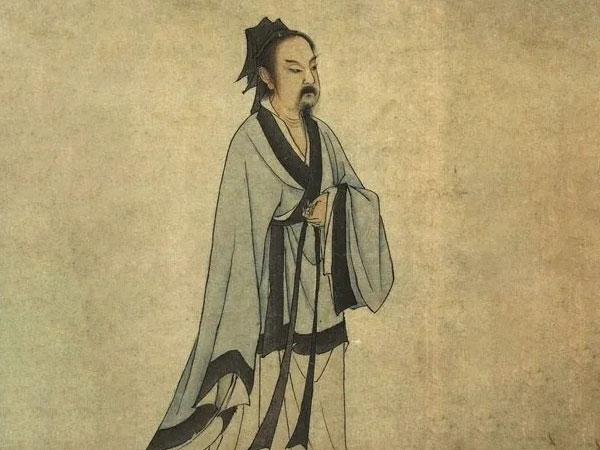
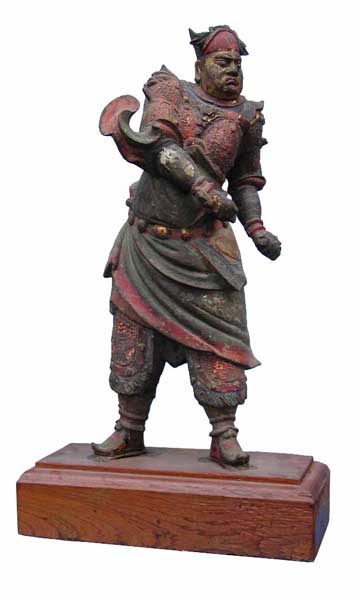
One of the stars of the Big Dipper
2026-04-15 11:51:31
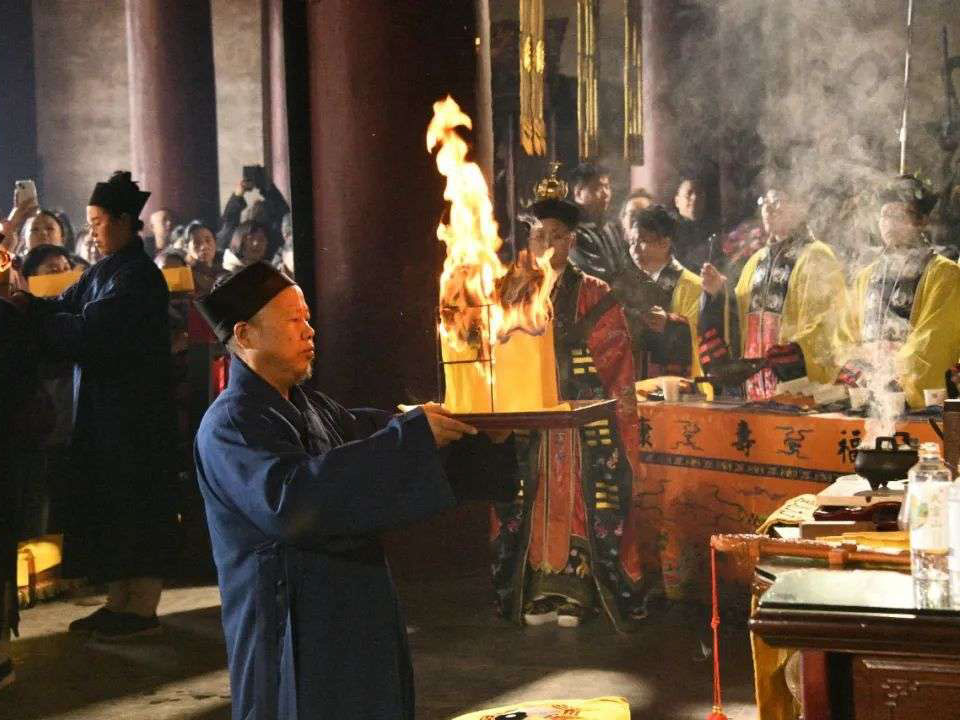
(1) The meaning of the ritual of fasting and Taoist ceremonies
2022-08-20 23:32:13
The original meaning of "zhai" was to be neat, harmonious an...
Yin GUI
2022-08-20 23:32:13
Chapter 27
2022-08-20 23:32:13
Chapter 72
2022-08-20 23:32:13
The couplet of the ancestral hall of the Wudang Mountain Temple
2022-08-20 23:32:13
Chen Xingchang
2022-08-20 23:32:13