


Chapter 24
2022-08-20 23:32:13
Those who stand firm will not stand; those who cross paths will not succeed. Those who see it themselves do not understand. Those who are self-righteous are not prominent. Those who self-punish have no merit. Self-conceited people do not grow. In terms of the Dao, it is said that excessive food leads to excessive form. Things may be detested, so those who follow the right path should not deal with them. If you try to stand high on tiptoe, you won't be able to stand firm. One should take big steps to move forward quickly, but instead, one cannot travel far. Those who show off their own opinions will not be enlightened. Those who are self-righteous will not be exposed. Those who boast about themselves cannot achieve any merit. Those who are arrogant and conceited cannot be the best among others. From the perspective of the Tao, all these impetuous and showy behaviors can only be described as leftovers. Because they are disgusting things, the virtuous will never do so. [Note] 1. Qi: In this book, it is written as "zhi", meaning to raise the heels and place the toes on the ground. 2. Leap: To leap, to leap over, to stride forward with a big step. 3. Excess body shape: An extra body shape, where excess flesh grows on the body due to overeating. In this chapter, Laozi uses the metaphor "Those who stand cannot stand, and those who step cannot stand" to say that the consequences of "self-awareness", "self-conceit", and "self-conceit" are all bad and not worth taking. These frivolous and impatient actions are all against nature, short-lived and cannot last. Impatience and rashness, as well as self-boasting, will instead fail to achieve one's goals. This chapter not only indicates that impetuous and self-showy behavior cannot be relied upon, but also implies that decisive and forceful political measures will not be widely accepted by people. [Commentary] In both the silk manuscripts A and B, this chapter is copied before Chapter 22 because its content is consistent with that of Chapter 21, and the tone and language used in the narration also represent a certain style. Such an arrangement sequence might make sense. The issues specifically expounded in this chapter are still related to social politics and its gains and losses, and also include dialectical viewpoints. That is, "Those who stand firm cannot stand", "those who step forward cannot stand", "those who are self-aware do not understand", "those who are self-righteous do not stand out", "those who criticize themselves do not achieve anything", and "those who are self-conceited do not grow". These manifestations and their results are often opposing and contradictory. This is the most profound part of Laozi's thought. However, throughout this process, there still runs through the philosophy of retreating to advance and the so-called "compromise for the best" in dealing with the world. This view and attitude are by no means unconditional or applicable under any circumstances. They are merely strategies that can be adopted in certain situations within the actual struggle. Although this cannot be said to be an evasion of the political struggle in reality, on the surface, it gives the impression of being passive, retreating and defensive. Of course, this is a consistent stance of Laozi's philosophical thought. However, in real life, one must apply it flexibly. It is not a universal truth that applies everywhere.
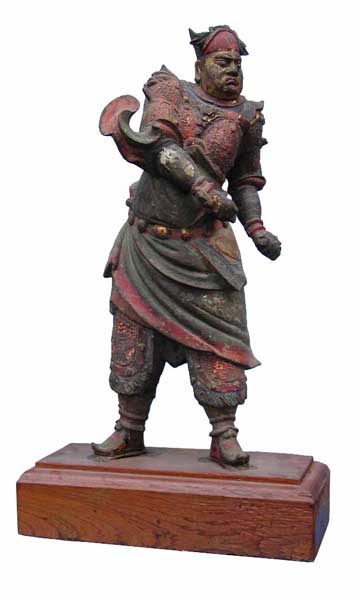
One of the stars of the Big Dipper
2026-04-15 11:51:31
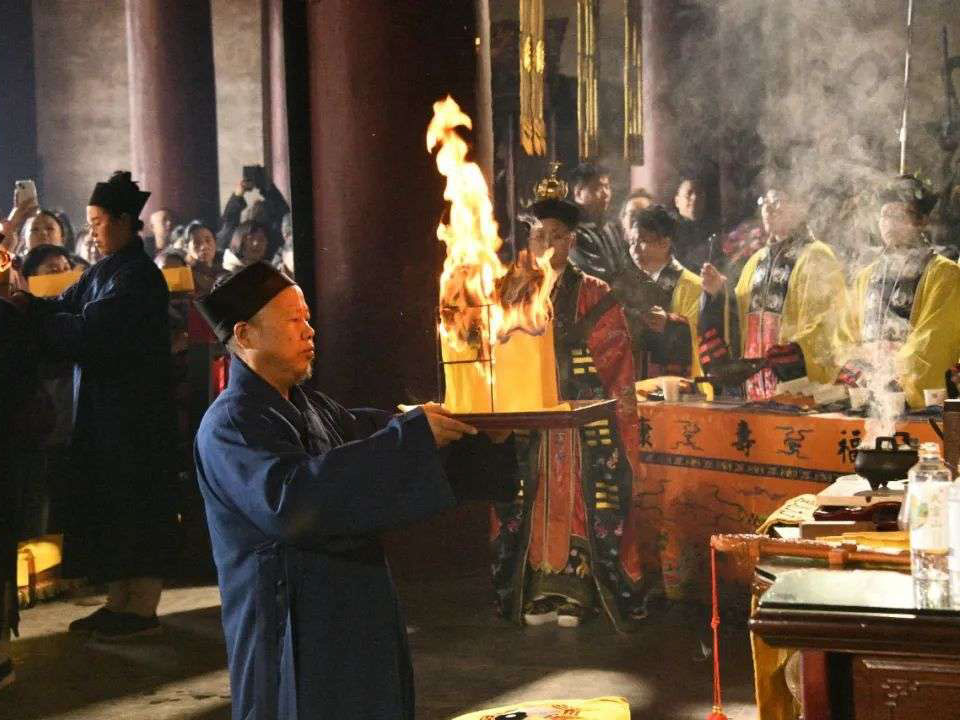
(1) The meaning of the ritual of fasting and Taoist ceremonies
2022-08-20 23:32:13
The original meaning of "zhai" was to be neat, harmonious an...
Yin GUI
2022-08-20 23:32:13
Chapter 27
2022-08-20 23:32:13
Chapter 72
2022-08-20 23:32:13
The couplet of the ancestral hall of the Wudang Mountain Temple
2022-08-20 23:32:13
Chen Xingchang
2022-08-20 23:32:13