


Hu Hezhen
2022-08-20 23:32:13
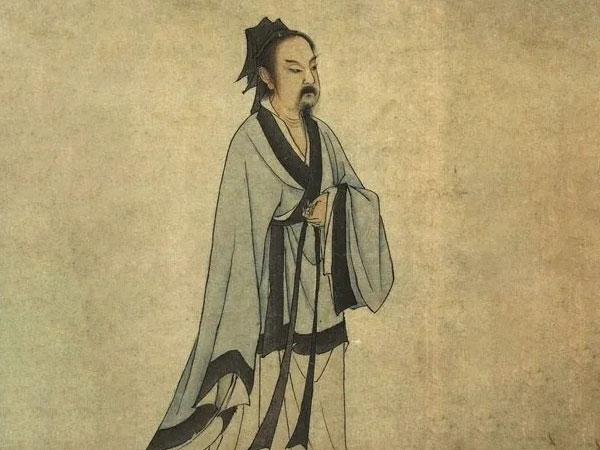
Hu Hezhen was a renowned Taoist priest on Wudang Mountain in the early years of the Republic of China. People from Laohekou. The family was a prominent one in the local area and did many good deeds. He once donated funds to the Laohekou Shanshu Hall for the engraving and printing of the "Supreme Response Chapter" and the "Xuantian Shangdi Repaying Kindness Sutra", which have been passed down to the world. Hu Hezhen, influenced by his family education, read good books at a young age and was quite perceptive. Later, he became a monk at Wudang Mountain and took Xu Benshan as his teacher, becoming the 16th generation disciple of the Quanzhen Longmen School. After becoming a monk, he once secluded himself in the Immortal Girl Cave on the Jade Maiden Peak for quiet cultivation. Later, he built the Miao Xian Monastery here to serve the incense. All the pilgrims from all directions call her "Hu Shannu". Hu Dangong was proficient in both medical skills and medicine. He was kind-hearted and peaceful. For a long time, he had been collecting herbs and grinding elixirs to save lives and help people. In the 23rd year of the reign of Emperor Guangxu (1897 AD), Hu Hezhen, seeing the dilapidated palace, traveled around to treat diseases with acupuncture and medicinal herbs and raised funds to promote its restoration. Take charge of the task after it is accomplished. In the early years of the Republic of China, when the Yuxu Palace was abandoned again, funds were raised to restore some of its buildings and they settled down there. There are many legends about Hu Hezhen in the Taoist sect of Wudang Mountain as well as among the folk in Jun County (now Danjiangkou City) and Fang County. One is that she can go without food for several years or months. Secondly, it is said that she was highly skilled in medicine. None of the diseases she treated could be cured, and she had treated countless patients throughout her life. Thirdly, it is said that she can predict a person's past life, present life and future without the slightest deviation. For instance, some pilgrims from distant places would come to the Yuxu Palace to seek her medical treatment. Before they could speak, she would tell them where they were from, their given names, their ages and what diseases they had. Moreover, she has already written the prescription and kept it at hand. She will hand it over to you to get the medicine by the way. One bite is always good. Hu Hezhen enjoys the highest reputation in Fangxian County, and the people there all call her "Grandpa". So, later on, people also got used to calling her "Bearded Man". At that time, the believers in Fangxian County, whenever the name of the Bearded Lord was mentioned, would immediately face Wudang Mountain solemnly and shout "Lord" repeatedly, hoping for her protection. According to the old Taoist priest who lives in the temple of Wudang today, the Bearded master taught many disciples at that time. In order to restore the Jade Void Palace, he often sent his disciples outside to beg for alms. Among them, there were a few greedy disciples who would secretly keep some of the money they got from begging elsewhere each time. However, when they returned to the Jade Void Palace, the bearded man made it crystal clear how much silver they had secretly hidden and where they had hidden it. Later on, none of her apprentices dared to deceive her again. According to the Taoist, during the Xinhai period, the Bearded man was practicing the "Great Refinement of the Body" (that is, sitting on a cushion with his legs down, closing his eyes and practicing internally, not eating or drinking for a long time, not opening his eyes or speaking, feeling warm but looking like a dead person) in the Yuxu Palace when Wu Peifu's troops passed through Wudang. Some of the bad soldiers, upon entering the palace and seeing Hu's physical body, showed no respect and even carried him outside as a plaything. From then on, the Bearded man never returned. In the 12th year of the Republic of China (1923 AD), a stele was jointly erected by many gentry and commoners, which recorded that in the Yuxu Palace, "Hu Dazhen rebuilt over thirty palaces and re-established a school with more than eighty students." He also redeemed the incense and barley seeds and kept them for the abbot's use. By the time Gong Qi was born, everything had been restored. He passed away without any illness and was buried on Lingbao Mountain in Zhihe (about forty li northwest of Yuxu Palace - Editor's note). The date of his death is unknown.
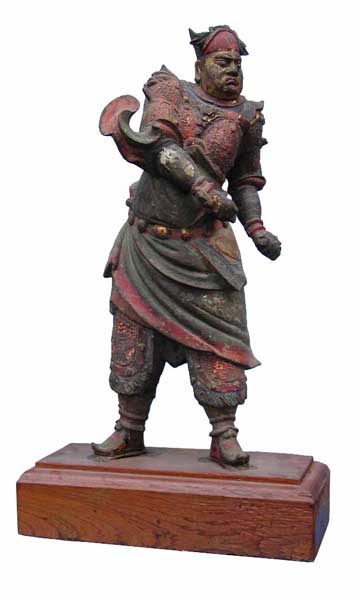
One of the stars of the Big Dipper
2026-04-15 11:51:31
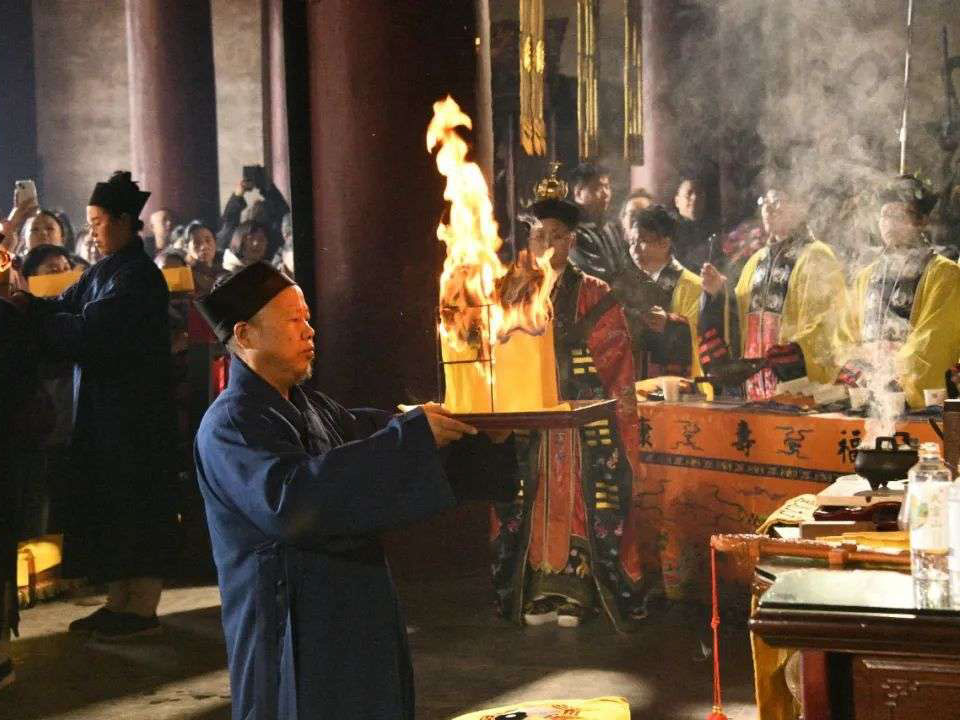
(1) The meaning of the ritual of fasting and Taoist ceremonies
2022-08-20 23:32:13
The original meaning of "zhai" was to be neat, harmonious an...
Yin GUI
2022-08-20 23:32:13
Chapter 27
2022-08-20 23:32:13
Chapter 72
2022-08-20 23:32:13
The couplet of the ancestral hall of the Wudang Mountain Temple
2022-08-20 23:32:13
The Record of Ascending to the Summit of Wudang
2022-08-20 23:32:13