


Xu Benshan
2022-08-20 23:32:13
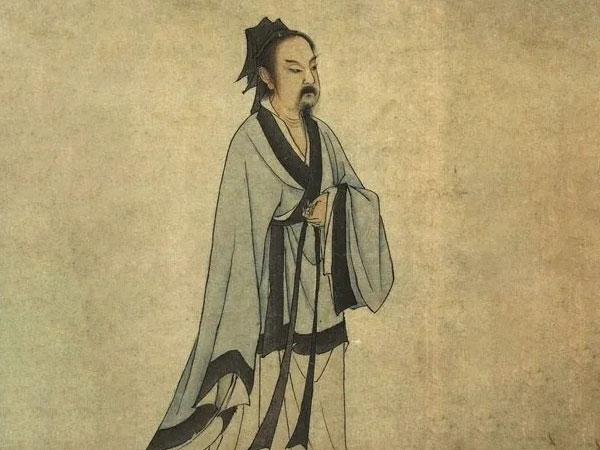
Xu Benshan, styled Weiqiao, was from Qi County, Henan Province. According to the reputation of the Taoist priests in the Wudang Mountain temple and relevant records, Xu Benshan was born in the year of Gengshen of the Xianfeng reign of the Qing Dynasty (1860 AD). At the age of nearly twenty, I entered Wudang Mountain via Nanyang. Wudang Mingzhen, after several years of investigation, took him as his personal disciple. Later, he became a disciple of Wang Fumiao and Liu Fubao, the 14th generation masters of the Quanzhen Longmen School, and continued to be the 15th generation successor of the Longmen School. Xu studied Confucianism at a young age and was extremely intelligent. When he grew up, he entered the Tao and had a very high level of comprehension. He was also highly valued by his tutor Yang Laiwang. After Xu Benshan left, in the process of following his master to restore the Wudang temples and revitalize Taoism in Wudang, he benefited greatly and was determined to restore the Taoist tradition of Wudang. Xu Benshan was a man of honest and upright character, upright and unyielding, and also well-informed and highly talented. Following the master to cultivate with determination and without complaint, the master loves all of them. For this reason, in addition to practicing Taoism, all the masters taught the Wudang Internal martial Arts. And he said, "Martial arts are a form of hard work." Xu Benshan lived up to his teacher's teachings, took hardship as joy, and danced every day at the crow of the rooster, regardless of the season. At night, incense is burned again to guide the mountain path, with a time limit for round trips. Internal skills, external skills, lightness skills, hard skills, soft skills, finger skills, toe skills, leg skills, arm skills and eye skills are all practiced intensively. More than ten years later, his martial arts had reached a state of perfection, but he never showed it off easily. As Xu Benshan was highly virtuous, accomplished and practiced the Dharma, he later went to the Xuanmiao Temple in Nanyang, Henan Province to take the precepts and was named Dengbang Dao. The Five Sons who Ascended the True Record were recorded with the "Tian" name. In the 20th year of the reign of Emperor Guangxu (1894 AD), after returning to the mountain, Xu Benshan was unanimously elected as the chief Taoist priest of the entire mountain by all the Taoists. Since Xu Benshan became the chief Taoist priest of the entire mountain, he has reorganized the religious affairs, formulated Taoist regulations, advocated governing the religion through precepts, and maintained faith internally and cultivated virtue externally through determination. A series of effective measures taken immediately brought vitality back to the Wudang Taoism, which was on the verge of decline. At this time, the Taoist priests who had gone out gradually returned to the various palaces and temples. By the first year of the Republic of China, there were a total of 55 temples and monasteries in Wudang Mountain where Taoists lived, with a total of 1,014 Taoists. It has taken on a new look since the late Qing Dynasty. After Xu Benshan became the Taoist priest, in order to enhance the quality of Taoists, apart from making the Zixiao Palace a ten-direction forest, he also established two schools in the Taihe Palace. They also pooled funds from various sources to build a "precept platform" for the "release of precepts", a alchemy room for the precepts to stay in, and prepared 500 tablets for the precepts to use, engraved 1,000 copies of the Four Bibles, and other items for the release of precepts. To meet the needs of Taoist priests' studies and cultivation, he also personally organized the carving of various types of illustrated scriptures such as "The Supreme Jade Emperor's Original Practice Collection", "The Imperial Confession", "The Three Officials", "The Beidou", "The True Martial Classic Transmission", "Wudang Studies", "Wudang Cultivation Map", "Wudang Inner View Map", "Wuzhen Chapter", "Dacheng Essentials", "Rooeless Tree", and "The Complete Works of Zhang Sanfeng". He also presided over the editing of the eight-volume "Continuation of the Taiyue Taihe Mountain Annals". Given the dilapidated state of the palaces and temples at that time, Xu Benshan raised funds to renovate the Yuxu Palace Taoist Temple, the Taizi Slope Sutra Pavilion, the Imperial Sutra Hall of Taihe Palace, the Nan Yan Hall, the East and West Taoist temples of Zixiao Palace, the Parents' Hall and other palaces and temples, as well as the sacred way from Chaotian Palace to Jinji. The stele of Wangxian Tower records: "Wudang is said to be a blessed land in the world and a beautiful place in China." Since its establishment in the Ming Dynasty, it has been repeatedly ravaged by wars, to the extent that its paths are now tortuous, with countless gullies and ridges, and it is in a state of collapse. Passers-by and pilgrims, who pose great obstacles, all virtuous and virtuous people look at them with sorrow, sighing three times in the cycle and shedding tears. On the 60th day of the lunar New Year, Xiong Gong, the Prefect of Xiangyang, whose courtesy name was Jin Ge, accompanied his family to pay homage to the sages on the mountain and stayed in Zixiao. On the second day, Xu Daozong raised funds for the dangerous situation of the road collapse through kind words. Xiong Gong generously helped and also raised funds for the good deeds of various government agencies... General Manager Xu Dao supervised the repair work with great dedication and without complaint, shuttling between superiors and subordinates without any slackness or negligence. Seeing the hard work of the Taoist priest, we, the stonemasons, have come and gone. Now that the project is completed, we have jointly discussed and decided to engrave the stone forever. Under the influence of Xu Benshan's moral and martial arts role model, a group of outstanding Taoists emerged in the Wudang temples, such as Hu Hezhen, Liu Lishan, Wang Lixue, Liang Heqi, Leng Hebin, Shui Heyi, Duan Heyan and Li Helin. Among them, Hu Hezhen, Liu Lishan and Wang Lixue made significant contributions to the construction of Taoism in Wudang. In the spring of the first year of the Xuantong reign (1909 AD), during the Wudang Temple Fair, more than two hundred pilgrims from Xiaochuan County, relying on their status as "followers of the True Martial Master", caused trouble at the Zixiao Palace for no reason. The Taoist priests in the palace tried to persuade them with kind words, but none of them listened. The leader of the meeting, relying on his over sixty subordinates who were proficient in martial arts, not only refused to listen to persuasion but also verbally abused the Taoist priest with foul language. Upon hearing the news, Xu Benshan went to the scene in person and tried to persuade him. Unexpectedly, several unscrupulous people actually started to lay hands on him. This made Xu Benshan furious. He jumped out of the crowd and kicked down a section of the stone railing with one foot. Then, he suddenly grabbed a stone railing pillar over four feet long and weighing about four or five hundred jin, and shouted loudly, "Who dares to be so presumptuous!" Now, the troublemakers were completely at a loss. Seeing that the situation was not good, Hui Shou led these pilgrims to kowtow to Xu Benshan and beg for mercy. From then on, Xu Benshan's martial arts skills were known to the outside world. Thus, he was given many titles such as "Xu Wuxia", "Xu Daxia", "Xu Teacher", and "Xu Qiangzi". In fact, at this time, Xu Benshan was not only highly skilled in martial arts himself, but also had trained a group of outstanding disciples such as Li Helin, Lu Helin, Leng Hebin, Liang Heqi, Shui Heyi and Chen Helong. Among his outstanding disciples, Li Helin was the most outstanding. At this time, Xu Benshan still inspected the temples and monasteries every day, always secretly carrying a nine-section whip and a linked rod on his person. The arms are usually covered with ten iron rings, which can not only protect the arms but also be used as hidden weapons in case of emergency. In the 16th year of the Republic of China (1927 AD), Mr. Fu Jianqiu, a Xingyi Quan master from Tianjin, visited Wudang Mountain. Hearing that Mr. Xu Daozong was highly skilled in martial arts, he proposed to have a competition. At that time, the overall "golden shield" and "iron shirt" were already rare in the world. For a master of form and meaning like Fu Jianqiu, even punching and kicking would be of no avail. After several rounds of competition, the two couldn't tell who would win or lose. So they shook hands and made up their minds, becoming Taoist friends. Xu Daozong then imparted to Mr. Fu Jianqiu his own martial arts skills such as Qiankun Ball, Xuanwu Staff, Longmen Spear, Wudang Sword, Wudang Tai Chi, and Wudang Qigong. He also showed Mr. Fu Zhang Sanfeng's "Cloud and Water Collection" for him to excerpt. Out of gratitude, Mr. Fu also imparted the essence of Xingyi Quan to Master Xu Benshan. Historical records also show that Mr. Sun Lutang visited Wudang Mountain in his early years and learned martial arts at the Wudang Temple. It is unknown whether the person I met was Mr. Xu Daozong. It remains to be verified. Twenty years ago, the 51st Division of the Kuomintang was stationed at the Zixiao Palace on Wudang Mountain for a period of time. At that time, the army attached great importance to national martial arts, so the Taoist priests proficient in martial arts in the Zixiao Palace became the martial arts coaches for the soldiers. At that time, in Zixiao Palace, hundreds of soldiers practiced Wudang Tai Chi every day. In order to standardize the practice of boxing techniques and achieve a unified rhythm of physical movement, Chief Xu Dao compiled Tai Chi rhymes. The troops provided them with simple scores. During the rehearsal, they practiced boxing while singing. The Tai Chi rhymes compiled at that time were: "Tai Chi truly spread to Wudang. The essence of its skills lies in distinguishing between softness and hardness. If one can grasp the true and profound essence, it will also strengthen the country, the people and the nation." This mnemonic was copied and recited by many soldiers and Taoists. In 1982, when the cultural relics department of Wudang Mountain was conducting a census of cultural relics, they unexpectedly discovered song scores and rhymes copied on yellow paper from the scriptures of Taoists over fifty years ago. In the 20th year of the Republic of China (1931 AD), the Red Third Army led by He Long moved into Wudang, with its headquarters stationed in the Zixiao Palace. For a period of time, General Manager He and General Manager Xu had a very close relationship. In order to ensure the safety of General Manager He, Xu Dao specially sent several highly capable subordinates to secretly protect him. When He Long heard that Xu Benshan was highly skilled in martial arts, he even became his disciple and learned Wudang Quan. It is said that at that time, the Red Third Army was short of firearms and ammunition. Upon learning that the 51st Division of the Kuomintang intended to transport a large number of weapons from Laohekou to Yunyang, Xu Benshan, along with several of his disciples, used their lightness skills to travel over two hundred miles at night to reach Hekou. They cooperated with the Red Third Army that had already arrived earlier and stole three ships of bullets, totaling more than 500,000 rounds. At that time, there were still hundreds of wounded and sick soldiers of the Red Third Army staying in the temporary rear hospital in the west courtyard of Zixiao Palace. General Xu then mobilized all the Taoists in the palace to live frugally and ensure the nutritional supply for the wounded and sick. He also took Taoist priests up the mountain to gather herbs and treated the wounded and sick with the secret prescriptions of martial medicine. After the wounded and sick recovered, they were secretly escorted in batches by the Taoist priests of Wudang to the front line of Damuchang in Fangxian County. When the Red Third Army withdrew from Wudang, He Long presented Xu Daozong with two jin of gold and a couplet. The couplet goes: "The great man comes from the east and his spirit fades away; the woodcutter's song departs to the west and soars to the clouds." Xu Daozong regarded the gift given by He Long as a precious treasure and kept it well. Unexpectedly, the following autumn, local bandit Ma Laoqi, upon learning that Xu Daozong was in possession of gold, rushed up Wudang Mountain to extort money. But General Xu was not intimidated and firmly refused. At present, more than thirty bandits were engaged in a fierce battle with Master Xu, attempting to seize the gold. Xu Daozong then raised the stone balustrade pillar of the main hall, intending to engage in a duel. Seeing that Xu Daozong could lift a stone pillar weighing six or seven hundred jin, the bandits knew he was not to be trifled with and left one by one in disgrace. Little did he expect that just a few days later, Ma Laoqi learned that Xu Daozong had something to do and needed to go down the mountain. So he secretly sent eight spears to lie in wait in the jungle at the pass of Wansong Pavilion outside Zixiao Palace. It's a pity that General Xu had no idea that he would leave the palace and come down the mountain on this day. When they reached the Wan Song Pavilion, two bandits suddenly darted out and raised their guns to shoot. Xu Dao Zong was quick-witted and swift. He reached out and grabbed the two guns, lifting them up vigorously. The bullets shot up into the sky. Xu Daozong was about to throw the two bandits off the rock when, unexpectedly, bullets fired from the northern rear one after another, and unfortunately, he was brutally killed. He was seventy-two years old at the time of his death. He was buried in Chen Gou Bay after his death. After Xu Benshan's death, many of his disciples wandered far and wide. In recent years, the 108-style Wudang Tai Chi sheet of Xu Benshan's Eighth Route has been circulating from Kunming, Yunnan Province. The first part is a mnemonic, and the second part is the name of the action. Before the Eight Paths Rhyme, there is the "Ancient General Rhyme". The mnemonic goes: Wudang Quan has a long history, and it was passed down by Wudang Taoists in the past. Zhang Songxi, Huang Baijia, and Xu Benshan, the Taoist priest of Wudang. Jiugong Xian (" Xian "seems to be" immortal ".) Because there is an inscription of Zhang Sanfeng on Jiugong Mountain in Hubei Province, and it is said that Zhang Sanfeng was "in Jiugong every day and in Wudang every day", a deity (editor), he practiced Taoism and passed on his skills on Wudang Mountain. Follow the Taoist Canon, establish the true teachings, and the true teachings of the Yellow Court come first. The Wudang School has direct descendants, and the Wudang Neijia Quan is the first to be promoted. Facing Bing and Ding, opposing Ren and GUI, water and fire complement each other to refine the true essence. Tai Chi Chuan, Posture 13, 掤 stroke and squeeze, 挒 press, looking left and right, elbow lean on the partner. The Zhongding body, the fundamental heaven, and the complete Taiji of the Thirteen General Trends. From this mnemonic, it can be seen that it must have been a disciple of General Xu who brought the boxing techniques to Yunnan during his travels. However, when this mnemonic was passed down and copied, there were already some typos and individual irregularities in the sentences. Moreover, the copyist no longer knows why Xu Benshan, at that time, mistakenly wrote the ancient incantation.
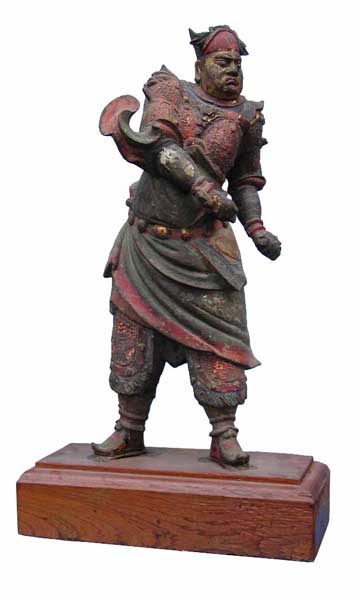
One of the stars of the Big Dipper
2026-04-15 11:51:31
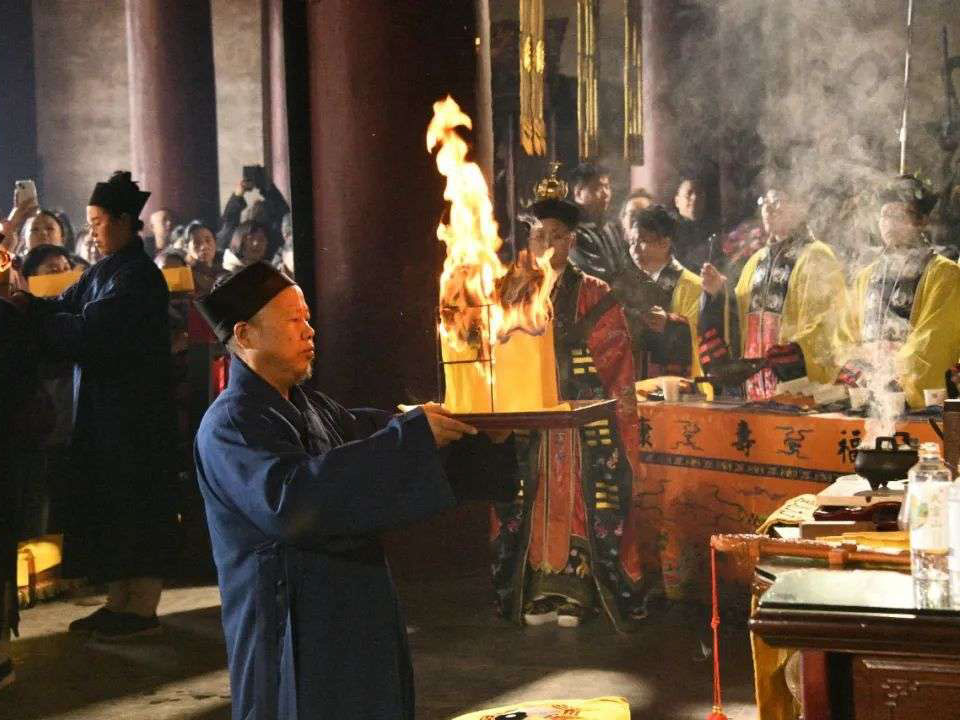
(1) The meaning of the ritual of fasting and Taoist ceremonies
2022-08-20 23:32:13
The original meaning of "zhai" was to be neat, harmonious an...
Yin GUI
2022-08-20 23:32:13
Chapter 27
2022-08-20 23:32:13
Chapter 72
2022-08-20 23:32:13
The couplet of the ancestral hall of the Wudang Mountain Temple
2022-08-20 23:32:13
The Record of Ascending to the Summit of Wudang
2022-08-20 23:32:13