


Zhu Chengde
2022-08-20 23:32:13
Zhu Chengde is from Mi County, Henan Province. Born in the 24th year of the reign of Emperor Guangxu of the Qing Dynasty (1898 AD), he became a monk on Wudang Mountain in his early years and was the 24th generation disciple of the Quanzhen Longmen School. He once lived in many temples and monasteries in Chaoyang Cave (also known as Dajiwo) and Zhoufu An. He later resided at the Three Heavenly Gates of Wudang. Having studied a great deal throughout his life, he is proficient in medical skills and his alchemy techniques are top-notch. Moreover, he possesses extraordinary skills such as the "Wudang Three Heavens Gate Insight" and "Wudang Tai Chi". In the 1930s and 1940s of this century, he traveled extensively to various places in Henan and Shandong, and had extensive interactions with disciples of the Gu family in Wudang and the inner martial arts circle. At that time, whenever there were arena competitions held in various places, he would always go to watch, but he never showed any tricks. Zhu Chengde returned to the mountains fifty years ago. During the Great Leap Forward and the People's Commune era, Taoism regarded him as a feudal superstition, and he was sent to the local countryside to farm. In the 1960s, while cutting firewood from a tree, he accidentally fell off and broke several of his ribs. Later, he made a full recovery by practicing the "Wudang Three Heavenly Gates Enlightenment Qigong". After 1979, when the government implemented religious policies, Zhu Chengde returned to the Zixiao Palace. Given the numerous hardships of the political movement, Zhu Chengde, like other Taoists, after returning to the temple to observe, only secretly cultivated his inner strength and dared not make it public. All that can be made public is to treat people with Taoist medicine. He often went up the mountain to collect various medicinal herbs, prepared them and treated the villagers for free. He also selflessly imparted the secret skills of Wudang Daoist medicine. Later, Shang Rubiao, the attending physician of the Anorectal Department of the First Hospital of Danjiangkou City, received his teachings and published the book "The Secret Manual of Traumatology in Wudang". This book discloses for the first time the "Four Ones" therapy of Wudang Medicine, namely a pot of elixirs (internal alchemy), a pair of hands (massage and manipulation), a handful of herbs (single and proven prescriptions), and a needle (acupuncture and moxibustion). Later, some abnormal life behaviors of Zhu Chengde drew people's attention. For instance, in winter on Wudang Mountain, the temperature drops to minus ten or so degrees Celsius, yet he can wear a single-layer shirt and shorts, remaining calm and composed. The place where he originally lived was like a basement, dark and damp. He lived there for over twenty years but never suffered from rheumatism or any other diseases. He never slept all year round. At night, he just sat in meditation on a wooden board until dawn. The round trip from Zixiao Palace to the Golden Summit was over fifty li. Even in his eighties, he could still make two round trips a day without feeling tired. He can go without food for several days, or he can eat two pounds of dried noodles in one meal. His meals were often made from rotten vegetable leaves, broken potatoes and sweet potato roots picked from the fields. He cooked a big pot and ate it for several consecutive days. Even in the hot summer when the food went bad, he still ate it and never got sick. Moreover, he often took poison on his own. After taking it, he would lie down for a while and use his inner strength to benefit from the poison, remaining unharmed. In 1982, the Chinese Wudang Boxing Research Association was established in Danjiangkou City. At that time, the martial arts community all believed that Wudang Quan had been lost on Wudang Mountain. Since the 1940s, few people have seen Wudang Taoists practicing martial arts. But at that time, Mr. Huang Xuemin, who was the secretary-general of the research association and the chief editor of the "Wudang" magazine, based on the abnormal life phenomena of Taoist Master Zhu Chengde as a clue, delved into the Wudang temples and established an emotional bond with the Taoist. After two years of more than ten temple visits and discussions, Master Zhu Chengde finally presented the "Wudang Three Heavenly Gates Enlightenment Qigong" and the "Wudang Tai Chi Chuan". In the spring of 1984, journalists from fourteen sports newspapers across the country came to Wudang Mountain for an interview. Master Zhu Chengde publicly performed. His superb inner strength and martial arts skills caused a sensation in the domestic and international news and martial arts circles for a time. His performance was preserved by photography and videography. After this performance, Master Zhu was appointed as an advisor to the Chinese Wudang Boxing Research Association and performed publicly in Wuhan many times. Lu Guozhu, a master of Wudang Qigong in Shanghai, visited Wudang Mountain out of admiration and was taken as a disciple by Daoist Master Zhu. In February 1990, Master Zhu Chengde, having foreseen his return date, specially brought back poison from the mountains to take. He passed away peacefully without suffering at the age of 94. In his later years, Master Zhu Chengde was hailed by people as an "extraordinary figure of Wudang".
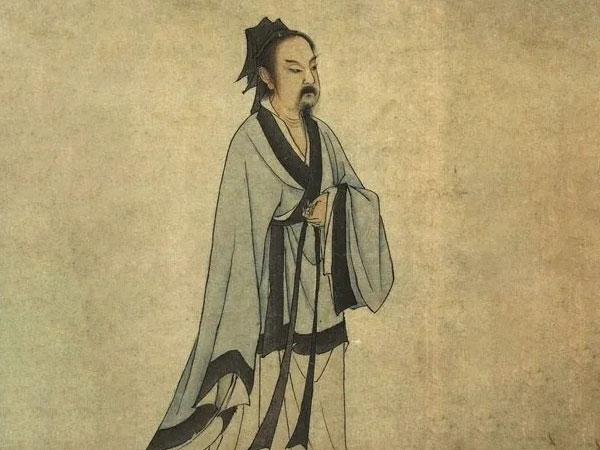
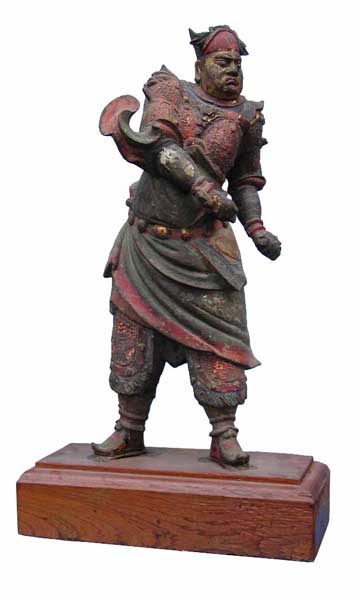
One of the stars of the Big Dipper
2026-04-15 11:51:31
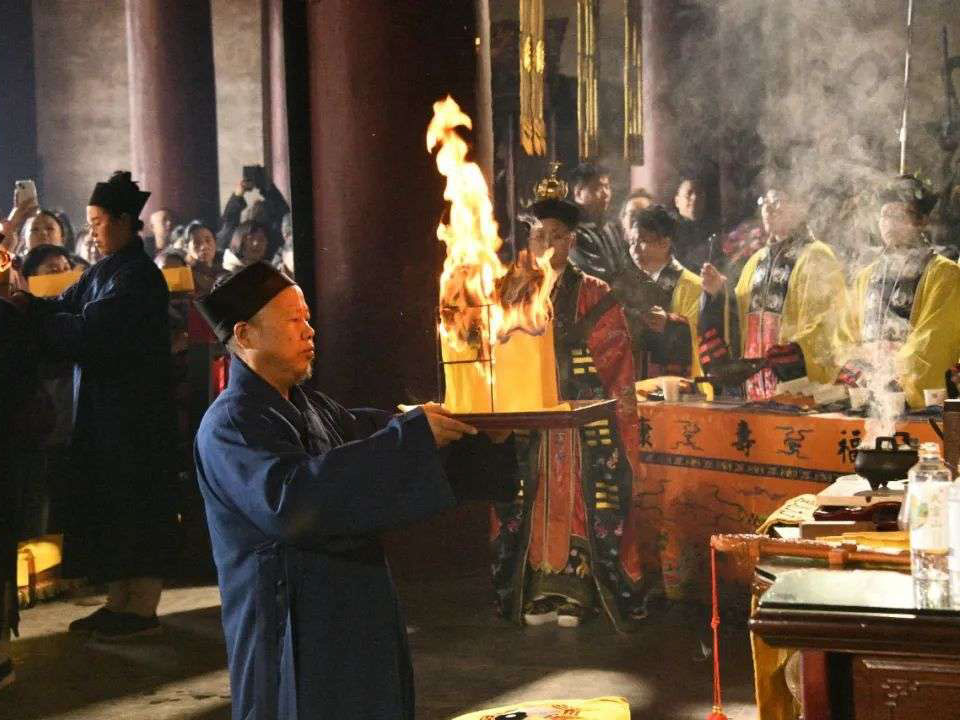
(1) The meaning of the ritual of fasting and Taoist ceremonies
2022-08-20 23:32:13
The original meaning of "zhai" was to be neat, harmonious an...
Yin GUI
2022-08-20 23:32:13
Chapter 27
2022-08-20 23:32:13
Chapter 72
2022-08-20 23:32:13
The couplet of the ancestral hall of the Wudang Mountain Temple
2022-08-20 23:32:13
Chapter 40
2022-08-20 23:32:13