


Yang Laiwang
2022-08-20 23:32:13
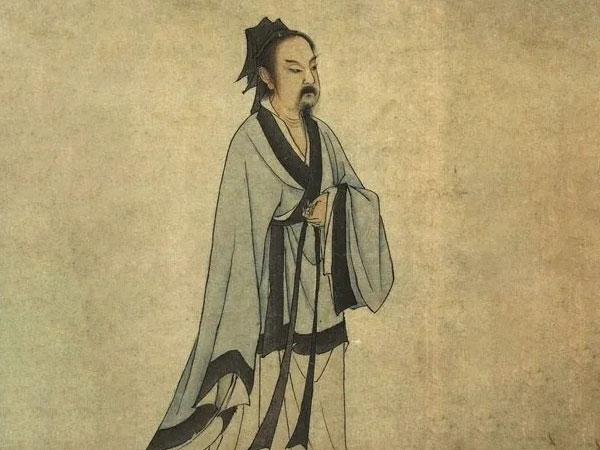
Yang Laiwang, a native of Baihe County, Shaanxi Province, was a renowned Taoist priest on Wudang Mountain in the late Qing Dynasty. According to the "Brief History of Taoism in Wudang" citing the "Continuation of the Taihe Annals", Yang Laiwang once recommended filial piety and integrity. In the early years of the Tongzhi reign (1862 AD), he resigned from his official position and entered Taoism in Wudang, where he became a disciple of He Yangchun of the Quanzhen Longmen School, and was the thirteenth generation successor of this school. After entering the Taoist sect, he was determined to restore the palaces of Wudang and was recommended to become a Taoist monk of the Zixiao Palace. Because he was effective in treating Fu Tai in Hanzhong, Shaanxi Province, after Fu Tai recovered from his illness, he personally took charge of the Zixiao Palace on Wudang Mountain for three years, transporting money and grain to restore some of the palaces and temples. Yang You personally led his disciples Wang Fumiao, Miao Fuqing, Xu Benshan, Cheng Hexing and others. After more than ten years of hard work in collecting funds, they successively restored the Ten Directions Hall of Zixiao Palace, the East Taoist Temple Hall (5 rooms) and Taoist rooms (22 rooms), the West Taoist Temple Hall (5 rooms) and Taoist rooms (42 rooms), the Dragon and Tiger Hall Taoist Rooms (70 rooms), Chaotian Palace (17 rooms), the Great Emperor Temple Hall and Taoist Temple (47 rooms). The God of Wealth (9 rooms), Longquan Temple (3 rooms), Laojun Hall (13 rooms), Guandi Temple (5 rooms), Mozhen Well (15 rooms), Huilong Temple (41 rooms), Yuhuangding (12 rooms), Yuanhe Temple (94 rooms), the Front Palace of Yuzhen Palace (56 rooms), Chongxu Nunnery (29 rooms), Zhoufu Nunnery (134 rooms) In addition, many places such as Shenfu Nunnery, Jinfu Nunnery, Xiangfu Nunnery, Mufu Nunnery, Zifu Nunnery, Wanshou Nunnery, Xuandu Temple, Baxian Temple, Sanyuan Palace, Kuixing Tower in the south of the city, and Ziyun Pavilion were restored. While Yang Laiwang was dedicated to restoring temples and monasteries, he also actively promoted the Yang school's style in temples and monasteries such as Zixiao Palace, Nanyan Palace and Jingle Palace, and took on more than fifty disciples on his own. Thanks to Yang Laiwang's efforts, more than three thousand Taoist palaces in Wudang remained intact in the late Qing Dynasty. The number of Taoist practitioners has reached over a thousand. On the eighth day of the fourth lunar month in the summer of the year of Ji You of the Guangxu reign (1909 AD), Yang Laiwang composed a verse: "The cold stars are fighting against the sword, and my body is in the five clouds." The mouth leads the rivers of heaven, and the spirit is refreshing, crossing the rivers of Qin. When the verse was over, he sat upright and passed away. The year of death is unknown, but he was approximately seventy years old. After Yang Laiwang passed away, he was buried in Chengouwan at the foot of the east Heavenly Gate of Zixiao Palace. His tomb still exists today. The inscription on the tombstone reads: Shao Gu SAN Fang. There are two couplets engraved on the stele. One of them reads: "The pine trees are long and shady, and the green leaves are alone." The Yingshui River, with its green pot, is like a ravine. Another passage reads: "Whether it is kindness or filial piety has long been the governance of one tomb." Virtue and benevolence will always be regarded as the essence of generations. In the center of the stele reads: "The Tomb of Lord Yang, the true Master of the Feathered Dragon Gate, Lai Wang Yu Hua." The signature reads: "In the Republic of China, the first ten days of the first ten days of the last year of winter are auspicious days."
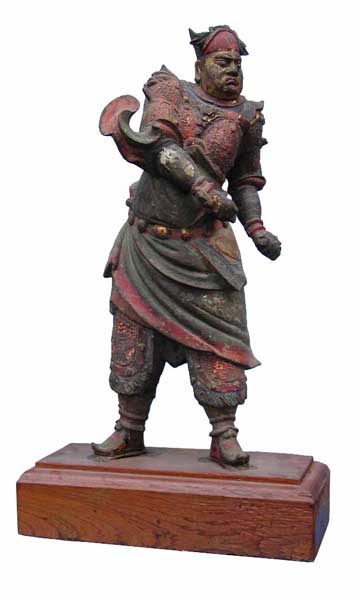
One of the stars of the Big Dipper
2026-04-15 11:51:31
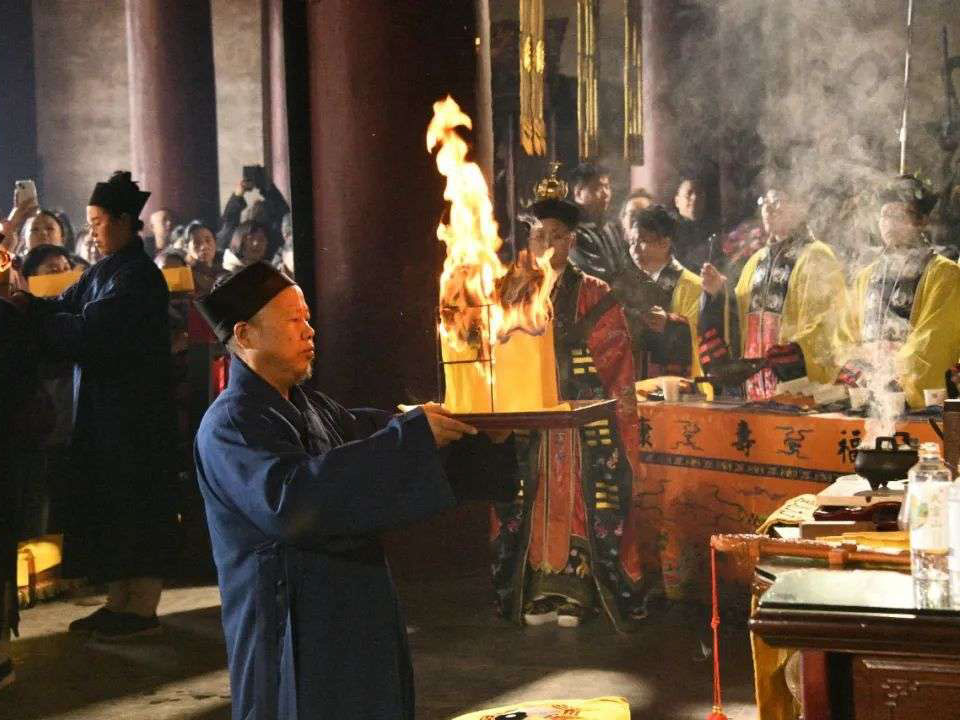
(1) The meaning of the ritual of fasting and Taoist ceremonies
2022-08-20 23:32:13
The original meaning of "zhai" was to be neat, harmonious an...
Yin GUI
2022-08-20 23:32:13
Chapter 27
2022-08-20 23:32:13
Chapter 72
2022-08-20 23:32:13
The couplet of the ancestral hall of the Wudang Mountain Temple
2022-08-20 23:32:13
Chapter 40
2022-08-20 23:32:13