


Sun Biyun
2022-08-20 23:32:13
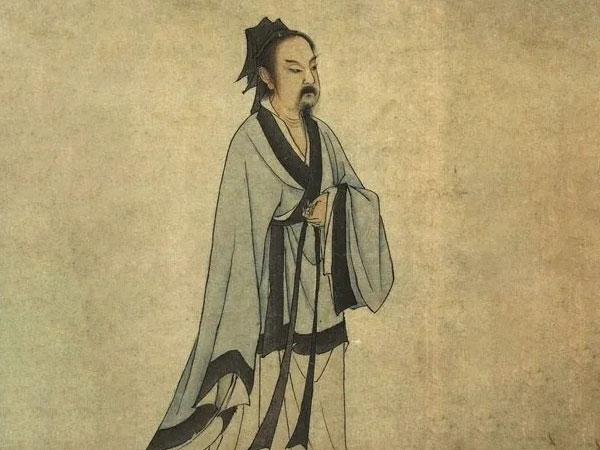
Sun Biyun was from Guanxi (now the northeast of Lingbao County, Henan Province or the area west of Tongguan). One theory holds that he was from Fengyi, Shaanxi Province (now Dali County, Shaanxi Province). According to the "Great Mountain Taihe Mountain Annals" of the Ming Dynasty, Sun Biyun was exceptionally intelligent in her childhood and had a strong aspiration for the Tao. He then became a monk on Mount Hua, the Western Peak, and sought refuge under a renowned master and Taoist priest, receiving teachings from Huang-Lao and the secret transmission of the I Ching. He also studied the theories of Confucianism and Buddhism, but none of them could grasp their profound essence. According to the "Brief History of Taoism in Wudang", citing the "Huazhou Annals", on Half of Mount Hua, there is a Taoist nunnery named Sun Biyun. In the stream below the nunnery, there is a huge rock cave. It is said that Zhang Sanfeng once taught Sun Biyun the Taoist arts here. From this perspective, the master that Sun Biyun became a disciple of when she entered Mount Hua at the age of thirteen might be Zhang Sanfeng, who was wandering around there. Sun Biyun had been practicing Taoism on Mount Hua for many years, and her moral reputation grew day by day. At the beginning of the Hongwu reign, he returned to Wudang and became a student of Zhang Sanfeng. As his master was fond of traveling, Sun Ji remained devoted to the incense and devoted himself to cultivation. In the 27th year of the Hongwu reign (1394 AD), Zhu Yuanzhang, due to an unclear dream omen, specially sent Zhang Wu and others to Wudang to invite Sun Biyun to the capital. In December of that year, he issued several imperial edicts in the capital to see Sun Biyun. When asked about the advantages and disadvantages of the three religions, Sun Biyun responded with the principle that "there are no two ways in the world, and sages have no two hearts" and "the three religions are divided, but the principle is consistent", and expounded the major principles of the school in combination with politics. Zhu Yuanzhang was so impressed by Sun Biyun's speech that he even gave her the high praise of "I am Xuanyuan, and you are Guangcheng." When Sun Biyun left the capital, Zhu Yuanzhang personally held a banquet to see her off in the Fengtian Hall, presented her with generous gifts, and bestowed upon her residence in the Chaotian Palace. The following year, he was granted a return visit to Mount Hua. The "Brief History of Taoism in Wudang" also states that in the first month of the following year, Sun Biyun moved to Jintian Temple in Lanzhou. In the tenth year of Yongle (1412 AD), Emperor Zhu Di of Yongle issued an edict to Sun Biyun, bestowing upon him the position of Right Director of the Bureau of Road Records and granting him special permission to travel freely within the four seas. In the same year, due to the vigorous promotion of the Wudang Palace, Sun Biyun was also ordered to be responsible for the site selection and overall design of the major palaces such as Yuzhen, Wulong, Nanyan, Zixiao and Yuxu. Sun Biyun is specially permitted to practice at Nan Yan and serve as the abbot, and no one is allowed to disturb him. During this period, Emperor Yongle presented a poem to Sun Biyun and bestowed upon her the title of Xuxuanzi. After the Yuzhen Palace was completed, Emperor Yongle Zhu Di once ordered Sun Biyun to serve the incense here. After Zhang Sanfeng returned to the mountain, Sun Biyun would convey Zhu Di's eagerness to see him. By taking advantage of the master-disciple relationship between Sun Biyun and Zhang Sanfeng, he would invite Zhang Sanfeng to the capital. After learning about it, Zhang Sanfeng avoided returning. In the 15th year of Yongle (1417 AD), the Wudang Palaces and Temples were basically completed. One day, Sun Biyun told her disciples, "Now that our Wudang Sect has flourished, I can go there with peace of mind." The next day, after taking a bath, changing clothes, burning incense and paying homage, he sat upright and passed away. Upon hearing the news, all the court officials in the Jianwudang Palace, including the Marquis of the Imperial family Mu Xin, expressed their condolences and buried them with great respect in the Hui Lin Nunnery. Sun Biyun was born around the middle of the Yuan Dynasty and lived to be over eighty years old. After his transformation, Mr. Taiyi Zi, a Taoist priest from Wudang, collected his posthumous works and compiled them into "Bi Ji Yun", which was published in the world. According to the "Genealogy of the True Sects" of the Baiyun Taoist Temple in Beijing, "The Patriarch of Biyun, whose surname was Sun and given name was Biyan, was from Zhongnan (now Dali County, Shaanxi Province). He left behind the Langmei School, which is the main sect of Wudang Mountain." The genealogy goes: The green mountains pass on the sun and the moon, adhering to the way and in harmony with nature, understanding the profound principles of nature and attaining enlightenment, the ancient and profound essence is clear and subtle. True tranquility endures forever, religious blessings last long, joyous clouds soar to the heavens, and eternal good fortune and prosperity follow. According to the introduction of the origin of the Wudang Langmei School Yumen Quan that is circulating in the Wuhan area, it is known that the Langmei School founded by Sun Biyun on Wudang Mountain is also an important branch of Zhang Sanfeng's Quan skills. Sun Biyun's Langmei School was officially founded and passed down by her in the Nan Yan Palace. At that time, her boxing techniques were only secretly passed down within the Taoist sect. At the end of the Ming Dynasty, six Confucian scholars, namely Ke, Han, Dong, Zhao, Xue and Song, went to the capital to take the imperial examination but failed to achieve success. They then withdrew from their official careers and traveled together. When he reached Wudang Mountain in Hubei Province, he saw a Taoist practicing boxing and thus became an apprentice to learn the art. Only then did he learn that it was the Langmei School of Boxing passed down by Sun Biyun. The six Confucian scholars had been monks and nuns in Wudang for many years. It was not until the early Qing Dynasty that they resigned and left the mountains. They then went to seclusion in places such as Wuchang, Geji, Shanpo and Xianning in Hubei Province to pass on their skills. Because its boxing techniques originated from the Taiji Yin-Yang Fish, and its performance was like that of a fish or a dragon floating around, it was renamed the Langmei School Fishmen Boxing. It has now been widely spread in the Wuhan area.
One of the stars of the Big Dipper
2026-04-15 11:51:31
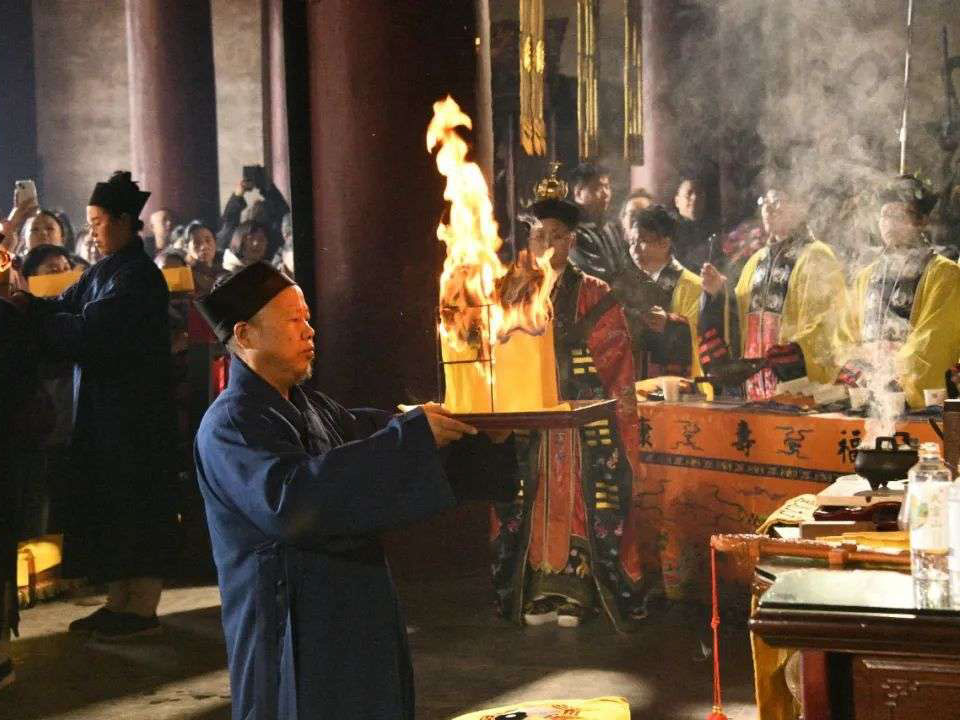
(1) The meaning of the ritual of fasting and Taoist ceremonies
2022-08-20 23:32:13
The original meaning of "zhai" was to be neat, harmonious an...
Yin GUI
2022-08-20 23:32:13
Chapter 27
2022-08-20 23:32:13
Chapter 72
2022-08-20 23:32:13
The couplet of the ancestral hall of the Wudang Mountain Temple
2022-08-20 23:32:13
Chapter 19
2022-08-20 23:32:13