


Zhang Sanfeng
2022-08-20 23:32:13
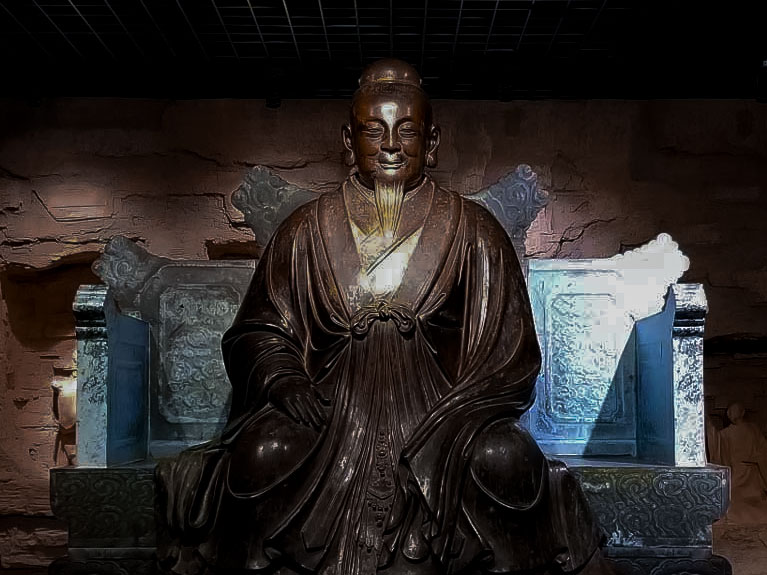
Zhang Sanfeng, also known as Yuanyuan. Because the primordial and the mysterious are interconnected, he is also called Xuanxuanzi. Nicknames: Zhang Laopa, Laopa Zhang.
According to historical records such as the "Great Mountain Taihe Mountain Annals", "Junzhou Annals", and "The Complete Works of Zhang Sanfeng", Zhang Sanfeng was from Yizhou, Liaodong (now the area around Tayingzi Village in the northeast of Fuxin County, Liaoning Province). Also known as Tong, his courtesy name was Junshi.
The ancestral home of Zhang Sanfeng is from Longhu Mountain, Jiangxi Province. The family ancestor claims to be a descendant of Zhang Tianshi (Zhang Daoling, the founder of the Five-pecking Rice Way in the Eastern Han Dynasty). Zhang Sanfeng's grandfather was an expert in astrology. At the end of the Southern Song Dynasty, by observing the stars, he predicted that the royal energy would rise from the north and that the south would be unsafe. Therefore, he led his family to move to Yizhou in the north.
Zhang Sanfeng's father was named Ju Ren, whose courtesy names were Zi 'an and Zhong 'an. He was a very talented scholar and passed the imperial examination during the reign of Emperor Taizong of the Yuan Dynasty (1229-1240 AD). But he was of a simple and unassuming nature and had no interest in officialdom, so he lived in seclusion in his hometown.
Zhang Juren first had four sons. In the year of Dingwei of Emperor Dingzong of the Yuan Dynasty (1247 AD), when the Yuan Dynasty had not yet been established, it was the seventh year of Chunyou of the Southern Song Dynasty. In the summer of that year, Lady Lin dreamed at night that a black crane flew down from the sea and landed at home. On the ninth day of the fourth lunar month of the following year, she gave birth to her fifth son, Zhang Sanfeng.
Zhang Sanfeng was born with a distinctive appearance: a turtle-shaped body with a crane's back, big ears and round eyes. At the age of five, I contracted an eye disease that has not been cured for a long time. Later, he met a wandering Taoist named Zhang Yun 'an. After meeting Zhang Sanfeng, he said to Lady Lin, "This child is born with the air of a celestial being. His eye disease is merely caused by demonic obstacles. It would be great if he could be my disciple."
In order to cure her child's eye disease, Mrs. Lin agreed to let him take Zhang Sanfeng away. From then on, Zhang Sanfeng became a disciple of Zhang Yun 'an.
At this time, Zhang Yun 'an chose to settle in a nearby temple. Besides offering incense every day, he also taught Zhang Sanfeng to recite scriptures. Zhang Sanfeng was extremely intelligent. Once he read any scripture, he would never forget it. Half a year later, my eye disease was completely cured and I studied even harder. Seven years passed in this way. As Lady Lin was deeply concerned about her son, Zhang Yun 'an sent Zhang Sanfeng home.
After returning home, Zhang Sanfeng continued to study Confucianism. In the first year of Zhongtong (1260 AD), he was awarded the title of "Outstanding Scholar" (i.e., "outstanding scholar"). The following year, he was also listed in the imperial court for his literary talent and knowledge to be used in imperial edicts. But Zhang Sanfeng was not concerned about fame and fortune. It seemed that he believed that if he could hold an official position, he should do it well; if not, he should give up and not take it seriously.
In the autumn of the Jiazi year of the Zhiyuan era (1264 AD, which was the first year of the Xianchun era of Emperor Duzong of the Southern Song Dynasty), Zhang Sanfeng visited Yanjing (now Beijing) and stayed there waiting for an imperial edict. At this time, his reputation was quite high in Yanjing. During his stay, he got to know Lian Xixian, the magistrate of Pingzhang. Lian Xixian was impressed by his extraordinary talent and immediately submitted a report to supplement the position of Governor of Boling, Zhongshan (now Ding County, Hebei Province), and thus took office.
During his tenure, Zhang Sanfeng often visited Mount Ge Hong in his spare time from governing the country, in search of the place where Taoist Master Zhi Chuan (Ge Hong, a renowned Taoist theorist, medical scientist and alchemist of the Eastern Jin Dynasty, who authored works such as "Baopuzi", "Emergency Prescriptions Left in the Elbow", "Biographies of Immortals" and "Miscellaneous Records of the Western Capital") practiced. Later, he grew increasingly tired of his official career and his desire to return to the right path grew stronger day by day.
In the second year of his tenure, he first learned that both of his parents were ill. Not long after, he found out that they had passed away. So he resigned from his post and returned to his hometown in Liaoyang, where he remained expressionless all day long. Later, he chose a quiet mountain forest in his hometown and lived in seclusion there, spending his days studying Taoist scriptures.
One day, a Taoist priest named Qiu came to visit the mountain forest. During their conversation, Zhang Sanfeng discovered that he had a noble character and felt ashamed of the vast gap between them.
After Qiu Daoren left, Zhang Sanfeng also returned home, distributed all his farmland to his clan members, and instructed him to visit his parents' graves on their behalf every year. Once the arrangements were completed, he took two itinerant children and embarked on a long journey to explore the Tao.
Zhang Sanfeng traversed famous mountains in search of the Tao, traveling and staying at the same time, composing poems and observing leisurely. For thirty years, he did not encounter a master. Later, when he entered Shaanxi, he saw the beautiful and secluded Baoji Mountain and decided to stay there. Seeing that there were three peaks standing tall and beautiful here, he borrowed the shape of the mountain and called himself the Hermit of the Three Peaks. Later, as Liu Song's "Three Peaks Adopting Tactics" was widely circulated, to avoid the suspicion of corruption, the term "Three Peaks" was changed to "Three Fengs".
In the first year of the Yanyou era of the Yuan Dynasty (1314 AD), Zhang Sanfeng, at the age of 67, entered Zhongnan Mountain to explore the Tao and encountered the Fire Dragon Immortal who passed on the Tao. So he was renamed Xuan Su, also known as Xuan Hua, with the combined name Xuan Xuan Zi and the alternative name Kun Yang.
He lived in seclusion in the Zhongnan Mountains for four years, but his Taoist skills did not improve. Later, I learned that to succeed in cultivating the Great way, one must use both Dharma and wealth. Zhang Sanfeng, feeling that he had traveled for over thirty years, lost all his possessions, and that he had always been generous and kind-hearted, now had empty sleeves, couldn't help but shed tears in sorrow.
Seeing this, the Fire Dragon Immortal was very puzzled. Zhang Sanfeng then told him the truth. The Fire Dragon Immortal knew the whole story and thus taught him the secret of using cinnabar to refine the yellow and white color. He was later ordered to come out of seclusion. After achieving this success, Zhang Sanfeng began to mingle with the common people, and several more years passed in the blink of an eye.
In the spring of the Jiazi period of the Tai Ding era (1324 AD), at the age of 77, Zhang Sanfeng climbed Wudang Mountain in the south. Upon seeing this mountain, he knew it was a good place for cultivation. Thus, he practiced in seclusion for nine years and achieved enlightenment at the age of 85. After that, he roamed among the famous mountains and rivers in Hunan and Sichuan for another dozen years.
At the beginning of the Zhizheng era (1344 AD), Zhang Sanfeng left Hubei Province via Wudang and returned to his hometown of Yizhou to pay respects at the graves. Then he went back to Yanjing to visit his old friends. By this time, he was over a hundred years old. After arriving in Yanjing, all my old friends had passed away, and I couldn't help but feel a sense of nostalgia. So I headed west and unexpectedly met Qiu Daoren, who had visited the mountains and forests in the past. After a heart-to-heart talk, Zhang Sanfeng learned that Qiu Daoren was actually Fu Yangzi, the elder he had been seeking out for a long time.
After parting, he went to Qin and Shu again. Then, he moved to Jinling (now Nanjing) from the Wu and Yue regions of Jingchu (now the area around Jiangling, Hubei Province), where he met Shen Wansan and taught him the way of alchemy.
In the 19th year of the Zhizheng era (1359 AD), when Zhang Sanfeng left Jinling, he foreseen that Shen Wansan might be exiled to the frontier. He then instructed, "The Eastern and Western Kings are in full swing. From now on, we will meet in the southwest."
After saying goodbye, he still entered the Qin Dynasty and stayed at Jintai Temple in Baoji. On the 20th day of the ninth lunar month of that year, Zhang Sanfeng went on a trip to the Jintai Temple to watch the Yang God. Yang Guishan, a local benefactor, believed that Zhang Sanfeng had passed away and immediately bought a coffin to keep him in place. Just as they were about to close the coffin, they suddenly heard Zhang Sanfeng snoring loudly and woke up again. Because he thought Yang Guishan was a kind and honest person, Zhang Sanfeng took Yang Guishan as his disciple and immediately disappeared together.
Two years later, the Yuan Dynasty came to an end. At this time, the world was in chaos and instability. Zhang Sanfeng built a nunnery on Wudang Mountain again, feigned madness, ignored officials when he saw them, and was very close to the common people. He devoted himself to preaching. People, seeing his unkempt appearance and being overly fond of him, playfully call him "untidy". Zhang Sanfeng was also quite pleased with it. At this time, he was over one hundred and twenty years old.
When Zhang Sanfeng visited Wudang this time, he first paid homage to Emperor Xuan at Tianzhu Peak and then roamed the entire Wudang to explore its wonders and scenic spots. Later, he said to others, "I have seen that this mountain will surely thrive in the future." He also instructed the Taoist priests to make preparations for the future revival of Wudang.
From then on, he personally led his disciples to clear the ruins of the Five Dragons, Nan Yan and Zi Xiao palaces one by one, and started to build temples and shrines to offer incense. He also cut through thorns and obstacles to open up roads leading through the mountains. Afterwards, he ordered his disciples Qiu Yuanqing to stay at Wulong, Lu Qiuyun at Nanyan, Liu Guquan and Yang Shancheng at Zixiao, while he himself sought out the northern part of Zhanqi Peak to build a thatched cottage to worship the incense of Emperor Xuan and named it Huixian Pavilion. This is the site where the Yuzhen Palace was built during the Yongle period of the Ming Dynasty.
Later, he built a nunnery in the Yellow Earth City and often ordered his disciple Zhou Zhende to serve the incense, while he himself chose a place to practice in seclusion and occasionally traveled around.
Zhang Sanfeng secluded himself in Wudang twice. The first time, he should have completed his Great Pill cultivation, while the second time, he mainly focused on preaching. During his cultivation period, he chose many places to practice in Wudang. Qingwei Meihua Rock was one of the places where he practiced for a relatively long time. At that time, Zhang Shouqing, a high-ranking Taoist priest from Wudang, was also practicing here. The two should have a mutual understanding of the essence of their cultivation.
According to historical records and analysis, Zhang Sanfeng once received the secret transmission of Chen Tuan's sleeping technique, which enabled him to often lie down under ancient pines and cypresses and sleep soundly, with lions and tigers as his companions.
During this period, he delved deeply into the martial arts of the Taoist school throughout history and also practiced Shaolin martial arts. He created the Wudang martial Arts with Tai Chi as its main feature and gradually spread it widely among the common people by himself and his disciples.
In the 17th year of the Hongwu reign (1384 AD), Zhu Yuanzhang heard of Zhang Sanfeng's high reputation and summoned him to the capital. Zhang Sanfeng avoided seeing him. The following year, he forced Shen Wansan to plead with him, but still refused to attend.
In the 23rd year of the Hongwu reign (1390 AD), Zhang Sanfeng left Wudang and resumed his travels. After twenty-five years, he fled to Yunnan. At that time, Shen Wansan was punished for offending Zhu Yuanzhang and his entire family was exiled to Yunnan. The two met in Yunnan, which is exactly what was said before "We should meet in the southwest in the future." Zhang Sanfeng taught Shen Wan SAN Tianyuan to take the great medicine in Yunnan. The couple took it and thus ascended to immortality.
In the first year of Jianwen (1399 AD), Mr. Wanpuzi visited Zhang Sanfeng in Wudang. At this time, Zhang Sanfeng had just returned from Yunnan, and the two of them had a very pleasant meeting.
In the fifth year of Yongle (1407 AD), Zhu Di ordered Hu Guang, a scholar serving in the imperial examination, to pay an imperial visit to Mr. Sanfeng. Hu Guang passed by him on Wudang Mountain and did not recognize him, thus missing the opportunity.
Because Hu Guang had the "Encounter with the True" incident in Wudang, in the tenth year of Yongle (1412 AD), Zhu Di sent Zhang Xin, the Marquis of Longping, and Mu Xin, the Marquis of the Imperial son-in-law, to supervise the construction of the Wudang Temple. Eight palaces, two temples, thirty-six nunneries, and seventy-two rock temples were completed. A special "Encounter with the True" palace was also built for Zhang Sanfeng. At the same time, he ordered Sun Biyun, a top student of Zhang Sanfeng, to guard the palace and wait for his master, with the intention that when Sanfeng returns to the mountains, he must earnestly request him to come to the capital to pay his respects.
So it was not until the fourteenth year of Yongle that they never met. Zhu Di angrily denounced Hu Guang for his incompetence and said, "Although Mr. Sanfeng is a highly respected Taoist priest with profound mysteries, I am so sincere. There is no reason for him not to see me." This must be because you didn't take your search seriously."
Hu Guang was greatly frightened and traveled day and night to Wudang again to search, but still failed to meet him. With no other choice, he gazed into the sky in the Wudang Mountains and prayed, hoping that Sanfeng would understand his good intentions and be summoned to the capital.
There is a legend that at that time, Zhang Sanfeng was invited by the Supreme Elder Lord to attend the assembly of immortals. He was riding a cloud on his way there. Sensing Hu Guang's sincere prayer, he lowered the cloud head and descended before Hu Guang, saying to him, "You return to the capital to report your order. I will be there shortly."
Hu Guang immediately rode his horse back and reached the capital after the New Year. Only then did he learn that Zhang Sanfeng had already entered the court earlier and met Zhu Di in the Golden Hall. This is the legend of "Ascending to the Golden Hall" that was passed down in later generations, but it is not verified in official history. But at that time, Zhang Sanfeng was still alive and was already 169 years old, which is indeed a historical fact.
It is also recorded that in the third year of Yongle, Wang Zongdao of Huai 'an was ordered to visit Zhang Sanfeng. In the sixth year of Yongle, he ordered Zhang Yuchu to search again. In the fifteenth year of Yongle, Wu Boli, the supervisor of the Shangqing Palace on Longhu Mountain, and Su Qin, the medical official of Baoji, were sent to visit everywhere with incense and books, but in the end, they could not meet.
In the third year of the Tianshun reign of the Ming Dynasty (1459 AD), Emperor Yingzong issued an edict, bestowing upon Zhang Sanfeng the title of "Tongwei Xianhua Zhenren". It is said that during the Tianshun period, Zhang Sanfeng once went to the capital to pay his respects to Emperor Yingzong.
According to the research conclusion of Mr. Feng Chongyan in his book "Research on Wudang Quan" (published by Beijing Sports Press in 1992) on the "Bronze Stele Bestowed by Emperor Yingzong on Zhang Sanfeng" : In the third year of the Tianshun era, Emperor Yingzong personally met Zhang Sanfeng, and this matter is highly credible.
The statements in the imperial edict such as "a once-in-a-lifetime encounter", "a special gift to you", and "I am looking forward to your guidance and your patronage will come to you" all clearly confirm that Zhang Sanfeng was still alive at that time.
The more reliable time when Zhang Sanfeng ascended the throne was at the end of the Tianshun era. Based on this calculation, Zhang Sanfeng lived to be over 210 years old.
Regarding the year of Zhang Sanfeng's death, there is no unified conclusion in the academic circle at present. The core controversy lies in the fact that the world finds it hard to accept that people can live to be over 210 years old.
In fact, the author believes that in today's world, many ordinary people who have never practiced any health-preserving exercises can still live to be over a hundred years old and enjoy a long life. It is not absurd or unattainable that Zhang Sanfeng devoted his entire life to the in-depth study of Taoist health preservation, alchemy secrets and the way of self-cultivation. He lived to be over two hundred years old.
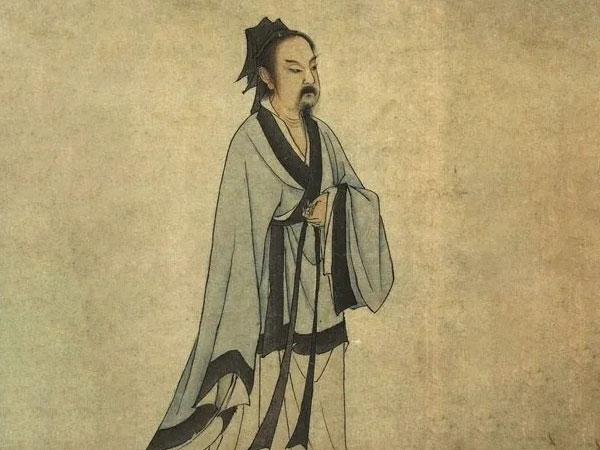
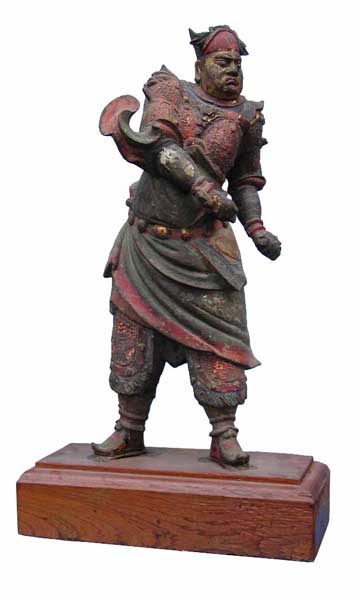
One of the stars of the Big Dipper
2026-04-15 11:51:31
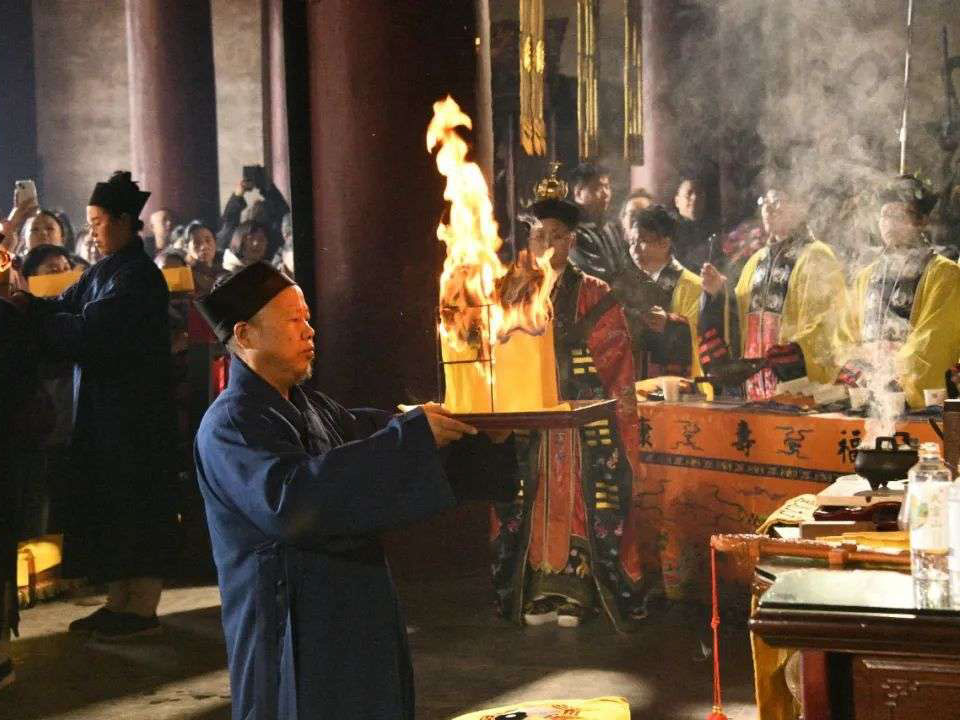
(1) The meaning of the ritual of fasting and Taoist ceremonies
2022-08-20 23:32:13
The original meaning of "zhai" was to be neat, harmonious an...
Yin GUI
2022-08-20 23:32:13
Chapter 27
2022-08-20 23:32:13
Chapter 72
2022-08-20 23:32:13
The couplet of the ancestral hall of the Wudang Mountain Temple
2022-08-20 23:32:13
Chapter 19
2022-08-20 23:32:13