


Chen Tuan
2022-08-20 23:32:13
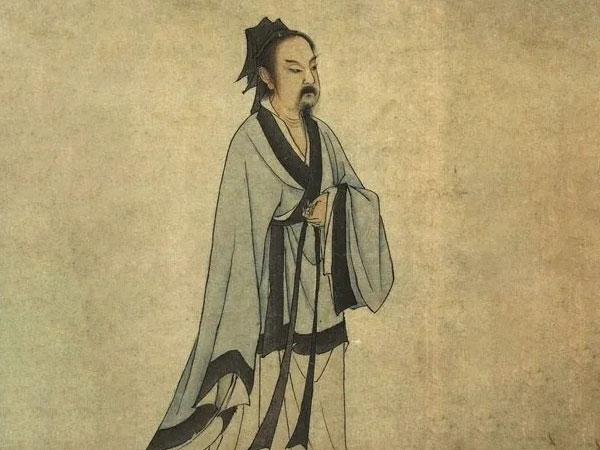
Chen Tuan, styled Tunan, was also known as Fuyaozi. He was from Zhenyuan, Haozhou (now east of Luyi County, Henan Province). Another theory holds that he was from Chongkan, Puzhou (now within the territory of Anyue County, Sichuan Province). However, the "Immortal Mirror" holds that it is said later that "it might be a place for later seclusion." The year of his birth is recorded differently in historical books. According to the consensus among historians that he died in the second year of the Duan Gong era of Emperor Taizong of the Song Dynasty (989 AD) at the age of 118, he was born in the twelfth year of the Xiantong era of Emperor Yizong of the Tang Dynasty (871 AD). Legend has it that a fisherman surnamed Chen was fishing in a river when he caught a big meatball wrapped in purple clothes. The poor fisherman thought it was edible and took it home to cook in a pot. When the water in the pot was hot, suddenly there were thunder and lightning all around the house. The fisherman thought to himself, "Could it be the monster in the pot that caused the trouble?" So he hurriedly picked up the meatball and threw it on the ground. Who would have thought that with this throw, the meatball burst and a chubby white baby was revealed inside. The fisherman couple had no children. Seeing this, they were overjoyed and believed it was a gift from heaven. From then on, they adopted the child. This was Chen Tuan. It is said that Chen Tuan still couldn't speak when he was four or five years old. One time, while he was taking a bath by the Wu River, he met a woman in green who picked him up to feed him milk. After he drank the woman's milk, he suddenly began to speak. And from then on, he became extremely intelligent. At the age of fifteen, he could recite the Book of Rites, The Book of Songs and the sayings of the Hundred Schools of thought at a glance, and was well-versed in all of them. During the Changxing period of the Tang Dynasty (930-933 AD), Chen Tuan went to the capital to take the imperial examination but failed. After that, he/she failed to be admitted despite repeated attempts. This made him fully understand the coldness and warmth of the world, and thus he lost confidence in his official career, and a sense of world-weariness followed. From then on, he indulged himself in the mountains and waters. Chen Tuan visited Mount Tai most frequently. On Mount Tai, he got acquainted with many Daoist scholars like An Qisheng and Huangshi Gong. Listening to them talk about the methods of transcendence and the elixir of immortality, he gradually felt as if he had woken up from a long dream. He once sighed and said, "I have read many books before, but looking back, they were all just reciting the names and surnames of the ancients." Why should I drift with the common people, only entering and leaving the cycle of rebirth? Not long after, Chen Tuan's parents passed away one after another. The family property left behind was quite wealthy. By this time, Chen Tuan had already made up his mind to enter the Tao. So he resolutely gave away all his family property to the poor neighbors and left home with only a stone griddle for serving food. Chen Tuan entered the Tao with a noble and refined demeanor, thus earning the admiration of many scholars and officials in the Tang and Liang dynasties, all of whom felt honored to meet him once. But Chen Tuan paid no attention to them at all and kept away from them all. Little did he know that this would only make his reputation grow higher and higher. When Emperor Mingzong of Tang heard of his high reputation, he issued numerous imperial edicts inviting him to the capital for a meeting. As a result, he did enter the capital but paid homage to Emperor Mingzong of Tang without bowing. This made Emperor Mingzong respect him even more, and he specially bestowed upon him three beautiful women and kept him in the capital to serve as an official. But Chen Tuan declined all of them one by one. Emperor Mingzong of Tang couldn't keep him and had no choice but to let him go. Chen Tuan left the capital and resumed his wandering. During this period, I often met two great men, Sun fang 麇 and Mr. PI. After getting familiar with each other, the two of them said to him, "The Nine Rooms Rock on Wudang Mountain is a great place for seclusion. Why don't you go there?" So Chen Tuan arrived at Wudang Mountain. When Chen Tuan was on Wudang Mountain, he met the five 炁 dragon Kings who taught him the sleep practice "Hibernating Dragon Method". Every day, he only drank a few cups of alcohol and practiced sleeping all the other days. Each time I sleep, it lasts for at least several months and at most years. He spent over thirty years in seclusion on Wudang Mountain and went to many places for seclusion. The Five Dragons Palace was where he studied the I Ching. Later, due to the large number of visitors, he moved to the Chanting Platform and then began to study the pictures of Tai Chi. Then move to Baiyunyan. Jiushi Rock was the place where he spent the longest time during his cultivation. Most of Chen Tuan's important works in his life, such as "Zhi Xuan Pian", "Sanfeng Fables", "Gao Yang Ji", and "Diao Tan Ji", were completed on Wudang Mountain. Later, when he moved to Mount Hua, he still wrote the lines with deep feelings for Wudang Mountain: "When I go south in the future, I will remember the name of this mountain." During his seclusion on Wudang Mountain, Chen Tuan might have also traveled to Mount Hua and Huayin from time to time. It was a time of great chaos at the end of the Five Dynasties. Once, the young Zhao Kuangyin and Zhao Guangyi were carried by their mother to escape. On the way, they were met by Chen Tuan. Chen Tuan was astonished and said to their mother, "Amazing! Amazing!" It turns out that this handful of people is actually carrying two emperors!" Later, it really came true. Zhao Kuangyin and Zhao Guangjiu became the Taizu and Taizong emperors of the Song Dynasty respectively. When Chen Tuan moved to Mount Hua, Zhao Kuangyin had already served Emperor Shizong of the Zhou Dynasty, Chai Rong. During this period, Chen Tuan had many interactions with them and predicted that they all had the appearance of an emperor. When Emperor Shizong ascended the throne, he issued an edict to keep Chen Tuan in the capital. He refused to comply and instead bestowed upon him the title of "Mr. Baiyun" to release him. The disciples of Taoism call him Immortal Baiyun. During the period of Taiping Xingguo, Emperor Taizong of the Song Dynasty bestowed upon him the title of "Xiyi Xiansheng" and styled himself "Tunan" and "Fuyaozi". Chen Tuan's sleeping practice was later praised by alchemists as "the most mysterious in the world". He left two large characters, "Sleeping for Good Fortune" and "Sleeping for Longevity", on the inner wall of the palace on the south rock of Wudang Mountain. Today, his handwriting remains intact, which is a deliberate indication of the subtleence of his sleeping practice. When he visited Mount Hua, he resided at the Yuntai Temple and also at the Shaohua Stone Chamber, still emphasizing the importance of sleeping exercises. Later, Zhang Sanfeng mastered the secret of his sleeping technique. Chen Tuan made remarkable achievements in the study of the Taiji Diagram throughout his life and had a significant influence on the Taoist and Confucian schools of thought in the Song Dynasty and later generations. He left the Taiji Primordial Diagram, also known as the Wuji Diagram, on the stone wall of Mount Hua. This painting was passed down to his disciple Mu Xiu (styled Bo Chang, from Henan Province), Mu Xiu to Li Zhicai (styled Tingzi, from Qingzhou, Shandong Province), Li Zhicai to Shao Yong (posthumously honored as Mr. Kangjie, who authored "The Record of the Shao Family's Observations and Experiences in Henan", which recorded the origin of the Wuji Painting from Chen Tuan), and Shao Yong to Zhou Dunyi. The story was passed down through the ages to Zhu Xi of the Southern Song Dynasty. One day in the first year of Duan Gong (988 AD), Chen Tuan said to his disciple Jia Desheng, "Go and dig a stone chamber in Zhang Chao Valley at the foot of Lotus Peak. I'm going to rest." The disciple grasped the meaning and immediately began to dig the room. In early July of the following year, the stone chamber was carved out. Chen Tuan wrote several hundred lines of text, among which he said that his days were coming to an end, and the date was July 22nd. On this day, Chen Tuan sat upright in the stone chamber and passed away as scheduled. Seven days after death, the warmth of his body did not dissipate, and the stone chamber was surrounded by five-colored auspicious clouds for over a month. (The political participation materials of this article: The Ming and Qing "Great Mountain Taihe Mountain Annals", "Junzhou Annals", "Sanyan Liangpai", "Henan Shao Family News and Observations Record", "Yuhu Qinghua", "Dongxuan Bilu", "Mianshui Yantan", "Qingsuo Gaoyi Qianji", "Xinbian Fenmen Ancient and Modern Miscellaneous Affairs", "Xu Yijian Zhi", "Song History Biographies - Seclusion", "Hanfu Mingtan", "History of Immortals Through the Ages", "Jianhu Xuxie", "Jianhu Xinji" Qu Hai Zongyin's Summary, Group Discussion on CAI Shi, Han Shang Yi Jie.
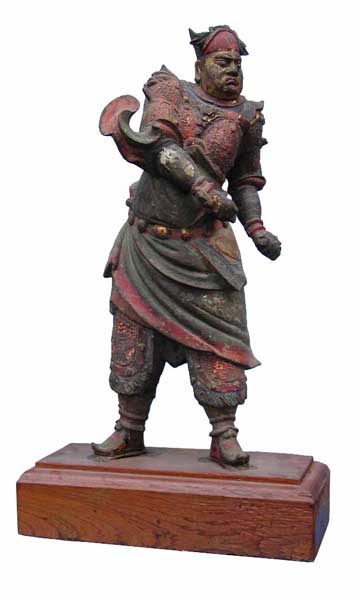
One of the stars of the Big Dipper
2026-04-15 11:51:31
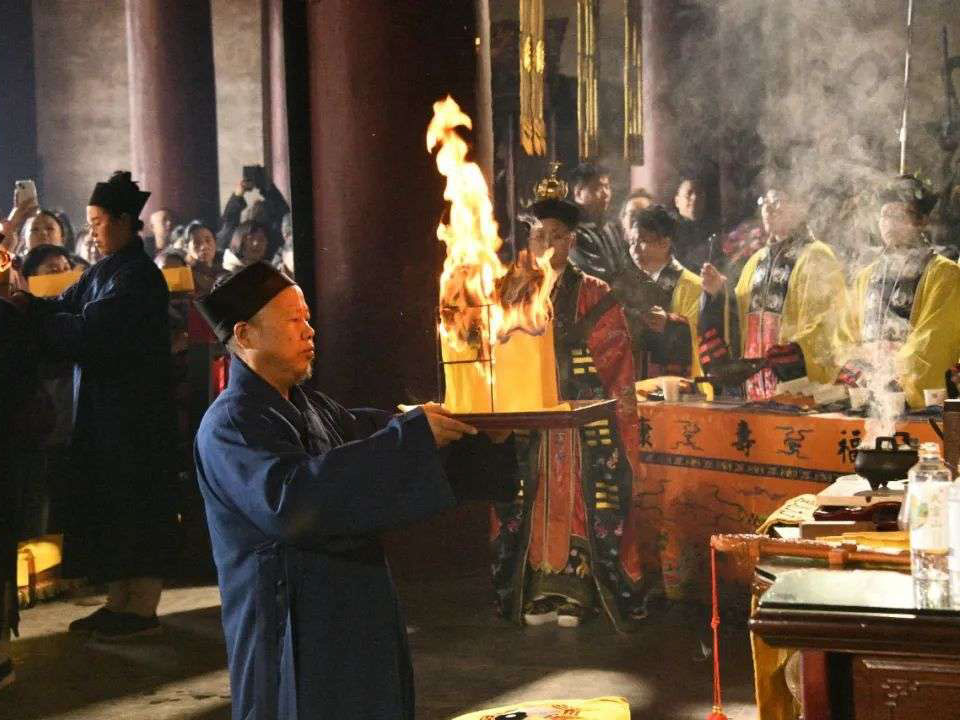
(1) The meaning of the ritual of fasting and Taoist ceremonies
2022-08-20 23:32:13
The original meaning of "zhai" was to be neat, harmonious an...
Yin GUI
2022-08-20 23:32:13
Chapter 27
2022-08-20 23:32:13
Chapter 72
2022-08-20 23:32:13
The couplet of the ancestral hall of the Wudang Mountain Temple
2022-08-20 23:32:13
Chen Xingchang
2022-08-20 23:32:13