


Liu Yongchang
2022-08-20 23:32:13
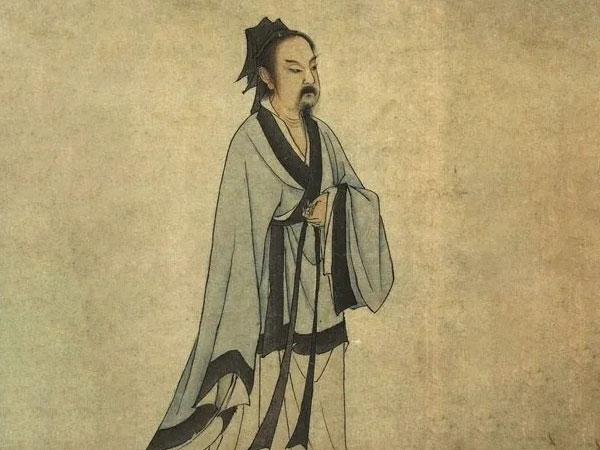
Liu Yongchang was a native of the Jin Dynasty. According to the "Junzhou Annals" of Junzhou, where the ancient Wudang Mountain belonged, his courtesy name was Daotong and he was from Liyang (now He County, Anhui Province). The young man has an extraordinary air, is handsome and intelligent. After entering the officialdom, he held the position of Luo Yi Zai (also known as Luo Ling) successively and achieved remarkable political accomplishments. At that time, Luoyi was approximately the present-day Zhushan County or Luotian County in Hubei Province. When he was in office, he read extensively in his spare time from official duties. He roughly read the most Taoist classics. Moreover, the place where he held office was very close to Wudang Mountain (Zhushan County is adjacent to Wudang Mountain, and Luotian County and the governor of Wudang Mountain are in Hubei Province). Therefore, he developed the intention of giving up his official position and retiring to Taoism. During the Taikang period (280-289 AD), Liu Yongchang submitted a memorial to Emperor Wu of Jin to resign from his official position and was granted permission. He then headed west to Wudang. It is also said that he entered Wudang during the Xianhe period (326-334 AD). This is very likely because after he resigned from his official position during the Taikang period, he had traveled around the world for a long time and only officially retired to Wudang during the Xianhe period. When Liu Yongchang was traveling westward to Wudang, he passed through Xiangyang and met a Taoist priest. The Taoist priest said to him, "My teacher, Mr. Dai, whose pseudonym is Mengshengzi, is a deity who achieved enlightenment on Wudang Mountain." He told me that if there was anyone traveling westward to Wudang to see me, I could lead them all the way here. Isn't this person precisely you?" Liu Yun was often very surprised and impressed, so he went up Wudang Mountain with the Taoist priest. They crossed gorges and streams and found Mr. Dai in an ancient pine forest. This person was Dai Meng, who retired to Wudang during the Han Dynasty. Dai Meng was sitting on a huge rock under an ancient pine tree, looking extraordinary. After Liu Yongchang had performed the disciple's ceremony, Dai Meng imparted to him the way of refining the spirit and filling the void. With that, he suddenly disappeared and was never seen again. From then on, Liu Yongchang built a thatched cottage as a nunnery in Wudang. In just a few years, he mastered the magic of refining the spirit and soaring through the void, and was able to fly between sheer cliffs. Later, he came from the pseudonym "Xie Luoxian". It means that he declined his position as Ziluo Ling and became an immortal. Later, some people also called Wudang Xieluo Mountain, which originated from here. Regarding Liu Yongchang, the Ming Dynasty's "Taiyue Taihe Mountain Annals" records him as Xie Yunchang, while the Qing Dynasty's "Dayue Taihe Mountain Annals" cites "Jingzhou Map Sub-Record", "Zhen Gao Ji Shen Shu", Li Daoyuan's "Shui Jing Zhu", and the Qing Dynasty's Wang Shizhen's "Dayue Taihe Mountain Fu" all referring to him as Xie Yun. Li Daoyuan's "Commentary on the Waterways Classic" also states that he had the magic to write a red talisman and throw it into water, which could turn it into a fish. The author believes that the three statements made by Liu Yongchang, Xie Yunchang and Xie Yun are incorrect, and Liu Yongchang should be regarded as the correct one. The reason is as follows: First, the basis of the "Junzhou Annals" is the old prefectural annals. The records of the archives of successive officials in the prefectural annals are more accurate than those in unofficial histories. Secondly, the "Taihe Mountain Annals" of the Ming Dynasty records it as Xie Yunchang. The character "Xie" must have originated from the self-name of "Xie Luoxian", and "Yunchang" actually recorded his given name. "Yun" sounds the same as "Yong", and borrowing characters was a custom of the ancients. In Taoism, there was also the intention of concealing his real name. Therefore, the record of "Liu Yongchang" in the prefectural annals and "Xie Yunchang" in the mountain annals are essentially not contradictory. And the name "Xie Yun" might just be another kind of self-title that Liu Yongchang made up. When he thanked the emperor for his resignation as the governor of Luo, and the emperor approved it, allowing him to retire, wasn't that the gain of "Xie Yun"? This has the same meaning as the self-title "Xie Luoxian". It is estimated that before Liu Yongchang styled himself Xie Luoxian, he had always kept his real name hidden and often referred to outsiders as "Xie Yun". As a result, people only knew Xie Yun and not Liu Yongchang. Here, I hereby list my own opinions and viewpoints for further argumentation. According to "A Brief History of Taoism in Wudang", the Xie Yun school was an early Shangqing school of 符箓 immortal Taoism. Xie Yun's master was Dai Meng, Dai Meng's master was the Immortal Pei of Qingling, named Pei Xuanren, and Pei's master was Lady Zi Wei. According to the "Seven Signs of the Xuanji", after Dai Meng achieved enlightenment, he had 34 disciples, among whom 18 studied Buddhism and 14 studied immortality. Xie Yun and Shan Shiyuan are his disciples of the immortal path. Xie Yun cannot provide detailed evidence later. The cultivation technique of the Upper Qing Immortal Path, as recorded, is a comprehensive cultivation technique. There were internal alchemy techniques, such as Lady Ziwei teaching Pei Xuanren the "Treasure Nerve", and Dai Meng imparting to Liu Yongchang the way of "Refining the Spirit and Filling the Void". There are medicinal stone external elixirs. For instance, after Dai Meng became a student of Pei Xuanren, he once went to Huayang Mountain to consume Atractylodes, rhubarb, and polygonatum odoratum, and also "planted mica, realgar, cinnabar, and zinnia..." "Attaining the way of immortality" There is a 符箓 Daoist method, such as "Pei Zhenren imparted to him the 'Jade Pendant and Golden Bell Sutra' and the 'Stone Essence and Golden Light Talisman', and thus he was able to walk freely and circle around famous mountains." Traveling seven hundred li a day... " During the time of Dai Meng, there were also people like Guo Zihua, Zhang Jilian and Zhao Shuda in this school. He had a relationship with the Tai Chi School at that time (when his master was a Tai Chi Immortal), and the Tai Chi School was also well-versed in the Daoist techniques of the "Jade Pendant and Golden Bell". The lineage of this school is as follows: Lady Ziwei (date unknown) - Pei Xuanren (date unknown) - Dai Meng (about 170 BC -?) According to the "Taiping Yulan" citing the "Zhen Yi Zhuan", it is said that Xie Yun of Liyang was styled Daotong. At the age of 15, he was looted and sold by Su Jun's rebel army, Wang Mian, to Jiang Feng's home in Dongyang. He often cut wood in the mountains. One day, he saw a dog mistakenly thrown into the tiger trap set up by a hunter. Feeling sorry for the dog's hunger, he entered the trap and found that there was also a tiger trapped inside, climbing up the trap and looking at him, but it did not harm him. So he said to the tiger, "This prison was supposed to arrest you, but I risked my life to come in and you didn't hurt me. Let you go." So he opened the threshold and let the tiger go. Later, when the rebel troops were quelled, Xie Yun went to the county to file a complaint, demanding justice for his injustice of being looted and betrayed. However, Zhang Qiu, the magistrate of Wucheng County, refused to hear the case and instead sent him along with the rebel troops to the Chu region for imprisonment. One night, Xie Yun dreamed that someone said, "You can get in here but not out, but you have a kind heart and can be saved." Xie Yun woke up and saw a young man in yellow standing outside the prison bar. From time to time, he would break through the prison without any obstacles and talk to him. From then on, this continued. When the prison guards saw this, they knew that there was a strange person in contact with Xie Yun, and thus they did not dare to injustice him. Not long after, Xie Yun's injustice was cleared and he was able to return home. But not long after, he went west to Wudang to retire. General Geng felt sorry for him and thus provided him with provisions and sent someone to see him off. Xie Yun met a Taoist priest in Xiangyang, who said, "My master, Mr. Dai, is waiting for you on Wudang Mountain." Xie Yun followed the Taoist priest into Wudang. After fasting for three days, he went to see the master and found that the master was the yellow-robed boy he had met in prison. Dai Mengsui bestowed upon him three pills of the divine medicine. Xie Yun took them without any hunger or thirst, nor did he have any desire to think. Tao Hongjing's commentary on the "True Edict" also states that after Xie Yun received the Dao in Wudang, he went on to serve as the magistrate of Liyang, Xinfeng and Xidao counties until he was nearly 70 years old without showing any signs of aging. Eventually, he resigned. But it did not mention what would happen next. However, the "Xu Shoushen Ji" does indeed record the event of "Xie Yun returning from Wudang". It is possible that Xie Yun first received the Tao in Wudang, then entered public service, and later returned to the Tao, eventually attaining the Tao in Wudang.
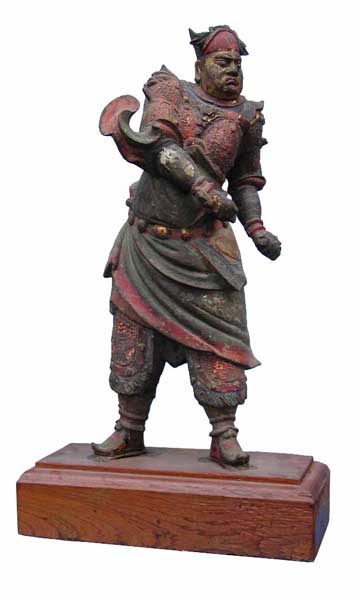
One of the stars of the Big Dipper
2026-04-15 11:51:31
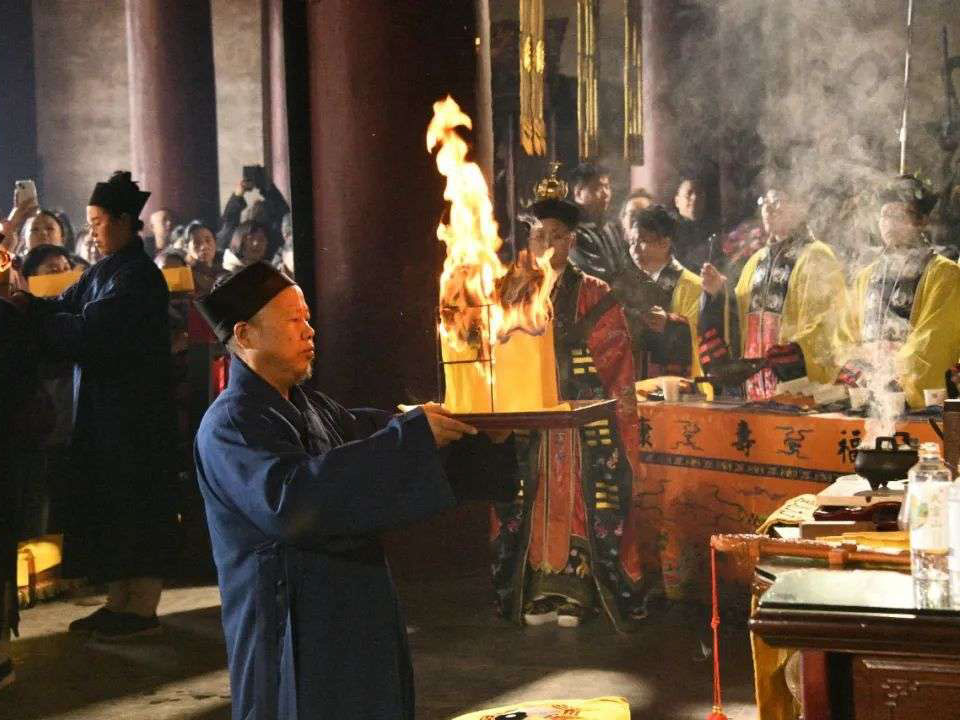
(1) The meaning of the ritual of fasting and Taoist ceremonies
2022-08-20 23:32:13
The original meaning of "zhai" was to be neat, harmonious an...
Yin GUI
2022-08-20 23:32:13
Chapter 27
2022-08-20 23:32:13
Chapter 72
2022-08-20 23:32:13
The couplet of the ancestral hall of the Wudang Mountain Temple
2022-08-20 23:32:13
Chapter 19
2022-08-20 23:32:13