


Laojun Rock
2022-08-20 23:32:13
Laojun Rock is located at the foot of Qingniu Mountain at the northern foot of Wudang Mountain. Originally named Taishang Rock, it is also known as Taishang Temple. Here, mountains surround the area and the terrain is high. It connects to the Purple Sky above and overlooks the green stream below, presenting a beautiful scene. According to records, in the ninth year of the Tiansheng reign of the Song Dynasty, Taoists Ren Daoqing and Wang Daoxing used manual labor to chisel stone niches and carve the image of Laozi, the Supreme Elder, to establish the Taixuan Temple. According to the mountain Chronicles of the Ming Dynasty, Taixuan Temple was destroyed by war and fire at the end of the Song Dynasty and was rebuilt in the Yuan Dynasty. It has buildings such as a mountain gate and an nunnery. By the tenth year of Yongle in the Ming Dynasty, an additional 23 rooms including the mountain gate, 廊庑 and Taoist quarters were ordered to be built. By the Qing Dynasty, all the buildings outside the cave had been abandoned. Only semi-circular caves remain now. On the left side of the Laojun Rock Grottoes, there is a group of cliff carvings, featuring inscriptions such as "The Crown Prince's First Entry into Wudang" and "The Nine Immortals of Penglai", all of which are bas-relief statues. The Nine Immortals of Penglai were soaring through the clouds and about to descend, with a four-clawed dragon beneath their feet. On Wudang Mountain, there are such a large area of grottoes and cliff carvings, and at the same time, religious sacrificial texts from the Song, Yuan, Ming and Qing Dynasties are collected. This is a rare physical object for the study of the religion and history of Wudang Mountain. The existing site of Laojun Rock covers an area of approximately 2,000 square meters. It was once used to create the living environment for the highest deities of Taoism, namely the residence of the Primordial Heavenly Lord, the Heavenly Lord of Lingbao, and the Heavenly Lord of Morality, and is also known as the "Three Pure Realms". Therefore, the layout of this place was very meticulous back then. Ren Ziyuan, the first governor dispatched by the Ming emperor to Wudang Mountain, was greatly impressed by this place and lived here for a long time. He compiled the eight-document "Taihe Mountain Annals" and had it published.
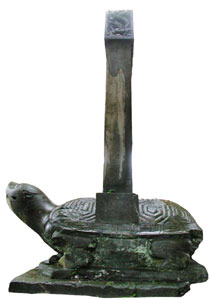
Wulong Palace Imperial Stele Pavilion No. 1
2022-08-20 23:32:13
Wulong Palace Imperial Stele Pavilion No. 1
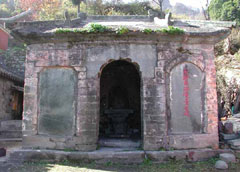
The Middle view of the Yuan Dynasty stone hall
2022-08-20 23:32:13
The Middle view of the Yuan Dynasty stone hall
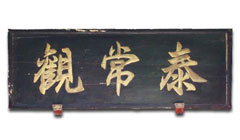

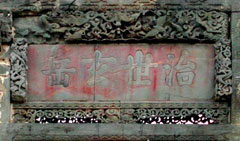
The Mystic Mountain for governing the world
2022-08-20 23:32:13
The Mystic Mountain for governing the world
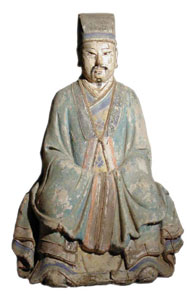
The main hall of the Five Dragons Palace has three statues
2022-08-20 23:32:13
The main hall of the Five Dragons Palace has three statues
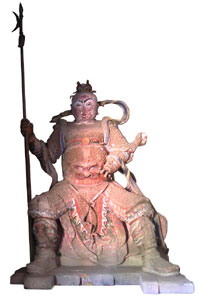
The white tiger in the Dragon and Tiger Hall of Zixiao Palace
2022-08-20 23:32:13
The white tiger in the Dragon and Tiger Hall of Zixiao Palac...
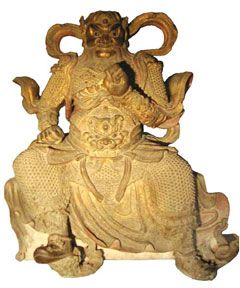
The main deity statue in the main hall of Yuanhe Temple
2022-08-20 23:32:13
The main deity statue in the main hall of Yuanhe Temple