


Be an honest official
2022-08-20 23:32:13
From then on, Zhang Juren invited famous teachers to teach Zhang Quanyi to study Confucianism exclusively. In the first year of the Zhongtong era of Emperor Shizu of the Yuan Dynasty (1260), Zhang Quanyi, at the age of 13, passed the examination for the title of Xiucai. For many years after that, he failed the imperial examinations repeatedly. It wasn't that his articles were bad; it was simply due to the political environment at that time. After the Mongol Mongols took over the Central Plains, they divided the ethnic groups into four classes: the first class were the Mongols, the second class were the Semu people (meaning various names, including all the ethnic minorities in the Western Regions), the third class were the Han people, and the fourth class were the Southern people (referring to the Han people of the Southern Song Dynasty, who had the lowest status due to their late conquest). As a Han Chinese, Zhang Quan was ranked third, and naturally, his treatment in the examination and the standards for admission were different. But he didn't lose heart and continued to study hard. During this period, in addition to studying Confucianism, he also delved into Taoism and Buddhism. As he entered Taoism at a young age, in addition to his studies, he also practiced meditation for health preservation and swordsmanship for fitness. Therefore, he is not only highly learned but also in good health. Tall and burly, with a round back like a turtle, long legs like a crane, big ears hanging over the shoulders, round eyes like torches, and a beard like a halberd, he was a man of great fortune and longevity. He also made a vow that he would never marry until he passed the imperial examinations. The parents were highly impressed by their son's grand aspirations, and Zhang Quanyi studied even harder. When Zhang Quanyi was 45 years old, his father fell seriously ill and was on his deathbed. He called Zhang Quanyi to his bedside and encouraged his son to study hard and enter the imperial court to make up for his own life of tranquility and inaction. He said that Quan Yi was only in his forties now, just approaching the age of forty, and it was a great time for him to achieve great things. This made Zhang Quanyi's eyes well up with tears. He knelt before his father and swore to the sky that he must go to the capital for the palace examination, win the honor in the palace, and make progress in his official career, not letting his life go to waste. Shortly after my father's death, my mother passed away one after another. He stayed at home, observing mourning for his parents while studying. Ten years later, he finally passed the imperial examination and became a jinshi. As he did not serve the powerful, he was appointed as the magistrate of Qingyuan County on the Shuntian Road. The first thing Zhang Quanyi did after taking office was to visit the Zhenwu Temple and pay homage to his master, Zhang Yun 'an. By this time, Zhang Yun 'an's hair was as white as snow, but he was still vigorous. Even if they talked with him all night long by candlelight, he would listen attentively. The master said to him, "Looking at the world as a whole, officials are divided into three grades: the first grade is an honest official, the second grade is a corrupt official, and the third grade is a greedy official." Honest officials serve the people, incompetent officials deceive the people, and corrupt officials harm the people. Honest officials bring prosperity to the country, incompetent ones mislead it, and corrupt ones ruin it. Therefore, upright officials are remembered for all time, corrupt officials are infamous for all eternity, and corrupt officials are ridiculed by all. My teacher hopes that you will become a first-class upright official, build the country for the people, and bring benefits to the local area. Zhang Quan nodded and said, "Disciple has noted it down." " Zhang Yun 'an also said, "To be a corrupt official is risky; to be a corrupt official is idle; to be an upright official is difficult." If you want to be an upright official, you must endure hardships and sufferings. Zhang Quanyi made a vow in front of his master: "No matter how hard or difficult it is, I will be an upright official. I will never be a corrupt official ridiculed by all, nor will I be a corrupt official infamous for all time!" During the Yuan Dynasty, the trade of people was widespread throughout the land. First, the captives captured by the Yuan army on the battlefield could be used as slaves for trading. Subsequently, the Confucian scholars of the Southern Song Dynasty captured by the Yuan army generals were also traded as slaves. Later, the practice of trading virtuous women as slaves became even more prevalent. The "human markets" that spread all over the country mostly traded women. In front of the City God Temple in Qingyuan County, there is a large market. On one side of the market is a "livestock market", where mules, horses, cattle, sheep, pigs and donkeys are traded. On one side is the "People's Market", where scholars, young men, young women and children are traded. The livestock market and the people's market are just across the road. The cries of vendors and the quarrels of bargaining are mixed and interwoven, rising and falling one after another. The stench of excrement and urine is foul, and the air is filled with thick smoke. One day, Zhang Quanyi went to the human market in disguise for a private visit. Seeing the men and women kneeling on the ground with straw tags on their heads, all dressed in tattered clothes, pale and emaciated, looking very sad, he couldn't help but sigh secretly that he must change this current situation where people are treated like cattle, horses or beasts. At the market, he saw an old man in tattered clothes selling his daughter at a low price in order to save his bedridden wife who had no medical treatment or medicine. Seeing that he couldn't stand it, Zhang Quan offered to help and left without leaving his name. As soon as Zhang Quan returned to the county yamen, he wrote a memorial to the imperial court, sternly listing the drawbacks of the "human market" and requesting a ban on human trade throughout the country. Later, the imperial court indeed imposed a ban on the "human market". Although the imperial court explicitly prohibited human trafficking, due to the large-scale land acquisition and property monopoly by the Yuan and Mongolian nobles in the Central Plains at that time, a large number of farmers were displaced and had no means of livelihood. The phenomenon of selling their children occurred frequently, and thus the "human market" of slave trading persisted despite repeated prohibitions. It was under such climatic conditions that a wealthy gentry from Qingyuan County found Zhang Quanyi. This wealthy gentleman was named Lin Shaokun and had a deep relationship with Zhang Quanyi's master, Zhang Yun 'an. He has a daughter who is just 15 years old and loves her as if she were the apple of his eye. Hearing that the imperial court was going to recruit unmarried women from the common people and hand them over to Mongolian nobles as slaves, he hurriedly sought out Zhang Yun 'an and asked him for advice on the way out. Zhang Yun 'an, holding his snow-white beard and pinching his withered fingers, opened his half-closed eyes for a long time. With a smile, he said, "How could my disciple and your daughter be destined for marriage?" He was determined to become an official before getting married. Coincidentally, he had just taken office and was not yet married. Lin Shaokun asked who it was. Zhang Yun 'an said it was Zhang Quanyi, the current magistrate of Qingyuan County. Lin Shaokun was naturally willing to marry his daughter to the county magistrate, but it was unknown whether the county magistrate was willing or not. So, Lin Shaokun asked Zhang Yun 'an to write a letter to facilitate this matter. In this way, Zhang Quanyi and Lin Shaokun's daughter got married. After marriage, Zhang Quanyi and Lin Shi were as loving as honey. Many years later, they had a daughter who was very intelligent. She could read and write at the age of three and recite Tang and Song poetry at four. In his later years, when Zhang Quanyi had a son, he loved him as if he were the apple of his eye and enjoyed the endless happiness of family life. (Note: All rights reserved. Reproduction or publication is prohibited.)
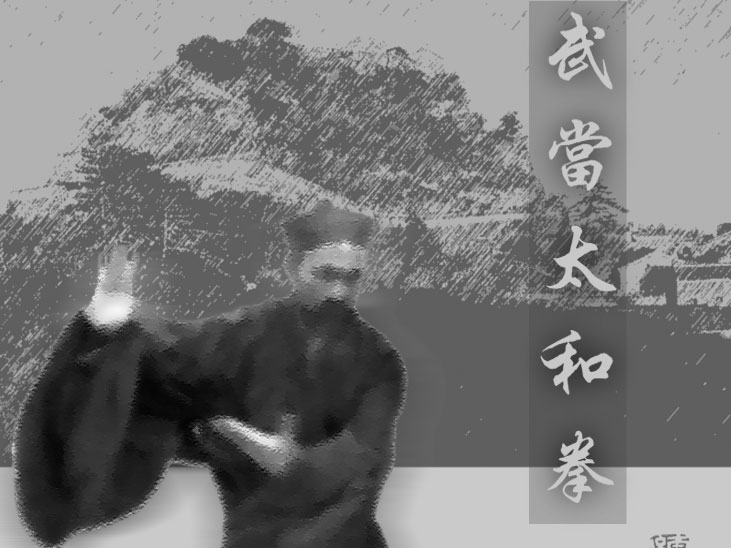
Verified by Zhang Sanfeng with the same name and pronunciation
2022-08-20 23:32:13
The main hall of Taizi Rock
Annotations on the 24 Poems of Jin Dan ⑥
2022-08-20 23:32:13
The tomb statue of Taoist Priest in Wulong Palace
Commentary on the Taiji Elixir Classic: "A Simple Explanation of Dao Yan" ①
2022-08-20 23:32:13
The white tiger in the Dragon and Tiger Hall of Fuzhen Templ...
"Xuan Yao Chapter - Part 1: A Song about Taoist Love.
2022-08-20 23:32:13
The dougong brackets in the main hall of Fuzhen Temple