


Annotation on the Hundred-character Stele of Lu Zu
2022-08-20 23:32:13
Zhang Sanfeng's Note/Kong Dejie's Note: All practitioners must first cultivate their qi. The way to cultivate qi lies in forgetting words and adhering to one principle. Forget your words and your spirit won't disperse; stay focused and your mind won't leave. The key is: Keep your tongue still and your mind calm. Kong Dejie: The most fundamental life skill in internal alchemy health preservation is to cultivate qi. Nourishing qi means first preventing the loss of the essence of life substances and allowing it to accumulate. The way to nourish one's qi lies in "forgetting words and adhering to one principle". Forgetting to speak means keeping silent. The key here lies in the word "forget", meaning there is nothing to think about and thus nothing to say. If one cannot keep their mind free of desires and their mind is filled with all kinds of distractions, even if they keep their mouth shut and do not speak, the words will still be swirling around in their mind. The key to "forgetting" lies in fundamentally eliminating distractions, and naturally, there will be nothing to say. Therefore, if one wants to keep silent, one must first clear one's mind from speaking. To adhere to the one is to adhere to the chaos. This chaos is a state where there is no one, no self, and no heaven or earth or all things. Because there is no distinction, it is called "One". "One" is represented by a number. If it were represented by an image, "One" would be an empty circle. To speak consumes one's energy, and to be moved consumes one's spirit. Therefore, if one can forget what one says, one's spirit will not disperse; if one can focus on one thing, one's mind will not leave. When the spirit is concentrated and the energy is gathered, the benefits of health preservation are achieved. The way to forget words and keep one is: close your lips and place your tongue against the palate. Cleanse the heart and mind, and calm the spirit and invigorate the spirit. Note: The hearts of ordinary people are constantly in turmoil. To cultivate the mind and achieve tranquility lies in subduing the two eyes. The eye is the gateway to the heart, and it must be sealed with a curtain. All things take the heart as the sword. Thinking that the world is of no benefit to me, the fire is instantly dispelled. Don't be greedy. The mantra goes: Look at your nose with your eyes, look at your navel with your nose, look up and down together, and let your mind and breath rely on each other. By focusing on the entrance hall, one can subdue thoughts. Kong Dejie: The hearts of ordinary people are constantly in turmoil and can never be at peace for a moment. For practitioners to calm their minds and guard against the chaos, the key method they should adopt during their practice lies in subduing their eyes. Why do you say so? Since the eyes are the gateway to the mind, when the eyes are exposed to external things, the external things will infect the eyes and transmit their information to the mind. As a result, the mind will react and cannot be at peace. Subduing the eyes is like drawing a curtain, closing the eyelids and no longer looking at things outside. However, the method of closing one's eyes is only a temporary technique used in practicing martial arts. Fundamentally, one still needs to be at ease. The issue of peace of mind, in the final analysis, lies in letting go of one's heart. The fundamental issue of being at ease lies in thoroughly thinking through everything, realizing that everything in the world is illusory and uncertain, and there is no need to be obsessed. All attachments are self-inflicted troubles and do no good to me. When you think about it this way, your heart can be at ease. As soon as the heart is at ease, the evil fire of distractions is dispelled. After eliminating it, one should no longer be greedy or defiled. This can fundamentally solve the problem of peace of mind. Eliminating distractions lies in establishing mindfulness. Mindfulness is like a sword of justice. Once distractions last a lifetime, they should be cut off immediately. Over time, there will be no source for the growth of thoughts. The specific techniques in practicing Qigong are as follows: Second, focus your attention, look down at your nose accurately (your head must not be lowered), and then use your eyes and nose to observe the dantian below the navel. At this moment, close both eyes and look up and down from the eyes to the dantian, achieving a state where the mind and breath are in harmony. After such smoothness, by concentrating one's true mind in the void and chaotic realm where the four elements are not present, which is called the entrance hall, one can subdue thoughts. Zongzu Fengzu's note: Movement and stillness refer to Yin and Yang respectively. The ancestral home is the place where one is born. A practitioner should know that before one's parents are born, they are already the mysterious female. The place where the Eight Trigrams of heaven and Earth and the Five Elements and four symbols converge in one's body is formed by a glimmer of spiritual light before the judgment of heaven and earth, which is the Tai Chi. Beneath the heart and above the kidneys, it seems as if there are no thoughts within. The place where the primordial breath begins is where the ancestral roots arise. (Note: The original text lacks the "yuan" in "Yuan Xi", which is not logically coherent and seems to be a mistake or omission. It is hereby supplemented.)" The so-called movement and stillness are to harmonize the true qi and stabilize the true essence. When one inhales the breath according to the root of heaven and the root of earth, closing a household is called Kun and opening a household is called Qian. When exhaled, the dragon roars and the clouds rise; when inhaled, the tiger roars and the wind rises. One closing and one opening, one movement and one stillness, it is precious that the mind remains still, allowing the true breath to come and go, continuous and lingering. Regulate the breath to the point of no breath, merge into one, then the spirit can be condensed and the elixir can be achieved. Kong Dejie: Within one's body, qi is Yang and qi is still Yin. The cycle of Yin and Yang, movement and stillness, is continuous, and thus the beauty of nature is achieved. The so-called ancestor is the root. Without this original foundation, there would be no life for us. The so-called place of being born is a bit of innate spiritual light. Although my body is born from the essence and blood of my parents and is infused into it, blending Yin and Yang, it is then that I have my life as a human being. This innate bit of spiritual energy, before being born into my body, was contained in the vast void of the universe and was called the mysterious female, remaining in an infinite state. In one's lifetime, when a person becomes a tangible form, it is called having extremes, being classified by the two instruments, the four symbols, the five elements, and the eight Trigrams. The two instruments refer to the spirit and the essence. The Four Symbols refer to the spirit, soul and spirit. The Five Elements refer to spirit, soul, spirit, intention, heart, liver, spleen, lung and kidney. The Eight Trigrams refer to Qian Shou, Kun Fu, Li Mu, Kan Er, Zhen Zu, Xun Shou, Gen Bi and Dui Kou. Beyond these, they are discussed. Gan Xin, Kun Shen, Kan Jing, Li Shen, Zhen Hun, Dui Po, Gen Yi, Xun Xi - these are discussed from within. Human beings have an extreme body. Their roots originate from the boundless, yet they are born from the extreme of spring. This Taiji gazing at the ocean and sighing is the primordial light of the primordial void 炁 the most static and vivid primordial light. When a practitioner is in the state of practice, beneath the heart and above the kidneys, there is no thought or reflection, a state of confusion and intoxication, in a state of chaos and emptiness. Breathing through the mouth and nose, not for my Lord, gradually and gradually fine... In an instant, the primordial breath of the dantian emerged, surging and undulating. The place where this primordial breath occurs is the source of life's rebirth, and thus it is called the ancestor. Yuanxi refers to the movement and stillness of the primordial energy. Yuanqi is the result of the primordial spirit. Self-automatic and self-quiet, pure and natural. When we regulate the true qi, we are precisely following the natural flow of movement and stillness, creating conditions for them to follow the natural laws. This is precisely what is meant by "doing something but not doing it", half human and half natural. The breathing of Yuanxi is meticulous within the microcosm of the human body. It starts from the top of the head when exhaled, thus it is said that "the breath connects to the heavenly root." When inhaling, it starts from the heel, thus it is said that "inhaling starts from the root of the ground." When it is in a state of stillness and harmony, it is called Kun, the base of Yin. When it moves and opens, it is called "Qian", the peak of Yang. Yuanxi breathing, ascending and descending, moving back and forth, the spirit is clear and the qi is smooth, the two senses converge. When the self-nature palace emerges, it is thus said, "The dragon roars and the clouds rise." It was born in the palace, thus it is said, "The roar of the tiger and the rise of the wind." To maintain this state, the key lies in keeping the mind still, so that the true breath can flow freely and continuously. If one's thoughts are mixed in or one's perception is added, the state of true breath will be disrupted. This is like a stove toppling over or a tripod collapsing. By regulating the breath in this way for a long time, this primordial breath will no longer have the rise and fall of breathing, nor the pulsation and circulation. It will only be a chaotic mass, unobstructed and unobstructed, like a cloudless and clear expanse. At this point, the spirit can be condensed and the elixir can be formed. If one can cultivate one's qi, forget words and keep to oneself, subdue the body and mind, return the spirit to the qi points, and focus the mind on the rules, blending into one qi, like a chicken holding an egg or a dragon nurturing a pearl, constantly thinking about it and never leaving it, over time and with deep skill, the pearl of millet will naturally appear, shining like the sun, enlightening the primordial spirit, and being clear and unpredictable. This is what it is. Kong Dejie: Ancient immortals said, "The breath without breath is the true breath, and the god without a spirit is the true spirit." It is also said: "Do nothing and do nothing." Therefore, the cultivation of the Tao is to create the extraordinary from the unextraordinary and to seek action from non-action. So it is called "nothing to do." Since it's a matter of no concern, we should let go of our desire to seek. Since I have no intention, I reveal my heart for the Tao. Since I have no intention, I reveal my true feelings. Since I have no breath (eliminating the breath from my mouth and nose), I naturally reveal my vital energy. Therefore, this mantra, "When there is no need, who else should I seek?", aims to prevent me from developing a discerning mind later in life and serves as a further methodological hint for "cultivating one's spirit, forgetting words, and keeping one's word." That is to say, when sitting in meditation, one should straighten the body and correct the mind, focus the mind and regulate the breath, and return to the dantian qi points. The true meaning lies in a state of harmony that is neither internal nor external, neither high nor low, neither biased nor partial, and neither thoughtful nor worried, allowing the body and mind to blend into one. This situation is like a hen hatching eggs or a mussel raising a ball. In the blink of an eye, as the degree of the body and mind returning from the acquired to the innate deepens, the innate energy naturally emerges. The primordial energy comes from the void and is our life treasure. Immortals compare it to a golden elixir, shining as brightly as the sun. Transform the primordial qi into the primordial spirit, and integrate the spirit and energy. After a long period of refinement, pure Yin fades away and all transform into Yang spirits, mysterious and unfathomable. This is the method and principle behind the saying "When there's nothing to do, who else should one seek?" Fengzu's note: This is the true and constant way. It is easy to lose consciousness when dealing with matters, so one should not be lost in mundane affairs when dealing with things. If one does not respond, there will be emptiness and nothingness. Respond when needed and leave when required. To be upright and honest is to be free from confusion. True nature is serene and the primordial spirit is condensed. The saying goes: "Every intention is wrong, and no action leads to failure." " Kong Dejie: Laozi said, "The Dao that can be spoken of is not the eternal Dao." The way that can be expressed is to respond to all differences with one principle and remain eternal and unchanging, thus it can be expressed. The phrase "dao Dao" means that it can be both expressed and followed. The "Extraordinary Dao" refers to the Dao itself, not its end. The Dao remains unchanged while its surface is ever-changing. The Dao is formless but its end has an image. The Dao is invisible but its end can be common. Therefore, people usually see this thing as the manifestation of the constant way, while what can be followed and what can be morally upright is the essence of the true way. Therefore, the "Dao that can be said" is not the "constant Dao"; this is the distinction between the primary and the secondary. The cultivation of the Great way follows the true and ordinary path. The way of truth and constancy is true when it is in harmony with the present and constant when it responds to things. It is not the way of ordinary people. Forgetting one's true self and often pretending to be false will eventually lead to impermanence. The true and eternal way is rooted in one's nature, comes from the heart, is simple and pure, and is free from defilement and contamination. Therefore, one can respond to things without being stained by them. This heart is like a bell hanging in a solitary temple; when struck gently, the sound becomes fainter. Even if a thousand people come to strike together, they all respond, yet their hearts remain empty as usual. The common people do not understand this principle. They are tainted by the constant way, clinging to things and colors when they see them. It is only because of the loss of the true and ordinary way that endless troubles are brought about. The Tao, having comprehended the truth, does not avoid external defilements and always remains calm and composed. Therefore, those who follow the Tao and ordinary people should deal with the same things. On the surface, they may seem to be laughing, laughing, scolding, being sad and passionate, but their spiritual realms are quite different. The former is a necessary role performance for the purpose of being in harmony with the common people. The latter, on the other hand, is a complete and thorough commitment. Some people think that spiritual practice is a matter of isolating oneself from the world. This is extremely wrong. The Tao is vast and boundless, encompassing everything. How much more so is it in the human world! If the cultivation of the Tao has nothing to do with the world, it is merely a narrow-minded view of self-transcendence and by no means the great way. Therefore, if a cultivator does not engage with social affairs, if he is unable to do so, or is not good at doing so, he can only fall into a stagnant and empty world, like a dead pool. Even in the state of power, it is the same. When one's energy flows, even if one says not to assist, one should never forget. Follow half of nature and half of human effort. Otherwise, god is god and qi is qi, just like a lamp that has its oil line cut off, it will eventually perish. Therefore, the Taoist always keeps the truth in mind and does not refuse to respond to matters. When something comes, respond to it; when it goes, be indifferent. Always be calm and composed, and keep your true heart from being lost. It is only because the true and eternal heart is upright and bright that it is not deluded. If a person can follow the true and ordinary way, he will display a pure and innocent nature, and thus be able to condense his primordial spirit. So the ancient immortals said: If you focus on the common way, you will make mistakes in handling any matter and go against the natural order. If you are afraid of making mistakes and resort to all evasive and non-actional methods, you will gain nothing and can only return to nirvana. Fengzu's note: All human nature is as fiery as fire, with joy, anger, sorrow, happiness, love, hate, desire, and aversion. It is abnormal and impermanent. But when touched, delusions arise and it is difficult to achieve a state of tranquility. If there is true punishment and anger, the fire will subside. If one truly has few desires, water will rise. When the body remains still, it is called refining the essence; when the essence is refined, it roars like a tiger. When the primordial spirit solidifies and the heart remains still, it is called refining qi. When qi is refined, the dragon will sing. When the vital energy is preserved and the mind remains still, it is called refining the spirit. When the spirit is refined, the two energies interact and the three elements blend, and the energy will naturally return. The Three Elements refer to essence, energy and spirit. The two qi refer to Yin and Yang. When a practitioner is not confused by things, his primordial spirit will naturally return and his true nature will naturally abide. When one's nature is inclined towards it, the innate qi within the body will naturally return. What's so hard about returning to one's roots? The key is: Reflect your light, keep your mind focused, and neither think of what comes out from within nor what comes in from outside. Kong Dejie: The common people do not understand the truth of the great way and do not know how to cultivate their nature, so they lose their true nature and act purely based on their nature. The nature of consciousness is an extreme nature that has lost its upright position, seeing and clinging to things. Just like the burning of a fierce fire, the more things it burns, the more intense the fire becomes. This intense fire is all kinds of thoughts and emotions such as joy, anger, sorrow and happiness, love and hate, desire and hatred. With this kind of consciousness, before touching things, although still, one desires to move. As soon as one touches things, delusions arise: if one gets one, one thinks ten; if one gets less, one thinks many; if one gets near, one thinks far; if one gets low, one thinks high. From then on, it is hard to have a moment of tranquility. Those who practice Taoism and wish to eliminate their nature of consciousness must establish a firm right mindfulness and an unfeeling will, never showing mercy. Only in this way can they subdue the evil fire of their nature of consciousness. Only when one truly achieves a state of simplicity and few desires can the innate primordial essence water evaporate and rise. When the body remains relaxed and still, the essence of substances within it will not be lost. When the essence of substances accumulates to a certain extent, a super-qualitative change will occur. This situation is called refining essence. When essence is refined, it transforms into qi; gold emerges from water, symbolizing the roar of a tiger. Maintaining the true intention to guard, concentrating the primordial spirit within, and keeping the mind still is called refining qi. This is because essence and qi belong to water and the primordial spirit belongs to fire. When fire accumulates internally, it is called refining qi. When the qi is vigorous, the spirit is vigorous. The innate nature nurtures the celestial deities. Fire is generated by the connection with wood, which is likened to the roar of a dragon. When the primordial energy is vigorous, my heart remains still. I cultivate it with a humble and inclusive attitude, which is called refining the spirit. In the state of spirit refinement, the Yin and Yang energies and the three elements of essence, energy and spirit are all integrated into one mass. Spirit is qi and qi is spirit, becoming purer and purer with each refinement. The primordial spirit of a person is always present within the body. It is only because of the loss of one's true nature that the primordial spirit is obscured and disappears. If a practitioner can respond to things without being lost in the true nature of permanence, the primordial spirit will be revealed by itself. This is like a mirror that is originally bright, but only because it is contaminated by the dust of consciousness does it lose its luster. If one remains free from the dust of consciousness and restores the original appearance before birth, the primordial spirit will always exist like a clear mirror. The return of the primordial spirit naturally makes the innate nature always present. Because the three are of the same entity but different names, the divine is manifested, and when the divine departs, the nature ceases. As long as the primordial deity of a person returns, the innate nature will also return, and then the innate primordial energy will naturally arise. This is a chain of regular reactions. In this sense, what difficulty is there in returning to one's roots and returning to one's mission? The method of using this formula in practicing martial arts is: the divine light converges and illuminates internally, adhering to the "middle" character that does not reach the four corners. Neither should thoughts arise from the mind, nor should they be triggered by external disturbances and influences. When one cultivates human nature and does not get entangled in mundane affairs, the qi will naturally return. Just as I was about to see the two qi rising and falling in the middle palace, the Yin and Yang were in harmony with the Dan Ding. Suddenly, I felt a wisp of heat rising from the kidneys to the heart. Emotions came to the nature, as if they were in harmony, intoxicated and infatuated. The two qi converged and formed a solid elixir. When water and fire interact in the qi points and circulate continuously, the spirit controls the qi, and the qi retains the form, achieving immortality without the need for any miscellaneous techniques. The key is: "The three treasures of ears, ears and mouth, if they are blocked, do not open up." A true man dives into the deep, floating within the rules." Until the qi in the dantian is full, it forms a sword and a jade. Kong Dejie: The so-called mundane affairs refer to the actions of people in the mundane world: fame, fortune, wine, women, wealth and power. All evoke the seven emotions and six desires, causing endless troubles. To be burdened with such mundane affairs is to lose one's true nature. When one's nature is lost, the mind is disturbed; when the mind is disturbed, the spirit is confused; when the spirit is confused, the qi is dispersed; when the qi is dispersed, one's life is harmed. Therefore, practitioners should observe the mundane affairs of the world, have a clear mind and a clear understanding of their nature, remain untainted by any dust, and their energy will naturally return. Silently observe, focus your heart on your breath, and let your breath be attached to your qi. Your qi follows your breathing, continuous and lingering, and each breath returns to the root of the qi point in the dantian. After such a long time, the dantian, like boiling water in a pot, was steaming hot and surging up to the heart. As the true breath reverberates within, it reaches the heart and descends to the kidneys. Back and forth, rising and falling, it is graceful and lively, with boundless beauty. This is the nature of love, just like a couple's sexual intercourse, swift and intoxicating. (To be continued
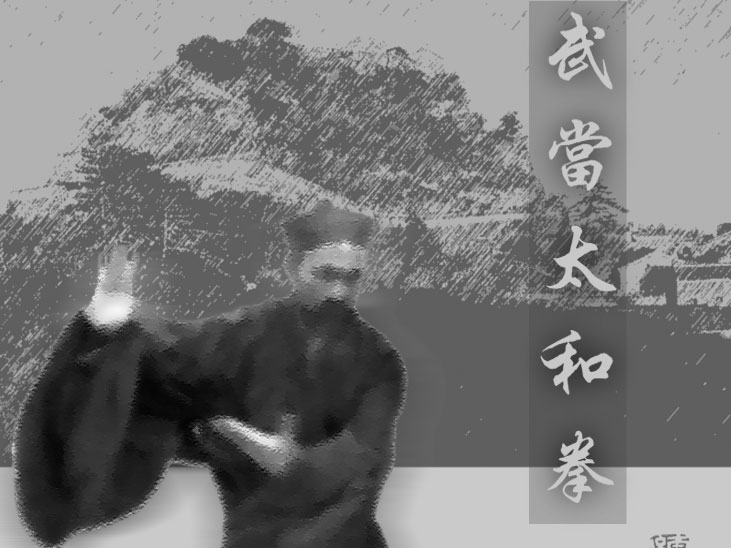
Verified by Zhang Sanfeng with the same name and pronunciation
2022-08-20 23:32:13
The main hall of Taizi Rock
Annotations on the 24 Poems of Jin Dan ⑥
2022-08-20 23:32:13
The tomb statue of Taoist Priest in Wulong Palace
Commentary on the Taiji Elixir Classic: "A Simple Explanation of Dao Yan" ①
2022-08-20 23:32:13
The white tiger in the Dragon and Tiger Hall of Fuzhen Templ...
"Xuan Yao Chapter - Part 1: A Song about Taoist Love.
2022-08-20 23:32:13
The dougong brackets in the main hall of Fuzhen Temple