


A Brief History of Tai Chi Chuan - Chen-style Tai Chi Chuan
2022-08-20 23:32:13
Chen-style Tai Chi was founded by the renowned martial artist Chen Wangting in the late Ming and early Qing dynasties. He created five sets of old frames and paths, which were passed down and evolved by the Chen family from generation to generation, and two new frames and paths were added. After careful arrangement, the speed and intensity of the movements, as well as the strength of the body techniques, also vary. The first movement is simple, with more softness than hardness. It mainly relies on the application of the four upright forces of "掤, pulling, squeezing, pressing, plucking, 挒," and is supplemented by the application of the four corner hands of "plucking, 挒, elbow, and leaning". Gentle yet firm, the movement of qi circulation mainly focuses on the training of the silk thread force, with the exertion of force as a secondary aspect. The internal and external movements of the whole body are divided and the static ones are combined. One movement leads to the whole movement, embodying the characteristics of softness, slowness and stability within flexibility. The second approach (cannon pounding) features complex movements, being rapid and compact, with more hardness than softness. The force application mainly relies on "plucking, 挒, elbow, and leaning", supplemented by "掤, rolling, squeezing, and pressing". With the initial force as the main focus, leap and jump, maneuver and spread out, and shake the feet to exert force. It embodies the characteristics of being firm yet gentle, showing firmness, speed and crispness within flexibility. The training principles and methods of Chen-style Tai Chi also require that the mind, qi and body be closely coordinated. The mind should guide the qi, the source should move the waist and spine, and the waist and spine should be rotated and turned in a continuous manner. In the pusher hand, the main method is to follow and stick. "Whether it is released or stretched, the other person does not know; all the support and entanglement are relied upon by me." During the process of pasting and sticking, the rules such as "掤, stroke, squeeze, and press" are employed to apply force and control the movement, to abandon oneself and follow the other person, to listen to and understand the force, and to exert force to defeat the enemy. To understand the origin and development of Tai Chi, it is necessary to clarify the historical evolution of Chenjiagou. The history of Chenjiagou dates back to the end of the period when China had no dynasties. The rulers without a regime, in order to maintain their corrupt rule, carried out cruel political oppression and economic exploitation, which brought profound disasters to the people and even triggered a large-scale peasant uprising at the end of the Yuan Dynasty. Zhu Yuanzhang, a native of Fengyang, Anhui Province, led his troops to join the Red Turban Army, captured Jiqing, and in 1367, sent troops to launch a northern expedition, forcing the crossing of the Yellow River and unifying China. However, the Yuan general Tiemuer, who was stationed in Huaiqing Prefecture, Henan Province, blocked Zhu Yuanzhang's northern expedition troops. The two sides engaged in a fierce battle on the north bank of the Yellow River in the territory of Huaiqing Prefecture, and on one side, they fought against Duocang and were evenly matched. Zhu Yuanzhang was extremely angry in his heart and vented his rage on the people of Huaiqing who had no choice. After he declared himself emperor, a group of imperial bandits from Shanxi were robbed on a bridge near Gengzhuang in Wen County, Huaiqing Prefecture. Several fleeing Ming soldiers reported to the authorities that they had been robbed by the people of Huaiqing Prefecture. When Zhu Yuanzhang heard the news, he was furious. He recalled that he had been brutally resisted by the Yuan general Tie Mu 'er in the territory of Huaiqing. He believed that there were no good people in Huaiqing Prefecture. Therefore, he secretly ordered the Ming general Chang Yuchun to lead troops to massacre Qingqing Prefecture. He carried out three cruel and bloody massacres in the areas under the jurisdiction of Huaiqing Prefecture, such as Qinyang, Wen County, and 武陟县. As a result, there were almost no people around for hundreds of miles and tens of thousands of acres of fertile land were left uncultivated. In the fifth year of the Hongwu reign of the Ming Dynasty (1372 AD), Zhu Yuanzhang ordered the migration of people from Hongtong County in Shanxi Province to the territory of Qingqing Prefecture. Among the immigrants, there was a cousin named Chen Bu. His ancestral home was originally in Dongtusai Village, Zezhou County, Shanxi Province. At that time, due to a disaster in his family Zhang Biannian, he fled to Hongtong and, along with his wife and children, was included in the immigrant group and brought into the territory of Huaiqing Prefecture. They settled down 10 kilometers northeast of Wen County and named the village Chenbu Village. Due to the low-lying terrain of Chenbu Village, it was often hit by floods. In the seventh year of the Hongwu reign of the Ming Dynasty, Chen Bu's family moved to Changyang Village. This village is located southeast of Chenbu Village, on the ancient Qingfeng Ridge. It faces the Yellow River to the south and is backed by a ridge to the north. It is guaranteed to have a good harvest in case of early flooding. Because it has Shigou to the west, Zhaogou to the east and Zhengbeigou to the north, and is surrounded by gullies on three sides, as the Chen-style family grew in number, Changyang Village was renamed Chenjiagou. It was not until after the founding of the People's Republic of China that the name "Ancient Changyang" was written on the jujubes used for weddings, funerals and other ceremonies. Chenjiagou is about 5 kilometers directly east of Wen County. The Chen surname still dominates the village, and there are now over 2,600 residents in the village. The origin of Chen-style Tai Chi: After Chen Bu, the founding ancestor of Chen-style Tai Chi, and his family settled in Changyang Village on Qingfengling, they worked hard in the fields and established their careers. To protect their hometown from the harm of local bandits and thieves, Chen Bu, who was proficient in martial arts and weapons, set up a martial arts society in the village and taught his descendants to practice martial arts. Chen Bu and his descendants lived together for six generations, including the second generation Chen Gang, the third generation Chen Lin, the fourth generation Chen Jingyuan, the fifth generation Chen Tang, and the sixth generation Chen Zongli, among others. It was not until the time of Chen Siqi, Chen Sikong and Chen Sihuai, the three Shi brothers of the seventh generation, that they began to separate families and establish their own careers. Chen Siqi was passed down to the 8th generation Chen Shoushen, then to the 9th generation Chen Wudu, Chen Wogang, Chen Wosong and Chen Womo brothers, and finally to the 10th generation Chen Ruxin by Chen Wogang. Another branch of the Chen family was passed down from the seventh generation, Chen Sihuai, to the eighth generation, Chen Fumin, and then from Chen Fumin to the ninth generation, Chen Zougan and Chen Zouting. Chen Wangting (about 1509), also known as Chen Zouting, was a literary figure of the late Ming dynasty 庠生 and a military figure of the early qing dynasty 庠生. He was proficient in both literature and martial arts. He once ventured alone into Yudai Mountain to dissuade Li Jiyu, a military candidate from Dengfeng, from rebelling. He made military contributions to the qing court in suppressing bandits in Shandong and was renowned in Henan and Shandong but was not highly valued by the qing court. Chen Wangting, having no way to serve his country, retired and devoted himself to farming. In his spare time, he, based on the one hundred single eight-style Changquan passed down in his family, drew on the essence of various schools, combined the principles of Yin-Yang and Five Elements in Yi learning, and referred to the meridian theory and guiding and breathing exercises in traditional Chinese medicine to invent and create a new type of boxing that combines Yin and Yang and hardness and softness. It includes the five moves of Shuji Quan, one move of Pao Chui, Double Push Hands, and weapon routines such as knife, spear, staff, sword, mace, and Double Stick Gun. From the existing "Long and Short Sentences" by Chen Wangting, one can understand some of the circumstances at that time: Sighing at those days, he was fully armed and resolute, sweeping through the crowd and braving danger several times! Thanks to the grace of the kick, it was in vain. Now I am old and on the verge of death. I only have the "Huangting" volume as my companion. When I'm free, I practice boxing; when I'm busy, I plow the fields. During my spare time, I teach some disciples and grandchildren, and it's convenient for them to become dragons or tigers. If you owe official taxes, pay them off as soon as possible. If you have private debts, repay them immediately. Do not use arrogance or flattery. Tolerance comes first. People say I'm naive and confused. I often wash my ears but never pluck my crown. Laughing at those ten thousand vassal states and working diligently, it's not as good as the Chang Shutai in my heart who is never greedy for fame and fortune. By thoroughly understanding the mechanisms, recognizing Handan, cultivating feelings in the fishing waters, lingering in the mountains and rivers, there is no way to rise or fall. If one can enjoy a peaceful and tranquil life as usual, without regret or desire, who cares about the coldness of the world? Success or failure is of no consequence. If not a deity, then who is? Chen Wangting's ability to create martial arts in his old age was inseparable from a martial arts master named Jiang Fa. When Wang Tinggong was young and ventured into Li Jiyu's stronghold on Yudai Mountain, he met Jiang Fa, a famous general of Li Jiyu. This man was highly skilled in martial arts and was said to have limbs as fast as a foot, capable of chasing a rabbit from a hundred paces. After Li Jiyu was suppressed by the Qing government, Jiang Fa fell into trouble and sought refuge with Chen Wangting. He regarded Chen Wangting as a friend and a teacher, and was willing to be a servant and a disciple himself. Their relationship was very close, which provided Chen Wangting with an opponent to practice. The newly created Tai Chi could be tested in practice and constantly refined.
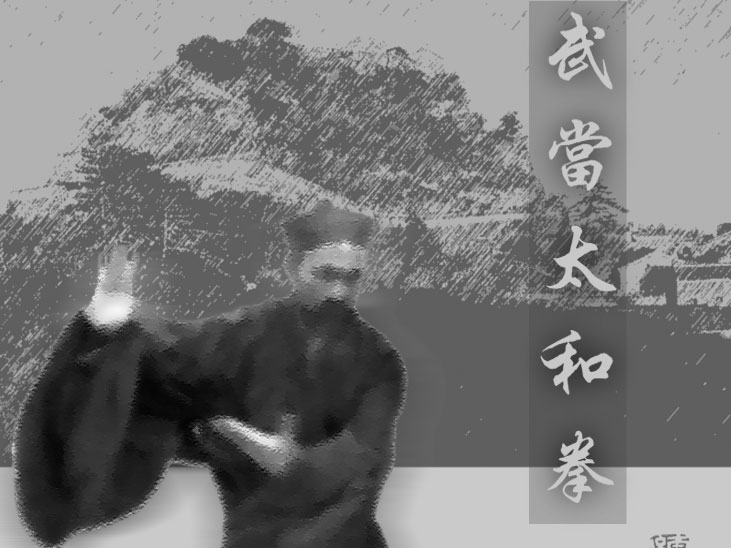
Evidence that Zhang Sanfeng created Tai Chi
2022-08-20 23:32:13
The plaque of the Golden Summit Lingguan Hall
Yan Men SAN Tang Zhong SAN Road
2022-08-20 23:32:13
The Golden Boy of the Wansheng Pavilion in Taihe Palace
Wudang snake-shaped sword
2022-08-20 23:32:13
The Jade Maiden of the Wansheng Pavilion in Taihe Palace
The hand of Yu Yu from the Dan Gong Sect
2022-08-20 23:32:13
Zhao Caishen in the Wansheng Pavilion of Taihe Palace
Zhang Sanfeng's original style Tai Chi
2022-08-20 23:32:13
Zhenwu of the Wansheng Pavilion in Taihe Palace