


A Study on the Inner Strength of Wudang Pure Yang Quan
2022-08-20 23:32:13
Author: Wang Zhaohui, Wudang Pure Yang Quan Neigong. In ancient Taoism, it was called "Eight Steps Pure". My teacher, Mr. Liu Lihang, learned it from Master Wang Zhidao, the 21st generation master of the Longmen School of the Quanzhen Sect, at Wudang Palace in 1927. Mr. Liu only followed his teacher's instructions and cultivated himself. Now over a hundred years old, he still has sharp hearing and vision, and walks briskly, deeply grasping the essence of Pure Yang Inner Power. In the late 1960s, at Snake Mountain in Wuchang, I was fortunate enough to have the opportunity to learn the Pure Yang Quan and the secret teachings of Feng Gong from Master Liu, and I benefited a lot from it. Pure Yang Inner Strength is still one of the branches of the Wudang Inner Strength Forest. I think it is hard to obtain and cherish it very much. I often feel self-satisfied. I cannot neglect my studies for a single day. At the time of the International Wudang Quan Friendship Conference, I have spent thirty years on research. Although it is difficult to grasp its profound meaning, I still dare to write this humble article, waiting for the evaluation of various schools of thought. The Wudang Pure Yang Internal Kung Fu uses the method of regulating breathing to cultivate the qi and form the "Dantian" function, which nourishes the five internal organs and reaches the limbs, bones, tendons, skin and hair, thereby achieving the functions and effects exerted by the internal qi spirit. Pure Yang Internal Kung Fu: "Maintain health through movement and stillness, and defend against enemies through hardness and softness." Thus, it distinguishes between internal and external, which is actually the subtle connotation of internal kung fu. It is a metaphor for the levels of its practice and the scope of its application. The method lies in cultivating the meridians, acupoints and meridians. Internally, it uses the mysterious mechanism of the spiritual root forming elixirs to guide the meridians, circulate the meridians, nourish the five internal organs and moisten the six bowels, so as to achieve the interaction of essence and form, the harmony of qi and form, and the interdependence of spirit and form. The external elixir qi is enriched to circulate the skin, and the latent spirit source penetrates the limbs, tendons, bones and skin. When ordered, it is carried out; when ordered, it is stopped. The qi flows within to nourish the body. When the inner self is refined, the outer self will also be refined. When the external cultivation is accomplished, the internal has already entered the inner scene. Here, the inside and outside are integrated as one, Yin and Yang merge into one, and hardness and softness are contained within one. All the secrets of the inside and outside are unified in the cultivation of the Pure Yang Internal Power Fist. In Volume 91 of "Yunji Qiqian", "The Nine Categories of Names and Numbers - Thirteen Nothingness", it is stated: "Breathe in harmony, and follow the body slowly." In "Mozi's Method of Holding One's Breath and Regulating Qi", it is stated: "If one desires to regulate qi, one must first calm oneself and harmonize one's qi, without contention with it." The secret of internal cultivation of Wudang Pure Yang Quan states: "It governs the mechanism of harmony and smoothness, regulates the Yin and Yang qi into the abdomen, and guides the dynamic form and the static form, aiming at the Yin within the Yang." This internal practice secret basically expounds the essence of cultivating energy within and explains the significant relationship among breathing, physical form and consciousness. The so-called "the mechanism of harmony and smoothness" refers to the practice of breathing with gentle, slow and deep techniques. This kind of balanced and harmonious qi is widely used in various static exercises. However, seeking the mechanism of harmony and smoothness in movement clearly has a profound inner intention and is beyond the reach of static exercises. This practice of breathing deeply, precisely and deeply into the abdomen is like "strolling in a leisurely courtyard" slowly following, although it appears dynamic, it leads to a state of stillness. However, when one is gentle and calm, the mind, energy and form are unified in application. The essence of moderation lies in the coordination of slowness, softness, relaxation, stillness and natural forms. It is an important entry point for internal cultivation. Under this principle, there will be a good state of practice and natural procedural responses, thereby gradually realizing the inner scenes that intentionally or unintentionally control consciousness, and entering the advanced realm of intention within, which is called the advanced realm of "dynamic form and static nature", to form a natural effect. When one reaches this state of practice, the essence is within it. The essence and form follow each other, and the qi and form are unified. The qi is guided to flow through the meridians, and the qi flows throughout the body, both inside and out, with all the effects contained within. Thus, in the practice of boxing, the principle of the refined and appropriate black crane spreading its wings to fly, the chest being contained and the back qi being drawn to sink the elixir was emphasized. After long-term practice, a sudden feeling of being on the verge of immortality emerged. When the practice method reaches such a state, it is obviously the result of correct application. The inevitable outcome is that the internal qi flows smoothly through all the meridians, reaches the five internal organs and six viscera, passes through the tips of each joint of the limbs, and connects all the bones and muscles. Through the transportation and conduction of the qi in the meridians, nutrients enhance the overall metabolism of the human body, thereby achieving the effect of health preservation and longevity. Another important reason for this effect is the way the Yin and Yang energies enter the abdomen. The so-called entry of Yin and Yang qi into the abdomen can be imagined as the function of the qi entering the abdomen (dantian), as well as the crucial impact of the foundation laid by the accumulation of qi through the sedimentation of the Dan on the cultivation of internal energy. On the surface, the two qi of Yin and Yang seem to be the method of deep breathing. In fact, it combines the inhaled qi (acquired qi) with the inherent qi within the body (innate primordial qi). When the qi that has not yet been synthesized in the abdomen is not yet the primordial qi, the waste and turbid qi within the body is first expelled. When the turbid qi is exhaled, the second inhaled qi sinks down to the abdomen, pushing down the first inhaled qi, so that the first inhaled qi officially combines with the primordial qi to form "the primordial qi", that is, "the pure Yang Qi" or "the true primordial qi", thereby generating a cycle, growth and promotion The exchange mechanism known as "the postnatal nourishes the innate, and the innate promotes the postnatal" is thus called "Yin and Yang". The "two qi" is a collective term for the innate qi and the postnatal qi. Long-term internal energy training, especially the application of breathing and sweating, has strengthened the function of in-depth exchange of Yin and Yang qi, and explored potential energy to nourish the five internal organs. Then, the essence of the internal organs is condensed in the dantian through Yin and Yang qi, and the condensed essence in the dantian is then provided to the whole body, creating an endless cycle of growth and development. The correct way of practicing martial arts is to follow the principle of going with the flow and form an inevitable effect of practicing martial arts. However, before the practice has entered the path of enlightenment or at the beginning of it, when it cannot be naturally applied, one must not force it or act blindly. This may lead to the inability of the mind, energy and form to be highly concentrated and coordinated, and the practitioner cannot naturally enter the state of enlightenment, resulting in extremism, weightlessness and mental tension, and adverse reactions. But this is not a drawback of the practice method. It is rather due to the fact that the intention, energy and form have not yet converged. Practice has taught us that if practitioners try to calm their minds as much as possible, relax their bodies and spirits, and naturally focus on the flow of qi, guiding it smoothly to the lower part of the body, they will regain smooth qi and a stable spirit, with a natural state of practice and no harm. As long as the learner follows the natural course, such an phenomenon will never occur. Follow the natural course both internally and externally, and practice with ease, softness, relaxation and stillness. The key lies in the "gentle breath of Yin", which is the secret of internal cultivation. The important content of "gentle breath of Yin" is not to use brute force, not to produce coarse breath, and to ensure the complete coordination of breathing and movement. At this point, one can gradually enter the realm of natural practice and reach the state of intent within it. If a learner wants to achieve the state of doing as they please in the room, they need to have a comprehensive understanding and explore forward in the long-term practice. The introverted cultivation method is a part of the Pure Yang Internal Energy Comprehensive Cultivation. It focuses on introverted cultivation and can also have an external strengthening effect to stimulate the internal energy to reach the skin in practice. To further expand and enhance the effect of this latent internal energy, so as to form an opposing resistance. Then the Shi Xin uses the "masculine energy" to enhance the enriching effect of the internal energy power. "Masculine vigor" and "feminine grace". They are two opposing breathing methods in the internal cultivation of Pure Yang Quan, aiming to achieve the key cultivation goals of each aspect, and have the corresponding cultivation reactions and effects to the fullest extent. There is also a unified, coordinated, interdependent and mutually beneficial relationship between the two, because from the inside to the outside, from the outside to the inside, Yin and Yang are rooted in each other, hardness and softness coexist, and internal nourishment and external defense are precisely the subtle manifestation and practical application of pure Yang internal power. The essence of the outward-oriented practice method still lies in "the key to harmony and smoothness, regulating the essence of Yin and Yang qi entering the abdomen, maintaining a dynamic form and a static nature, aiming at the Yang within the Yin." It refers to inhaling slowly, gently and deeply. During the inhalation, the body should remain relaxed, natural, the movements smooth and the mind calm. When inhaling deep into the abdomen, it should be like "strolling leisurely in a courtyard", or like the posture of a black crane taking flight, with the spirit leading the mind as if it were floating around, so that the whole body is in a state of ultimate softness and relaxation. Exhalation is also carried out slowly and deeply, enriching the pulsating effect of the qi in the dantian. The tightening sensation of the whole body centered on the dantian enables the dantian to be fully filled with qi and strength under the combined effect of the mind, qi, force and form. At this point, when the movement force is exerted, the qi in the dantian overflows and surges to the mobilized parts, ascending when commanded, descending when commanded, leaving to the left when commanded, and reaching to the right when commanded. All originate from the internal qi condensed in the dantian, resulting from the cultivation of the mind. The result is first based on the practice of breathing as the foundation for entry. When the Pure Yang Internal Power is cultivated to a profound extent, upon exhaling, one feels an incomparable firmness throughout the body, with the internal energy flowing through the entire body. The supreme way is to apply the mental method, which can make the qi and blood flow internally through the five internal organs and six viscera, in the middle through the hundred meridians, and externally through the skin, muscles and bones. The cultivation of the second internal power must emphasize the relationship among intention, qi and form, which is an important factor for success. Of course, the unity and coordination of the mind, qi and form are not only referred to in "dynamic exercises". In the cultivation of "stillness and movement", this principle of unity should also be followed. Because movement and stillness are merely different in the form of movement, their essence is to unify and coordinate the mind and qi with the form (the difference between movement and posture) under the natural purpose, thereby achieving the unity of the mind, body and breath. So as to achieve the effect of practicing martial arts. The so-called dynamic exercise is a method of achieving effects by coordinating the movements of each joint of the limbs under the guidance of the mind and qi. Stillness, on the other hand, is a method where all parts of the body remain still, and one can sit, stand or lie down in a proper posture, achieving the desired effect through a relaxed and natural physical form. The two are similar in essence, but the principle of this method that active auxiliary stillness is the practice of cultivation indicates that stillness is only for nourishment and does not have the function of dynamic cultivation for comprehensive cultivation. Although the two have the same effect, in comparison, there are differences in static practice. This article aims to expound on movement and stillness. The reason for this is the process of pure Yang internal Energy actively complementing stillness and running through the entire method. Therefore, it is discussed here. Among the three elements of intention, energy and form, it is the intention that dominates. As the saying goes, "When one moves, the intention comes first." The intention is governed by the heart. In the "Ling Shu: Ben Shen Chapter", it is said: "Therefore, what governs things is called the mind." It should be noted that the external activities and mental activities of the human body are carried out by the heart. Of course, the heart governs the spirit and blood, and the spirit is one manifestation of mental activities. However, the subtle relationship between the mind guiding the qi and the qi promoting the blood flow in a unified form of human body activities is difficult to explain in one stroke. But it must be recognized that the mind guides the flow of qi and also guides the movement of the form. The three elements should be synchronized, unified and coordinated into the method; otherwise, the purpose of the mind and qi following each other and the tranquil nature guiding to unblock the meridians cannot be achieved. It should be emphasized that intention, energy and form are all essential elements for the human body in life, because the spirit, thought and action of the human body form an eternal unity, which is an absolutely inseparable manifestation of human life activities. At all times, a person's actions and words are under the normal control of consciousness. This is the combination of intention, qi and form. However, this combination has a different instinctive significance from the combination of internal power cultivation. The coarse intention, energy and form are not the same as those produced during the cultivation of inner strength. The mind, qi and form in the state of work are a method of transforming the objective world with the subjective. To be precise, it is about transforming oneself, exercising oneself, cultivating oneself, and using specific and correct human methods to transform the internal structure of the human body, thereby developing in a healthy direction. However, such specific meanings, energies and forms are the result of evolution and development based on the coarse meanings, energies and forms. Only in this way can potential energy effects be obtained in the cultivation of internal power. Practitioners should fully understand this to facilitate the correct cultivation of internal power. The cultivation of the three essences, qi and spirit is the essence of Pure Yang Internal Power boxing practice. This is related to the true knowledge and effect that a practitioner should have in internal power cultivation. No matter from which aspect internal power cultivation is started, if the cultivation results of essence, qi and spirit are not achieved, other so-called effects are out of the question. Of course, the human body inherently possesses the foundation of essence, energy and spirit, which naturally sustains human life activities. However, this cannot tap into one's own latent energy to fully exert and utilize it. Therefore, by cultivating inner strength from the perspective of subjective initiative, one can tap into potential energy sources, thereby providing sufficient energy for regular consumption and reserve surplus energy, achieving extraordinary functions. From the records of the Taoist classics throughout history regarding the cultivation of inner strength, it can be seen that great emphasis has been placed on the refinement of essence, energy and spirit. In the martial arts world, the practitioners of health preservation throughout history have also attached great importance to the cultivation of essence, energy and spirit, regarding them as the three treasures of life. They consider the three treasures of heaven - the sun, the moon and the stars, the three treasures of earth - water, fire and wind, and the three treasures of human beings - essence, energy and spirit - equally important and collectively refer to them as the symbols of heaven, earth and human beings. Explain the significant position that essence, qi and spirit occupy in the human body and the urgent need to cultivate and nourish them. In terms of actual practice, it is a combination of cultivation and nurturing. It is a process of practicing first and then nurturing. Cultivation is a method, a method of combining the mind, qi and form for cultivation. Nourishment is the good benefits and results achieved under the premise of practice, such as a peaceful mind, a comfortable and refreshing feeling, and vigorous qi and blood. A good state of function can generate sufficient energy to supply the entire body and the five internal organs, thereby achieving the purpose of accumulating essence, gathering qi and perfecting the spirit. Accumulating essence can nourish qi, and nourishing qi can complete the spirit. Therefore, accumulating essence, nourishing essence and protecting essence are the contents of refining essence. Only by keeping it sufficient and not letting it leak out can the practitioners achieve the right path. The term "precision" has two meanings: broad and narrow. In a broad sense, essence is also known as acquired essence. This essence is the nutrients absorbed by the human body through the transformation and transportation of food and drink by the spleen and stomach. It is also called "the essence of water and grains", so the spleen is said to be the "source of acquired production and transformation". These refined substances are then transformed into blood and body fluids to nourish and moisten the five internal organs, six viscera, and the three jiao. In a narrow sense, essence, also known as the essence that carries heaven, is the essence inherited from one's parents before heaven. It is stored in the kidneys and is the fundamental substance that maintains the growth, reproduction and reproductive functions of the human body. Therefore, there is a saying that the kidneys are the foundation of the innate constitution. The essence acquired after birth and the essence innate after birth are collectively referred to as the essence of the human body, that is, the essence referred to as essence, qi and spirit. They converge and are stored in the kidneys, constantly promoting and growing with each other, forming the basic substances that sustain life activities in the human body. During the Five Dynasties period, Tao Hongjing of the Liang Dynasty pointed out in his "Record of Nourishing Nature and Prolonging Life" that "the way of health preservation is to take essence as the whole. If it is given, one will be born; if it is retained, one will be born." From this, it can be seen how important it is to refine, nourish, preserve and restrain the essence. When essence is abundant, it is transformed into qi, which is the result of storage by the kidneys. Part of it is the result of the transformation of essence and qi from food and water and the fusion of oxygen absorbed by the lungs. Qi (that is, the true essence qi), when it reaches the internal organs, becomes the qi of the internal organs. The flow of meridians is the qi of the meridians. The qi of the three jiao is the qi of the three jiao, thus it is divided into the theories of Yuan, Zong Ying and Wei Qi, which form the material basis of human life activities. Inner strength cultivation is to use the function of breathing to enhance the oxygen-taking capacity of the lungs, mobilize the potential of the alveoli, and obtain sufficient oxygen for absorption. Furthermore, through the cultivation of qi, the five internal organs are fully regulated to enhance the function of metabolism, brewing sufficient "essence of water and grains" to transform into qi, which benefits the human body in a cycle. The Ming Dynasty medical expert Di Jingyue wrote "The Complete Works of Jingyue", in which it is stated: "The life of a person depends entirely on this qi", referring to qi as the fifth nature of human life, which shows the close relationship between qi and human life. God is the highest form of human life activities, the commander, and the sum of essence and qi. Gods also have "broad and narrow" distinctions. In a broad sense, all external activities of the human body, as well as expressions such as actions and language, all belong to the broad sense of gods. In a narrow sense, "god" refers to the spirit and thought, the spirit hidden in the heart. As stated in the "Ling Shu: Great Confusion Chapter", "The heart is the abode of the spirit," indicating that the heart governs the spirit. However, the activities of the spirit are mainly based on blood as the material foundation, which shows that the heart also has the function of governing the blood vessels. The "Ling Shu: Ying Sheng Hui Chapter" states, "Blood is the spirit." Therefore, when a person is energetic and their qi and blood are in harmony, they will be full of spirit, have a clear mind and sharp thinking. Externally, it is manifested in the form; Internally, it is manifested in the mood and is the concentrated embodiment of God. In the "Suwen: Theory of Shifting Emotions and Changing Qi", it is stated: "Those who grasp the spirit will thrive, while those who lose it will perish." If qi is the primary nature of human life, then spirit is the manifestation of human life, that is, the relationship between nature and destiny. From this, it can be seen that essence, energy and spirit hold a significant position in the human body, which has led to the fact that throughout history, practitioners of martial arts, health preservation experts, as well as Confucianism, Buddhism and Taoism, have placed the cultivation of essence, energy and spirit at the top of all martial arts. Therefore, in the cultivation of the entire method, it is specifically reflected in the cultivation of the five elements of the heart, liver, spleen, lung and kidney. The subtleties of the five internal organs are cultivated at the bottom to form the roots of the five internal organs, at the middle to nourish the spirit of the five internal organs, and at the top to combine the roots to form the spirit. This is called abundant essence, full qi, and overflowing spirit. However, abundant essence lies in accumulation, full qi in gathering, and overflowing spirit in nourishment. The Four Pure Yang Internal Skills, when practiced to a profound extent, can bring out the latent power of the human body and exert the due effects and functions. This is the unique power condensed through the cultivation of inner strength, which is usually called "power". Power is not an ordinary matter of strength. The so-called strength refers to the power held by those who have not practiced martial arts. This is the physical strength that everyone possesses, and this kind of strength cannot exceed the limits of one's own constitution. However, there are also some people who are born with an extraordinary strength. But no matter how you put it, this kind of strength belongs to the category of physical strength. This kind of force is applied in the normal life of the human body. When compared with martial arts, it is called "brute force" or "clumsy force", which cannot be compared with "martial arts power". Power can be roughly divided into two types. The first one is a kind of force formed through martial arts movements and applied in combination with techniques. The force applied in martial arts postures and the force applied in techniques often interact with each other, which is the result of long-term practice and application into the method. This is called "power", also known as "skillful force" and "skillful force". Therefore, martial arts practitioners often say "fast against slow, skillful against clumsy", meaning fast hands against slow hands and skillful forces against clumsy forces. Another interpretation of "power" is the result of long-term internal cultivation, the result of internal qi spreading throughout the body through meridians, the result of the five internal qi of the heart, liver, spleen, lungs and kidneys spreading throughout the body through meridians, and the result of the essence (micro-essence) gathered by the five internal organs of the heart, liver, spleen, lungs and kidneys transforming into the dantian and forming dantian qi, which then drives the bones of the four limbs to concentrate and form a force. This kind of force is called "internal force". However, when applied to external combat techniques, it is called "consolidating the force". This "consolidating the force" means: "The qi originates from the dantian, runs through the two waist, penetrates each joint, and is concentrated at one point." Wudang Pure Yang Boxing Style particularly emphasizes the exertion of this kind of internal force. Like other Wudang internal martial arts styles, it also has the characteristic of activating internal force. Through long-term and persistent practice, the practitioner will gradually recognize and understand the refined power condensed by this inner strength, which is precisely what the latter refers to as "inner strength" and "integrated force". It is the result of the application of qi. This "inner strength" has its specific place of exertion. By exerting force through the flow of qi, the internal qi spreads throughout the body, forming a feedback resistance for self-defense. The overall force, also known as the internal force, is formed by the rapid concentration of the soft and flexible energy throughout the body, which then bursts outwardly to achieve the combat effect and function. The force between these two is precisely the power exerted by the internal power. To sum up, the power generated by internal cultivation actually has a wonderful meaning embedded within it. When it functions within the human body, it can protect the body and resist the attack of external forces. It is called "preventing the outside from the inside", which is characterized by a flexible and flexible appearance while being strong and solid inside. The exertion of internal strength within the human body from the inside out serves to attack the opponent. This is the principle of taking the outside out from the inside, that is, the most gentle form, storing the energy within, and being ready to burst forth at any moment. There is hardness within softness, which is the saying of generating hardness from the extreme. The formation of the aforementioned skills is not something that can be achieved in a year or two; rather, it is the fruit of long-term study.
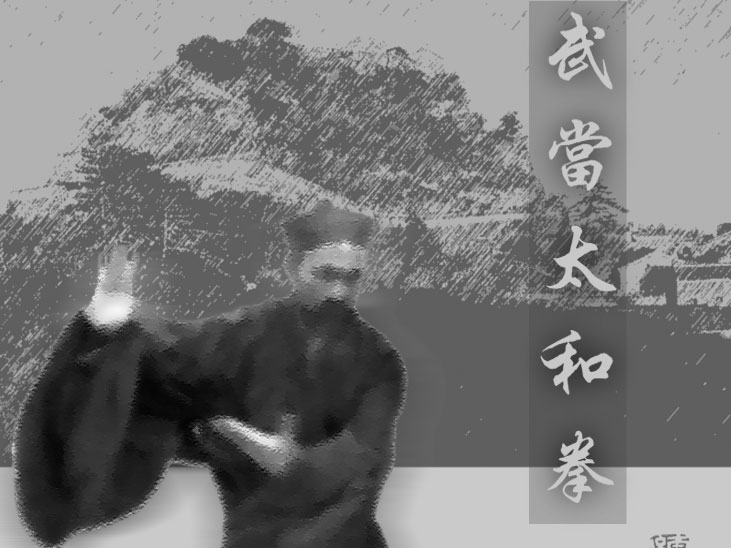
Evidence that Zhang Sanfeng created Tai Chi
2022-08-20 23:32:13
The plaque of the Golden Summit Lingguan Hall
Yan Men SAN Tang Zhong SAN Road
2022-08-20 23:32:13
The Golden Boy of the Wansheng Pavilion in Taihe Palace
Wudang snake-shaped sword
2022-08-20 23:32:13
The Jade Maiden of the Wansheng Pavilion in Taihe Palace
The hand of Yu Yu from the Dan Gong Sect
2022-08-20 23:32:13
Zhao Caishen in the Wansheng Pavilion of Taihe Palace
Zhang Sanfeng's original style Tai Chi
2022-08-20 23:32:13
Zhenwu of the Wansheng Pavilion in Taihe Palace