


Zhang Sanfeng's native place is bian
2022-08-20 23:32:13
There are various records in the literature about Zhang Sanfeng's native place, making it hard to follow. Based on the review and verification of the literature, as well as the comparison, investigation and research, the following discussion is made, which we believe is in line with historical facts. The earliest proposal was made in the second year of Xuande (1427) in the "Record of Zhang Shenshen's Ancestral Hall" on Heming Mountain. Zhang Sanfeng said, "During the Song Dynasty, I passed the imperial examination and traveled to the capital. After the Song Dynasty fell, I was captured by the Jin and taken to the Hu region, and thus became a Shatuo." Later generations followed his account in local Chronicles such as the "Jianzhou Annals" during the Qianlong period, as well as in the "Shen Qian" of King Hui of Shu (who died in 1493 in the sixth year of Hongzhi), the great-grandson of King Xian of Shu Zhu Chunchun, the son of King Ding Yougai, and the "Praise of Zhang Sanfeng's Portrait" which reads, "He moved from Zhongshi to Shuofang in the past." Shuofang generally refers to the north, both inside and outside the Great Wall. The phrase "Shatuo" mentioned in the inscription undoubtedly refers to the north, although it does not specify the region as "Yizhou", it still seems somewhat close. When the Northern Emperor and his ministers suffered from the downfall of their country, many of them moved to Northeast China, with only a few residing in Shanxi and Hebei. Zhang Sanfeng's native place, "Shatuo", has its historical roots. Zhang Sanfeng was from Baoji and lived at the Jintai Temple in Baoji. Zhang Yonghuan (written as Han in the "Ruzhou Annals") recognized the "Record of Zhang Sanfeng's Relics", and the stele reads: "True Immortal, from Baoji, Shaanxi Province." In the same way, in the ninth year of the Chenghua reign (1473), Yao Fu wrote "Qingxi Xiaobi", in the eighth year of the Hongzhi reign (1495), Huang Yu wrote "Shuanghuai Sui Chao", Lu Shen wrote "Yutang Manbi", and Shen Defu wrote "Wanli Yehuo Bian", all of which stated: "One person was from Baoji." In the 38th year of the Wanli reign (1610), Wang Qi compiled the "Compilation of Miscellaneous Histories" and also stated: "From Baoji." Wang Daoheng and feng Congwu compiled the "General Annals of Shaanxi." Tan Yu wrote "Zao Lin Za 俎" and stated: "According to his book, it is said: from baoji." In the 18th year of the Shunzhi reign (1661), Zhang Junzhe and others compiled the "General Annals of Shaanxi", and Tian Wenjing and others compiled the "General Annals of Henan", stating: "Some people are from Baoji." Deng Mengqin and others compiled the "Annals of Baoji County", and some local Chronicles of the Qing Dynasty also stated that Zhang Sanfeng was from Baoji. This will not be fully recorded here. The above is the origin of the Baoji theory. Zhang Sanfeng was from Yizhou. Huang Yu (1425-1497) wrote "Shuanghuai Sui Chao", which includes "The Two Immortals of the East Sea". "Liu Xun from the north said that there were two immortals near the East Sea. One of them was Zhang Sanfeng, a native of Yizhou, Liaodong." Other works holding the same view include Wang Qi's "Comprehensive Examination of the Continuation of Literature", Lang Ying's "Continuation of the Seventh Revision", and Fu Weilin's "History of the Ming Dynasty", among others. In fact, it was named after the location where the Wei Zhi was later relocated. In the "Geography" section of the "History of the Ming Dynasty", "The Houtun Wei of Guangning was placed in the old Yizhou in the first month of the 26th year of the Hongwu reign." In the eighth year of Yongle (1410), the administrative center was moved to the Weicheng of Yizhou. Or the sounds of "Yi Yi" and "Yi Yi" are similar, and they might even be borrowed from each other. Zhang Sanfeng was from Liaoyang. Du Mu (1458-1525) wrote "Famous Records of Mountain Tours". On Wangwu Mountain, it was written: "On the third day of the tenth lunar month in the middle of winter of the year Guiyou (1513, the eighth year of the Zhengde reign), I arrived at Jiyuan." ... To the Balcony Palace, which is located at the southern foot of the royal house. ... Go up to the Purple Micro Palace. ... There was a Taoist priest named Chen Xingchang who knew that he was from my hometown and invited him to drink. Xing Chang used to live in the Natural Hermitage on Wudang Mountain. He is now 78 years old and his spirit is fresh and vigorous, as if he had attained the Tao. He has moved to this mountain for twenty years. His teachings were passed down by the immortal Zhang Sanfeng. I would like to say: Master Zhang's name was Xuanxuan, a native of Liaoyang, and he styled himself Sanfeng Dunsou. Because of his title, people first called him Sanfeng, but few knew his name. During the orthodox period, he still existed, but later no one knew where he came from. I said: It is said that Sanfeng was from Baoji in Shaanxi Province, but you say he was from Liaoyang. Which one is correct? Xing Chang said: "Baoji, Zhang Shi Yi once lived in it. It is not from that place." The "Record of a Tour to a Famous Mountain" has a preface by Wang Ao in the 15th year of the Zhengde reign (1520) at the beginning and a postscript at the end, which reads "The Inscription of Hai Ling Chu Zi" in the 13th year of the Zhengde reign. Liaoyang was the governor of Liaoyang Prefecture during the Yuan Dynasty. The Liaoyang Road governed Yizhou and Yizhou. During the Ming Dynasty, it was the Commander-in-Chief of Liaodong, with its administrative center located in Liaoyang. The Houtun Guard of Guangning was a guard under the jurisdiction of the Liaodong Commandery. In Zhang Sanfeng's "Cloud and Water Collection", there are four poems, namely "Climbing Huabiao Mountain", "Touring the Mountains of Liaoyang" and "Jicui Village of Liaoyang". Facts show that Zhang Sanfeng did indeed visit Yang, which is beyond doubt. And the "Compilation of Miscellaneous Histories" also states: "Some say he was from Liaoyang." Zhang Sanfeng was from Liaodong. The "Shuanghuai Sui Chao" states: "Some say he was from Liaodong." The following documents all claim to be from Liaodong. For instance, during the Wanli period, Xu Xuemo compiled the "General Annals of Huguang", Hu Jia compiled the "Annals of Xiangyang Prefecture", Jiao Hong compiled the "Xianzheng Lu", Tian Wenjing and others compiled the "General Annals of Henan", and Jia Hanfu and others compiled the "General Annals of Shaanxi", etc. Liaodong can generally refer to the three northeastern provinces, of course, Yizhou is also included. Zhang Sanfeng was from Yizhou. Zheng Xiao (1499-1566) wrote in "Jinyan" : "Zhang Sanfeng was from Yizhou, Liaodong." Lu Xixing's "Miscellaneous Notes on Huaihai" states: "Sanfeng Laoxian is the descendant of the dragon and tiger. His ancestor, Yuxian Gong, was both learned and capable of divination. He moved his family to Yizhou of the Jin Dynasty." Yang Yi wrote in "Gao Po Yi Zuan" : "Zhang Sanfeng was from Yizhou, Liaodong." ... "Yu Shu Sanfeng Shi is an old biography in the 'Yizhou Annals'." " Wang Shizhen and Wang Yunpeng wrote the "Complete Biographies of Immortals", Hong Zicheng wrote the "Xiaoyao Xu Jing", and Shen Defu wrote the "Wanli Yehuo Bian". It is also stated that Sanfeng was from Yizhou, Liaodong. He Qiaoyuan wrote "Mingshan Zang" and Tan qian wrote "Zao Lin Za 俎", stating: "according to his writings: Zhang Sanfeng was from Yizhou, liaodong." Zhang Junzhe compiled the "Xiangfu County Annals" and stated: "He was from Yizhou." And the following documents Wang Jianzhang wrote the "History of Successive Immortals", Wang Yuanxiu compiled the "Annals of Minzhou", during the Yongzheng period, Mai Zhu and Xia Lishu compiled the "General Annals of Huguang", Wang Hongxu wrote the "Draft History of the Ming Dynasty", and Wang Xiling wrote it The "Biography of Mr. Zhang Sanfeng", the "History of the Ming Dynasty" compiled by Zhang Qianyu and others, the "General Annals of Gansu" compiled by Xu Rong and Li Di, the "Brief Account of Mount Taihe" compiled by Wang Gai, the "Annals of Baxian" compiled by Wang Erjian and Wang Shiyuan, the "Annals of Tai 'an" compiled by Xiao Lulin and Li Weixi, the "General Annals of Shengjing" compiled by A GUI and Liu Jinzhi, and the "Annals of Baoji" compiled by Deng Mengqin all refer to Zhang Sanfeng as a native of Yizhou. In conclusion, Yizhou later held a dominant position in the literature, which might have been influenced by the "History of the Ming Dynasty". Yizhou is now Zhangwu County, Liaoning Province. Zhang Sanfeng was from Min County. During the Wanli period, Guo Zizhang (1542-1618) wrote "Qian Ji", stating: "He was from Min County." The books that hold the same view are as follows; Tan Qian's "Zao Lin Za 俎", Tian Wen's "Gu Huan Tang Ji", Wei Jiji and Xue Zaide's compilation of "Guizhou General Annals" in the 36th year of the Kangxi reign (1697), Li Zhaoxi and Mo Youzhi's "Qian Shi Ji Lue" in the 12th year of the tongzhi reign (1873), and the anonymous "Biography of Immortal Master Zhang Sanfeng" all strongly support this theory. Zhang Sanfeng was from Guangzhou. Guo Zizhang's "Qian Ji" states: "He was also said to be from Guangzhou." There are also "Zao Lin Za 俎" and "Qian Shi ji lue". However, there is no such record in the local Chronicles of Guangdong. Perhaps it was not thoroughly investigated. For now, it remains in doubt. Zhang Sanfeng was from Tianmu. In the seventh year of the Yongzheng reign (1729), Huang Tinggui and Zhang Jinsheng compiled the "General Annals of Sichuan", stating that Zhang Sanfeng was "from Tianmu". In the 25th year of the reign of Emperor Kangxi (1686), Tong Shixiong and Li Siquan compiled the "Annals of Chengdu Prefecture", which stated: "Some say: Tianmu people." In the first year of the Qianlong reign (1736), Yin Jishan and Jing Daomo compiled the "General Annals of Yunnan", and Wang Erjian and others compiled the "Annals of Baxian", all holding the same view as above. A few local Chronicles also held this view, but they cannot all be recorded. In the seventh year of the Yongzheng reign (1729), Jue Shilin and Chu Dawen compiled the "General Annals of Shanxi", which stated: "Zhang Sanfeng of the Ming Dynasty was from Pingyang, and Yi Yun was from Yishi." In the first year of the Qianlong reign (1736), Qiu Rui and Du Zhao compiled the "General Annals of Shandong", stating: "Zhang Sanfeng was originally from Huangping, Guizhou." ... I once visited Huangping Prefecture at the Lidou Terrace in Sanfeng. Note: A native of Pingzhou, Shandong Province, he was exiled here at the end of the Yuan Dynasty. ; I once again saw a calligraphy piece by Sanfeng inscribed: "Jinling, which one is more auspicious?" " In the 28th year of the Qianlong reign (1736), Long Shuxiao and Li Yuanzheng compiled the "Jimo County Annals", which stated: "Zhang Sanfeng of the Ming Dynasty was from Huangping, Guizhou Province." In the seventh year of the Hongwu reign (1374), the Huangping Pacification Office was established. In April of the 29th year of the Wanli reign (1601), it was changed to a prefecture. Zhang Sanfeng was from Jinling. In the fifth year of the Tongzhi reign (1866), Chen Wei and others compiled the "Annals of Changyang County", which stated: "Zhang Sanfeng was from Jinling." In the 17th year of the Guangxu reign (1891), Xiong Can and others compiled the "Fugou County Annals" and wrote "Wuyang People". Regarding Zhang Sanfeng's native place, there is a "Hidden Mirror Chronology" in the "Complete Works of Zhang Sanfeng", which is not adopted. This is hereby explained. Please refer to the original book. The above claims about Zhang Sanfeng's native place are truly diverse. The only ones that hold true are the one from Baoji and the one from Yizhou. The so-called Shuofang, Yizhou, Liaoyang and Liaodong were actually just the expansion of Yizhou. According to historical documents, the Baoji theory held an advantage, but later the Yizhou theory took its place. We should consider that the account of Yizhou in the "History of the Ming Dynasty" is correct and reliable. Other regions are for reference only. The various speculations about Zhang Sanfeng's native place, when traced back to the reasons, are related to the travels and visits of Taoist priests to various places. The lifestyle of being like a solitary cloud or a wild crane, with no fixed abode and making every place their home, easily led people to mistake the place of residence for their native place. There are also precedents for this among Taoist historical figures. In Zhang Sanfeng's "Cloud and Water Collection", there are the inscriptions "Climbing Huabiao Mountain" and "Jicui Village in Liaoyang", which use the allusion of Ding Lingwei, which is worth deep reflection. Further research and verification are needed regarding Zhang Sanfeng's native place. Welcome to participate in the discussion.
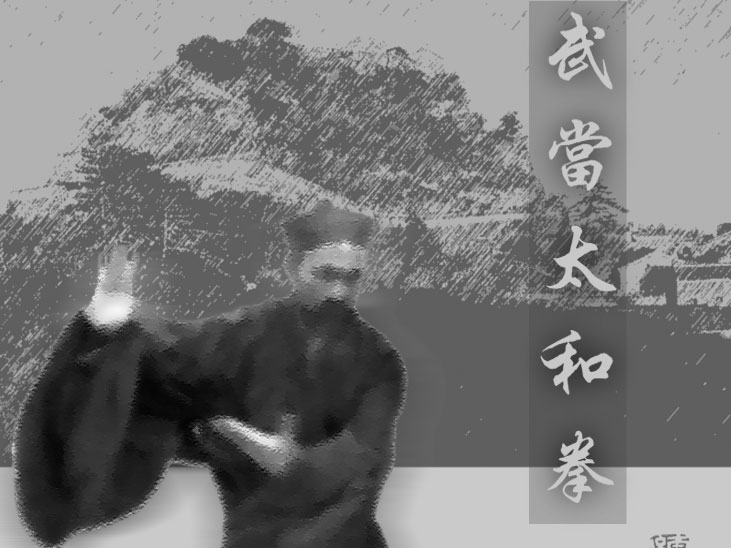
Evidence that Zhang Sanfeng created Tai Chi
2022-08-20 23:32:13
The plaque of the Golden Summit Lingguan Hall
Yan Men SAN Tang Zhong SAN Road
2022-08-20 23:32:13
The Golden Boy of the Wansheng Pavilion in Taihe Palace

The Four strictnesses of the strict school are achieved through three paths
2022-08-20 23:32:13
The Holy Father of the Wansheng Pavilion in Taihe Palace