


Under the Golden Hall lies a secret file: A forgotten secret history of the royal incense tax in Wudang
2026-08-24 10:24:42
Qin Chu Wind News (Shiyan Media Reporter Zhu Jiang) When climbing to the Golden Summit of Tianzhu Peak on Wudang Mountain, the eyes of thousands of tourists are all drawn to the gilded copper hall built by imperial decree during the Yongle period of the Ming Dynasty on the summit, and they are amazed by its unparalleled craftsmanship of a hundred tons of gilded casting and its ability to withstand six hundred years of wind and frost! However, very few people bend down to take a close look at the Sumeru Throne that supports the entire golden hall. This platform base, carved from spotted stone, is an inseparable original component of the national treasure of the Golden Hall. The inscriptions of varying depths on the stone surface have been eroded by rain and snow for hundreds of years, and the inscriptions of the officials from the capital who oversaw the incense tax and the restoration of palaces during the reigns of Emperor Tianqi of the Ming Dynasty and Emperor Kangxi of the Qing Dynasty have been completely preserved.
The mottled inscriptions repeatedly mention the place names of Daxing and Wanping in Shuntianfu. With first-hand cultural relics and historical materials from the original site, it weaves together the deep connection between Beijing and Wudang Mountain spanning six hundred years, gradually revealing the complete historical picture of the imperial top-level layout of "building the imperial palace in the north and constructing Wudang Mountain in the south", as well as the system of dispatching officials from the capital and the fiscal context of the exclusive operation of incense tax, leaving behind irreplaceable physical archives for the research on the imperial Taoist temple culture of Wudang Mountain.
The foundation stone for the royal double Project was laid, and the base of the Sendai was constructed with spotted stones
In the early years of Yongle in the Ming Dynasty, Emperor Chengzu Zhu Di issued an edict to change Beiping to Shuntian Prefecture, officially establishing the foundation of the northern capital. During the Yongle period, the imperial court simultaneously launched two super projects: the construction of the Forbidden City in Beijing in the north and the construction of Taihe Mountain (Wudang Mountain) in Junzhou in the south. Later generations collectively referred to them as "the Construction of the Forbidden City in the North and the construction of Wudang Mountain in the South". This was Zhu Di's core strategy for consolidating imperial power and establishing a "divine right of Kings" ruling order. The Forbidden City in Beijing served as the residence for emperors on earth to govern, while the Zijin City on the Golden Summit of Wudang Mountain was the exclusive Taoist temple for the Supreme Emperor Zhenwu of the celestial realm. One in the south and the other in the north, they respond to each other from afar, establishing the triple cosmic ritual order of "the Purple Micro Wall in the Sky, the Imperial Palace on Earth, and the Golden Gate on the Immortal Mountain". From then on, Wudang Mountain was conferred the title of "Great Mountain Taihe Mountain", surpassing the Five Great Mountains and becoming the only imperial temple of the Ming Dynasty. Its construction, personnel, and finance were all directly under the jurisdiction of the six central ministries and were not subject to the administrative control of local prefectures and counties. This special regulation persisted throughout the Ming and Qing dynasties.
During the Yongle period, the imperial court recruited the world's top craftsmen to gather in the capital. In Beijing, they cast a complete set of components for a hundred-ton gilded copper hall in sections. These components were then loaded onto a canal ship and set sail from Tongzhou, traveling southward along the Beijing-Hangzhou Grand Canal to Yingtianfu in Nanjing. They were then transported along the Yangtze River and the Han River for three thousand miles to Junzhou. Finally, they were carried by hand over a thousand steep stone steps to the top of Tianzhu Peak and installed according to the mortise and tenon structure.
The stone of the Sumeru pedestal that supports this huge gilded copper hall is specially taken from the spotted stone. Some experts say it is from Xuzhou, Jiangsu Province, while others say it is from Junxian, Hebi, Henan Province. In summary, the entire large piece of material was carved in one piece into the standard imperial style of inverted lotus, cinched waist and covered lotus, which was commonly known among the people as the "Jade Courtyard". The base of the Golden Hall on Wudang Mountain is made of precious stone of the same origin and grade as that of the Forbidden City in Beijing. From the perspective of building materials, it directly confirms the equal royal status of Wudang Immortal Mountain and the imperial palace in the capital.

"Assist in collecting the incense tax." The mottled inscriptions on the Sumeru throne in the Golden Hall of Wudang Mountain are just like a tax record of the Ming and Qing dynasties, with the most authentic and original imprint of the imperial incense tax system remaining between the lines. (Photo by Zhu Jiang
This Sumeru pedestal is by no means merely a decorative architectural base; it is an indispensable component of the main body of the Golden Hall. From the Yongle period to the Qianlong period of the Qing Dynasty, over a period of more than three hundred years, every group of officials who were dispatched from the capital by imperial order to supervise the management of incense, money and grain, and to preside over the renovation of palaces and buildings would, without exception, engrave their native places, duties and responsibilities, and the details of the projects on the remaining stone surfaces of the bases, leaving behind rare inscriptions and archives. Unlike the inscriptions separately erected in later times, the inscriptions directly carved on the original base of the Golden Hall coexist with the main body of the Golden Hall. The authenticity and scarcity of historical materials are irreplaceable, and they have become the core key to solving the financial problems of the Wudang royal family and the exchanges between officials in the north and south.
Follow the will of heaven, respond to heaven and inherit heaven to build a closed loop of management and control in Wudang
During the Ming Dynasty, in order to coordinate the management of the entire country, three core Tianfu regions - Shuntianfu, Yingtianfu and Chengtianfu - were established. The three-level administrative system was closely linked, forming a complete top-down control network for Wudang Mountain. This also explains why a large number of officials from Daxing and Wanping of Shuntianfu were continuously dispatched thousands of miles to Jingchu to supervise mountain affairs.
Shuntian Prefecture was the capital of the Ming Dynasty, Beijing. Its name was derived from the meaning of "obeying the way of heaven". The official rank of the prefectural governor was of the second grade. It governed two affiliated counties, Daxing and Wanping, which governed the eastern and western parts of the capital. All six ministries and various central government agencies were located here. It was the core center for the promulgation of national policies, the construction of the imperial court, and the national finance. The construction of major temples and monasteries on Wudang Mountain, the collection and management of incense taxes, and the selection of dispatched supervisory officials are all coordinated and decided by the Shuntian Prefecture. The officials dispatched to Wudang Mountain to manage incense, money and grain, and preside over the restoration work are given priority to be selected from among the officials of Beijing origin from Daxing and Wanping, which has become a routine.
Yingtianfu was the founding capital of the Ming Dynasty, Nanjing. After Zhu Di moved the capital to Beijing, he still retained the complete set of six ministries and offices, which served as the remaining capital to undertake the core functions of north-south canal transportation and the transfer of materials for the royal family. During the Yongle period, the copper components of the Golden Hall were transferred through Nanjing. Officials, artisans and materials traveling between Beijing and Wudang all rested and gathered here. It was a key waterway hub connecting the capital and the Xianshan Mountains in Jingchu, playing an intermediate connection role in the 3,000-mile transportation chain.
Chengtianfu is located in Zhongxiang, Hubei Province, in the heart of Jingchu, and is adjacent to the jurisdiction of Wudang Mountain. In the middle and late Ming Dynasty, the imperial court permanently appointed local officials of Chengtianfu to work in coordination with the Taihe Mountain Branch to jointly inspect the boundaries of the mountain areas and assist in the control of incense tax revenues. This led to the formation of a three-level vertical control chain: "decision-making in the capital in accordance with Tianfu, waterway transfer in Yingtianfu, and landing in Jingchu in Chengtianfu."
The three-level Tianfu linkage system enabled Wudang Mountain to remain free from the administrative jurisdiction of ordinary prefectures and counties for a long time and firmly in the hands of the royal family. It also provided a complete institutional support for the prosperity of Shuntian Prefecture and the travel of officials from Wanping to Wudang Mountain. Over the course of several hundred years during the Ming and Qing dynasties, a continuous stream of officials from the capital city followed this system to the mountains to handle affairs, leaving clear inscriptions on the Sumeru pedestal.
The Wanping Work Department and the Daxing Inspection Team have engraved the century-old connection between Beijing and Chu
Shuntian Prefecture governs two subordinate counties, namely Daxing and Wanping. One county governs the east and the other the west of the city, located at the foot of the emperor. Most of the officials in the capital, court laborers and dispatched dispatched officials come from these two counties. There is a popular saying among the people, "The red belly of Daxing County and the iron of Wanping County", which reveals the characteristics of the two counties being busy with various tasks and having regular dispatched positions.
From a geographical perspective beyond the capital, this frequent dispatch of personnel is also projected onto Wudang Mountain, which is thousands of miles away. By reading the inscriptions on the Sumeru Pedestal in the Golden Hall and the steles left over from past dynasties on Wudang Mountain, officials from Daxing and Wanping, believers who went to the mountain to pay homage, and court craftsmen frequently appear. The exchanges between the two counties attached to the capital and Wudang Mountain span the Ming and Qing dynasties. The inscriptions on one side and the two stories of Beijing officials performing their duties spanning a hundred years are clearly distinguishable.
By the late Ming Dynasty, the imperial court's financial control over Wudang Mountain further focused on specific personnel. During the Tianqi period of the Ming Dynasty, the imperial court directly managed the incense tax of Wudang Immortal Mountain and used the silver from the incense to repair the guardrails of the Golden Hall.
The precious inscriptions have left behind first-hand historical materials of the first official dispatched to the capital on Wudang Mountain for future generations. Associate Researcher Liu Zhijun of Shiyan Museum discovered through reading that on one side of the Sumeru Throne in the Golden Hall of Wudang Mountain, during the Tianqi period of the Ming Dynasty, there was a complete record of the deeds of the officials from the capital stationed on the mountain. The inscriptions are clearly preserved: "Wang Zhizhen, the director of the Wensi Institute of the Commission of the Imperial Commissioner's Office, was from Wanping County, Shuntian Prefecture, the capital, and his pseudonym was Taihuan." (Note: □ is a character that has been weathered and is illegible.

The inscriptions such as "Wanping County, Shuntian Prefecture" and "Incense Tax in Two Seasons" are clearly distinguishable. In the first year of the Tianqi reign of the Ming Dynasty, the connection between Wanping in the capital and Wudang Mountain thousands of miles away, which transcends mountains and rivers, was firmly fixed in the inscriptions on the Sumeru throne in the Golden Hall. (Photo by Zhu Jiang
To understand Wang Zhizhen's duties in Wudang, it is first necessary to clarify the background of the royal institution to which he belonged. The Institute of Literature and Thought of the Ministry of Works was a core institution directly under the capital of Shuntian Prefecture. It was exclusively responsible for the casting of royal bronze wares and the restoration of palaces and tombs, and directly followed the orders of the Minister of Works. It was a core department of the imperial court construction system. Wang Zhizhen, a native of Wanping and an official of the Ministry of Works in the capital, was ordered to travel a thousand miles to perform his duties on Wudang Mountain. His core responsibility was to oversee the entire casting process. The detailed records of the inscriptions show that in the first and second years of the Tianqi reign (1621), he, in collaboration with Li Shiji and a hundred households of the imperial guard, stationed at the Golden Summit of Wudang Mountain. He divided the responsibilities and authorities to manage the silver donated by pilgrims from all directions and used the special funds for incense tax to repair and maintain the Golden Hall. After the completion of the project, all the officials in charge jointly carved an inscription, stating straightforwardly, "We all set an example here, with the intention of not grinding it again in the future." In the autumn of the year of Renxu, they collectively inscribed their names on a stone, documenting the entire process of the project.
Wang Zhizhen was not an isolated case. Among the numerous inscriptions of the Ming Dynasty, one can observe the deeper and multiple connections between the Shuntianfu group and Wudang Mountain. Not only Wang Zhizhen, but also many inscriptions on Wudang Mountain during the Jiajing and Wanli periods of the Ming Dynasty record that a large number of believers from Wanping, Shuntian Prefecture, spontaneously formed the "Capital Incense Association", traveling in groups to Wudang to worship and hold Taoist ceremonies, and donating funds to repair dilapidated palaces and temples. Whenever the imperial court initiated a major renovation project on Wudang Mountain, officials from the Ministry of Works and the Jinyiwei were always dispatched from Shuntian Prefecture to supervise the construction. Officials from Wanping, who had long been exposed to the architectural techniques of the imperial court and were familiar with the royal construction standards, were the first choice for being sent to Wudang to supervise the project. During the Ming Dynasty, the central government directly dispatched officials from the Ministry of Works to manage the incense tax in Wudang, fully demonstrating the special status of the Wudang imperial family temple. It was not subject to interference from local governments, and the financial power was directly managed by the imperial court.
With the passage of time, during the Qing Dynasty, the personnel ties between Shuntian Prefecture and Wudang Mountain were not severed. On the right side of the Sumeru Throne in the Golden Hall, another story of a family's residence on the mountain was engraved. The entire family settled down on the Golden Summit and was in charge of the incense tax and grain tenancy affairs for three generations. On the other side of the Sumeru Throne in the Golden Hall of Wudang Mountain, there is a longer inscription by Emperor Kangxi, which depicts in detail the connection between the great prosperity of Shuntian Prefecture and Wudang, and comprehensively records a "tax family" of Beijing origin who has taken root on the Golden Summit. The original inscription records: "In the 58th year of the reign of Emperor Kangxi, I was entrusted with the task of inspecting bandits in Taihe Mountain by the Imperial Decree." In the 59th year, he was entrusted to collect the tenancy grain. For sixty years, he was entrusted with the responsibility of guarding the incense tax. Xing Renfu, also known as Junbi, is a first-level inspector of the Jinxiangping Inspection Office concurrently in Wanjiayan, Nanzhang County, Xiangyang Prefecture, Hubei Province. Male, Guo Dong; Nephew, Guozhen, Guoxi; My nephew, Zhang Zhijin, lives in the fourth lane of the East city outside Chongwen Gate, Daxing County, Shuntian Prefecture, Beijing.
Xing Renfu held three core positions: mountain security inspection, collection of mountain grain, and chief of incense tax at the Golden Summit. He was stationed at the Golden Summit of Tianzhu Peak all year round. He even engraved the names of his eldest son Guodong, nephew Guozhen, nephew Guoxi, and nephew Zhang Zhijin, all of the children of the Beijing family, on the stone surface of the base, forming a unique physical record of the Daxing tax family stationed at Wudang Mountain. The Qing Dynasty continued the old system of imperial control over Wudang in the Ming Dynasty. The incense tax in the mountains and the money and grain in the mountain fields were still prioritized to be managed by officials from Shuntian Prefecture. Daxing is located in the east of the capital. Many of its officials, including civilian guards and inspectors, were from the grassroots level. It was a common practice in the imperial court for them to be dispatched to local areas to manage ancestral temples, mountains, forests, money and grain. The Xing Renfu family has been rooted in the Golden Summit for several years and has fully experienced the dual fiscal system of incense tax and grain tenancy on Wudang Mountain in the late reign of Emperor Kangxi. The inscriptions on the Sumeru Pedestal have become the most vivid and intuitive cultural relic evidence of the dispatch of officials from the capital to Jingchu. Looking at the contents of the two inscriptions, one from the Ming Dynasty and the other from the Qing Dynasty, one from Wanping and the other from Daxing, they precisely form a complete historical contrast.

The inscriptions such as "Xiangshui" and "Shuntianfu Daxing County" are still vivid in my mind. During the reign of Emperor Kangxi of the Qing Dynasty, the historical connection between Daxing in Beijing and Wudang Mountain was frozen in the mottled inscriptions on the Sumeru Throne in the Golden Hall of Wudang Mountain. This inscription has become a precious physical witness to the distant exchanges between the two places. (Photo by Zhu Jiang
Wanping, Daxing; A Ming Dynasty official from the Ministry of Works in the capital and a Qing Dynasty family of inspectors. The two counties affiliated with the Shuntian Prefecture, two generations of officials dispatched by imperial decree, and the same flower-spot stone with a Sumeru pedestal inscription, spanning over a hundred years, echo each other, fully demonstrating the unbreakable personnel bond between the Shuntian Prefecture of Beijing and Wudang Mountain over the past six hundred years. It also directly showcases the vertical control model of the Ming and Qing dynasties over the finance and public security affairs of Wudang.
A single stone serves as evidence, revealing the complete rise and fall of the incense tax on Wudang Mountain over 243 years
The mountain Chronicles clearly record that in the sixth year of the Hongzhi reign of the Ming Dynasty (1493), the imperial court officially established an incense tax collection and management system for Wudang Mountain, 23 years earlier than Mount Tai, making it the earliest royal mountain in the country to standardize the collection of incense taxes.

In the sixth year of the Hongzhi reign of the Ming Dynasty (1493), the imperial court established a tax collection and management system for incense for Wudang Mountain. The picture shows Emperor Hongzhi and Emperor Xiaozong of the Ming Dynasty, Zhu You Tang. (Reference image
During the Jiajing period, the seventh volume of the "Great Mountain Taihe Mountain Annals" compiled by Wang Zuo recorded: "Since the early years of the Hongzhi reign, more and more pilgrims have come to the mountain to offer incense money." In the sixth year of the Hongzhi reign, CAI Jie, a citizen of Junzhou, reported to the imperial court that according to the decision of the Ministry of Rites, from the first month to the fourth month of each year, officials would receive incense money in the Golden Hall of the Taihe Palace and send it to the official Treasury of the Jingle Palace in Junzhou City for storage, to be used for various expenses related to mountain construction.

Wang Zuoxiu's "Great Mountain Taihe Mountain Annals" records that in the sixth year of the Hongzhi reign of the Ming Dynasty (1493), the imperial court officially established a tax collection and management system for incense for Wudang Mountain. (Reference image
At that time, the law stipulated that the silver from the offerings of incense by pilgrims from all directions should be uniformly stored in the Treasury and used for specific purposes only, including the repair of palaces and temples, the maintenance of mountain forests, the daily support of Taoist priests, and the defense of public security in the mountain. This financial system continued until the first year of the Qianlong reign of the Qing Dynasty (1736), when the imperial court issued an edict permanently exempting the incense tax on Wudang Mountain. This system lasted for a full 243 years. The multiple inscriptions preserved on the Sumeru Throne in the Golden Hall make up for the historical omissions in the old mountain Chronicles of Wudang Mountain, such as the brief records and the absence of key personnel. They comprehensively restore the overall picture of the operation system of the incense tax on Wudang Mountain from three dimensions: the use of funds, the appointment of officials, and the north-south linkage.
On the thirteenth day of the fourth lunar month in the first year of the Qianlong reign, the newly ascended Emperor Qianlong announced to the whole country that the incense tax for pilgrims visiting Wudang would be permanently waived. During the Qianlong period, the "Brief Record of Mount Taihe" compiled by Wang Gai, Volume Five, records: "The incense tax in Tai 'an Prefecture, Shandong Province, I have issued an edict to exempt it." Nearby, in Taihe Mountain, Hubei Province, all those who come to burn incense from near or far are also subject to an incense tax. The common people who worship deities devotedly should be allowed to do as they please. It is not advisable to impose incense taxes on them to cause disturbance and burden. All the incense taxes on Taihe Mountain were permanently exempted in accordance with the regulations of Tai 'an Prefecture. The governor immediately ordered local officials to strictly enforce them and prevent corrupt officials from causing corruption. Therefore. On the thirteenth day of the fourth month of the first year of the Qianlong reign.

In the first year of the Qianlong reign of the Qing Dynasty (1736), after Emperor Hongli ascended the throne, the incense tax for pilgrims to burn incense in Wudang was permanently exempted. The picture shows Emperor Qianlong (reference image)

The "Brief Record of Mount Taihe" compiled by Wang Gai records that in the first year of the Qianlong reign of the Qing Dynasty, the incense tax on Wudang Mountain was permanently exempted. (Reference image
The official documents have captured the moment when the incense tax system on Wudang Mountain came to an end, while the inscriptions on the Sumeru throne in the Golden Hall preserve first-hand evidence of the period when this system was in operation. Through these inscriptions engraved on the stone, a detailed investigation can be conducted into the actual implementation of the incense tax on Wudang Mountain.
Firstly, the inscriptions prove that the incense tax was strictly used for specific purposes only, which was in line with the design of the imperial system. The inscription by Wang Zhizhen during the Tianqi period records that the incense tax was used for the major repair of the wooden railings around the Golden Hall. The inscriptions by Xing Renfu during the reign of Emperor Kangxi show that the incense tax was also used for the maintenance of palaces and temples. The contents of the two inscriptions fully confirm the top-level institutional design recorded in ancient books that "the incense money was stored in the Treasury and exclusively used for the maintenance of the mountain". The incense money never flowed into the local Treasury and was fully enclosed for the operation and maintenance of the sacred mountain, demonstrating the meticulous financial control of the royal family over Wudang Mountain. In the third year of the Tianqi reign of the Ming Dynasty (1623), when Xu Xiake visited the Golden Summit of Wudang Mountain, he wrote in his travelogue that "the Golden Hall was supervised by a thousand households and demanded incense money, which was no less than an imperial confiscation." This indirectly attested to the strict process of incense tax collection and management and the extremely strong control of the imperial court at that time. The inscription of the official at the Sumeru Throne, from an official perspective, supplemented the complete closed loop of incense tax collection and use.
Secondly, the inscriptions clearly distinguish the different official appointment systems of the Ming and Qing dynasties, with a clear hierarchy of powers and responsibilities. During the Ming Dynasty, the palaces and temples on Wudang Mountain were in charge of the coordinated management of incense taxes, and personnel appointments and financial allocations were directly coordinated with the six ministries in the capital. During the Qing Dynasty, the administrative structure was adjusted, with the Jingnan Sub-governor taking overall charge. Inspectors from Daxing and Wanping were dispatched to stay in the mountain for a long time. The responsibilities for public security, grain tenancy, and incense and tax were further detailed. The central government delegated power to local authorities to take charge of the sub-governor, ensuring the indirect control of the imperial court over the affairs of Wudang Mountain. Although there were adjustments to the two generations of management systems, the core logic remained unchanged: to isolate the interference of local prefectures and counties, and to have the capital officials trusted by the imperial court control the finances of incense offerings.
Thirdly, the inscriptions are direct physical evidence of the integrated imperial governance system of Beijing and Chu. The successive dispatch of officials from Daxing and Wanping of Shuntian Prefecture to Wudang Mountain ensured that the government orders from Beijing reached the sacred mountain of Jingchu. This completely proved that Wudang Mountain had always been a national-level exclusive imperial Taoist temple, by no means an ordinary local shrine, and could not be managed independently by the local authorities. After the abolition of the incense tax system in the first year of the Qianlong reign, the imperial court no longer specially dispatched officials from the capital to Wudang Mountain to supervise the incense, money and grain. From then on, there were no new official inscriptions on the Sumeru Throne in the Golden Hall. The names, native places and era names engraved on the spotted stones were thus fixed as the last written marks before the end of the incense tax system that had lasted for more than three hundred years on Wudang Mountain.
The pedestal conceals a thousand autumns, half of the history of exchanges between the royal families of Beijing and Chu
The vast majority of tourists who climb to the Golden Summit of Wudang Mountain only focus their eyes on the grand and magnificent appearance of the gilded copper hall, and seldom bend down to pay attention to the flower-spotted stone Sumeru pedestal beneath their feet, which bears the imperial regulations of six hundred years and depicts the complete history of the exchanges between Beijing and Chu.
Despite being exposed to wind and rain for a long time, the stone's texture has become moaky and worn. However, the inscriptions on the stone surface, "Shentianfu, Daxing, Wanping", which are the names of Beijing, are still clearly distinguishable. The era names of the Tianqi and Kangxi reigns are distinct and clear. Every word and sentence is a vivid footnote to the administrative system of the Three Tianfu regions in the capital, the system of dispatching officials from the capital, and the fiscal system of the exclusive operation of the incense tax under the grand national policy of "building the imperial palace in the north and constructing Wudang in the south".
A Sumeru base that coexisted with the Golden Hall condensed half of the history of exchanges between the royal families of Beijing and Chu, witnessing the collaboration between Beijing and Yan that spanned six hundred years. The hidden inscriptions at the foot of the Golden Hall, which are easily overlooked by tourists, serve as a physical key to unlocking the governance code of the Ming Dynasty's royal family. Today, through the mottled inscriptions, people can span six hundred years and understand the top-level design of the imperial power of Emperor Chengzu of the Ming Dynasty, which was "co-governance by heaven and man" : taking Wudang Mountain as the royal temple, the divine power protected the royal power, and a ruling logic that connected the gods, the monarch and the people was constructed. The inscriptions clearly sort out the vertical management network of the three major Tianfu regions of Shuntian, Yingtian and Chengtian, which are interconnected layer by layer, and restore the true past of the officials from Daxing and Wanping traveling thousands of miles to Wudang Mountain to supervise projects, manage incense taxes, money and grain, and protect the immortal mountain for generations.
The inscriptions carved on the original components of the national treasures, without the embellishment and refinement of the extant classics, are the first-hand on-site records of the officials' performance of their duties at that time. They have preserved an irreplaceable, immovable and national treasure-level in-situ cultural evidence for the study of the local Wudang royal culture in Shiyan, the financial system of the Ming and Qing Dynasties, and the movement of officials between the north and the south.
Nowadays, if we take a closer look at this flower-spotted stone Sumeru pedestal that supports the hundred-ton Golden Hall, the rough stone patterns interweave and overlap with the records of the Ming Dynasty's Ministry of Works officials repairing the hall and the past of the Qing Dynasty's inspection families residing in the mountain. The small inscriptions carry not only the stories of several officials in the capital performing their duties, but also a historical microcosm of the Ming and Qing dynasties regarding Wudang as the royal temple and their firm control over the sacred mountain through a north-south linkage system. When visitors stop at the Golden Summit, if they bend down to read the inscriptions on the base carefully, they will be able to escape the visual shock of the gilded copper hall and see the thousand-mile-long bond between Beijing and Chu hidden behind the incense offerings of the immortal mountain, and understand the unique royal historical background of Wudang Mountain.

The author of this article (right) accompanied Associate Professor You Zian (middle) and Researcher CAI Ning (left) from the Department of Chinese Literature of Hong Kong Zhuhai College to inspect the inscriptions on the Sumeru Pedestal in the Golden Hall.

Now, the inscriptions on the Sumeru Throne in the Golden Hall of Wudang Mountain, such as "Incense Tax Affairs" and "Taxation", are just like a record of taxation from the Ming and Qing Dynasties, with the most genuine and original imprints of the royal incense tax system remaining between the lines. (Photo by Zhu Jiang

The author of this article examines the inscriptions on the Sumeru Throne in the Golden Hall of Wudang Mountain.

Love never stops at reaching. "Wudang, I'll be back again!"
2026-06-26 15:11:19
Love never stops at reaching. Diego, an Italian youth, hiked...
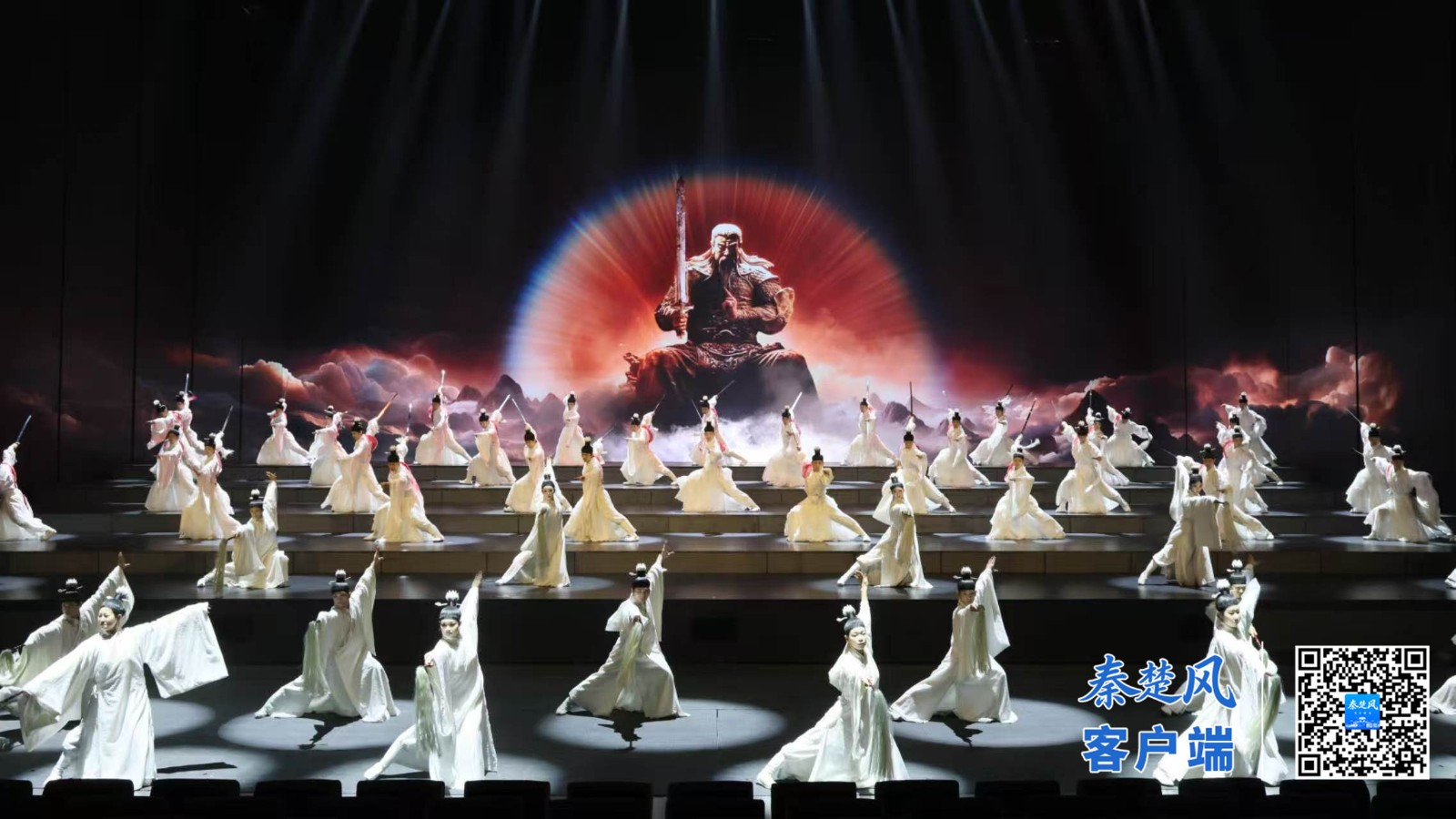
Announcement on the Adjustment of Performance Time for "Wudang Yimeng
2026-04-09 22:56:30
Dear visitors: In order to further optimize the experience o...
Special offer air tickets for Shiyan Wudangshan Airport starting from 200 yuan in March have been released
2026-04-10 00:01:36
The warm March breeze is here. Saying goodbye to the high pr...
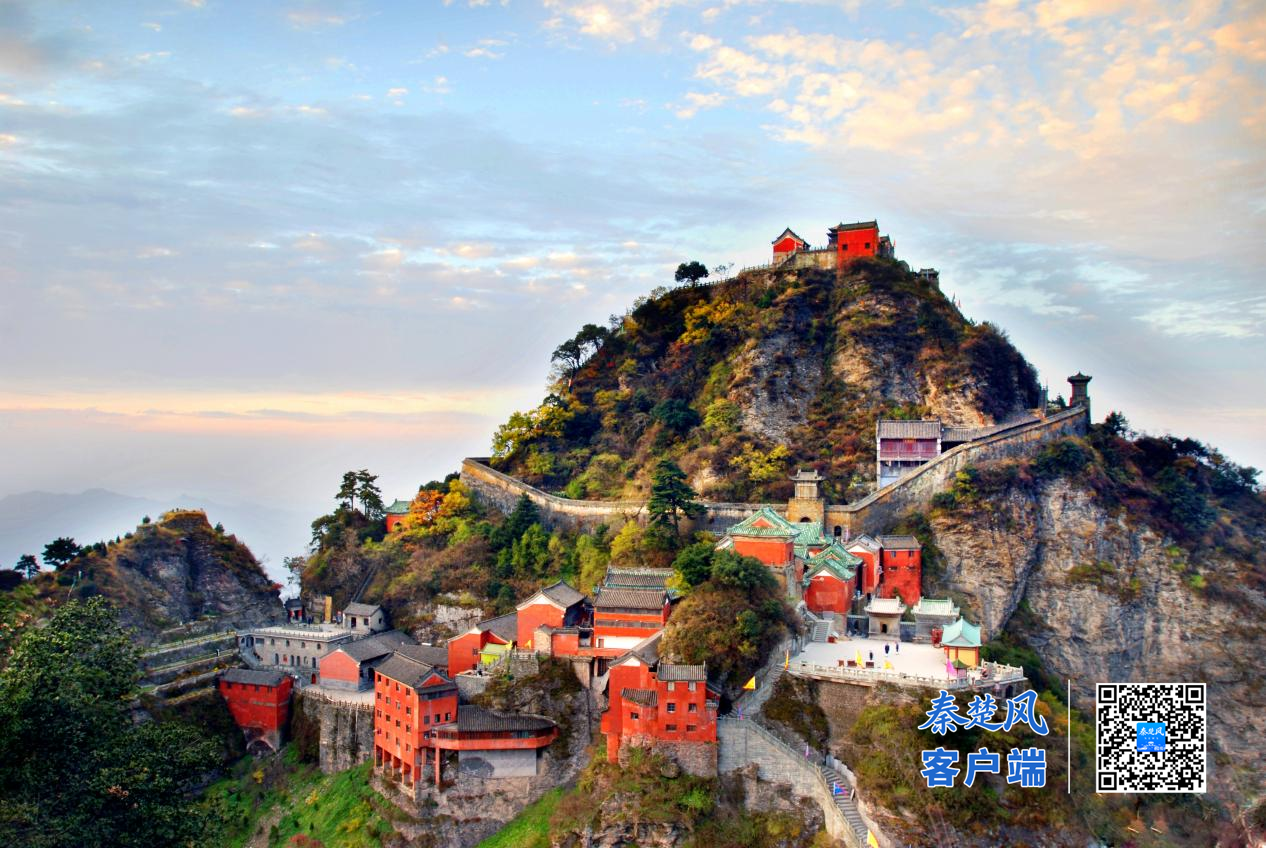
Female visitors can enter the park at half price! Wudang Mountain Scenic Area is offering discounted tickets
2026-04-09 22:02:47
Qin Chu Feng News (Correspondent Tan Mengjie) To celebrate I...

101 Reasons to Stay in Hubei: Wudang Jack: Please Call Me "Old Nei"
2026-04-09 22:03:58
Jack, an American young man who has practiced martial arts o...
Shiyan Wudangshan Airport has newly opened routes to Harbin and Zhuhai. Low-priced air tickets are now available for grabs
2026-04-09 21:56:47
Here it comes! Finally here it comes! Starting from March 31...
On the Golden Summit of Wudang Mountain, which is 1,612 meters above sea level, this "long-lived family" is little known
2026-04-09 22:07:49
Qin Chu Wind News (Shiyan Media Reporters Lu Wei and Liu Kun...

Because of the beautiful scenery of Wudang, people come to stay for the city's best views. "Shiyan, the city of immortal mountains and clear waters" is making all-out efforts to attract tourists
2026-04-09 22:06:08
On the evening of March 11th, at the foot of Wudang Mountain...