


The bell pavilion in front of the Golden Hall
2022-08-20 23:32:13
On the north side of the Golden Hall, there is a copper golden bell pavilion, which is symmetrically placed with the jade chime Pavilion on the south side. Built in the 42nd year of the Mingjia reign, the copper pavilion has a square roof with four pillars, four eaves and four slopes, and is 1.22 meters high. In the pavilion hangs a copper bell, which is called the "Golden Bell". The bell has a round mouth and its body is engraved with patterns such as the Eight Trigrams. On the golden Summit of Wudang Mountain, a bell and a pavilion are placed together with a bronze tripod, which holds a special significance. Historically, bells and tripods were the general term for ancient bronze wares, which were borrowed by later generations to symbolize achievements. The "Biography of Changsun Wujie" in the "Old Book of Tang" records: Since ancient times, emperors have praised meritorious deeds and virtues, not only engraving them on bells and tripods but also depicting them in paintings. The Ming Dynasty and Taoism on Wudang Mountain undoubtedly used bells and tripods to "praise and honor merit" and mark achievements. "Golden bell" is also a term in traditional Chinese medicine. In medicine, it refers to the lungs. In "The Return to the Essence of Medicine", it is said: "The golden bell refers to the lung." The lung belongs to metal. Its shape is suspended inside, resembling a bell, thus it is called the "golden Bell".
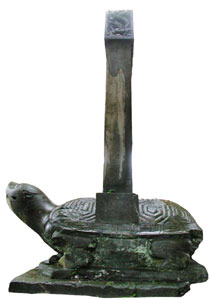
Wulong Palace Imperial Stele Pavilion No. 1
2022-08-20 23:32:13
Wulong Palace Imperial Stele Pavilion No. 1
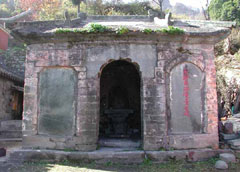
The Middle view of the Yuan Dynasty stone hall
2022-08-20 23:32:13
The Middle view of the Yuan Dynasty stone hall

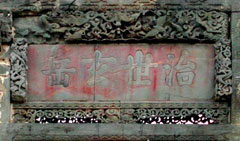
The Mystic Mountain for governing the world
2022-08-20 23:32:13
The Mystic Mountain for governing the world
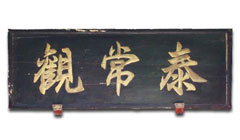
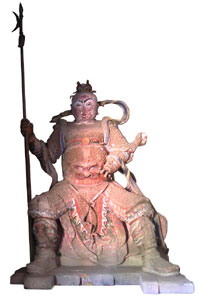
The white tiger in the Dragon and Tiger Hall of Zixiao Palace
2022-08-20 23:32:13
The white tiger in the Dragon and Tiger Hall of Zixiao Palac...
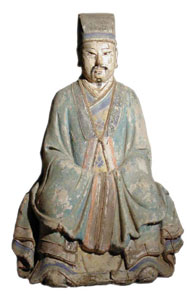
The main hall of the Five Dragons Palace has three statues
2022-08-20 23:32:13
The main hall of the Five Dragons Palace has three statues
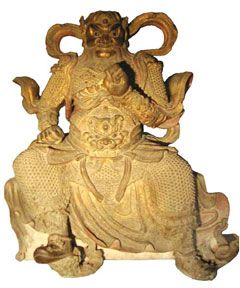
The main deity statue in the main hall of Yuanhe Temple
2022-08-20 23:32:13
The main deity statue in the main hall of Yuanhe Temple