


The wood carvings in the Imperial Scripture Hall of Taihe Palace
2022-08-20 23:32:13
The front of the Imperial Scripture Hall is decorated with numerous wooden carvings featuring Taoist figures, stories and rare birds and beasts. The patterns are exquisite and the entire building is painted in rich colors, making the entire structure sumptuous and magnificent. Among these woodcarving artworks, the figures of the Eight Immortals are the most common, which is also a common technique in Taoist temples. The Eight Immortals is a general term for a group of Taoist immortals. Historically, there have been various explanations, such as the Eight Immortals of Tang Dynasty, the Eight Immortals of Huainan, and the Eight Immortals of Sichuan, etc. The Eight Immortals originated approximately in the Yuan Dynasty, but at that time, the Eight Immortals were not fully unified. In the Yuan Zaju play "Lu Dongbin's Three Drunkards on Yueyang Tower", there were no female immortals among the Eight Immortals. Among the Eight immortals in the "Western Records of the Three Eunuchs" of the Ming Dynasty, there are no Zhang Guolao or He Xianggu. Among the Eight immortals in "The Biographies of the Immortals", there is no Zhang Guolao but Liu Haichan. It was not until Wu Yuantai of the Ming Dynasty wrote "The Origin of the Eight Immortals: Journey to the East" that the names of the Eight Immortals were uniformly determined as: Zhongli Quan, Li Tieguai, Zhang Guolao, Cao Guojiu, Lu Dongbin, Han Xiangzi, LAN Caihe and He Xianggu. Since the Ming and Qing dynasties, there have been many folk tales about the Eight Immortals, such as "The Eight Immortals Crossing the Sea" and "The Eight Immortals Celebrating Longevity", etc. In Taoist temples, items representing the eight immortals are also used as decorative patterns, which are known as the "Dark Eight Immortals".
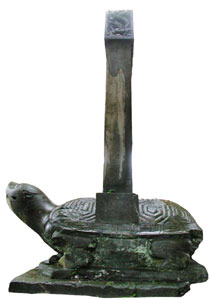
Wulong Palace Imperial Stele Pavilion No. 1
2022-08-20 23:32:13
Wulong Palace Imperial Stele Pavilion No. 1
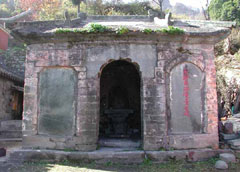
The Middle view of the Yuan Dynasty stone hall
2022-08-20 23:32:13
The Middle view of the Yuan Dynasty stone hall
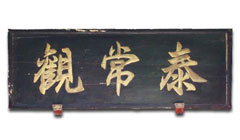

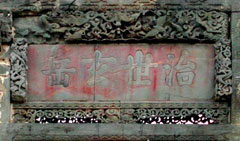
The Mystic Mountain for governing the world
2022-08-20 23:32:13
The Mystic Mountain for governing the world
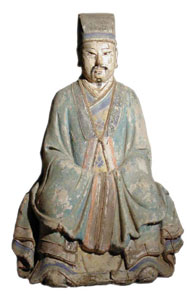
The main hall of the Five Dragons Palace has three statues
2022-08-20 23:32:13
The main hall of the Five Dragons Palace has three statues
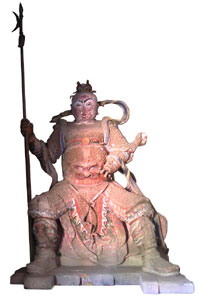
The white tiger in the Dragon and Tiger Hall of Zixiao Palace
2022-08-20 23:32:13
The white tiger in the Dragon and Tiger Hall of Zixiao Palac...
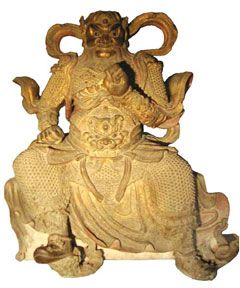
The main deity statue in the main hall of Yuanhe Temple
2022-08-20 23:32:13
The main deity statue in the main hall of Yuanhe Temple