


Focus on the first "International Tai Chi Day" - Wudang Tai Chi has gone viral for a thousand years, with its gentle force stirring the world
2026-04-09 22:11:50


The descendants of the Sanfeng School of Wudang are demonstrating Tai Chi on the Lion Peak of Wudang Mountain. Photo by reporter Zhang Jianbo
Qin Chu Feng Xun (Shiyan Media Reporter Zhu Jiang) March 21st is the first "International Tai Chi Day", and it is also the first international day named after martial arts by the United Nations. When the world's attention is focused on this thousand-year-old martial art, all the clues tracing its origin will eventually converge on Wudang Mountain. From Ye Dami's establishment of the Wudang Tai Chi Society in Shanghai in 1926 to the printing of the "Health Guide - Tai Chi Diagram" in 1929; From the release of "The Secrets of Wudang Boxing" in 1930 to the publication of "The Comprehensive Collection of Wudang Tai Chi Chuan, a Combination of Hardness and Softness Fitness Techniques" in 1946, these are all precious historical witnesses to the journey of Wudang Tai Chi from the deep mountains to the common people and from tradition to modernity. On the occasion of the first "International Tai Chi Day", only by following the thousand-year-old trajectory of Wudang Tai Chi can one truly feel the cultural power of Chinese martial arts that transcends time and space.
The Dao originated in Wudang, the thousand-year-old root of Taiji thought

The gilded bronze statue of Zhang Sanfeng in the collection of Wudang Museum. Photo by reporter Zhu Jiang
"Immortal" means that "man" is in the "mountain". 2,500 years ago, Yin Xi roamed the deep mountains and thick forests of Wudang Mountain, spending several years paying homage to the Great Summit. He became the first historical figure to practice and spread Taoist thought on Wudang Mountain. His connection with Laozi enabled the Tao Te Ching to take root on Wudang Mountain, laying a profound cultural foundation for the birth of the Taiji thought. The Taoist culture of Wudang Mountain takes "the unity of heaven and man" as its core and the mutual generation of Yin and Yang and the combination of hardness and softness as its core, which is precisely the spiritual origin of Tai Chi. Tai Chi, born from the boundless, is the mother of Yin and Yang. The Taoist culture of Wudang Mountain has laid the most profound ideological foundation for Tai Chi.
The connection between Wudang Mountain and Tai Chi was concretely manifested when Chen Tuan of the Northern Song Dynasty practiced and studied the Tai Chi diagram on Wudang Mountain. Due to the manifestation of Tai Chi by Zhang Sanfeng in the Ming Dynasty, a qualitative change occurred. During the Ming Dynasty, Ren Ziyuan recorded the life and cultivation path of Zhang Sanfeng in the "Chronicle of the Construction of Mount Taihe by Imperial Decree". Guo Xuyang, the representative inheritor of the Hubei provincial intangible cultural heritage of the Legend of Zhang Sanfeng and vice president of the Zhang Sanfeng Historical and Cultural Research Association of Shiyan City, discovered through in-depth study of ancient documents that this martial arts master clearly recorded in the "History of the Ming Dynasty" and the "Chronicle of the Construction of Mount Taihe by Imperial Decree" was not a virtual immortal.
Guo Xuyang said that the "Re-published Xiangyang Prefecture Annals - Biography of Zhang Sanfeng" in the third year of the Tianshun reign of the Ming Dynasty (1459) clearly records that Zhang Sanfeng was registered under the "Zhihe Li Dao" in Junzhou at the foot of Wudang Mountain in the early years of the Hongwu reign. His appearance, living habits and Taoist cultivation trajectory are all recorded, which serves as solid evidence of his real existence.
There is also solid evidence to support the connection between Zhang Sanfeng and Tai Chi. On November 3, 2010, Professor Xi Yuntai, a renowned martial arts educator, clearly stated in an interview with reporters at Wudang Mountain Hotel: "Zhang Sanfeng is the creator of Tai Chi, and Wudang Mountain is the cradle of Tai Chi." This view has been widely recognized by the academic community. Dr. Joseph Needham, a British Sinologist, also stated directly that when tracing the origin of Taiji, it is impossible to bypass Zhang Sanfeng and Wudang Mountain. The Tai Chi Chuan passed down by Zhang Sanfeng integrates the Taoist concept of yin-yang balance into martial arts moves, enabling Tai Chi Chuan to transcend its mere combat attributes and become a cultural carrier with functions of health preservation, self-cultivation, and enlightenment. Wudang Mountain is precisely the birthplace of this cultural carrier.
CAI Xingsheng, a cultural and historical expert from Shiyan City, pointed out that Yin Jifu was the earliest martial artist with verifiable history in the Wudang Mountain area, and the Baotang Temple in Fangxian County at the southern foot of Wudang Mountain was his ancestral temple. The Book of Songs, Minor Odias, June highly praises his talent with the words, "With both literary and military prowess, all nations will be blessed." He was capable of governing the country through literature and stabilizing the nation through military prowess. He was also an important collector and compiler of the Book of Songs. In 2014, the "Legend of Yin Jifu" was included in the fourth batch of the National Intangible Cultural Heritage List, leaving a precious footnote for the long-standing cultural and military roots of Wudang Mountain. He also introduced that the Wudang Tai Chi passed down by Xu Benshan, the chief Taoist priest of Wudang Mountain during the Republic of China period, still has three clear lines of inheritance in modern times. One of them is still being passed down and developed at the foot of Wudang Mountain.
This tradition of valuing martial arts and literature has been deeply integrated with Tai Chi culture in later generations, forming a unique cultural symbol of Wudang Mountain. In his book "The Interpretation of the Taiji Diagram", Huang Zongxi, a historian of the late Ming and early Qing dynasties, sorted out the inheritance of the Taiji Diagram: He Shanggong passed on this diagram, Wei Boyang obtained it and composed "Shen Tongqi", Zhongli Quan obtained it and passed it on to Lu Dongbin, Lu Dongbin passed it on to Chen Tuan, and Chen Tuan engraved it on the stone wall of Mount Hua. As a second-generation disciple of Chen Tuan, Zhang Sanfeng inherited the Taiji Diagram and the Taiji Heart method from him. From Yin Jifu laying the foundation of both culture and martial arts, to Yin Xi promoting Taoist culture, and then to Zhang Sanfeng demonstrating Tai Chi, Wudang Mountain has undergone a transformation from a gathering place of Tai Chi thought to a cradle of Tai Chi martial arts, laying an inseparable cultural foundation for itself and Tai Chi.
A century of inheritance: The rebirth of Wudang Tai Chi in the common people

On September 7, 2024, the Wudang Mountain Natural Landscape Investigation Team, while exploring the Seven True Caves, unexpectedly discovered "The Secrets of Wudang Boxing", adding another precious historical material to the deep connection between Wudang Mountain and Tai Chi. Photo by reporter Zhu Jiang
If Wudang Mountain is the "root" of Tai Chi, then Shanghai a hundred years ago was the "branch" where Wudang Tai Chi emerged from the deep mountains and took root among the people.
At the beginning of the 20th century, a group of ambitious people stepped forward to devote themselves to the inheritance and promotion of Chinese martial arts, and thus the modern dissemination of Wudang Tai Chi began. The establishment of the Wudang Tai Chi Society in Shanghai in 1926 became a landmark event. Pan Ruhong, a director of the Shiyan Collectors Association and a collector of Wudang Taoist culture, has collected a "Brochure of Wudang Tai Chi Society", which leaves precious evidence for this period of history.
In November 1926, Ye Dami, a master of martial arts, founded the first professional martial arts group in China named after Tai Chi - Wudang Tai Chi Society - at his residence at No. 19, Yongji Li, South Wangzhi Road, French Concession, Shanghai. At that time, although there was the Zhirou Tai Chi Society founded by Chen Weiming in Shanghai that taught Yang-style Tai Chi, the Zhirou Tai Chi Society also taught martial arts such as 八卦掌, while the Wudang Tai Chi society, with tai Chi as its core, had a very clear professionalism. The Boxing club offers research classes on Tai Chi and Tai Chi sword, regular learning classes, and even children's classes. It breaks through the traditional master-based teaching model of martial arts and adopts an open teaching concept, enabling Wudang Tai Chi to be passed down from a small group of masters to a wider range of the general public. This brochure clearly states that the qualifications for joining the Tai Chi club are: those with noble character, gentle personality, and a basic understanding of Tai Chi sword through daily practice. Both men and women are eligible to participate.
Ye Dami's pioneering achievement was no accident. His family's Tai Chi Chuan originated from the direct descendants of Zhang Songxi, a disciple of Zhang Sanfeng, with the genes of Wudang Tai Chi flowing in his veins. He also studied under martial arts masters such as Li Jinglin and Yang Chengfu, mastering Yang-style Tai Chi and Wudang Sword. He integrated the essence of various schools, making the dissemination of Wudang Tai Chi in Shanghai more professional and inclusive. The establishment of the Wudang Tai Chi Club has enabled Wudang Tai Chi to take root in Shanghai and has further promoted the systematic dissemination of Tai Chi culture. In 1927, Ye Dami invited Chen Weiming and others to Li Jinglin to learn Wudang swordsmanship. Subsequently, both the Wudang Tai Chi Society and the Zhirou Tai Chi Society added Wudang swordsmanship courses, thus improving the martial arts system. In 1928, Ye Dami and his disciple Pu Bingru performed Wudang swordplay for free at the Lanxin Grand Theatre to raise funds for the night school in Shanghai. The next day, they were featured in the "Shilin West Daily", making Wudang Tai Chi a cultural hotspot at that time. In 1939, the "Brochure of Wudang Tai Chi Society" was officially published, standardizing the teaching, inheritance and management of Wudang Tai Chi. This document has become an important witness to the modern dissemination of Wudang Tai Chi.
The various monographs that emerged along with the Wudang Tai Chi Society are even more important carriers for Wudang Tai Chi to move towards modernity. In 1929, Huang Chujiu, a descendant of Huang Zongxi, a scholar of the late Ming Dynasty, printed the "Health Guide", which included pictures of Tai Chi and provided in-depth introductions to the Tai Chi photos of Wu Jianquan, a master of Wu-style Tai Chi. Pan Ruhong's collection of "The Comprehensive Collection of Wudang Tai Chi Chuan: The Art of Hardness and Softness for Fitness" from 1946, with "hardness and softness" at its core, closely adheres to the essence of Wudang Tai Chi Chuan, systematizing and textual its moves, mental methods, and health preservation principles, thus breaking the limitations of traditional martial arts passed down orally and by heart. Guo Xuyang's collection of "Zhang Sanfeng and His Tai Chi" was compiled by Huang Naizhi, a disciple of Yang Shouzhong, the eldest son of Yang Chengfu, a master of Yang-style Tai Chi, in 1954. It not only traces the origin of Tai Chi but also highlights the inheritance of the Yang family line, documenting the legend of Yang Shouzhong publicly passing on his family's Tai Chi and teaching disciples all over the world.
From the oral transmission and personal instruction on Wudang Mountain to the teaching in the boxing clubs in Shanghai, and then to the publication of various monographs, Wudang Tai Chi successfully completed its transformation from "deep mountain martial arts" to "folk culture" a hundred years ago. And the origin of all this lies in Wudang Mountain!
The cultural heritage continues, and the intangible cultural heritage glory of Wudang Tai Chi

The "Brochure of Wudang Tai Chi Society" collected by Pan Ruhong has left precious evidence for the modern dissemination of Wudang Tai Chi. Photo by reporter Zhu Jiang
Wudang Mountain is not only a culturally renowned mountain of outstanding natural beauty but also the cradle of Tai Chi. Wudang Tai Chi has always been deeply rooted in the fertile soil of Taoist culture, adhering to the core essence of "the combination of hardness and softness, and the unity of heaven and man", and has become a brilliant calling card of China's fine traditional culture. In 2006, Wudang martial arts were included in the first batch of the National Intangible Cultural Heritage Representative Project List. This honor is not only a high recognition of Wudang martial arts, but also confirms the unshakable position of Wudang Mountain as the birthplace of Tai Chi.
Zhang Sanfeng's Tai Chi Chuan, with the Taoist idea of Yin and Yang at its core, integrates the spiritual essence of the immortal mountain and Taoist philosophical concepts into every move and posture. It emphasizes the transformation of Yin and Yang, as well as the ascending, descending, opening and closing. It can not only be used for self-defense and combat but also regulate qi and blood and cultivate one's character. It is precisely because of this characteristic deeply bound with the Wudang landscape and Taoist culture that Tai Chi has become an important way for people to relieve anxiety and pursue health in the fast-paced modern society, and it also has a powerful dissemination power that transcends national boundaries and connects civilizations.
On September 7, 2024, when the Wudang Mountain Natural Landscape Investigation Team was exploring the Seven True Caves, Yao Feng, a member of the team and a doctor of history, unexpectedly discovered "The Secrets of Wudang Boxing" written by Jin Yiming, a modern martial artist and renowned martial arts theorist, in a hidden rock crack inside the cave. This discovery adds another precious historical material to the deep connection between Wudang Mountain and Tai Chi. The book clearly records: "The external school regards Bodhidharma as its ancestor, while the internal school regards Zhang Sanfeng as its ancestor..." It is said that the external school is called the Shaolin School and the internal school is called the Wudang School. It is more clearly marked that "Wudang Mountain is located in the south of Jun County, Hubei Province", directly linking Zhang Sanfeng, Wudang Mountain and internal martial arts (Tai Chi Chuan) closely, which confirms the historical origin of "Internal Tai Chi originated from Wudang". According to Zheng Guangchun, the president of the Wudang Mountain Branch of the Shiyan Collectors Association, this classic book, which was issued in 1930, has 88 pages and is divided into 17 chapters. It is accompanied by 17 diagrams of the meridians and acupoints of Tai Chi, elaborating in detail on the secrets and techniques of Wudang Tai Chi. Although the cover has faded and the edges are rounded, it completely retains the essence of Wudang Tai Chi and is a vivid witness to the continuous transmission of Wudang Tai Chi. Yao Feng said, "I look forward to discovering more precious relics and historical clues that carry Tai Chi culture during the continuous exploration of Wudang Mountain in the future."
In addition to precious documents, the numerous cultural relics of Tai Chi preserved on Wudang Mountain are vivid physical witnesses to this cultural heritage. In the Wudang Museum, a gilded bronze statue of Zhang Sanfeng weighing over one ton is exquisitely cast. As a masterpiece of Ming Dynasty art, it captures the deep connection between the Tai Chi master Zhang Sanfeng and Wudang Mountain. The copper stele "Bestowing Immortal Images" clearly records the bestowal of the title to Zhang Sanfeng by Emperor Yingzong of the Ming Dynasty, confirming the revered status of Wudang Taiji in the Ming Dynasty. These cultural relics and historical records corroborate and support each other, jointly building up the complete cultural context of Wudang Tai Chi, providing the most solid historical materials and physical support for the saying that "all Tai Chi originated from Wudang".
Wudang Mountain has never ceased its efforts to inherit and promote Tai Chi culture. At present, 57 martial arts promotion centers have been established both at home and abroad, attracting over 3 million "foreign disciples" from more than 150 countries and regions to study here, and driving hundreds of millions of people around the world to practice Tai Chi. The continuous holding of events such as the World Wudang Tai Chi Congress and the International Tai Chi Friendship Competition has made Wudang Tai Chi an important bond for the exchange and mutual learning of civilizations between China and foreign countries. The UNESCO has designated March 21st of each year as the "International Tai Chi Day", which is a high recognition of the global value of Wudang Tai Chi and has once again amazed the world with its unique charm.
Tai Chi has gone viral, from the ancestral temple of Wudang to being shared globally
Wudang of the world, Tai Chi of mankind. With the arrival of the first "International Tai Chi Day", Wudang Tai Chi has ushered in brand-new development opportunities.
Nowadays, Tai Chi has become a "cultural health preservation wonder" that suits modern life. Its gentle movements can effectively relieve the physical strain caused by prolonged sitting. Its concept of "combining hardness with softness" can teach people to maintain balance in high-pressure work and life. Its core of "harmony between man and nature" enables people to find inner peace in the fast-paced world.
The Taiji thought nurtured by Wudang Mountain is not only a martial arts concept but also a kind of life wisdom. The balance of Yin and Yang is the way to harmonize work and life. Using softness to overcome hardness is a composed approach when facing pressure. "Moving a thousand pounds with four ounces is a clever solution to problems." This wisdom, which has been passed down for thousands of years, still suits contemporary society. This is the fundamental reason why Wudang Tai Chi has been able to go global and become an international cultural treasure.
A hundred years ago, Ye Dami founded the Wudang Tai Chi Society in Shanghai, taking it as his mission to "strengthen the nation and save the country, resist aggression and strive for survival", making Wudang Tai Chi an important carrier for boosting the national spirit. Nowadays, Wudang Tai Chi is going global, with "harmony and coexistence" as its core, and has become a solid bridge promoting cultural exchanges between China and foreign countries. From the deep mountains and dense forests of Wudang Mountain to the alleys of the French Concession in Shanghai, and then to the streets and lanes around the world, the dissemination trajectory of Wudang Tai Chi is a vivid microcosm of the inheritance and innovation of China's fine traditional culture. No matter how far one travels, Wudang Mountain will always be the root of Wudang Tai Chi, the spiritual origin of "the harmony of hardness and softness, and the unity of heaven and man".
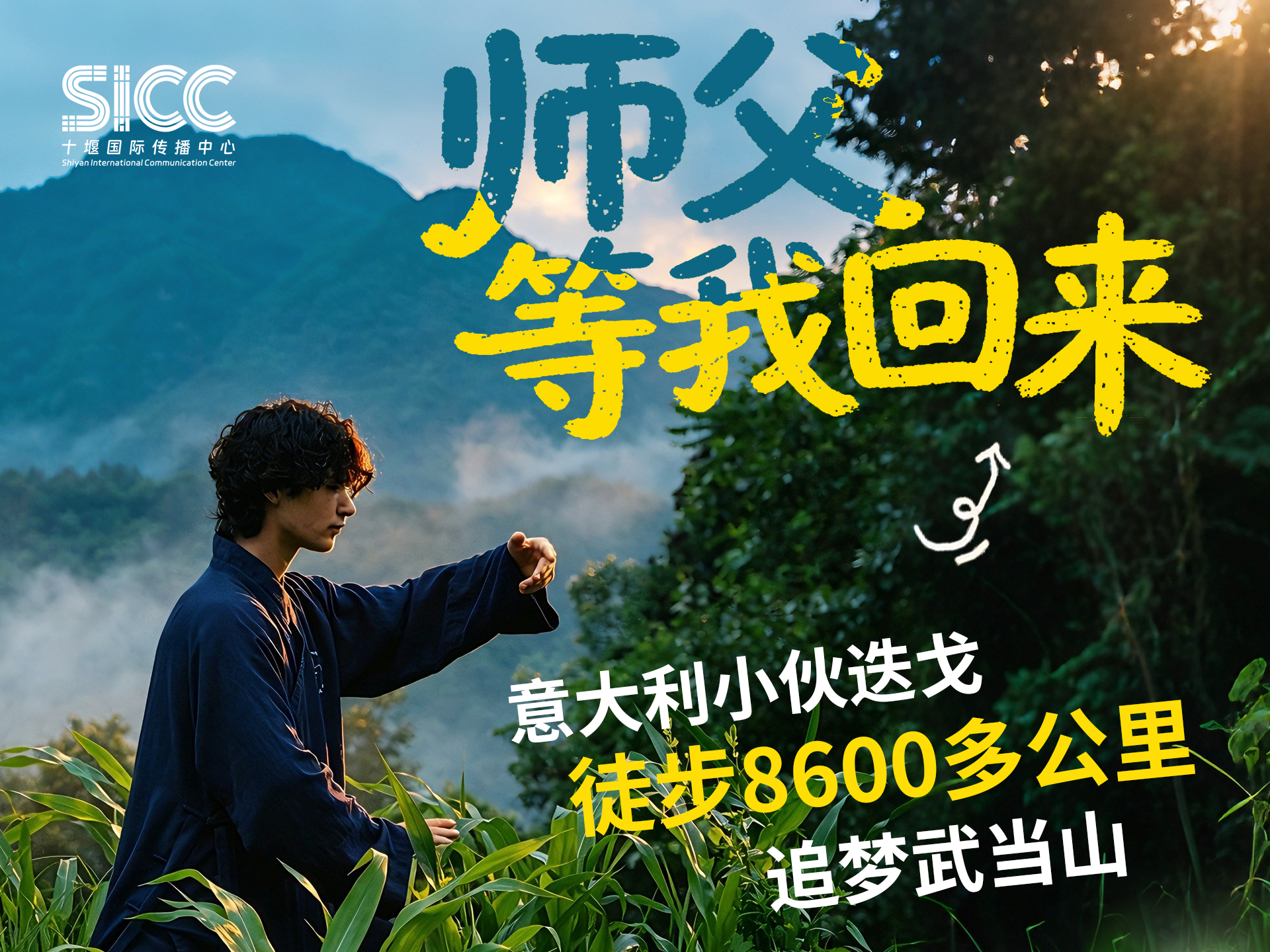
Love never stops at reaching. "Wudang, I'll be back again!"
2026-06-26 15:11:19
Love never stops at reaching. Diego, an Italian youth, hiked...
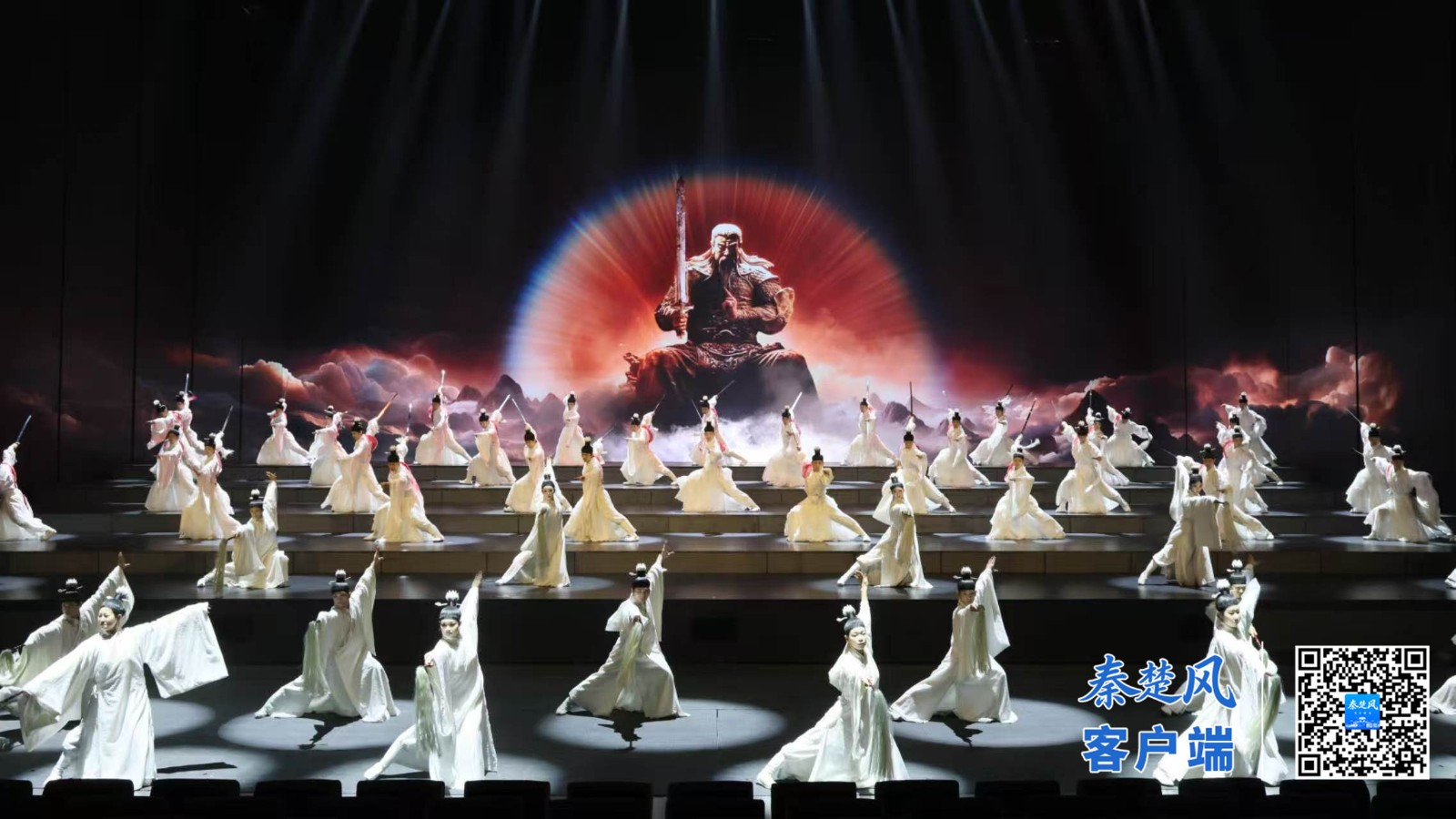
Announcement on the Adjustment of Performance Time for "Wudang Yimeng
2026-04-09 22:56:30
Dear visitors: In order to further optimize the experience o...
Special offer air tickets for Shiyan Wudangshan Airport starting from 200 yuan in March have been released
2026-04-10 00:01:36
The warm March breeze is here. Saying goodbye to the high pr...
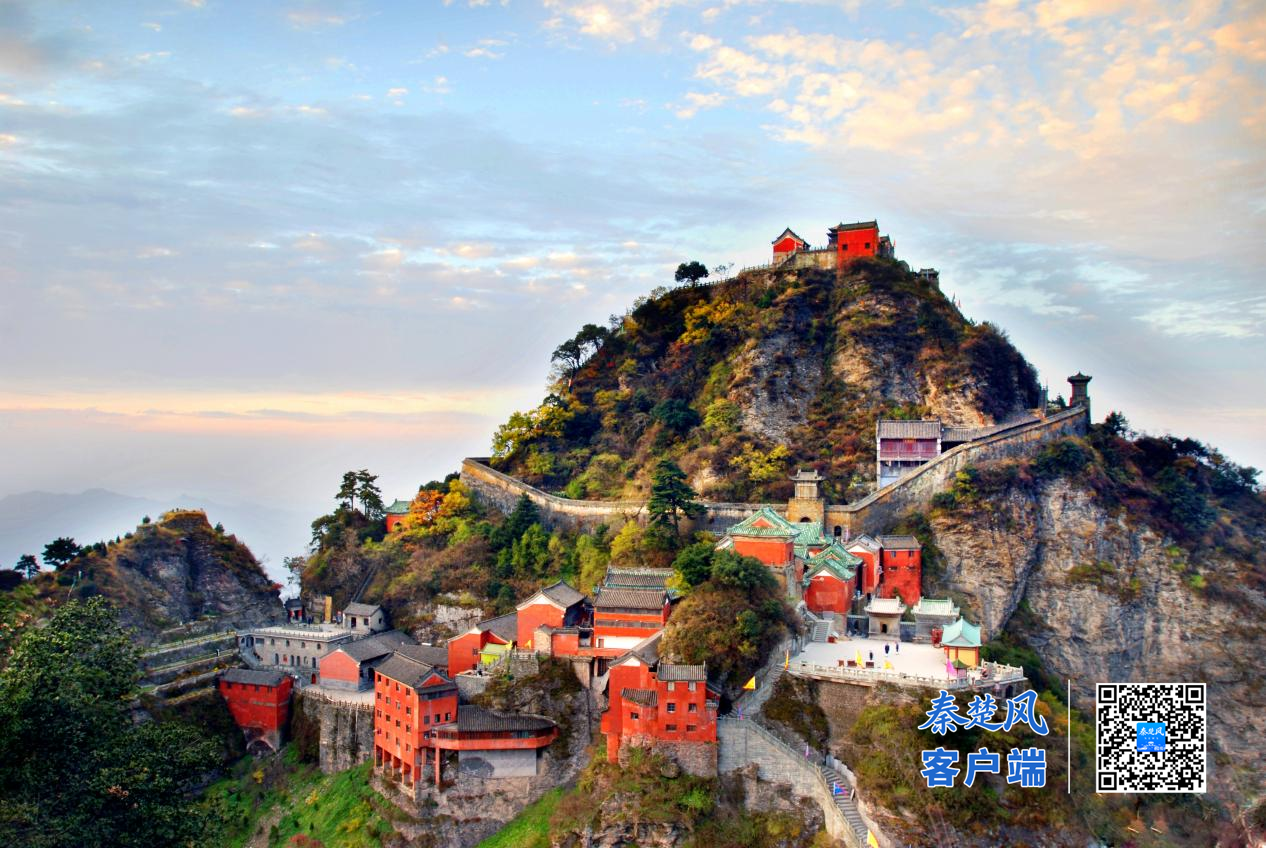
Female visitors can enter the park at half price! Wudang Mountain Scenic Area is offering discounted tickets
2026-04-09 22:02:47
Qin Chu Feng News (Correspondent Tan Mengjie) To celebrate I...
101 Reasons to Stay in Hubei: Wudang Jack: Please Call Me "Old Nei"
2026-04-09 22:03:58
Jack, an American young man who has practiced martial arts o...
On the Golden Summit of Wudang Mountain, which is 1,612 meters above sea level, this "long-lived family" is little known
2026-04-09 22:07:49
Qin Chu Wind News (Shiyan Media Reporters Lu Wei and Liu Kun...
Shiyan Wudangshan Airport has newly opened routes to Harbin and Zhuhai. Low-priced air tickets are now available for grabs
2026-04-09 21:56:47
Here it comes! Finally here it comes! Starting from March 31...

Because of the beautiful scenery of Wudang, people come to stay for the city's best views. "Shiyan, the city of immortal mountains and clear waters" is making all-out efforts to attract tourists
2026-04-09 22:06:08
On the evening of March 11th, at the foot of Wudang Mountain...