


Wulong Palace
2022-08-20 23:32:13

The Wulong Palace faces east with its back to Lingying Peak and is adjacent to the Five Dragon Peaks above. It is surrounded by tranquility and in a primitive state. Historically, it was known as the "Immortal Cave Residence" and the "Land of Lingying". Famous ancient Chinese Taoist figures such as Yin Xi, Yin GUI, Ma Mingsheng and Chen Tuan all achieved success in their Taoist practices here.
Wudang Taoism holds that the area around the Five Dragons Palace is the "Divine Dragon Cave Abode", a place where immortals and divine dragons reside. So, in the past, there was a stele standing here, inscribed with the words "The cave heaven is near, passing by in a low voice." This serves as a warning to people that this place is adjacent to the Heavenly Court on one side and the Divine abode on the other. When passing through here, one should be quiet and keep a low voice to avoid disturbing the deities.
According to the "Taihe Mountain Annals", during the Zhenguan period of the Tang Dynasty in the early 7th century AD, there was a severe drought throughout the country. Emperor Taizong Li Shimin sent Yao Jian, the governor of Junzhou, to pray for rain on the Five Dragons. Here, Yao Jian met five Confucian scholars who called themselves the Five Dragon Kings and asked them for rain. As a result, a torrential rain poured down, relieving the drought throughout the land. So, Emperor Taizong issued an edict to build the Five Dragons Shrine, thus kicking off the era of ancient architecture on Wudang Mountain.
During the reign of Emperor Beizong, the Wulong Palace already had a large-scale structure with "complete halls and halls", and Emperor Zhenzong of the Song Dynasty bestowed upon it the title of "the Temple of the Five Dragons' Spiritual Response". During the Southern Song Dynasty, wars were frequent. The Taoist architecture of Wulong Palace was "hit by war three times in a hundred years".
During the Yuan Dynasty, Wang Zhenchang, a Taoist priest from Wudang, along with Lu Dayou and his disciples, restored the Five Dragons in the year of Yihai of Zhiyuan, that is, in 1275 AD. Kublai Khan issued an edict to bestow upon them the title of "Five Dragons Lingying Palace". In the first year of the Zhizheng era, that is, 1341 AD, Li Mingliang, the Taoist priest in charge of the Five Dragons Palace, together with Shao Minggeng, raised funds to build the Five Dragons Hall. In April of the following year, Emperor Shun of the Yuan Dynasty sent his ministers to hold a grand ritual of Golden Seal Script in the Five Dragons Palace. Forty-two years later, Ye Xizhen, the founding master of the Qingwei School of Wudang, was appointed as the abbot of Wudang. Taking advantage of the opportunity of paying homage to the Emperor, he presented a "secret shrine, which greatly promoted the emperor's way". Not only did he restore the destroyed buildings of the Five Dragon Palace to their original state, but he also built new buildings such as the Mingzhen, Penglai, and Buyun Towers. As a result, the Five Dragon Palace at that time was "majestic and imposing, with a forest of ceremonial statues", and the entire complex was "magnificent and imposing". Become the center of Taoism in Wudang. However, at the end of the Yuan Dynasty, these buildings were once again destroyed by war.
In the tenth year of Yongle in the Ming Dynasty, Emperor Chengzu Zhu Di vigorously developed Wudang and carried out large-scale construction in Wulong, bestowing upon it the title of "Xingsheng Wulong Palace". By the Jiajing period of the Ming Dynasty, the Wulong Palace had 850 various halls and Taoist rooms. Ancient people highly praised the Wulong Palace as "a strange pine tree falling layer upon layer, with a thousand lotus flowers in the hall", which shows the grandeur and magnificence of the architecture at that time.
There are numerous Taoist relics near the Wulong Palace, such as Huayang Rock, Yinxian Rock, Lingying Rock, Lingxu Rock, Laomu Rock and Ziran Nunnery, all of which are worth visiting and sightseeing. Not only is the scenery there beautiful, but it is also a historical witness to the development of Taoism in Wudang.
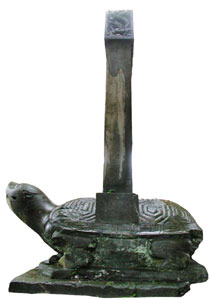
Wulong Palace Imperial Stele Pavilion No. 1
2022-08-20 23:32:13
Wulong Palace Imperial Stele Pavilion No. 1
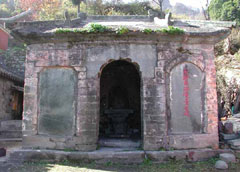
The Middle view of the Yuan Dynasty stone hall
2022-08-20 23:32:13
The Middle view of the Yuan Dynasty stone hall

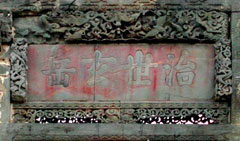
The Mystic Mountain for governing the world
2022-08-20 23:32:13
The Mystic Mountain for governing the world
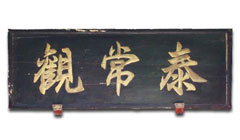
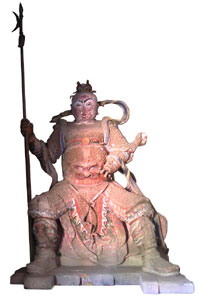
The white tiger in the Dragon and Tiger Hall of Zixiao Palace
2022-08-20 23:32:13
The white tiger in the Dragon and Tiger Hall of Zixiao Palac...
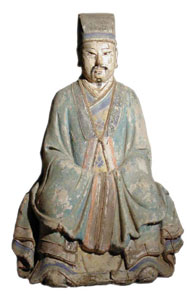
The main hall of the Five Dragons Palace has three statues
2022-08-20 23:32:13
The main hall of the Five Dragons Palace has three statues
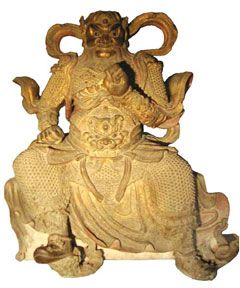
The main deity statue in the main hall of Yuanhe Temple
2022-08-20 23:32:13
The main deity statue in the main hall of Yuanhe Temple