


Preface to the inner chapter of Baopuzi in the School magazine
2022-08-20 23:32:13
The essence of Taoism is merely purity and emptiness. Its drawbacks may flow into political tactics or indulgence. There is no such thing as golden elixirs, immortal medicines, yellow and white mysticism, breathing exercises, guiding exercises, or the art of prohibiting blessings. The alchemists of the Qin and Han dynasties would never associate with Laozi. Even if it is based on the Yellow Emperor, it is not the belief of Taoism. The "Yiwen Zhi" of the "History of the Han Dynasty" classifies the various chapters of the Yellow Emperor under the category of Taoist immortals and covers the seven categories. The seven points are also based on the alternative records. Liu Zizheng still recited Xi Hongbao and firmly believed in immortals. As for the secretary of the school, he still kept his skills separate from those of the other scholars and did not mix with them. During the Eastern Han Dynasty, Emperor Huan was fond of immortals and worshipped Laozi. Heng, the son of Zhang Ling, ordered people to serve as sacrificial wine and planned to study all five thousand texts of Laozi. The connection between immortals and Taoism lies precisely here. The Inner Chapter of Baopuzi is a discourse of ancient immortals. Although it belongs to the Daoist school from the inner part, the number of immortal scriptures and divine talismans mentioned is as many as two hundred and eighty-two, and there is not a single one from the Daoist school. It is also said that Laozi's general discourse is rather brief. Zhuangzi, Wenzi, Guan, Yin and Xi, the disciples of Huangzi and Laozi, their ancestors said that Huangzi and Laozi never had the most profound words to travel a hundred thousand miles to immortals. In terms of its essence, it is completely different from Taoism. Later generations of immortals regarded Wei Boyang as the orthodox. It is the name of the book and the inner chapter of Boyang, but there is no word to describe it. Only in the biographies of immortals does it mean that the false hexagram images can be used to make elixirs. It was the school of Zhi Chuan, which was not particularly different from Taoism and had little in common with the later immortal schools. I once said that the immortal arts of the Han Dynasty diverged from those of the Yuan Dynasty and the Yellow Emperor. During the Wei and Jin dynasties, esoteric sayings became increasingly prevalent and the classics and doctrines were diverse. Taoism is treacherous to Confucianism, and immortals are thus misled by Taoism. However, it is not easy to actually use such a name. By the Song and Yuan Dynasties, it was through the practice of internal alchemy in the same furnace fire that Yin and Yang were cultivated and the primordial energy was mixed. The practice of taking fetal breath was regarded as a minor art, gold and stone talismans as a secondary art, and yellow and white mysticism as an evil art. Only by exchanging lives and cultivating together could it be regarded as the key to the immortality of Gu Shen and his ascension to the true realm. His theory delves into Chan Buddhism, incorporates the principles of the I Ching, adheres to the subtle yet profound, and aims to integrate Confucianism and Buddhism into one. As a result, during the Han and Jin Dynasties, the notion of immortals was completely abandoned, and their names and reality were confused. However, Ge's works strictly follow his master's teachings and do not flaunt his profound insights. For instance, when a Confucian scholar expounds the classics, is it the Sinology of immortals? Sun Boyuan, the director of the Canal Transport Department, was deeply devoted to ancient doctrines and well-versed in the nine schools of thought. He personally collated and corrected the confusion and errors in the Ming Dynasty's printed copies of Baopuzi and Tianyi Pavilion. Later, I and Gu Jian each used their family collections and compared them with other books to re-collate several times. Boyuan recorded the chapters and will publish them. Because I have listed the lineages of immortals and Taoists, as well as the divisions and reunions of ancient and modern times, I have arranged them in order. Those who read them may have some reference. It was written by Fang Weidian of Tongcheng on the day of Jiaxu in the seventh month of the 17th year of the Jiaqing reign. Note: In the Ming Dynasty, Bao Puzi placed a separate chapter after the inner chapter, specifically discussing breathing exercises and guiding exercises. This does not align with the original meaning of the inner chapter and the language is rather simple and straightforward, unlike the style of the Jin Dynasty. According to the self-narrative of Zhi Chuan, there is no such book. None of the Chronicles of the Sui and Tang dynasties recorded it. Only the Daoist section of the "Art and Literature Annals of the Song Dynasty" has two volumes, namely, "Bao Pu Zi" and "Bi Zhi". Note: I don't know the author. It is not said to have been written by Zhi Chuan either. A late-published book is not trustworthy. Moreover, the current version contains over 560 words and does not fill a single volume. It is not an old version from the Song or Yuan Dynasties. Therefore, it was cut off and no longer attached to the end of the text. Weidian Youba.
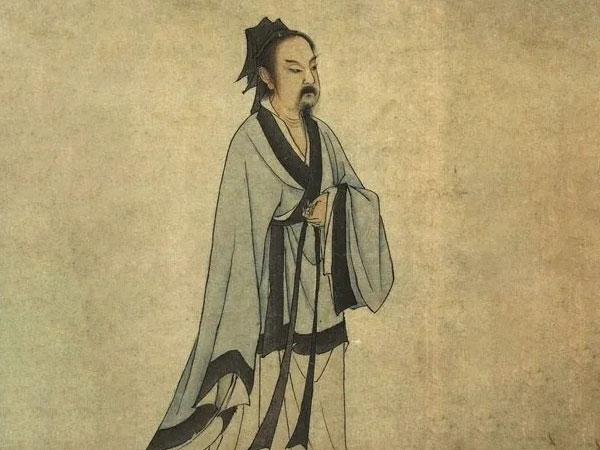
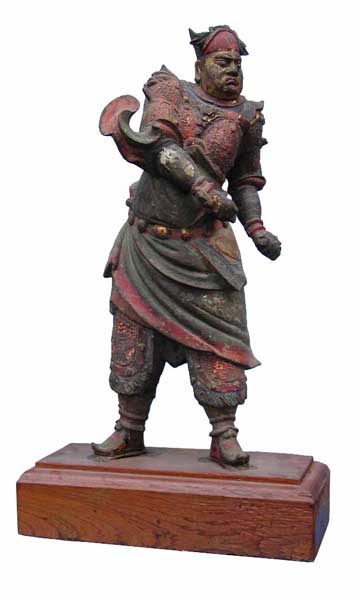
One of the stars of the Big Dipper
2026-04-15 11:51:31
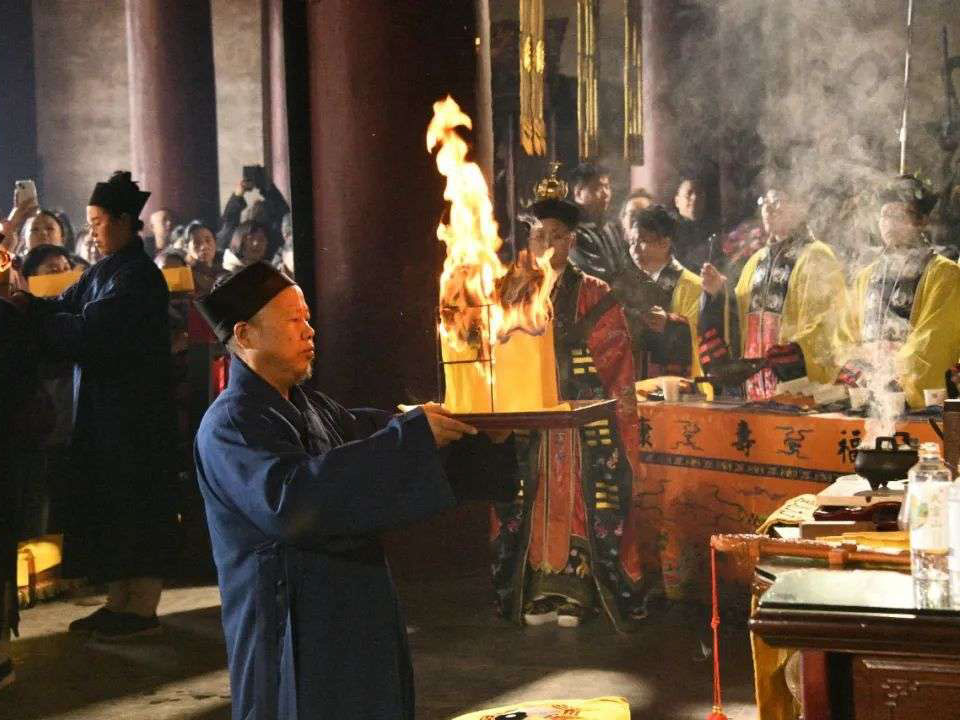
(1) The meaning of the ritual of fasting and Taoist ceremonies
2022-08-20 23:32:13
The original meaning of "zhai" was to be neat, harmonious an...
Yin GUI
2022-08-20 23:32:13
Chapter 27
2022-08-20 23:32:13
Chapter 72
2022-08-20 23:32:13
Chapter 25
2022-08-20 23:32:13
The couplet of the ancestral hall of the Wudang Mountain Temple
2022-08-20 23:32:13