


Volume Twelve "Questioning"
2022-08-20 23:32:13
Some may ask, "If immortals can surely achieve it, sages have already cultivated it. But if Zhou and Confucius did not do it, it is understandable that there is no such way." Baopuzi replied, "A sage does not need to be an immortal, and an immortal does not need to be a sage." The sage, entrusted with the mission, does not seek the path to immortality, but desires to eliminate the wicked and the evil, to eliminate the dangerous and the violent, to establish rituals and music, to write laws and teachings, to change unhealthy trends, to change outdated customs, to protect threatened masters, to support fallen and warring states, to publish poetry and books, to write the Rivers and Luo Rivers, to write scriptures and prologues, to compose elegant verses and praise, to train children, to apply to various states, and suddenly there is no smoke or warmth, and one cannot take it all in. How could one possibly close one's hearing, hide one's vision, look inward and listen to the opposite, breathe and guide, eat long meals and keep clean, enter the room to cultivate the body, climb mountains and gather herbs, count breaths and think of the mind, and sever the grain to clear one's mind? As for immortals, one must be steadfast in faith, diligent without slackening, and able to remain calm and composed. Then one can attain them without the need for much talent. To have the high truth of entering the mundane world is a heavy burden for those who follow the Tao. If one acquires the great medicine of unity and knows the key to nourishing the spirit, then one can enjoy longevity and long-term vision. Is this not as boundless as the cultivation of sages? Moreover, the so-called sages in common parlors are all sages who govern the world, sages who do not follow the way, and sages who have achieved the Way. Among them, Mr. Huang is the sage. The sages who govern the world are Zhou and Confucius. The Yellow Emperor first governed the world and then ascended to immortality. This is one of the rare talents who can achieve both. The emperors of ancient times were inscribed on Mount Tai, which can be read by seventy-two scholars. The number of others that have been erased is countless. Among them, the one who only records the Yellow Emperor and the Immortal can be clearly understood. The world calls someone a sage because of what others excel at and what others cannot match. Therefore, those who are extremely proficient in Go are called the "Go Sage", and thus Yan Ziqing and Ma Suiming are still known as the "Go Sage" today. Those who excel in historical records are called the Sage of calligraphy. Therefore, Huang Xiang Hu Zhao is still known as the Sage of calligraphy today. Those who are exceptionally skilled in painting are called "painting sages", which is why Wei Xie and Zhang Mo are still known as "painting sages" today. Those who are particularly skilled in carving and carving are called the "Wood sages". Therefore, Zhang Heng and Ma Jun are now known as the "Wood Sages". Therefore, Mencius called Bo Yi the sage of purity. Liu Xiaohui is the sage of harmony. Yi Yin is the sage of Ren. To put it simply, the sage is not the same thing. Foban lost 倕 di, the sage of machinery; He is gentle and soothing, a sage in treating diseases. Zi Wei Gan Jun was the sage of divination. Sushinliao, the sage of 卜筮; Xia Yu Du Hui, the sage of sinews and muscles; Jing Ke and Nie Zheng, the sages of bravery, Fei Lian and Kuafu, the sages of lightness and speed. Ziye Yanzhou, the sage of kindred spirits; Han Bai of Sun Wu was the sage of military strategy. The sage is the ultimate title of human affairs, not limited to literature alone. Zhuang Zhou said: There are five ways of the sage in theft. He who, despite his deluded thoughts, knows the hidden dangers of others is enlightened. To enter without doubt is courage. To come out later without fear is righteousness. Those who know whether something is appropriate or not know. To distribute wealth equally is benevolence. There has never been a person who became a great thief in the world without attaining this path. Some say: "The way of a sage must not be fragmented or scattered; it must be comprehensive and integrated, and then become a sage." " I replied, "Among Confucius' disciples, there are seventy-two who have reached the level of enlightenment, and each of them has achieved the unity of the sage. This is a judgment of the sacred matter." It is also said: Yan Yuan is specific and subtle, which means that there are differences in the thickness and thinness of sacred affairs. It is also said that there are four ways of the sage: those who speak value their words, those who move value their changes, those who make tools value their images, and those who 卜筮 value their occupation. This is a clear proof of the holy way. What is it that a person who is good at morality to the extent of being a deity cannot be called a sage who has attained the Tao? If there were no enlightened sages, could Zhou and Kong not have been sages for governing the world? Since they are not the same, how can responsibility and mission be combined? According to the Immortal Sutra, all those who have attained immortality are naturally endowed with the energy of immortals by chance. Therefore, among the births, there is already the nature of faith and knowledge. If one's heart is fond of doing things, one will surely be taught by a wise teacher and obtain the Dharma. Otherwise, one will not believe or seek, and even if one seeks, one will not obtain it. The original ruling of the Jade Seal Sutra states: A person's good or bad fortune is determined on the day of giving birth and receiving qi, and they will all receive the essence of the constellations. If one is in the sacred abode, one is sacred; if one is in the virtuous abode, one is virtuous; if one is in the literary abode, one is literary; if one is in the martial abode, one is martial; if one is in the noble abode, one is noble; if one is in the rich abode, one is rich; if one is in the humble abode, one is humble; if one is in the poor abode, one is poor; if one is in the longevity abode, one is immortal. There are also the inns of immortals and sages, the inns of sages who govern the world, the inns of both sages, the inns of nobility but not wealth, the inns of wealth but not nobility, the inns of both wealth and honor, the inns of first wealth and then poverty, the inns of first nobility and then lowliness, the inns of both poverty and lowliness, the inns of eternal wealth and honor, the inns of loyalty and filial piety, and the inns of evil. So indescribable, it is more like this. It is said that one's life is predestined. If one does not accept the order of immortals, there will surely be no heart of loving immortals. There is no one who seeks something with a bad heart, and there is no one who obtains something without seeking it. From ancient times to the present, there have been people of great talent and understanding who do not believe in immortals, and there have been people of average learning who have achieved immortality. Person A, despite having many understandings, may be obscured by immortals, while person B, despite having many misunderstandings, tends to grasp the principles. Isn't this the result of the will of heaven? Among the disciples of the secret immortal arts of the Dao, it is especially important to select the most concise and master them for a long time, and then explain the key points. Moreover, for the world, it is fortunate that they do not believe or seek them. Why should one insist on using such words? Neither can they be persuaded to believe them, nor will they be ridiculed and slandered. Therefore, those who have attained the Tao walk on different paths and stop in different places from the world. They do not wish to associate with others in words and do not wish to mix with others in body. Even a thousand miles apart, it is still feared that a distant and arduous attack is not enough. To sever the path, one is still afraid that it is insufficient to avoid the humiliation and disgrace. High status is not enough to lure him, nor is wealth enough to remove him. How could he be willing to show off to the common people and say that he has immortal magic? This is the reason why one has no connection with the path of immortality. Moreover, Zhou Kong was a man of profound talent and profound learning. Even in his minor skills, he was not idle. To make him jump over arrows and wield swords, cross the sharp edge and throw into the narrow space, walk on the pagoda, 擿 board the edge of the table, follow the steep cliffs of ten thousand feet, swim in the unexpected events of Luliang, carry a thousand pounds with his hands, stand on tiptoes and strike with fear, strike tigers and leopards, catch swift arrows, ordinary people could do it, but Zhou Kong couldn't. How much more so than this? What others are concerned about, where fleas and lice head, the red and purple of the wall, the grass and grass under the forest, the books in the box, the treasures in the ground, the birds and beasts in the rich forest and deep marshes, the fish and turtles in the deep and vast pools, the Zhou Confucius may not be able to know all of them, let alone those far away. A sage will feel hungry if he does not eat and thirsty if he does not drink. He will feel hot if he is burned, cold if he is frozen, painful if he is struck, and injured if he is cut. Over time, he will grow old; if he is injured, he will fall ill; if his breath is exhausted, he will die. This is what makes him 无异者 much different from ordinary people, but at least what makes him different. Therefore, those who are overly cruel to others can only do so because they are talented and far-sighted, have a high level of speech and writing, are virtuous and upright, and are well-informed and knowledgeable. How could they be free from evil in every matter? Having already written the classics and governed the people, if one still desires to make both of them understand the way of immortals and achieve immortality, how many times can one praise the sages for this? When I hear my words, they are contrary to the common people's ears. True words must be contrary to the masses. Scholars and soldiers who read my book will surely say that I have not ruined the sage. How could I be so? But if one attempts to understand all the physics, to end up with all the principles and all the matters, it would be like slandering Confucius. The world says that sages fall from heaven, are divine beings, know everything and can do anything. If one is even more intimidated by the name and dares not elaborate on the matter, saying that it is what the sage does not do, then there is no one who can replicate it. What the sage does not know, no one else knows. How laughable is that? Now, by comparing it with recent events, one can understand. Confucius was unaware of the sound of a bird selling its life and dying. Could he then say that Yan Hui could only interpret it in a partial way? Hearing the weeping of the woman from Taishan, I asked her about it. Only then did I learn that the tiger had eaten three of her family members. I didn't know why she didn't move away. I had to answer to understand. Those who see the sparrow are simply drawn by its yellow mouth and cannot discern its meaning; only by asking it can one understand. When he wanted to bury his mother, he didn't know where his father's tomb was. He had to be told by someone. Once the tomb collapsed, he still didn't know. His disciples informed him, and he burst into tears. It is also suspected that Yan Yuan's act of stealing food is a false claim that he intends to offer sacrifices to his ancestors, which is a sign of hypocrisy. The stable was burned down, but it was unknown whether it had hurt the horse or not. After Yan Yuan, it was said that he was dead. He has traveled around more than seventy countries, yet he cannot reverse the fact that those who know him will not be used, and he cannot even settle down, nor can he have time to warm up. They do not know how to surround the Kuang people and thus follow their own path. When I asked Laozi about the ancient rites, there was no understanding of them. When Tan Zi was asked about his position as a bird, the official was not aware of it. If one does not know the direction of the journey and is asked about it, but does not know what is being asked, the person will surely ridicule him without telling him the way. If you know this, you will not ask. Those who get off the vehicle to chase after the singing phoenix do not know that it is not there. Seeing Nanzi without realizing that it is of no benefit. If such examples cannot be enumerated, but one does not know the immortal arts, what is there to be surprised about? Another common scholar said: If a sage cannot do something, no one else can. Then Dangren lived in the water, Liang Mu was crematted, Bozi endured the heat, Zhongdu endured the extreme cold, Zuo Ci was killed, Gan Shi did not feed for the years, Fan Yi did not enter when he saw someone being cut, the turtle was reborn when its body was lost, Shao Qian held a hundred ghosts, Chang Fang shrank the earth's ridges, Zhongfu pretended to be in the morning ducks, Zhang Kai praised the clouds and mists, but I have never heard of Zhou Kong doing such things." Some common people might say, "Zhou Kong could do this, but he didn't do it." I replied, "If I do not seek to express it in plain language but rather in empty words, then I can say that Zhou Kong can spread his wings and fly, soar in the eight corners of the earth, create clouds and rain, move mountains and pull Wells, but I will not listen." If one does not rely on the records of events as evidence, what else can be limited? Surely, as it is said, I can also say that both Zhou and Confucius have ascended to immortality. However, this method cannot be used to teach the world. I fear that everyone will know that immortality is possible and will all be entrusted to support. They will be demoted from officialdom and ascend to peril and hardship to cultivate this way. This is because there will be no descendants in the family, no officials in the country, and both loyalty and filial piety will be lost, and the great family will be in chaos. Therefore, Zhou and Confucius secretly did it themselves and did not tell others. They outwardly claimed the form of ultimate death but inwardly claimed the reality of being immortals. If so, then why will you also find it difficult for me? It's not necessarily the case. The Lingbao Sutra contains three chapters of Zhengji Balance taught by fei GUI, all of which are immortal arts. The King of Wu cut down stones to govern the palace. Among the stones, he found a book with purple inscriptions and golden slips, which he could not read. He sent an envoy to ask Zhongni about it, but he deceived Zhongni, saying, "The King of Wu lives in leisure. He has a red bird carrying a book and placing it in the hall. He does not know its meaning, so he has consulted Zhongni from afar." Zhongni regarded it and said, "This is the prescription of Lingbao, the method of immortality, the one that Yu accepted. It was hidden in the water land, with a year equal to the sky and the earth, and served in the Purple Court." Yu was about to become an immortal and was sealed in a stone box on a famous mountain. It is now carried by the red bird, which is almost a gift from heaven. From this perspective, it can be said that Yu the Great of the Xia Dynasty did not die, and Zhongni knew this. How do you know that Zhongni did not all diligently practice his teachings? If the sage does not do this, it can be said that it is ineffective. People's likes and dislikes vary from person to person. If we explain them to each other, wouldn't we believe it? If it is in line with his will, even if it is small, he will surely do it. If it is not in line with the spirit, even if it is great, one will not learn it. There are already people who love bitterness and hate sweetness, and there are countless people who love profit and abandon righteousness. The great treasure of a sage is his position; how can he gather people and make them rich? It is also said that "Wealth and honor are what people desire." In the past, there were those who, despite holding the position of emperor, refused to use it, were entrusted with the wealth of the four seas, slandered the officials of the three nines, carried the rewards of jade and silk, pursued the noble nature of the mountains and forests, and were willing to engage in the humble work of fishing, all of which were beyond count. It is also said: "When men and women eat and drink, the great desires of human beings exist." Therefore, lust cannot be remedied, but indulgence can forget worries. In the past, there were those who abandoned the beauty of the valley, did not keep wives or concubines, went alone in seclusion, were full of pride and joy, looked at their shadow with joy, and washed away the taste of the stream. It is hard to remember. All human beings love the beauty of women and the lightness of the body. However, Emperor Huang Qiu qiu Du Chou's 嫫 mother, and Marquis Chen Lian Lian detestable Dun Qia. Everyone's nose is filled with joy and fragrance, so they exude yellow yujin, Zhi LAN Su He, Xuan Dan Su Jiao, Jiang Li Jie che, Chun Hui and Qiu LAN, all of which are as expensive as Qiongyao. And the girls on the sea chase after the cold and stinky husbands, and they never stop. Zhou Wen is fond of the unappealing 菹 and does not tolerate the overly strong taste of yi. Wei Ming was fond of the sound of his chisel and did not harmonize it with the sounds of silk and bamboo. Everyone has their own intentions. Can one seek to be in harmony with another? Zhou Kong, from time to time, did not believe in the way of immortals. The sun and the moon did not shine on it, and the sages did not know it. How could it be that if the sages did not do it, there would be no immortals in the sky! It is the fault that the three lights do not shine within the pot.
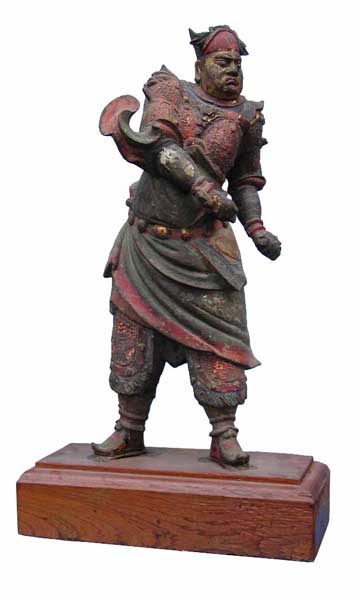
One of the stars of the Big Dipper
2026-04-15 11:51:31
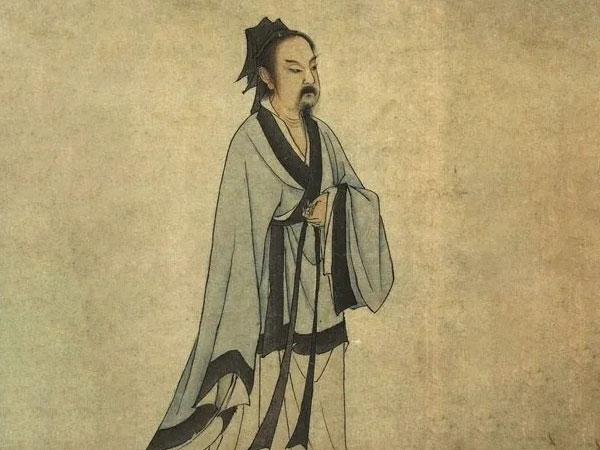
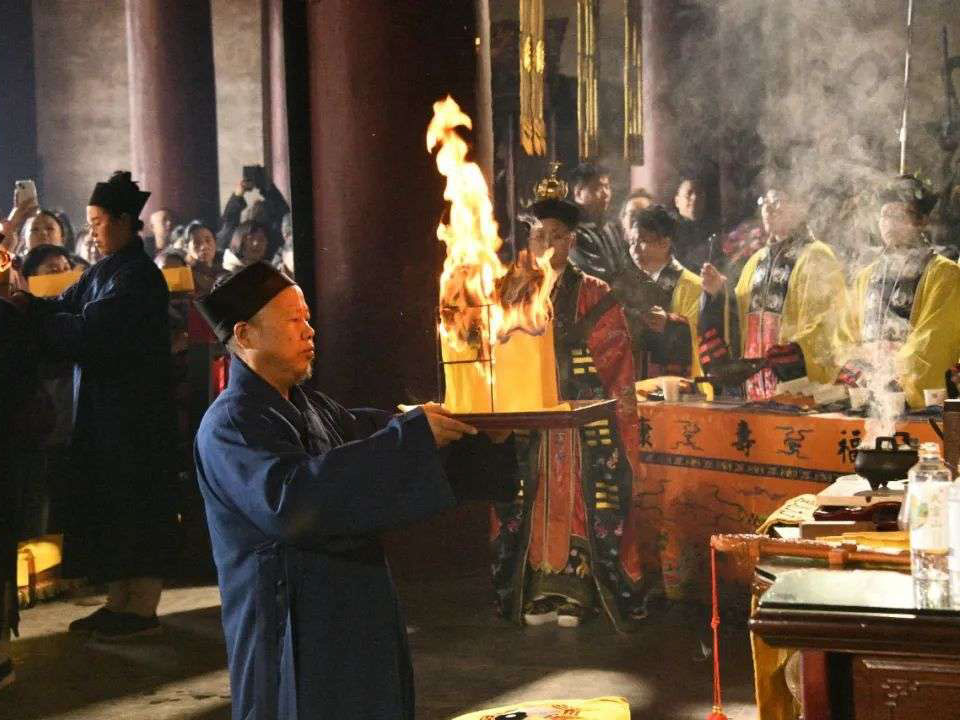
(1) The meaning of the ritual of fasting and Taoist ceremonies
2022-08-20 23:32:13
The original meaning of "zhai" was to be neat, harmonious an...
Yin GUI
2022-08-20 23:32:13
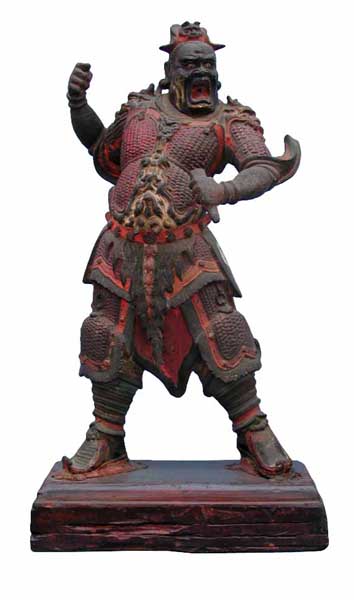
The fourth of the Big Dipper Stars
2026-04-15 11:57:55
The couplet of Jiang Taigong Shrine on Wudang Mountain
2022-08-20 23:32:13
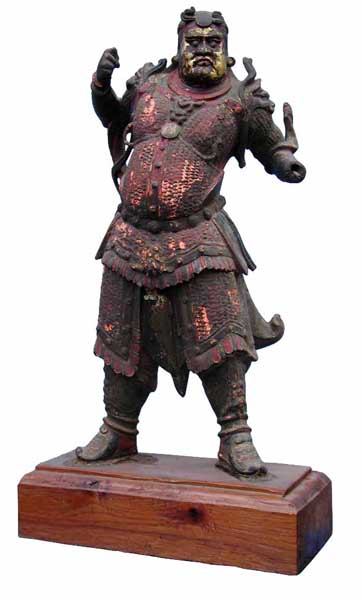
The second Star God of the Big Dipper
2026-04-15 11:56:49
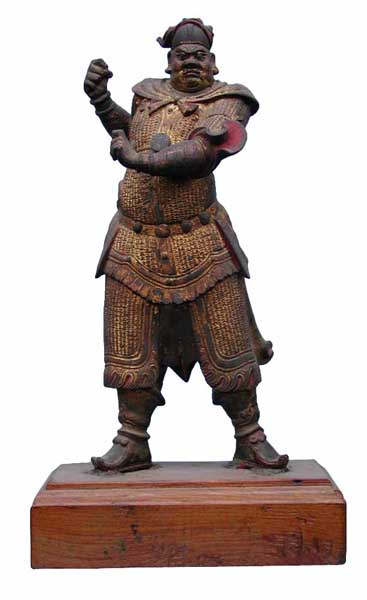
The third of the Big Dipper Stars
2026-04-15 11:57:19