


Dohara
2022-08-20 23:32:13
Laozi said, "There are things that are mixed together, born before heaven and earth, and only form without form. Youdaoplaceholder0 is deep and dark, lonely and indifferent, and its sound is not heard. I force myself to name it, and I call it the Dao." The Dao is so lofty and unfathomable that it embraces the universe and the formless, flowing in its original state 泏泏, surging but not overflowing, purifying the turbidities into a gentle and clear stillness, exerting an infinite force without any time, manifestly not overflowing within a handful, being concise yet expansive, secluded yet bright, gentle yet firm, containing Yin and exuding Yang, and illuminating the three lights. Mountains are high because of their height, deep valleys because of their depth, beasts because of their movement, birds because of their flight, dragons because of their swimming, phoenixes because of their soaring, and stars because of their passage. To seek survival through extinction, to seek honor through humility, and to seek advancement through retreat. In ancient times, the Three Sovereigns, having achieved the rule of the Tao, stood at the center, with their spirits and spirits wandering to pacify the four directions. Therefore, it can transport heaven and earth 墆, turn without waste, flow without ceasing, and start and end with all things. The wind rises and the clouds steam; thunder rumbles and rain falls, and the response is endless. After being carved and polished, it returns to simplicity. By doing nothing, one can conform to the cycle of birth and death; by speaking without action, one can connect with virtue; by being content without arrogance, one can achieve harmony; by being diverse in all things, one can be born. Harmonizing Yin and Yang, regulating the four seasons, regulating the five elements, moistening grass and trees, soaking metal and stone, animals and beasts are large and their hair is lustrous, bird eggs remain unblemished, animal offspring are not 㱩, fathers have no worry of losing their children, brothers have no sorrow of crying for their younger brothers, children are not lonely, women are not widowed, the rainbow is not seen, thieves are not punished, all these are the results of virtue. The way of the great permanence is to live without existence, to transform without slaughter, for all things to rely on it to live without knowing its virtue, to rely on it to die without being able to complain, to store and accumulate without becoming rich, to give and receive without becoming poor. Hu xi 怳 xi, do not form an image xi, 怳 xi hu xi, use does not bend xi, 窈 xi Ming xi, respond to form without form xi, thus xi tong xi, do not move in vain xi, with hardness and softness, curling and stretching, with Yin and Yang, rising and falling. Laozi said: A true man is at ease and without thought, 惔 without worry. He uses the sky as his cover, the earth as his chariot, the four seasons as his horse, and Yin and Yang as his control. He travels without a path, wanders without idling, and leaves without a door. If the sky is the cover, everything will be covered; if the earth is the carriage, everything will be carried; if the four seasons are the horses, everything will be utilized; if Yin and Yang are in control, everything will be prepared. Therefore, when fast, one does not waver; when far, one does not toil; when the four elements do not move, one's intelligence does not wane; and when illuminating the world, one holds the essence of the way and observes the boundless land. Therefore, the affairs of the world cannot be accomplished; they should be pushed forward by nature. The changes of all things cannot be saved; they should be returned to by their essence. Therefore, the sage cultivates the essence within himself and does not embellish the details externally. He strives for his spirit and restrains his knowledge and views. Thus, he is indifferent and inactive, yet nothing is left undone; he is undisciplined, yet nothing is left undone. The so-called non-action is not to act before material things. What is incurable is not easy to come naturally. Nothing is beyond cure because of the nature of all things. Laozi said: "Those who govern the people by adhering to the Dao will follow when events come and respond to things when they move." All things transform in response to each other, and all undertakings change without exception. Therefore, the Dao is characterized by nothingness, simplicity, tranquility, weakness, purity and plainness. These five elements are the images of the Dao. The void is the abandonment of the Dao, the simplicity of the Dao is the plain of the Dao, the tranquility of the Dao is the mirror of the Dao, and the weakness of the Dao is the application of the Dao. The opposite is the constancy of the Dao, the softness is the hardness of the Dao, and the weak are the strength of the Dao. Purity and simplicity are the essence of the way. Emptiness means there is no burden in the heart, and balance means the mind is free from burden. Desires and desires are not carried. This is the ultimate of emptiness. There are no likes or dislikes. This is the ultimate of balance. One remains unchanged. This is the ultimate of stillness. One is not mixed with other things. This is the ultimate of purity. One is neither worried nor happy. This is the ultimate of virtue. The governance of the supreme people is to abandon their intelligence, destroy their literary works, follow the way and abandon wisdom, and be in harmony with the people to achieve public benefit. Restrain what they hold fast to, reduce their desires, remove their enticements, get rid of their noble desires, and donate their thoughts. If one restrains what they hold onto, they will observe; if they have few desires, they will obtain. Therefore, by controlling the outside with the middle, nothing will be wasted. If one can obtain what they want, the outside can lead them. When one achieves this, the five internal organs are at peace, thinking is balanced, the muscles and bones are strong, and the ears and eyes are intelligent. The great way is smooth and unobstructed, and the journey is not far. Those who seek the distant will return. Laozi said, "The sage forgets to govern others but cares about self-care." It is important to forget about position and power, but to focus on self-satisfaction. When self-satisfaction is achieved, the world will have you. To forget about wealth and honor and care about harmony, to know oneself while minding the world, is close to the Way. Therefore, it is said: "To reach the ultimate void, to remain still and steadfast, all things come together, and I observe their return." The Tao refines all things, beginning and end without form, still and motionless, vast and boundless, deep and vast, it cannot be the outside, nor can it be the inside by splitting the hair and cutting the edge. It is a universe without any obstruction, yet it arises between being and non-being. The true human body is characterized by its emptiness, simplicity, tranquility, weakness, purity and plainness, not mixed with any material things, and follows the supreme virtue of heaven and earth. Therefore, it is called a true person. A true person is one who values oneself over the world, values self-governance over others, does not seek harmony with material things, does not let desires disrupt emotions, conceals one's name and name, conceals when there is the way, reveals when there is no way, acts without action, acts without action, knows without knowing, holds the way of heaven, embraces the heart of heaven, inhales Yin and Yang, expels the old and takes in the new, closes with Yin, opens with Yang, coexists with hardness and softness, rises and falls with Yin and Yang, is in harmony with heaven, and is in harmony with the Way. There is no joy, no pain, no delight, no anger. All things are mysterious and the same, nothing but nothing. For those who suffer from the torment of cold, heat, dryness and dampness, the physical form is thorough but the spirit is relaxed. For those who suffer from joy, anger, overthinking and worry, the spirit is exhausted but the physical form remains. Therefore, the true person's heart is devoted, the staff's nature relies on the divine, and they support each other to achieve the beginning and the end. Thus, they do not dream when sleeping and are free from worries when awake. Confucius asked. Laozi said: "Correct your form and your vision, and heaven and earth will come." To keep you informed and correct your conduct, God will eventually abandon you, virtue will embrace you, and the Way will dwell for you. Tongzi, like a newborn calf, has no reason for seeking it. Its form is like a withered tree, and its heart is like ashes. It truly knows but does not restrain itself because it is crooked. It is vast and has no intention of scheming. "Understanding the four directions, how can one be ignorant?" Laozi said: "Those who act in response to changes arise from The Times and are impermanent actions." Therefore, "The Dao that can be spoken of is not the eternal Dao; the name that can be named is not the eternal name." Calligraphy is the birth of words, and words come from wisdom. The wise do not know this; it is an extraordinary way. One can be named, but not a book collector. "Extensive learning leads to exhaustion; it's better to adhere to the middle way." "Absolute learning brings no worries." "Abandoning sages and wisdom benefits the people a hundredfold." Man is born calm; this is the nature of heaven. Being moved by objects is the harm of one's nature. When things come, they respond; this is the movement of wisdom. Wisdom, when connected with things, evokes a sense of aversion. Hatred takes shape, and wisdom is intimidated by external factors, unable to turn against oneself, and thus the natural order is extinguished. Therefore, the sage does not change the heaven with man; externally, he transforms with material things, but internally, he does not follow emotions. Thus, those who understand the Tao turn against tranquility, and those who are empty of material things ultimately achieve non-action. Cultivate wisdom with tranquility, unite the spirit with indifference, and you will reach the boundless. Those who follow the heavens roam with the Tao, and those who follow others associate with the common people. Therefore, the sage does not let his affairs deceive the heavens, nor does he let his desires disturb his emotions. He acts without planning, trusts without speaking, gains without worrying, and achieves without doing. Therefore, when in a high position, the people do not respect it; when at the forefront, people do not harm it. The world belongs to it, and the wicked fear it. Because it does not contend with all things, no one dares to contend with it. Laozi said: "If a man loses his nature from his desires, his actions will never be correct. If he governs a country, it will be in chaos; if he governs himself, it will be filthy. Therefore, those who do not listen to the Tao cannot reverse their nature, and those who do not understand things cannot be at peace." The original human nature is pure and pure. When it is deeply immersed in the world for a long time, it becomes easy. When it becomes easy and forgets its original nature, it is in harmony with its true nature. The desire of water is clear, while that of sand and stones is filthy. Human sexual desire is flat, but excessive desires harm it. Only the sage can reflect on himself through his own deeds. Therefore, the sage does not control things with wisdom, nor does he indulge in desires. When he is happy, he is not overjoyed; when he is worried, he is not sorrowful. Thus, he is high but not dangerous, and at ease but not overconfident. Therefore, when hearing good advice, one responds promptly; even the foolish know how to say it. He is called a sage of high virtue and conduct, and even those who are not virtuous will admire him. Many talk about it but few put it into practice; many admire it but few act on it. The reason for this is that 掔 is related to things and to the common people. Therefore, it is said: "When I do nothing, the people will transform themselves; when I do nothing, the people will become rich; when I love tranquility, the people will be upright; when I have no desires, the people will be simple." Tranquility is the ultimate virtue, and softness is the application of the Tao. Emptiness is vast without form, fine without form, abundant without form, scarce without form, strong without form, weak without form, solid without form, and illusory without form. What is tangible is what accomplishes things; what is intangible is what initiates them; what accomplishes things is what achieves them; what initiates them is simplicity. Where there is form, there is sound; where there is no form, there is no sound. The form originates from the formless, so the formless is the beginning of the form. A broad and thick reputation is renowned; a renowned reputation is valued for its completeness. Frugality and obscurity mean that the nameless is lowly and contemptuous. Yin Fu is renowned and respected. Poverty and obscurity mean being nameless and weak. The male and the male are famous, and those who are famous are famous. The female and the female are nameless; the nameless is vague. Those who have a surplus have a name, and those who have a name are highly virtuous. Those who are lacking are nameless; those who are nameless are appointed to lower positions. Those who have made achievements are famous, while those who have not made achievements are nameless. Fame comes from nameless, and nameless is the mother of fame. The way of heaven is that being and non-being give birth to each other, and difficulty and ease complement each other. Therefore, the sage adheres to the Way, being calm and subtle to achieve his virtue. Thus, having the way means having virtue, having virtue means having merit, having merit means having fame, and having fame means returning to the Way. Fame and honor last long, and one is free from blame throughout life. Princes and nobles have fame and honor, but the lonely and the widowed do not. Therefore, it is said that the sage considers himself lonely and the widowed, returning to the root. When one achieves success but does not gain it, one regards merit as profit and nameless as use. In ancient times, when people were young and naive, they knew nothing. Their appearance was not separated from emotions, but their speech was not expressive. Their actions were not graceful, and their words were not written. If their clothes were fine and their spiritual virtues were not complete within them, they did not know how far they could be harmed. If the desire to harm was forgotten within, it would be like a hungry tiger. How much more so for people? Those who follow the Dao are lost but not exhausted; those who employ numerous measures are diligent but achieve nothing. Laws, punishments, and punishments are not the responsibility of emperors; 棰 and excessive strategies are not the means of far-reaching control. When there are many likes and dislikes, disasters follow. Therefore, the laws of the ancient Kings were not what they had done or caused; their prohibitions and punishments were not what they had done or maintained. Thus, if the causes are great, the actions will be meticulous; if the rules are solid, the actions will fail. Those who rely on their eyes and ears for hearing and seeing will exhaust their minds but fail to understand; those who rely on their wisdom and thinking for governance will exert their efforts but achieve nothing. Relying on one person's talent is hard to achieve governance, and one person's ability is not enough to manage three mu of land. According to the numbers of reason, because of the nature of heaven and earth, that is, the six combinations are not even, listening to the wrong praise, the eyes are lustful to the colorful women, the rites are not enough to release love, the sincerity can hold far and wide. Therefore, in war, do not 憯 follow the will, mo? For a minor bandit, nothing is more important than Yin and Yang. The 枹 drum is the smallest. As the saying goes, a major bandit lies in silence, a medium bandit hides in the mountains, and a minor bandit 遯 lives among the common people. Therefore, it is said that when the people are intelligent, strange things will arise, laws and regulations will be established, and bandits will take from one place to another, and natural disasters will not arise. Therefore, if one governs a country with wisdom, it is a traitor to the state. If one does not govern a country with wisdom, the virtue of the state is the ancestor of all things. When the three are carried forward, they will perish into nothingness. The formless is called unity, and unity means having no intention to unite with the world. If virtue is not disseminated, if it is not used frequently, if it is not seen, if it is not heard, if it is formless, form comes into being; if there is no sound, the five sounds sound; if there is no taste, the five flavors take shape; if there is no color, the five colors form. Therefore, existence arises from non-existence, and reality from emptiness. The number of sounds is no more than five, and the changes of the five sounds cannot surpass hearing; the number of flavors is no more than five, and the changes of the five flavors cannot surpass tasting; the number of colors is no more than five, and the changes of the five colors cannot surpass observing. When the sound is established, the five sounds take shape; when the taste is sweet, the five flavors are stable; when the color is white, the five colors are complete; when the way is established, all things come into being. Therefore, the principle of oneness is applied to the four seas, and the principle of oneness is observed in the universe. When it is complete, it is stable, it is simple; when it is scattered, it is turbid, turbid but gradually clear; when it surges, it gradually fills; when it is calm, it is like the sea; when it is vast, it is like floating clouds; when it is absent, it is present; when it is dead, it exists. Laozi said: the 摠 of all things follows the same Confucius, and the root of all things originates from the same path. Therefore, the sage follows the path for a long time, does not change the original, does not change the constant, follows the accurate rope, and bends according to the constant. Anger and joy are the evil of the Tao. Sorrow and grief are the loss of virtue. Those who are prone to hatred are the faults of the heart. Desire is a burden to life. When a person is extremely angry, it breaks the Yin; when they are overjoyed, it brings down the Yang; when they are thin, they become silent; when they are frightened, they become wild; when they are worried, they become anxious; when they are ill, they accumulate. If a person can possess these five qualities, they are in harmony with the divine. The divine is one who has grasped the inner self. When one has grasped the inner self, the five internal organs are at peace, thoughts are calm, the ears and eyes are intelligent, the muscles and bones are strong, they are open and unobstructed but not contradictory, they are firm but not weak, and they have no excesses or deficiencies. Nothing in the world is more weak than water. Water is the way, vast and boundless, deep and unfathomable, long and endless, far-reaching and endless, gradual and gradual, never too insignificant. The sky is like rain and dew, the earth is like moisture. All things must come into being, all undertakings must succeed. It grows in clusters without seeking any benefit, benefits the small without expecting anything in return, enriches the world without ceasing, bestows virtue upon the people without expense, does things that cannot be achieved but are exhausted to the extreme, and does things that cannot be obtained but are grasped. When struck, it does not cause damage; when stabbed, it does not hurt; when cut, it does not break; when burned, it does not fumigate; when trapped in a stream, it cannot disperse; when sharp, it penetrates metal and stone; when powerful, it descends the world; when abundant or insufficient, it allows the world to take and accept; when receiving all things without any sequence; when selfless and impartial, it is in harmony with the vast expanse of heaven and earth. This is called the supreme virtue. The reason why water can achieve its supreme virtue is because of its excellent lubrication. Therefore, it is said: "The softest in the world can overcome the hardest in the world, and nothing can enter the void." The formless one is the supreme ancestor of all things; the soundless one is the supreme emperor of all kinds; the true person is in the realm of the spirit; the one who is in harmony with nature is human. With the profound virtue in their heart, they transform and float like gods. Therefore, the way of not following the Dao is truly great. To change customs and practices without giving orders is to act based on one's own heart. All things come into being but remain at their roots, and all undertakings emerge but remain at their gates. Therefore, they can be endless, boundless, illuminating things without being daunted, responding without being aware. Laozi said, "Those who have attained the Tao have weak aspirations but strong actions; they have a humble heart but still act with determination." The weak-minded are gentle 毳 quiet, hiding in what they do not take, acting in what they cannot, calm and non-actional, moving without losing time. Therefore, "the noble must take the humble as its foundation, and the high must take the humble as its base." By supporting the small to embrace the large, by controlling the middle to restrain the outside, by being gentle yet firm, no force can overcome any enemy. In response to the changing circumstances, no one can harm them. Those who desire strength must hold on to it with softness; those who wish to be strong must protect it with weakness. The accumulation of softness leads to strength, and the accumulation of weakness leads to strength. By observing what is accumulated, one can know whether to survive or perish. The strong overcomes those who are not as strong as themselves, and they are as strong as themselves. The gentle overcomes those who come from within themselves, and their strength is immeasurable. Therefore, "A strong army will be destroyed, and a strong tree will break." Leather that is too strong will crack; teeth that are harder than the tongue will die first. Therefore, "The weak are the stem of life, while the strong are the ones who die." Those who sing first will find their way to the end, while those who act later will reach their destination. If one adheres to the way by coupling and transforming, the first can control the second, and the second can control the first. How can one not lose the reason of controlling others? People cannot be controlled either. The latter refers to adjusting the numbers to match the time. The changes of time cannot be interrupted. If it is too early, it will be too much; if it is too late, it will be too little. The sun rises and the moon cycles. Time does not travel with people. Therefore, the sage does not value the jade of a foot but the Yin of an inch. Time is rare and easy to lose. Therefore, the sage acts in accordance with The Times, achieves great deeds based on resources, adheres to the pure way, restrains the virtues of the female, ADAPTS to the order, always lags behind rather than leads, remains calm in the weak, is composed in the slow, and is extremely firm and cannot contend with others. Laozi said: "When the mechanical heart is hidden within, it is the unpurity of pure white." His clothes are warm but without color, his soldiers are blunt but without blades, and he conducts 蹎蹎. Looking at the night, standing a well to drink, plowing the fields to eat, not giving alms, not seeking virtue, the high and the low do not compete with each other, the long and the short do not match each other, the wind is in harmony with the common people and can be followed, the affairs are in harmony with the easy to do, being conceited and false to confuse the world, acting freely to mislead the masses, the sage does not consider it vulgar.
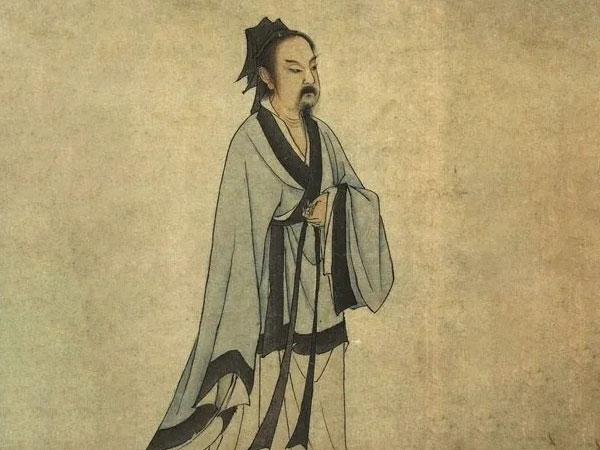
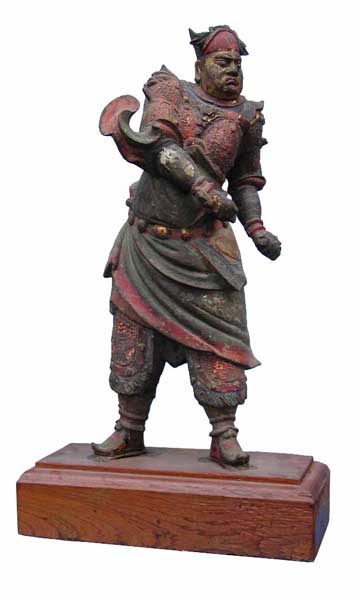
One of the stars of the Big Dipper
2026-04-15 11:51:31
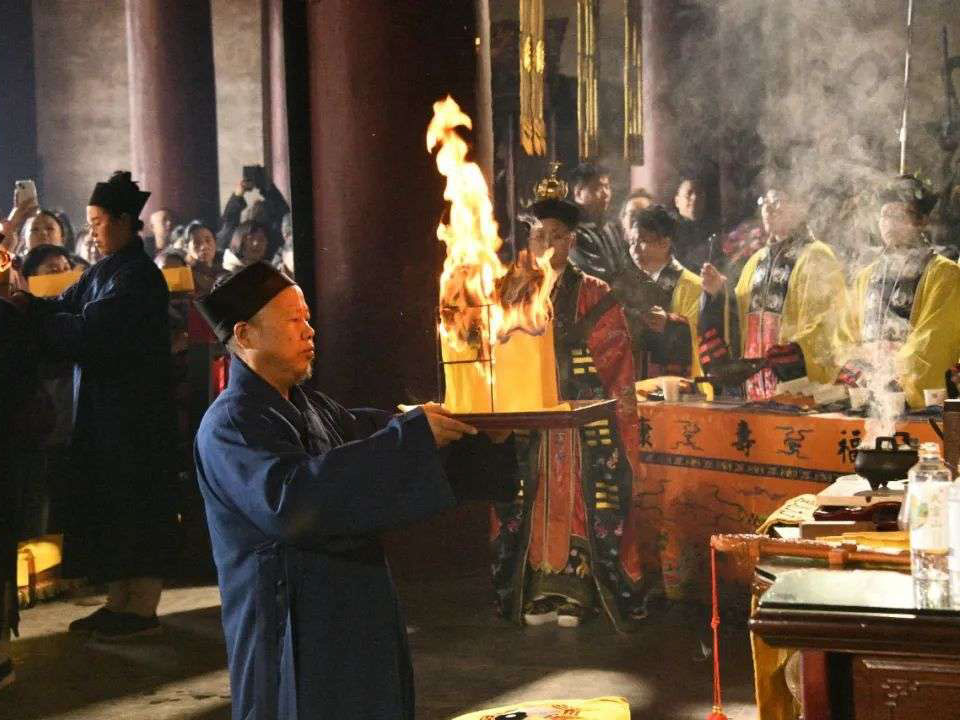
(1) The meaning of the ritual of fasting and Taoist ceremonies
2022-08-20 23:32:13
The original meaning of "zhai" was to be neat, harmonious an...
Yin GUI
2022-08-20 23:32:13
Chapter 37
2022-08-20 23:32:13
Zhao Yuanliang
2022-08-20 23:32:13
Chapter 47
2022-08-20 23:32:13
Chapter Fifty-Eight
2022-08-20 23:32:13