


The chapter on Pain Relief
2022-08-20 23:32:13
The Yellow Emperor asked, "Those who have heard good words from heaven will surely be verified by people." Those who speak well of the past must be in line with the present. The Good Speaker ① also: The original work "ru" was modified according to (Jia Yi Jing). Those who do so must be fed up with themselves. In this way, the Dao is no longer perplexed but still counts to the extreme, which is what is called clarity. Now, when I ask the master, can my words be understood, what I see be visible, and what I value be obtained? Can I ask myself to enlighten and solve my doubts, and can I obtain and hear? May you pay your respects and bow your head to the sun again, Sir? Between the rivers? Emperor's Day: I wish to hear the sudden pain in the five compartments of others. What is the cause of this? Qi Bo's view to the sun: The meridians keep flowing without end, and the circulation around them does not cease. When the cold is too much in the meridians, it is delayed and does not stop. If it is outside the meridians, the blood will be scarce; if it is inside the meridians, the qi will be blocked. Therefore, sudden pain occurs at the end. Emperor's Day The pain may stop suddenly, or it may be severe and persistent, or it may be so severe that it cannot be pressed, or it may stop when pressed, or it may be ineffective when pressed, or it may cause shortness of breath and pain in the hands, or it may cause pain when the heart and back are drawn together, or it may cause pain when the hypochondrium and lower abdomen are drawn together, or the abdominal pain may lead to the Yin and thigh, or the pain may accumulate in the head, or it may cause sudden death without being known, with a few days of recurrence, or it may cause vomiting due to cancer, or it may cause abdominal pain followed by diarrhea. For all these kinds of pain, each with a different form, what can be done about them? Qi Bo Ri: When cold invades the outside of the pulse, the pulse becomes cold. When the pulse is cold, it shrinks and spreads out. When the path shrinks, the pulse becomes thin and rapid. It then invades the small meridians. If it lasts for a year, it will cause pain. If it is relieved, the pain will stop immediately. If there is excessive coldness, the pain will last for a long time. When cold energy invades the meridians, if it is thin with the spiritual energy, the meridians will be full. When full, it causes pain and cannot be pressed. When cold energy is retained and the spiritual energy rises, the meridians will be swollen and the blood and qi will be disordered. Therefore, the pain is severe and cannot be pressed. When cold air invades the stomach and intestines, beneath the membrane, the blood cannot disperse. The small meridians become urgent, causing pain. Pressing on them will disperse the blood and qi, and thus the pain will cease. When cold air invades the meridians of the Xia Spine, deep pressing cannot reach it, and thus pressing is of no benefit. When coldness invades the Chong meridian, the Chong meridian starts from Guanyuan and ascends directly along the abdomen. When coldness invades the meridian, the meridian becomes blocked. When the meridian is blocked, the qi is affected. Therefore, the first movement of the hand is appropriate. When cold air invades the back Shu meridian, it causes the pulse to cry. Crying indicates blood deficiency, and blood deficiency leads to pain. Since the Shu meridian is infused into the heart, it leads to pain. Press it and the heat will rise. When the heat rises, the pain will cease. When cold air invades the Jueyin meridian of the hand, the Jueyin meridian is associated with the liver and the collateral-yin organs. If cold air invades the meridian, blood will cry and the pulse will become rapid, thus causing pain in the hypochondrium and lower abdomen. The cold qi invades the bright thigh, the coldness rises to the lower abdomen, and the blood sobs downward, thus causing abdominal pain to lead to the Yin thigh. The coldness invades the area between the small intestine and the thigh, within the collaterals and blood, and the blood sobs cannot flow into the major meridians. The blood qi is retained and cannot circulate, thus remaining for a long time and accumulating. When coldness invades the five compartments, it reverses and ascends, depleting the Yin qi and preventing the Yang qi from entering. As a result, one suddenly dies of pain without knowing the person. When the qi reverses again, one will be reborn. When coldness invades the stomach and intestines, it ascends and causes pain and vomiting. When coldness invades the small intestine, the small intestine cannot gather, so abdominal pain occurs later. Heat remains in the small intestine, causing pain within it. When there is miasma, heat, and thirst, it becomes hard and dry, unable to escape, thus leading to pain and blockage. The day of the Emperor: What is meant by words that can be understood. It's obvious what can be done? The Qi Bo Day: There is a part of the five storehouses and six mansions. By observing their five colors, yellow and red represent heat, white represents cold, and blue and black represent pain. This is what is meant by seeing and perceiving. Emperor Ri: What can be done when detained? Qi Bo Ri: It shows that the pulse of the main disease, which is firm, bloody and sunken, can all be obtained through price. Emperor's Day: Good. I know that all diseases arise from qi. Anger causes qi to rise, joy causes qi to slow down, sorrow causes qi to dissipate, fear causes qi to descend, cold causes qi to contract, excessive heat causes qi to escape, shock causes qi to be disrupted, overwork causes qi to be consumed, and overthinking causes qi to be blocked. When the nine qi are different, what diseases arise? Qi Bo said, "When one is angry, their qi reverses. In severe cases, they may vomit blood and have diarrhea, which is why their qi rises." When one is happy, the qi is harmonious and the aspiration is lofty. Honor and health flow smoothly, and thus the qi becomes calm. When one is sad, the heart becomes anxious, the lungs expand and the leaves lift, the upper jiao is blocked, the Rong and Wei cannot disperse, and the heat remains in the middle, thus the qi dissipates. Fear leads to the exhaustion of essence, exhaustion causes the upper part of the body to close, closure results in the return of qi, and return leads to the distension of the lower part of the body. Therefore, qi cannot flow. Han ze 腠① Chui: the original work 'asthma', modified from 'Ling Shu: The Beginning of All Diseases'. When the principle is closed, the qi cannot flow, and thus the qi is restrained. When jiong, 腠理 opens, rong and wei flow smoothly, and sweating is excessive, thus the qi is released. When one is startled, the heart has no place to rely on, the spirit has no place to return to, and thoughts have no place to settle, thus the qi becomes chaotic. When one is overworked, they tend to catch their breath and sweat, both internally and externally, thus depleting their energy. When one thinks, the mind has something to focus on and the spirit has something to return to. The righteous energy remains but does not move, and thus the qi is blocked.
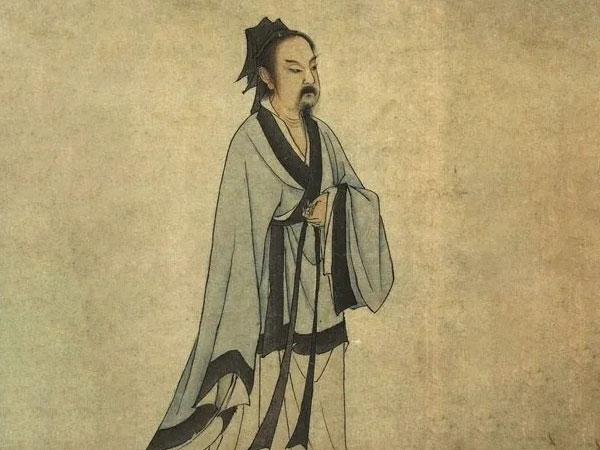
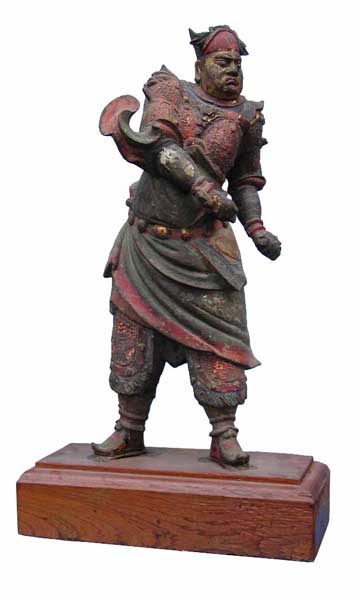
One of the stars of the Big Dipper
2026-04-15 11:51:31
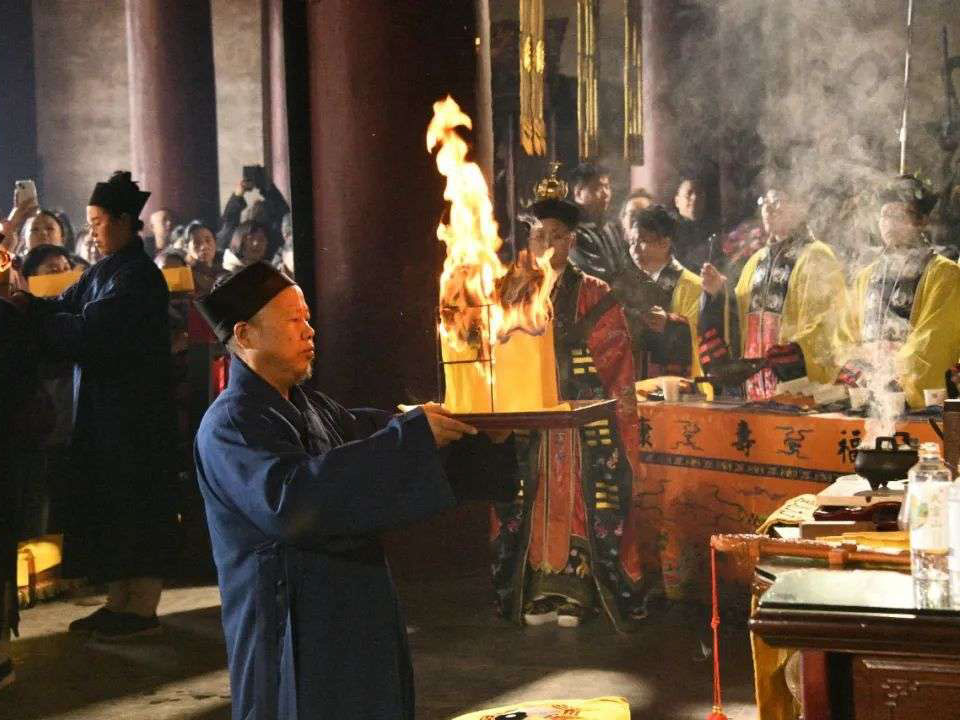
(1) The meaning of the ritual of fasting and Taoist ceremonies
2022-08-20 23:32:13
The original meaning of "zhai" was to be neat, harmonious an...
Yin GUI
2022-08-20 23:32:13
Chapter 27
2022-08-20 23:32:13
Chapter 72
2022-08-20 23:32:13
The couplet of the ancestral hall of the Wudang Mountain Temple
2022-08-20 23:32:13
Chen Xingchang
2022-08-20 23:32:13