


"Jingcheng
2022-08-20 23:32:13
Laozi said: "The sky makes it high, the earth makes it thick, the sun and the moon shine, the stars are bright, Yin and Yang are in harmony. This is not something that can be achieved through action. By rectifying the way, things will come naturally." The four seasons of Yin and Yang do not give birth to all things; the descent of rain and dew does not nourish plants. When the gods receive and Yin and Yang are in harmony, all things come into being. The Tao is one who stores the essence within, rests the spirit in the heart, is calm and serene 惔, is delighted in the chest, is vast and formless, silent and still. If there were no affairs in the government, no people in the court, no hermits, no idle commoners, no forced labor, no cruel punishments, the world would all look up to the image of the sovereign and the will of the ruler. Even if the country and the common people were different, they would all be reinterpreted and conveyed. It is not because the family is present that people see it, but because of its sincerity, it is bestowed upon the world. Therefore, rewarding the good and punishing the violent is a proper order. The reason why one can practice is because of sincerity. Although the order is clear, one cannot act alone; one must be sincere. Therefore, 摠 the way that the people do not follow cannot be embraced by sincerity. Laozi said: Heaven sets the sun and the moon, lists the stars, arranges the four seasons, and regulates Yin and Yang. By day it is exposed to violence, by night it is rested, by wind it is dried up, and by rain and dew it is moistened. All living things grow because they are nourished. When it kills things, do not see that when it is lost, all things perish. This is called a deity. Therefore, the sage sees it, and it brings about blessings. He does not see the reason why blessings arise. It is to eliminate the disaster without seeing its cause. It cannot be verified, but it is not false. The daily plan is insufficient, but the annual plan is abundant. It is silent and still, but a single word can move the world greatly. This is how the will of heaven moves and transforms. Therefore, sincerity takes shape within, the energy flows in the sky, the stars of the scene appear, the yellow dragon descends, the phoenix Emperor arrives, the sweet spring gushes out, the fine grain is born, the river does not overflow, and the sea does not surge. Extreme celestial phenomena, that is, the thin eclipse of the sun and moon, the loss of the five stars, the multiplication of the four seasons, bright day and bright night, collapsing mountains and drying up rivers, thunder in winter and frost in summer. Heaven and man are interconnected, and thus the decline of a nation is due to the changes in the sky and the chaos in the world. The rainbow and the rainbow are seen, and all things are connected. The essence and energy are interdependent. Therefore, the matters of the divine cannot be done with wisdom or force. Therefore, the great man is in harmony with the virtue of heaven and earth, with the brightness of the sun and the moon, with the spirit of the ghosts and gods, and with the faith of the four seasons. With the heart of heaven and the spirit of earth, he adheres to the principles of conflict and harmony, transcends the hall and travels the four seas, changing customs, transforming the people and improving their virtues. If he can transform himself, he is one of them. Laozi said: "The first person to follow the Dao is one who retains his true nature, does not lose his body, and is proficient in the face of urgent and difficult situations. If he has not yet emerged from his sect, what is it that cannot be achieved? Life and death are in the same realm, and one should not be threatened or oppressed. Moreover, he governs the universe, embraces all things, returns to nature, and is inclusive and harmonious. He has never died." Sincerity is manifested within and expressed outwardly in one's heart. This is the way that is not passed on. The sage is in the highest position, holding the way but not speaking, benefiting all people. Therefore, the teaching without words is truly great! The harmonious hearts of the ruler and his subjects are so treacherous that they are revealed in the heavens. The spirit and energy are in harmony, but it is insignificant. This is what is called unspoken debate and the way that is not explained. Those who call far away are made to do nothing, those who are close to them are said to have nothing to do. Only those who travel at night can do so, but they ride horses and do not connect their tracks to distant places. This is called sitting and galloping on land and sinking on land. The way of heaven is selfless in both taking and leaving. Those who are capable will have more than enough, those who are harsh will have less. Those who follow will benefit, while those who oppose will suffer misfortune. Therefore, those who govern by wisdom find it difficult to maintain a state. Only those who follow the principle of great harmony and respond naturally can achieve it. Laozi said: The Dao and virtue are like the encirclement and the revolution. When they are far away, they are near; when they are near, they are . They cannot be verified and are not false when examined. Therefore, the sage is like a mirror, neither inviting nor welcoming, responding without concealing, not harming anything. What is gained is lost, and what is lost is gained. Therefore, those who are well-versed in the great harmony are like those who are drunk and content to lie down and wander within it. If they have not yet emerged from the essence, it is called the great harmony. This kind of non-use can achieve its use. Laozi said: In the past, when the Yellow Emperor governed the world, he regulated the movements of the sun and the moon, governed the Yin and Yang, regulated the four seasons, corrected the numbers of the calendar, distinguished men from women, clarified the hierarchy, ensured that the strong did not hide the weak, the masses did not overpower the few, the people saved their lives and did not die, the seasons were well-behaved and did not become harsh, officials were upright and impartial, superiors and subordinates were not blamed, laws were clear and not concealed, assistants to the public were not corrupt, farmers gave way to the side, roads did not return lost goods, and markets did not advance merchants. Therefore, at this time, The sun, the moon and the stars do not fail to move. In the season of wind and rain, the five grains are bountiful. The phoenix soars in the courtyard and the unicorn swims in the suburbs. Youdaoplaceholder0 The king of the Xi family ruled the world, sleeping on the square rope, killing autumn and winter, embracing the square state, embracing the yuan heaven. He managed all that was trapped and blocked by Yin and Yang, and completely stopped all that was accumulated due to the adverse energy and evil things that harmed the people. His people, being young and ignorant, did not know east or west, looked at each other, and moved 蹎蹎. They were content and self-aware, not knowing the origin, floating and drifting, not knowing the origin, and were confused and did not know where to go. At this time, all beasts, insects, and snakes held their claws and teeth, hiding their stings and poisons. The merit is determined by heaven and earth. When the Yellow Emperor wanted to be subordinate to the Taizu Emperor, he did not publicize his achievements, nor did he glorify his name. He concealed the way of the true man, in order to follow the natural course of heaven and earth. How could it be that he was morally enlightened and thus his wisdom vanished? Laozi said: "The sky is not fixed, the sun and the moon carry nothing, the earth is not fixed, plants have nothing to stand on, the body is not at peace, right and wrong have no form. Therefore, there are true people and then true wisdom. What they hold is not clear. How can I know that what I call knowledge is not ignorance?" Those who accumulate benefits and value goods, making the people happy and enjoying their lives, are benevolent. To perform great deeds, to display a good reputation, to set a good example for the ruler and his subjects, to regulate the upper and lower levels, to distinguish between close and distant relationships, to preserve a precarious state, to carry on the legacy of the unbroken, to establish an unparalleled position, this is righteousness. To close the nine orifices, to hide one's will and mind, to abandon intelligence and instead lack consciousness, to pretend to be beyond the dust and dirt, to engage in carefree and idle activities, to contain Yin and exude Yang, and to be in harmony with all things, is virtue. It is because when the way scatters, it becomes virtue; when virtue overflows, it becomes benevolence and righteousness; when benevolence and righteousness are established, morality ceases to exist. Laozi said: "Those whose spirit transcends speak splendidly; those whose virtue is lacking act falsely. When the essence and brilliance are within, one's words and deeds are not reflected outwardly. This inevitably leads to serving others with one's own body." Even when the essence is exhausted from sorrow, its actions are boundless. Due to the indecision of what it adheres to, it indulges in the worldly customs. Therefore, the sage cultivates the arts within himself without adorn himself with benevolence and righteousness. He knows the appropriateness of the nine orifices and four branches, and he roams in the harmony of the spirit. This is the wandering of the sage. Laozi said: "The wandering of a sage is to move to the ultimate void, to wander the mind to the greatest nothingness, to roam beyond the mundane, to walk without doors, to hear without sound, to see without form, not bound by the world, and not bound by the mundane." Therefore, what the sages do to move the world, the true people do not surpass; what the virtuous people correct the world, the sages do not observe. A lady is bound by the mundane world and her form is bound to be rigid while her spirit is loose. Therefore, she cannot be bound by others. Those who allow me to be rigid must have an external order. Laozi said: The thoughts of a person in charge do not let the spirit wander in the heart, and wisdom does not come from the four realms. With a heart full of benevolence and sincerity, the spirit rains at the right time, the five grains grow in abundance, spring brings birth, summer grows, autumn harvests, winter stores, the months and hours are measured, tributes are offered throughout the year, the people are nurtured with public interest, strict and sincere, the law is not burdened, education is like a spirit, the law is lenient and the punishment is lenient, the prison is empty, the common people in the world have no evil intentions. This is the thought of the sage. When the best is taken without limit, the lower levels will be greedy for credit without giving in. When the people are poor, strife will arise. When the people work hard but achieve nothing, cunning and fraud will arise, thieves will spread, and the upper and lower levels will be resentful. When orders are not enforced, the water is murky and fish are scattered; when the government is strict, the people will be in chaos. When the upper has many desires, the lower levels will be deceitful; when the upper is troubled, the lower levels will be unstable; when the upper has many demands, the lower levels will be contentious. If the root cause is not addressed but the root cause is not, it is no different from digging a channel to stop the water and holding onto firewood The sage practices self-reflection and seeks, is modest yet generous, does not give but is benevolent, does not speak but is trustworthy, does not seek but gains, does not act but achieves. He holds onto nature, upholds the ultimate truth, adheres to the way and promotes sincerity. The world follows him like a sound responding to the sound or a shadow forming the image. This is the essence of cultivation. Laozi said: When the spirit goes beyond the outside and the wisdom and thoughts flow within, it cannot govern the form. What the spirit uses is far, but what it leaves behind is near. Therefore, "One should not go out to know the world, nor look into 牖 to know the way of heaven. The farther one goes, the less one knows." These words are sincerely expressed from within, and their spirit moves through the heavens. Laozi said: The Yang in winter and the Yin in summer, all things return to them without being disturbed. The most natural and refined feeling comes without being called and goes without going. Youdaoplaceholder0 in the dark, without knowing what to do, the work is accomplished by itself. It needs to be seen with the eyes and fulfilled with words. It is difficult to govern. Gao Tao was silent but became the great ruler. There was no torture or punishment in the world; there were people who valued their words. Shi Kuang was blind but became the Grand minister. There was no chaos in the state of Jin; there were people who valued their views. The orders that are not spoken and the views that are not seen are the reasons why the sages are their teachers. When the people are enlightened, it is not based on their words but on their actions. Therefore, if the ruler is brave enough, he will not let the struggle cause the country to suffer many hardships. Eventually, there will surely be chaos of calamity and slaughter. When a ruler is lustful, he does not allow the state to be in chaos due to public opinion. This accumulates to the difficulty of lewdness 泆. Therefore, the sage is sincere within and likes to hate and be clear outside. He speaks to express his feelings and issues his name to clarify his direction. Therefore, punishment is not enough to change the wind, and killing is not enough to prevent evil. Only the divine is precious. When the essence reaches its peak, it becomes divine. The movement of the essence is like the birth of spring and the killing of autumn. Therefore, a gentleman is like a shooter; he will seek a hundredfold more than a hundredfold more than a hundredfold more. Therefore, those who deal with others should be cautious about the reasons they evoke in them. Laozi said: "Those who set up rewards but fail to change customs and practices will not embrace them with sincerity. Therefore, by listening to their sounds, one can know their style; by observing their music, one can know their customs; by seeing their customs, one can know their transformation." Those who embrace truth and sincerity will move heaven and earth, transcend the heavens and the earth, obey orders and prohibitions, and sincerely follow the way to convey their intentions. Even without a single word, all the people, beasts, ghosts and gods in the world will be transformed. Therefore, the supreme deity deifies, secondly, does not allow wrongdoings, and secondly, rewards the virtuous and punishes the violent. Laozi said: The Great way is non-action. Non-action means no existence. What is non-existence does not reside. What does not reside is in the formless state. What is formless does not move. What does not move is silent. What is silent is still, silent and formless. What is silent and formless is invisible to the eye and inaudible to the ear. This is called subtle, this is called the supreme divine, "continuous and lingering", "this is called the root of heaven and earth." The Dao is silent, so the sage forcibly takes its form and names it with one sentence as the Dao of heaven and earth. The great starts with the small, and the many begin with the few. The emperor regards heaven and earth as his character and all things as his resources. His merit and virtue are the greatest, and his reputation and power are the most precious. The beauty of these two virtues is in harmony with heaven and earth. Therefore, one must not deviate from the great way and take it as the mother of the world. Laozi said: "Revitalize the poor and replenish the urgent, and fame and fortune will arise. Eliminate harm and success will be achieved. If there are no disasters in the world, even the sage will not bestow virtue; if there is harmony between the upper and lower levels, even the virtuous will not establish achievements." Therefore, in the governance of the best people, one should embrace virtue and the Way, and apply boundless wisdom with sincerity. One should speak in silence, and no one in the world knows how to value such silence. Thus, "The way that can be spoken of is not the eternal way; the name that can be named is not the eternal name." What is written on bamboo and silk, engraved on metal and stone, and can be passed down to others is all because of its roughness. The Three Sovereigns, five emperors and three Kings, despite their different matters, were of one heart and one mind, but on different paths, they all returned to the same destination. The scholars of the end times, who do not know the essence of the one virtue 摠, should take the traces of their achievements and kneel down to talk about them. Although they are erudite and well-informed, they will not be confused. Laozi said: The essence of the heart can be deified but not expressed. The sage does not leave his seat but governs the world. His feelings are more profound than a single call. Therefore, when words are spoken in unison, trust comes before words; when orders are followed in unison, sincerity lies beyond orders. When the sage is above, the people are transformed like gods, and emotions precede them. Those who act above should not act below, and their emotions and commands are different. A three-month-old baby is unaware of the pros and cons, but the deeper a mother's love, the more it is true affection. Therefore, the application of words changes, and the changes are minor; the application of non-words changes, and the changes are significant. Trustworthiness is the word of a gentleman, and loyalty is the intention of a gentleman. Loyalty and trustworthiness are manifested within, and their influence is reflected externally. This is the transformation of the virtuous and the sage. Laozi said, "A son's death of his father and a minister's death of his ruler are not due to seeking fame, but because his kindness is hidden within and does not go against the difficulty." The 憯 of a gentleman is not upright but emerges from the middle. He also observes what he does. A sage is not ashamed to be in the shadows, while a gentleman is cautious when alone. He gives up the near and the far, which is blocked. Therefore, when a sage is at the top, the people enjoy his governance; when he is at the bottom, the people admire his will. His aspiration is never to forget the desire to benefit others. Laozi said: "When a warrior cries out, all three armies will break away. If the sincerity of the march is not in harmony and the intention is not conveyed, there must be some discord." Those who do not leave the table to look after the world are seeking within themselves. Therefore, what is said not to be reached will be reflected in one's appearance, and what is not reflected in one's appearance will be reflected suddenly. It is reflected in the arising of the heart and takes shape. When the spirit is extremely refined, it can be reflected in one's appearance, but it cannot be expected by time. Laozi said: "Words have their principles and deeds have their roots. Without their roots and roots, even if one has many tricks and skills, it is not as good as being taciturn." It is impossible to make people write 倕 and cut off their fingers in the hope of achieving great ingenuity. Therefore, the craftsman does it wisely, not taking advantage of the time, not knowing how to close. Thus, it must be done before opening. Laozi said: The sage's endeavors, though taking different paths, converge at the same destination; whether in life or death, they remain united as one; his aspiration never forgets the desire to benefit others. Therefore, the songs of the Qin, Chu, Yan and Wei states, when heard in different ways, are all filled with joy; the cries of the Nine barbarians and the eight Barbarians, when heard in different ways, are all filled with sorrow. Singing is the subtle joy, while crying is the sorrowful effect. It is subtle within and expresses outwardly, which is why it is felt. The heart of a sage never forgets his desire to benefit others day and night, and the reach of his kindness is far away. Laozi said: "A person is governed by non-action; action leads to harm." Those who govern by non-action do not act; those who act cannot do nothing, and those who cannot do nothing cannot act. A man is wordless but divine, and when he speaks, he is hurt. Those who are silent and lack spirit, if they carry silence, will harm the spirit of the divine. Wenzi said, "A name can be established by force, and achievements can be accomplished by force." In the past, Rong Chou was ashamed of the sacred way and perished alone. When he met Laozi in the south, he received a single word of instruction. His spirit became clear and sharp, and he cultivated his knowledge. He worked hard for ten days without eating, as if he were in prison. Thus, he illuminated the world and made his name known to future generations. He was wise and discerning in the universe, discerning every detail, and praised the Chinese language. To this day, he has not stopped. This is what is meant by a name that can be established. Therefore, the fields are not strong, the 囷 granaries are not full, the officials are not diligent, the sincerity is not pure, the generals and ministers are not strong, the achievements are not remarkable, the Kings and Dukes are slack, and they are unknown throughout the world. A sage who moves stealthfully is like the hiding place of thunder, ready to act at any time, to achieve great feats based on talent, and to advance or retreat without difficulty, knowing nothing. The most virtuous person is sincere within, and their virtue spreads far and wide. When they see that the world is beneficial, they are happy but do not forget it; when the world is harmful, they are worried as if there is a loss. Those who worry about the people's worries, the people also worry about their worries; those who enjoy the people's joy, the people also enjoy their joy. Therefore, worrying about the world and enjoying the world, yet not being a king, has never been achieved. The law of the sage begins in the invisible and ends in the unattainable, remaining in an unshakable place, accumulating in an inexhaustible granary, and being carried in an inexhaustible mansion. The order is like the source of flowing water, leading the people to an official without contention, opening the door to success. If not acted upon, it cannot be achieved; if not sought, it cannot be obtained; if not maintained, it cannot last long; if not acted upon, it cannot be restored. A great man can carry out the governance that can be said, but no one should go against his will. When the will is favorable, one follows; small matters can lead to great ones; when the will is unfavorable, one turns good into harm and eventually becomes a failure. A true man is strong inside and bright outside. His inner strength is like that of heaven and earth, and his outer brightness is like that of the sun and the moon. Heaven and earth all cover him, and the sun and the moon all illuminate him. When a great man shows kindness to others, he does not change his ways and does not change his ways. The world follows his orders as grass follows the wind. Governance is lost in spring; the stars of the years waxing and waning do not follow their usual patterns. The governance was lost in summer, and the glow of the sun went against the current. Governance is lost in autumn; too white is not appropriate; comings and goings are unpredictable. When governance fails in winter, the stars do not show their influence in the countryside. When the four seasons fail to govern, the stars sway, the sun and the moon are demoted, the five stars are in chaos, and comets emerge. In spring, governance never fails to ensure the flourishing of crops and millet; in summer, it never fails to ensure the timely rain; in autumn, it never fails to ensure the prosperity of the people; in winter, it never fails to ensure the peace and stability of the country.
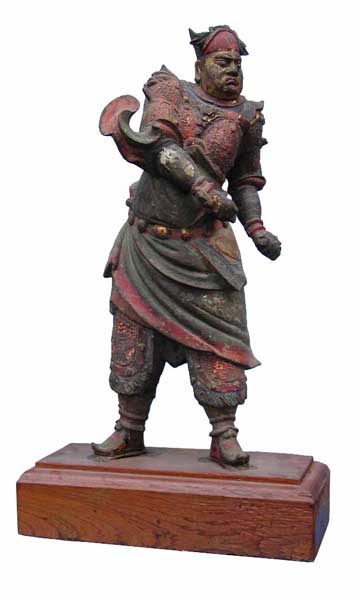
One of the stars of the Big Dipper
2026-04-15 11:51:31
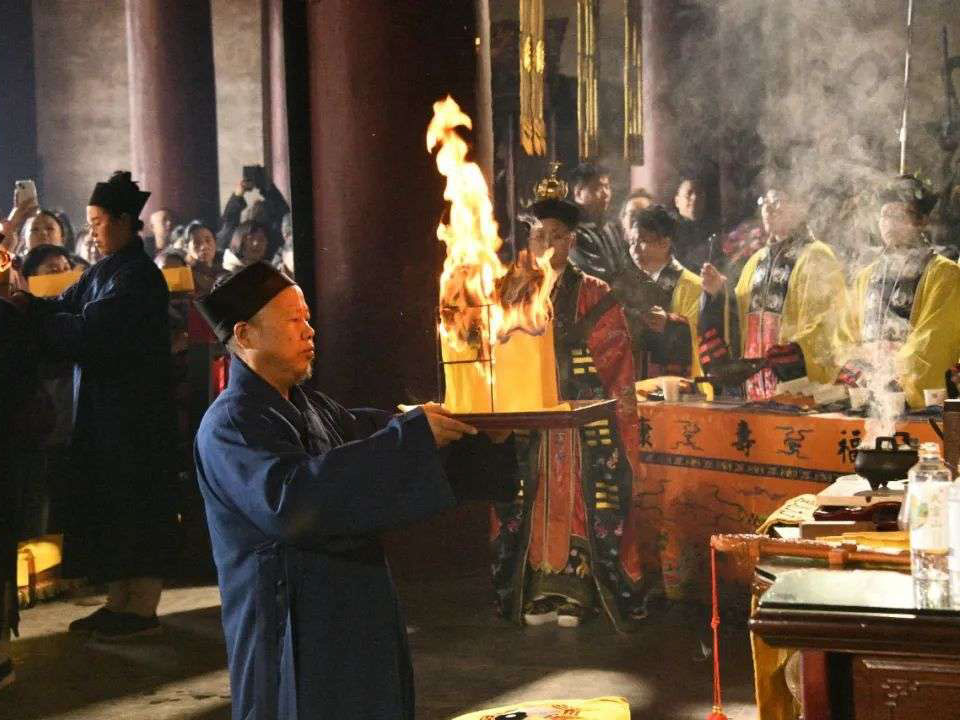
(1) The meaning of the ritual of fasting and Taoist ceremonies
2022-08-20 23:32:13
The original meaning of "zhai" was to be neat, harmonious an...
Yin GUI
2022-08-20 23:32:13
Chapter 27
2022-08-20 23:32:13
Chapter 72
2022-08-20 23:32:13
The couplet of the ancestral hall of the Wudang Mountain Temple
2022-08-20 23:32:13
Chen Xingchang
2022-08-20 23:32:13