


Fable
2022-08-20 23:32:13
【 Solution 】 "Fable" is originally the first two characters of this article, but it is also one of the main topics discussed in this piece. A fable is a kind of speech that conveys a message. The Zhuangzi expounds its principles and propositions, often relying on characters in stories. The method of allegory is precisely a major feature of the language expression in the Zhuangzi. The entire text is roughly divided into six parts. The first part, from "The uniformity of heaven is the trace of heaven", discusses "fables", "repeated statements" and "卮 statements", pointing out that all things in the universe are fundamentally uniform and equivalent. Analyzing various statements about things ultimately does not conform to objective principles. It is either better to forget the words or to speak freely without prejudice, constantly changing and renewing. The first part is the main body of the full text. The second part, from "Can't I reach that?", uses Zhuangzi's mouth to comment that Confucius no longer has the aspiration and intention, pointing out that no matter how good the words are, they cannot convince people sincerely. The third part, from "Just like watching birds, mosquitoes and flies pass by before me", describes that Zeng Can's moods during his two official stints were different, but neither could achieve a state of being free from attachments. Therefore, he still couldn't break free from the constraints of external things. The fourth part, from "If it were evil, how evil it would be", describes the process of comprehending the Great Way, pointing out that the most important thing in this process is to forget about life and death. The fifth part, up to "Why does the Strong Yang have Questions?", tells the story of the faint Yin outside the shadow asking about the unpredictable changes of the shadow, pointing out that only by having no reliance can one act according to one's heart. The remaining part is the sixth section, which describes Laozi's criticism of Yangziju and Yangziju's repentance, thereby illustrating that only by getting rid of arrogance and being inclusive of others can one truly achieve self-cultivation and refinement. Fable 19 (1), Restatement 17 (2), 卮, sunrise (3), and the clue of the sky (4). Fable 19: An External Discussion (5). A father does not act as a matchmaker for his son. One's own father praises him as if he were not his father. It's not my fault; it's a human fault. If you follow the same path as yourself, you will respond; if you do not follow the same path, you will go against it. What is right as oneself (6), what is wrong as it is different from oneself (7). The seventeenth point is that since it has been spoken (8), it is called "Qi Ai" (9). The years are advanced (10), but those who do not have the longitude and latitude, the beginning and the end to predict the years are not advanced (11). A person who cannot surpass others (12) has no human nature (13). A person without humanity is called a Chen person (14). Youdaoplaceholder0 says the rising sun, and it is in harmony with the sky, because it is derived by man (15), so it is in short years (16). Silence leads to uniformity (17). Uniformity is not uniformity with words, and words are not uniformity with uniformity. Therefore, it is called silence (18). Words without words last a lifetime; it's not that one never speaks. (19) To remain silent all one's life is not necessarily to remain silent. It is possible because of its own nature (20), and it is impossible because of its own nature. There is a reason for it to be so (21), and there is a reason for it to be not so. How could that be? Of course. It is better to be otherwise than otherwise. What is evil is acceptable, and what is acceptable is acceptable. Isn't that unacceptable? It is impossible. All things are as they are, all things can be, nothing is impossible and nothing is impossible. It is not 卮 to say that the sun rises, or to discern the sky, which is longer? All things are seeds (22), in different forms (23), beginning and ending are like a circle (24), not reaching their proper state (25), this is called the equality of heaven (26). Tianjun is the grain of the sky. Nine out of ten words of inspiration are trustworthy, and seven out of ten words of quotations from predecessors and sages are trustworthy. Words expressed freely and without prejudice change and update every day, in line with the distinction of nature. Nine out of ten words of allegory are convincing because they are discussed based on the actual situation of objective things. A father doesn't act as a matchmaker for his son. A father's praise for his son is never as genuine and credible as others' praise. This is not the father's fault; it is the fault that people are prone to suspicion. If your opinion is the same as yours, you should agree; if it is different from yours, you should oppose. If your opinion aligns with yours, affirm it; if it doesn't, deny it. Seven out of ten quotes from the predecessors and sages are convincing because they convey the teachings of the predecessors, who were all elderly men. A person who is older than others but lacks the ability to govern the world and the understanding of the principles and the virtue of an elder cannot be regarded as a senior or elder. If a person has no strengths that precede others, he lacks the way of being a person. If a person lacks the way of being a person, he is called a stale and useless person. Words expressed freely and without prejudice change and update every day, in harmony with the natural distinction, following the endless changes and developments, and thus can last for a long time. Without words, the common sense of things naturally becomes uniform. The originally uniform natural principle cannot be equated with the words used to distinguish things. Since words cannot be in harmony with the objective uniform natural principle, it is better not to say anything than to have something to say. Saying words that are not in harmony with natural common sense is like not speaking at all. Even if one speaks all their life, it seems as if they have never spoken. And not speaking for a lifetime might not be speaking at all. There is always a reason for recognition, and there is always a reason for non-recognition. There is always a reason for affirmation, and there is always a reason for negation. What counts as correct? What is right lies in what is right. What constitutes incorrect? What is incorrect is what is incorrect. How can it be confirmed? Certainty lies in its certainty. How should one deny it? Negation lies in the fact that it should be negated. Everything originally has its correct aspect, everything originally has its definite aspect. There is no thing that does not have a correct aspect, and no thing that does not have an aspect that should be affirmed. If the unrestrained and unprejudiced remarks do not change and update every day and are in line with the natural distinction, what kind of remarks can last for a long time? All things have a common origin, but they replace each other in different forms. The beginning and the end are like a cycle back and forth, and no one can grasp the laws in between. This is called the balance of nature. The balance of nature is often referred to as the boundary of nature. Zhuangzi said of Hui Zi, "Confucius, at the age of sixty, changed sixty times. At the beginning, he was what he was, but at the end, he was no longer what he was. He did not know what is now called what is not fifty-nine times what is not." Hui Zi said, "Confucius was diligent and devoted to knowledge." Zhuangzi said, "Confucius thanked him, but he had spoken before." Confucius said, "One's talent is based on the great foundation (7), and one's spirit is restored to life (8)." "Sound in accordance with the law (9), speak in accordance with the law." The righteousness and benefits are presented before us, but the likes and dislikes, right and wrong, are all directly told by others. (10) It makes people convinced in their hearts and they dare not 蘁 establish (11), to stabilize the world (12). Oh, oh, oh! "Yet I cannot reach that!" " Zhuangzi said to Hui Zi, "Confucius lived to be sixty years old. Over these sixty years, he has been constantly renewing himself with the passage of time. What he affirmed at the beginning was eventually denied. I wonder if what he considers right now is what he thought was wrong at the age of fifty-nine." Hui Zi said, "Confucius was diligent in inspiring himself and devoted to his studies." Zhuangzi said, "Confucius' spirit of being determined and dedicated has greatly declined. There is no need for you to make any further self-judgments." Confucius once said, "One receives wisdom and intelligence from nature and restores spirituality to complete life." Nowadays, the sounds made are in harmony with the music, and the words spoken are in accordance with the rules. If both profit and righteousness are presented before people at the same time, and then they can distinguish between like and hate as well as right and wrong, it will only make people take it orally. To make people truly submit from the bottom of their hearts and not dare to disobey in the slightest, it is also necessary to establish the rules of the world. Forget it, forget it. I'm not even as good as him!" Zengzi once again entered public service and his heart was transformed once more. He said, "I have entered public service with my parents and my heart is filled with joy." After three thousand hours of service, I am still not satisfied. My heart is filled with sorrow. A disciple asked Yu Zhongni, "If one participates, can it be said that there is no guilt at all? (5)" He said, "It's already a county." Can a man without a county feel sad? He gazed at the three cauldrons and three thousand bells (6), just as he watched the birds, mosquitoes and flies passing by (7). When Zeng Shen took office for the second time, his inner feelings changed again compared to the first time. He said, "When I was an official, my parents were still alive, and the meager salary of the three POTS made me feel happy." Since then, when I became an official again, the generous salary of three thousand hours was no longer enough to support my parents, so I was very sad in my heart. One of Confucius' disciples asked him, "Can a person as filial as Zeng Shen be said to have no fault of worrying about his salary?" Confucius said, "Zeng Shen's mind has already been linked to his salary." If there is no concern in the heart, will there be sad feelings? When it comes to those who have no heart for salary, they view the Three Cauldrons and even the Three Thousand Bells as if they were birds and mosquitoes flying past their eyes." Yan Chengzi said to Dongguo Ziqi, "Since I heard your words, I became wild in a year, followed in two years, understood in three years, learned about things in four years, came in five years, ghosts entered in six years, nature became complete in seven years, I did not know death or life in eight years, and I was greatly enlightened in nine years." "Born to achieve something, die to die (10), advise the public (11)." Because of his death, he has his own self. (12) And the generation of Yang (13) has no self-origin. And indeed (14)? Do you hate what suits you? Do you hate what makes you uncomfortable (15)? Heaven has its own calendar (16), and earth has its own records (17). Do I detest seeking them? No one knows where his end will come from. How doomed would he be? (18) If one does not know where it began, how predestined it must be? If there is a corresponding response, how could there be no evil spirits? There is no response at all. If so, what evil spirit is there? Yan Chengziyou said to Dongguo Ziqi, "Since I listened to your talk, I returned to simplicity in a year, followed the mundane world in two years, had a sudden enlightenment in three years, merged with things in four years, felt self-satisfied in five years, had spiritual understanding and enlightenment in six years, merged with nature in seven years, forgot about life and death in eight years, and reached a mysterious state in nine years." Dongguo Ziqi said, "If one pursues external things and acts recklessly during one's lifetime, one is bound to die. I advise people to seek justice in everything." The end of life has its certain reasons. However, the emergence of life is influenced by the Yang energy, and there are no obvious signs. Can you really understand life and death in this way? So where is considered appropriate between life and death? Where else is not suitable? The sky has the changes of the sun, moon, stars and solar terms, and the earth has the divisions of people's living areas and residences. So where should I go and what should I pursue? No one can truly understand the direction and end of life. How can it be said that there is no fate's arrangement? How can it be said that there is an arrangement of fate when no one can truly understand the beginning and formation of life? Sometimes, one can form a corresponding appeal with external objects. How can it be said that there are no ghosts or gods at play? Sometimes, if one cannot form a corresponding appeal with external things, how can it be said that there is the drive of ghosts and gods? The emperor asked Jing two questions: "If one looks down but now looks up, if one looks up but now looks out, if one looks up but now looks out, if one looks down but now looks up, if one looks up but now looks out, if one looks up but now looks out, if one looks up but now looks out, if one looks up but now looks out, if one looks up but now looks out, if one looks up but now looks out, why is that?" Jing said, "Search and search! Why bother to ask?" Having something without knowing why (6). Yu, 蜩 jia (7), snake shed, is similar but not so. Fire and the sun, my village (8) Yin and night are my era. (9) Why am I waiting for evil? (10) And there is no need for anything else (11)! If that comes, I will come with it; if that goes, I will go with it; if that is strong and bright, I will be strong and bright with it. (12) Why would the strong Yang have such a question!" The faint shadow outside asked the shadow, "You used to lower your head but now raise it up, you used to tie your hair up in a bun but now let it down, you used to sit but now stand up, you used to walk but now stop. What's the reason for this?" The shadow replied, "I just move freely like this. What's there to ask?" I don't even know why I am behaving like this. I am like the shell shed by a cicada or the skin shed by a snake, similar to the original thing but not the thing itself. Fire and sunlight bring me together and make me manifest. The darkness and the night allow me to rest. But are tangible objects really the means on which I rely for existence? How much more so for something that has no basis at all! When tangible objects come, I follow them; when they leave, I leave as well; when tangible objects linger, I keep moving. What is there to ask about things that are constantly changing? Yang lived in Pei in the south (1), Lao Dan traveled westward to Qin (2), was invited to the suburbs (3), and met Laozi in Liang (4). Laozi, in the middle of the Way, looked up to the sky and sighed, saying, "At first, I thought you could be taught, but now I can't." Yang Ziju did not answer. When he reached the dormitory (5), he went into the washbasin and his handkerchief (6), took off his sandals and stepped outside (7), and walked forward on his knees, saying, "I wish to invite the master, but the master is never idle (8), so I dare not." Now that I'm free, I may ask about my faults." Laozi said, "And when we look around, who will dwell with us?" "Great virtue seems humiliating (10), and great virtue seems insufficient." " Yangzi Ju suddenly changed his appearance and said, "I have respectfully heard your order!" To go there is (12), and to leave is to welcome the general (13). The father-in-law held the table (14), the wife held the scarf and the comb (15), the one who left the house avoided the table, and the one who was in the kitchen avoided the stove (16). On the contrary, those who give up compete with them for a seat. Yang Ziju headed south to Pei. Coincidentally, Lao Dan was strolling leisurely in the western part of Qin. Yang Ziju estimated that he would meet Lao Dan in the suburbs of Pei, but it was not until he reached Liang City that he saw him. Laozi, on the way, looked up to the sky and sighed deeply, saying, "Back then, I regarded you as someone to be taught, but now it seems you are unteachable." Yang Ziju didn't say a word. When he arrived at the inn, Yang Ziju took in all kinds of toiletries, left his shoes outside the door, knelt down on both feet and went forward, saying, "Just now, I was about to ask you for advice, but you happened to be on your journey and had no free time, so I didn't dare to speak up rashly." Now that you have some free time, I sincerely ask you to point out my mistakes." Lao Dan said, "You look up and are so arrogant and domineering. Who else can you get along with?" It seems that the overly white always seems to have some dirt, and the most virtuous always seems to have some shortcomings. Yang Ziju's expression changed greatly upon hearing this and he said shamefully and uneasily, "I sincerely accept your teachings, Sir." When Yang Ziju first came to the inn, all the guests had to be seen off and welcomed. The male owner of the inn personally arranged a seat for him, and the female owner personally held a towel and a comb to help him wash up. When the guests saw him, they all had to give up their seats, and the people by the fire also moved away from the fire. By the time he left the inn, the guests there had already been competing with him freely for a seat.
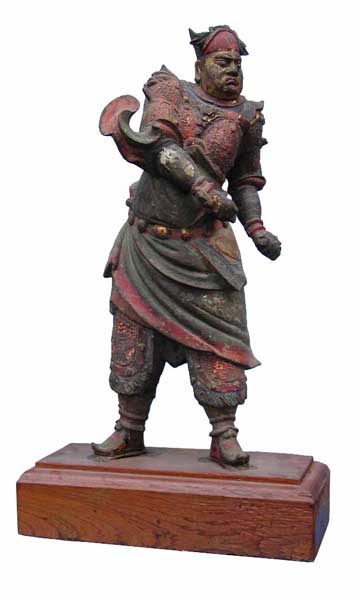
One of the stars of the Big Dipper
2026-04-15 11:51:31
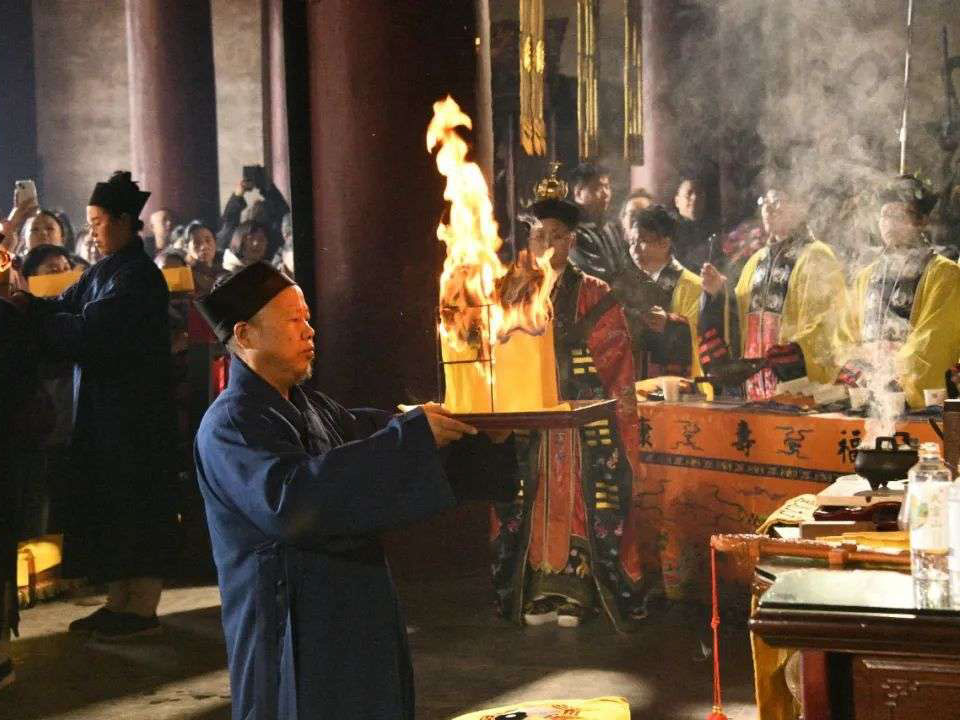
(1) The meaning of the ritual of fasting and Taoist ceremonies
2022-08-20 23:32:13
The original meaning of "zhai" was to be neat, harmonious an...
Yin GUI
2022-08-20 23:32:13
Chapter 27
2022-08-20 23:32:13
Chapter 72
2022-08-20 23:32:13
The couplet of the ancestral hall of the Wudang Mountain Temple
2022-08-20 23:32:13
Chen Xingchang
2022-08-20 23:32:13