


"Constructive nature"
2022-08-20 23:32:13
【 Solution 】 The core of this article remains the discussion on how to cultivate one's character. The so-called "improving one's nature" means to cultivate and rectify one's nature. The whole text is roughly divided into three parts. From the first part to "If one overcomes, things will lose their nature", it puts forward the proposition of "nurturing knowledge with tranquility", arguing that following the mundane cannot "return to the original state", and only by self-nurturing and restraining oneself can one avoid "losing one's nature". The second part, from "His virtue fades away", pays tribute to the ancient times of chaos and purity, and points out that with the passage of time, virtue gradually declines to the point where it cannot return to its true nature. This is all due to "the destruction of essence through literature" and "the indulgence of the heart". The remaining part is the third section, which points out that the key to cultivating one's nature is to "rectify oneself" and "achieve one's goals". If one can both rectify oneself and adapt oneself, external things will not cause one to lose one's nature and body, and thus one will not reverse the priorities. Cultivate one's nature in the mundane (1), and learn from the mundane to restore one's original state (2); Indulge in mundane desires (3), and think deeply to achieve enlightenment (4); It is called a people who are shielded and protected. The ancient way of governance was to cultivate knowledge through tranquility (5). To know life without knowing how to act is called nourishing tranquility with knowledge. Knowledge and tranquility nourish each other, and harmony brings out one's nature. Fude (6), harmony; The Dao, the Dao. There is no tolerance in virtue; this is benevolence. The way is without reason; it is righteousness. When righteousness is clear and all things are close, it is loyalty. Pure and genuine, yet reflecting emotions, is joy. To act in accordance with the nature and follow the text (7) is a form of propriety. When the rites and music 徧 are carried out (8), the world will be in chaos. When one is upright, one gains virtue (9). Virtue will not be displayed; if it is displayed, things will surely lose their nature. Cultivate one's temperament within the framework of mundane customs and practices, and strive to return to the original true nature through the Confucian and secular doctrines of benevolence, righteousness, propriety and wisdom. The inner desires have long been disturbed by customs, yet one still yearns to achieve clarity and understanding. This is called blocking out the ignorant. In ancient times, those who studied Taoist arts always cultivated their minds through tranquility. The generation of the mind without the need for smart actions can be called the cultivation of tranquility through the mind. The mind and tranquility are mutually regulated, and thus the harmonious and compliant feelings are revealed from one's nature. Virtue is harmony. The Way is to go with the flow. Virtue that embraces everything is called benevolence. When everything in the way does not go against righteousness, it is called righteousness. When the principles of righteousness are clear and thus all things are in harmony, it is called loyalty. When one's heart is pure, simple and returns to its true nature, it is called joy. A person who is honest and upright, has a proper appearance and is in line with certain etiquette and propriety is called propriety. If the rites and music are obsessed with one side and all sides suffer losses, then the world is bound to be in chaos. If each person rectifies himself and conceals his virtue, virtue will not offend others. If virtue offends others, all things will surely lose their own nature. In ancient times, people, in the midst of confusion (1), spent a lifetime in indifference (2). When the time is right, Yin and Yang are in harmony and still, ghosts and gods do not disturb, the four seasons are in harmony (3), all things are not harmed, all living beings do not die, and people have knowledge but no use. This is called the ultimate unity (4). When it is the right time, do not act but remain natural. The decline of Dai De (5), and the fact that Suiren and Fuxi were the first to rule the world (6), are thus in order but not uniform. Virtue declined again. When Shennong and Huangdi began to rule the world, it was thus peaceful but not smooth. Virtue declined again. It was not until the Tang and Yu Dynasties that the world began to embrace the trend of governance and transformation (7), simplicity and purity (8), deviating from the Dao to do good (9), and taking risks to act with virtue (10), and then discarding one's nature and following one's heart. The mind and consciousness know (11), but they are not enough to govern the world. Then, they are supplemented with literature (12) to enrich and broaden (13). When the essence of culture is destroyed and the heart is indulged, then the people begin to be confused and confused, and it is impossible to reverse their nature and restore them to their original state. From this perspective, it can be seen that the world has lost the Tao, and the Tao has lost the world. The world and the Tao are in mutual decline. How can those who follow the Tao thrive in the world? (14) How can the world thrive in the Tao? If the Dao cannot thrive in the world, and if the world cannot thrive in the Dao, even if the sage is not in the mountains and forests, his virtue will be hidden. In ancient times, people lived in a state of chaos and purity, blending in with the entire outside world. They were all indifferent to each other and did not interact with one another. It is precisely at this time that Yin and Yang are in harmony and peaceful, and even ghosts and gods do not interfere. The changes of the four seasons follow the seasons, and all things will not be harmed. All living things can enjoy their natural years to the fullest. Even if people store their minds, there is no place to use them. This is called the most perfect state of unity. It is precisely at this time that people do not know what to do to maintain their naturalness. Later on, when morality declined and Suiren and Fuxi ruled the world, the world went with the flow but could no longer be unified as one. Morality declined once again. By the time Shennong and the Yellow Emperor ruled the world, the world was stable but could no longer follow the will of the people and the conditions of the world. Morality declined once again. When Tang Yao and Yu Shun ruled the country, they initiated the trend of governance and education. The simple and honest style was disturbed and undermined. People deviated from the great Way and acted with few virtues. After that, they abandoned their nature and submitted to their own selfish desires. If people know and understand each other well, it is not enough to bring stability to the world. Then, they attach flowery decorations and add a lot of vulgar learning. The superficiality and extravagance of literature have ruined the simple style, and the extensive vulgar learning has concealed the pure heart. Only then did the people begin to be confused and chaotic, with no way to return to their true nature and restore their original state. From this perspective, the world has lost the way of nature, and the way of nature has lost the human world. Society and the Dao are lost together. How can those who follow the Dao stand firm in the human world, and how can the human world be revitalized by the Way of nature? The Tao cannot rise in the human world, and the human world cannot enable the Tao to thrive. Even if a sage does not live in a desolate mountain forest, his virtue will surely fade away and remain unknown to others. To hide, thus not to hide oneself (1). In ancient times, the so-called hermits were not those who prostrated themselves and refused to be seen, nor were they those who kept their words from speaking, nor were they those who concealed their knowledge from expressing it. At that time, their lives were greatly distorted. At that time, if one was destined not to follow the world, there would be no trace left. If one's fate is not right and one's world is in a state of great poverty (4), then one should have a deep root and wait for the extreme (5). This is the way to survive. In ancient times, those who conducted themselves (6) did not embellish knowledge through debate, did not impoverish the world with knowledge, and did not impoverish virtue with knowledge. Instead, they were in a precarious position and reversed their nature (7). What then is it! The way is not without practice (8), and virtue is not without knowledge (9). Minor knowledge harms virtue, and minor conduct harms the way. Therefore, it is said: "Just rectify oneself." To be content and complete is to achieve success (10). In ancient times, the so-called successful people were not defined by Xuan Mian (11), but merely by the fact that they could not enhance their happiness. The so-called successful people nowadays are referred to as "Xuan Mian". The Xuan crown is on one's body; it is not one's life. When things come, they are sent. Once sent, its arrival cannot be halted, and its departure cannot be stopped. Therefore, one does not indulge in the pursuit of fame and ambition (14), nor does one follow the conventions of the mundane. One's joy lies in the same way (15), and thus there is no need to worry. Now that it is sent, I am not happy. From this perspective, although I am happy, it is not without desolation. (16) Therefore, it is said that those who lose themselves in material things and lose their nature in the mundane are called inverted people (17). When it comes to vanishing from the world, one does not need to hide the light when it is dim; one has already hidden oneself. In ancient times, the so-called hermits were not those who wanted to hide their figures and thus refused to show themselves to the world, nor were they those who wanted to remain silent and thus refused to reveal their true feelings, nor were they those who wanted to hide their talents and thus refused to make use of them. It was because of the wrongdoings and fallacies of their circumstances and destinies. When one encounters and fates in accordance with nature and travels through the world, one will return to the state of chaos and purity without showing any trace. At that time, when encountering misfortunes and fate, and being impoverished throughout the world, one should hold fast to the fundamentals, maintain the ultimate nature of tranquility, and wait patiently with a calm heart. This is the way to preserve oneself. In ancient times, those who were good at preserving themselves did not use rhetoric to embellish their wisdom, nor did they use their ingenuity to embarrass the world, nor did they use their intelligence to trouble their virtue. They lived in their own environment with composure and returned to their nature and true feelings. Why did they have to do anything? The great way is vast and expansive; it is not something that only those with minor achievements can follow. The great virtue pervaded all things; it is not something that only those with limited knowledge can discern. A little knowledge can harm one's virtue, and a little success can harm the great way. So, it's enough to correct oneself. To maintain one's true self with pleasure can be called having a self-satisfied and self-satisfied mind. In ancient times, the person who was self-satisfied and content did not refer to those with high official positions, generous salaries, or prominent status. Instead, it was about having a natural pleasure without the need to add anything else. Nowadays, when people talk about being content and at ease, they refer to high-ranking officials, generous salaries and prominent positions. Wealth and honor do not come naturally; they are like external things that come by chance and are temporary sustenance. External things are entrusted. When they come, there is no need to stop them; when they leave, there is no need to dissuade them. Therefore, one should not indulge in indulgence for the sake of wealth and honor, nor should one conform to the mundane because of poverty and scarcity. The pleasure in both wealth and honor and poverty and scarcity is the same, and thus there is no sorrow. Nowadays, when the things one entrusts in leave, one feels that one cannot feel satisfied. From this perspective, even if one has truly felt satisfied, it is not necessarily a case of being confused by one's true nature. Therefore, a person who loses himself due to external things and his true nature due to the mundane is called one who has reversed the priorities.
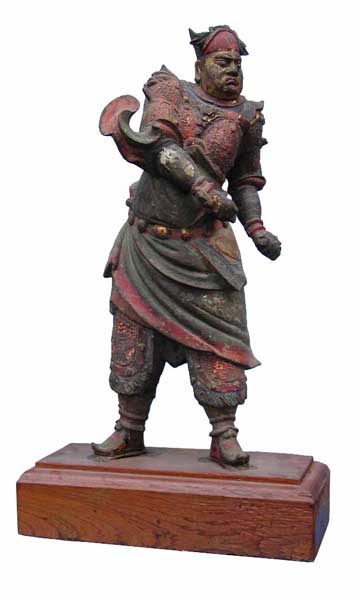
One of the stars of the Big Dipper
2026-04-15 11:51:31
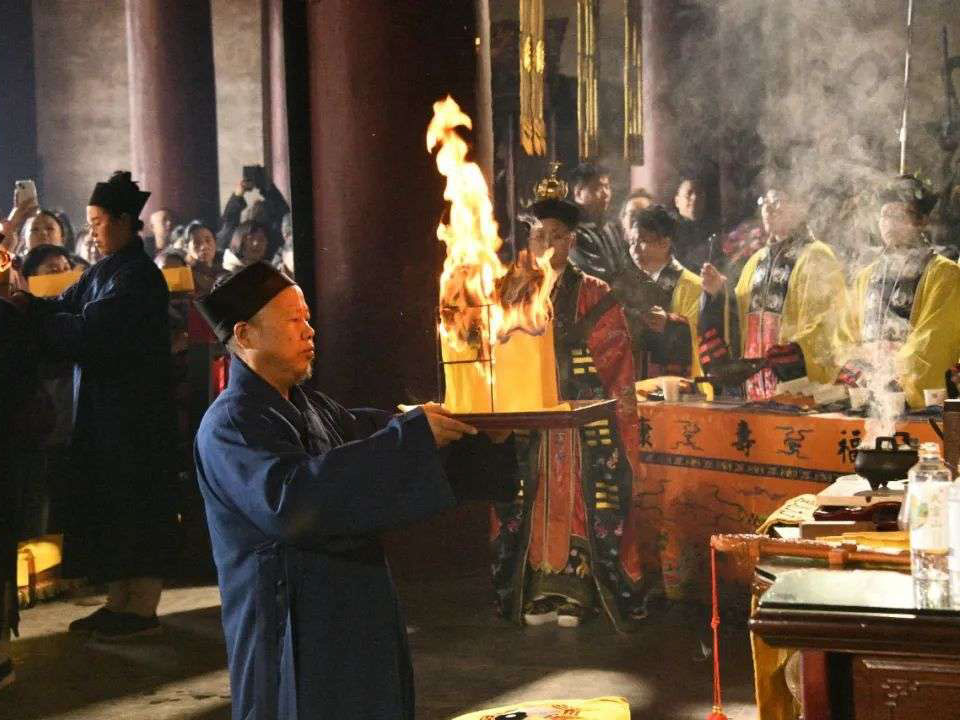
(1) The meaning of the ritual of fasting and Taoist ceremonies
2022-08-20 23:32:13
The original meaning of "zhai" was to be neat, harmonious an...
Yin GUI
2022-08-20 23:32:13
Chapter 27
2022-08-20 23:32:13
Chapter 72
2022-08-20 23:32:13
The couplet of the ancestral hall of the Wudang Mountain Temple
2022-08-20 23:32:13
Chen Xingchang
2022-08-20 23:32:13