


Horse hooves
2022-08-20 23:32:13
This passage demonstrates Zhuangzi's political stance of opposing constraints and entanglements and advocating a return to nature in all things. The full text can be divided into three parts. The first part, from "This is also the fault of those who govern the world", takes "Bo Le was good at governing horses" and "Tao and Jiang were good at governing handicrafts and wood" as examples, to imply that all the rules and methods used by those in power to govern the world directly harm the natural and inherent nature of things. The second part, from "The Fault of the Sages", contrasts with the fact that everything in ancient times shared a common nature and originated from nature. It condemns the later generations for promoting so-called benevolence, righteousness, propriety, and music, which have destroyed human nature and the true feelings of things, and directly points out that this is "the fault of the sages". The remaining part is the third section, which continues to use the horse as a metaphor to further illustrate that all entanglements are a destruction of the natural nature. The so-called benevolence and righteousness promoted by the sages can only encourage people to "strive for profit". In Zhuangzi's view, all the disputes and disturbances in the current society originated from the so-called "governance" of the sages. Therefore, he advocated the abandonment of benevolence, righteousness, rites and music, and the removal of all constraints and entanglements, allowing society and things to return to their natural and inherent nature. The article profoundly exposes the hypocrisy and concealment of benevolence, righteousness, propriety and music, but it is highly undesirable to yearn for the primitive state of ancient society. The political proposition of "self-transformation through non-action" is also negative and evades reality. The horse's hooves can withstand frost and snow, and its fur can resist wind and cold. Youdaoplaceholder0 grass drinks water ①, and it raises its feet to land ②. This is the true nature of the horse. Although there is a righteous platform, road and bedding ③, it is of no use. When it came to Bo Le, he said, "I am good at governing horses." Burn ⑤, chisel ⑥, engrave ⑦, luo ⑧, connect them into a binder ⑨, weave them into a soap stack ⑩, and the horse has died twelve or thirteen times (11). When hungry, thirsty, galloping (12), sudden, straightening (13), alms, there is the threat of a peg in front (14), and then there is the might of a whip (15), and by then, more than half of the horses have died. The potter said, "I am good at making dumplings. Round ones are in the middle of the square, and square ones are in the middle of the square." The craftsman said, "I am good at handling wood. When it is curved, I hook it in the middle; when it is straight, I attach it to the rope." If one has the nature of wood, how could one expect it to be bound by a regular rope? However, it has been said from generation to generation that "Bo Le is good at governing horses" and "Tao and Jiang are good at governing handicrafts and wood (17)". This is also the fault of those who govern the world. 【 Note 】 ①龁 (he) : chew. ② qiao: To lift up. lu: Generally expressed as 踛 (lu), jumping. ③ Yi (e) : Similar to "E", "Yi Tai" means high platform. Road: Large, upright; "Sleeping room: A living space." ④ Bole: His surname was Sun and his given name was Yang. Bole was his courtesy name. He lived during the reign of Duke Mu of Qin. It is said that he was good at recognizing and training horses. ⑤ Burn it: It refers to burning a red-hot iron object to scorch horse hair. ⑥ Trim and remove: It refers to trimming and removing the horsehair. ⑦ Carving: refers to chiseling the horseshoe armor. ⑧ luo Zhi: "Luo" is generally used to mean "luo", referring to leaving a mark with a soldering iron. ⑨ Link: To attach or connect. Ji: The head of a horse. Youdaoplaceholder0 (zhi) : a rope that stumps a horse's feet. ⑩ zao: a stable used for feeding horses. Stack: A piece of woven wood placed under the feet of a horse to prevent moisture, commonly known as a horse bed. (11) 12:30: Two out of ten. (12) Chi: A horse running fast; The character "suddenly" in the next sentence has the same meaning. "Chi Zhi" and "ju Zhi" mean galloping a horse at full speed, demanding that the horse run fast. (13) Neat and uniform; The character "qi" in the next sentence has the same meaning. "Straightening" and "aligning" mean to keep the pace and speed of the horse consistent. (14) jue: A piece of wood held in the mouth of a horse. Nowadays, it is made of iron and is called tinplate. Decoration: Refers to the ornaments on the head of a horse. (15) : an alternative form of the character "ce". A horsewhip made of leather is called a whip, and one made of bamboo is called a whip. (16) zhi: clay. (17) To praise: to lift up or commend. The horse's hooves can be used to trample on frost and snow, and its fur can be used to protect against wind and cold. When hungry, it eats grass; when thirsty, it drinks water. When in a hurry, it raises its hooves and leaps with all its might. This is the nature of the horse. Even if there is a high platform and a main hall, it is of no use to the horse. When a mentor emerged in the world, he said, "I am good at managing horses." So, the horses were scorched with red-hot iron, their manes were trimmed with scissors, their hoof nails were chiseled, and their marks were made. They were tied together with lashes and ropes, and arranged with manger and bed. In this way, about two or three out of ten horses died. When they are hungry, they are not given food; when they are thirsty, they are not given drink. They are made to gallop fast, to run fast, to keep their steps in unison, to move in unison. With the restrictions of the crossbar and the horse net decoration in front and the threat of whips and bamboo sticks behind, in this way, more than half of the horses die. The potter said, "I'm best at shaping clay. The vessels I make from clay are round enough to fit a compass and square enough to fit a square." The carpenter said, "I'm best at handling wood. The vessels I make from wood can make the curved ones fit the requirements of the hook and the straight ones conform to the ink lines." Is the nature of clay and wood to conform to compasses, squares, hooks and ink lines? However, they have been praised from generation to generation, saying that "a talent judge is good at managing horses" and "potters and carpenters are good at handling clay and wood". This is the fault of those who govern the world! Those who wish to govern the world well do not. The people there have a common nature of weaving clothes and farming for food. This is called having the same virtue. One does not follow the Party ④, and one's destiny is set free by heaven ⑤. Therefore, in the age of supreme virtue ⑥, one's conduct is perfect ⑦, and one's vision is perfect ⑧. At that time, the mountains had no path or tunnel ⑨, the marshes had no boat or beam ⑩. All things grew in groups, all belonging to their hometowns (11). Birds and beasts gathered in flocks, and grass and trees grew (12). Therefore, beasts can swim in captivity (13), and the nests of birds and magpies can climb and (14). In the age of supreme virtue, one lives among beasts and beasts, and is on par with all living things (15). How detestable are those who know the virtuous and the petty (16)? They are both ignorant (17), and their virtue is inseparable (18). The same as having no desires is called simplicity and plainness (19). Simplicity leads to the attainment of a down-to-earth nature. When it comes to the sage, 躠 is regarded as benevolence (20), 踶跂 as righteousness (21), and the world begins to be in doubt. Youdaoplaceholder2 is regarded as joy (22), and pruning is regarded as propriety (23), and the world begins to be divided. Therefore, simple and unspoiled (24), who is the sacrificial vessel (25)! If white jade is not destroyed, which one is the jade seal? (26) Morality is never abandoned (27), and benevolence and righteousness are at ease (28)! Keep your temperament close and enjoy the rites and music! When the five colors are in harmony, which is the literary talent? (29) If the five tones are not disturbed, who should follow the six rules? It is the sin of a craftsman to use rags as tools. To destroy morality for benevolence and righteousness is the fault of a sage! 【 Note 】 ① "Yi" : Meaning, to believe. ② Constancy: Unchanging, inherent instincts and natures. ③ Common virtue: It refers to the commonality of human beings. ④ Party: Partial. ⑤ Destiny: Name, called. Tianfang: Let things take their natural course. ⑥ The Age of Supreme Virtue: The era when human nature is best preserved, which is often referred to as the primitive society. ⑦ Tian Tian: A composed appearance. ⑧ Diandian: A state of being single-minded. ⑨ Xi: A small path. Tunnel: Tunnel. ⑩ Beam: Bridge. (11) Associated: It means to mix up. (12) Sui: to go as one wishes. (13) Tie: To pull with a rope. (14) Climbing: Scaling or climbing over. Youdaoplaceholder0 (ku) : the same as "peek", to observe or visit. (15) Tribe: Aggregation. And: compare and merge. (16) The gentleman and the villain: In traditional views, they respectively refer to those who follow the right path and those who sacrifice themselves for the evil. I believe they should refer to the rulers and the ruled. (17) The same: commonly written as "惷 (ch) u n", which is stupid; This meaning was written as "stupid" by later generations. (18) "Li" : departure, loss. (19) Plain: Undyed raw silk. Park: Unprocessed wood. "Simplicity" here refers to one's true self. (20) 躠 (biexu) : The appearance of walking with difficulty and with great effort. (21)踶跂 (zhiq ǐ) : the feet are lifted up with all one's might. (22)澶 (dan) man: unrestrained pleasure. (23) Abstruse: Complicated. (24) Simplicity: Intact, unprocessed wood. (25) Xi Zun: A finely carved wine vessel. "Zun" is also written as "zun". (26) GUI Zhang: Jade articles; The one with a pointed top and a pointed bottom is called "GUI", and the half GUI shape is called "zhang". (27) Morality: Here it refers to the original natural nature of human beings. (28) Benevolence and righteousness: Here it refers to various moral norms set by human beings, which is in opposition to the "morality" in the previous sentence. (29) Literary talent: Literary charm; A rich and gorgeous array of colors. I don't think those who are good at governing the world are like this. The common people have their inherent and unchanging instincts and natures. They weave cloth and then dress, cultivate the land and then eat. This is the common virtue and instinct of human beings. When people's thoughts and behaviors are seamlessly integrated without any bias, this is called letting things take their natural course. So in the era when the nature of ancient humans was most perfectly preserved, people's actions were always so solemn and natural, and their gazes were so focused and undistracted. It was precisely in this era that there were no paths or tunnels in the mountains and fields, no boats or Bridges on the water surface, all kinds of creatures lived together, human dwellings were connected without any distinction between towns and counties, animals and beasts lived in flocks, and grass and trees grew freely as they pleased. Therefore, animals can be led by ropes for play, and the nests of birds and magpies can be climbed to visit. In that era when human nature was best preserved, humans lived like beasts and coexisted with all kinds of creatures. How could there be any distinction between gentlemen and villains? If everyone is stupid and lacks wisdom, human instincts and nature will not be lost. Everyone is ignorant and has no selfish desires. This is called "simplicity" and "plainness". If human instincts and natures can be preserved in their natural color just like raw silk and logs, they will be passed down completely. When sages emerged in the world, they struggled to advocate what is called benevolence and pursued what is called righteousness with all their might. As a result, confusion and suspicion began to appear throughout the world. Indulging in the unrestrained pursuit of pleasantness and the complicated formulation of rituals and laws, the world began to be divided. So, if it wasn't originally divided, who could still carve it into a wine vessel! If a piece of white jade is not cracked, who could still carve jade articles from it! If the original natural nature of human beings is not abandoned, there is no need for benevolence and righteousness! If the inherent nature and true feelings of human beings are not deviated from, there is no need for rites and music! If the five colors are not mixed up, who can create a literary color? If the five tones are not matched, who can respond to the six tones? It is the sin of carpenters to break down logs into various vessels. To destroy human nature to promote so-called benevolence and righteousness is the sin of sages! When a horse lives on land, it eats grass and drinks water. When it is happy, it will be neck and neck with each other, and when it is angry, it will be back and neck with each other, 踶②. The horse knew it had come to this. In addition, he added the balance yoke ③, leveled it with the moon title ④, and the horse zhi jie ni ⑤, yoke ⑥, 鸷 man ⑦, GUI xian ⑧, and kui pei ⑨. Therefore, if a horse's knowledge leads to a thief's behavior, it is the sin of a talent scout. During the time of Huxus (11), the common people did not know what to do or where to go. They would be filled with nourishment (12) and wander with bulging stomachs (13), and the people could do so. When it comes to the sages, they compromise rites and music to shape the form of the world (14), and cultivate 跂 benevolence and righteousness to comfort the hearts of the world (15). Then the people begin to 踶跂 love knowledge and strive for profit, which cannot be stopped. This is also the fault of the sage. 【 Note 】 ① mo: Generally pronounced as "mo", referring to mo. ② Back to back: facing back to back. Youdaoplaceholder0 (di) : kick. ③ Balance: The crossbar in front of the carriage shaft. Yoke: Also written as "yoke". A plank for forking a horse's neck. Question ④ : Um. The "moon ornament" refers to the moon-shaped accessory on a horse's forehead. ⑤ Jie: Independent. Ni: To squint, meaning to look sideways or glare angrily. It is said that the character "jie" is a mistake of the character "wu", and "ni" is generally pronounced as "". "Wu " means to break off and break free from . ⑥ : flexion. Yoke: A yoke. Youdaoplaceholder0 Clenching fingers and bending the neck without stretching, resisting the wooden yoke. ⑦鸷 (zhi) : fierce. Man: Wild outburst. Youdaoplaceholder0 man refers to a horse being violent and unruly. ⑧ Guizhou: It means to want to spit out the peg in one's mouth in a sly way. ⑨ Stealing the REINS: It means secretly trying to get off the horse's lashing head. ⑩ State (state) : Capable. "Dao" : It means to resist the enemy against others. (11) Huxus: A legendary ancient emperor. (12) "bu" : The food in the mouth. Xi: Generally expressed as "xi", playing and having fun. (13) Bulging belly: To have a bulging stomach, meaning to eat one's fill. (14) Bending: It means to correct. Kuang: Uprightness, change. (15) County (xuan) : The same as "suspended". Youdaoplaceholder0: commonly used as "enterprise", to look forward to. "County 跂" means suspended and out of reach. As for horses, they live on land, eat grass and drink water. When they are happy, they rub their necks against each other; when they are angry, they kick each other back to back. The ingenuity of horses is just like this. When the balance and the neck yoke are later attached to it, and the bridle with crescent-shaped ornaments is placed on its head, the horse will glare sideways, stiffen its neck to resist the yoke, become violent and unruly, or strangely spout the bridle from its mouth, or secretly take off the bridle on its head. So, it is entirely the fault of Bo Le that the horse, with its ingenuity, could adopt an attitude of confrontation with man. In the ancient times of Huxus, the common people had no idea what to do when they lived or where to go when they moved around. They played with food in their mouths and played with their full stomachs. All they could do was this. When the sages emerged, they adjusted the rites and music to correct the image of the common people and flaunted unattainable benevolence and righteousness to comfort their hearts. Thus, people began to seek wisdom and ingenuity in every possible way and compete with each other for personal gain, and could not stop. This is also the sin of the sage!
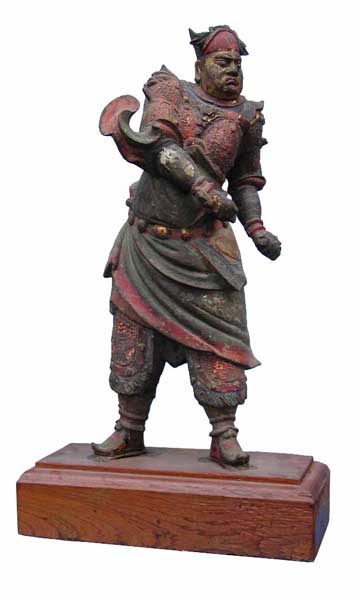
One of the stars of the Big Dipper
2026-04-15 11:51:31
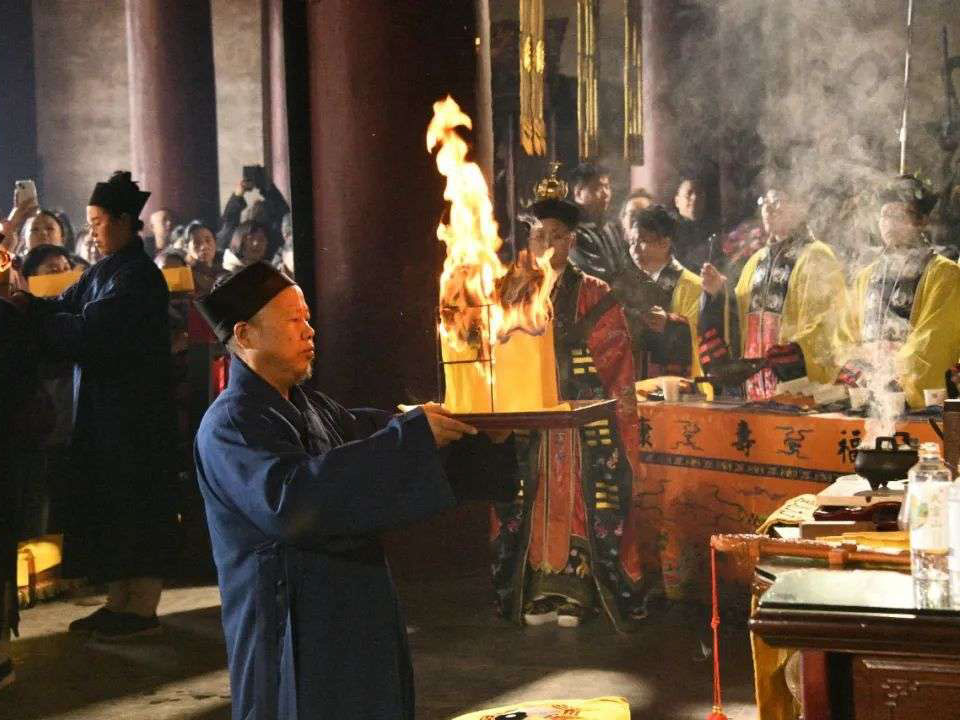
(1) The meaning of the ritual of fasting and Taoist ceremonies
2022-08-20 23:32:13
The original meaning of "zhai" was to be neat, harmonious an...
Yin GUI
2022-08-20 23:32:13
Chapter 27
2022-08-20 23:32:13
Chapter 72
2022-08-20 23:32:13
The couplet of the ancestral hall of the Wudang Mountain Temple
2022-08-20 23:32:13
Chen Xingchang
2022-08-20 23:32:13