


Pian mu
2022-08-20 23:32:13
【 Solution 】 "Parallel thumb" refers to the toes that are joined together. Just like the protruding bifidus fingers and the attached tubercles, they are all superfluous parts of the human body. What is inherent in things? That is something that conforms to nature and human nature. The core of this article lies in advocating the idea of letting nature take its course and conforming to human nature. The entire text is roughly divided into four parts. From the first part to "not the most upright in the world", it is explained that wisdom, benevolence, righteousness and argumentation are like the "parallel thumbs", "branch fingers" and "attached warts" on the human body, all of which are superfluous and do not conform to the original nature. The second part, from "causing confusion in the world", focuses on criticizing benevolence, righteousness, and rites and music, pointing out that the ultimate truth and right path of the world are none other than "not losing the emotions of one's life", that is, maintaining the original true feelings. However, "benevolence and righteousness" and "rites and music" have caused confusion in the world. The third part, from "He also detested taking the virtuous and the wicked among them", further points out that glorifying benevolence and righteousness is the root cause of chaos in the world. From the perspective of sacrificing one's life for external things, both the virtuous and the wicked are "damaged in nature", and thus there is no difference. The remaining part is the fourth section, which points out that all actions are inferior to inaction, thereby clarifying the social view of neither benevolence and righteousness nor debauchery. This piece and the second part of "The Horse's Hoof" can be regarded as sister works. This piece can also be seen as the prelude to "The Horse's Hoof", reflecting Zhuangzi's social and political views of non-action and returning to nature. It directly criticizes the benevolence, righteousness, and rites and music of Confucianism, but also negates certain social advancements. The language is straightforward and the viewpoints are expressed beyond words. The parallel thumbs and fingers ① are beyond one's true nature ②! And squandering virtue ③. The warts of the attached county ④ are out of shape! And indulging in sex. Those who apply benevolence and righteousness in various ways are listed among the five Treasuries! Rather, it is not the uprightness of morality. Therefore, what is parallel to the feet is even useless flesh. A branch in one's hand means that a tree is of no use. Those who are devoted to the five treasures of emotions ⑦, those who are indifferent to the conduct of benevolence and righteousness ⑧, and those who are devoted to the application of intelligence ⑨. Therefore, when it is parallel with the Ming, the five colors are confused ⑩, the writing is lewd (11), and the blue, yellow and fu 黻 are so brilliant (12)? And Li Zhu was already there (13). Those who are more intelligent are confused about the five tones (14), indulges in the six rules (15), and are they not like the sounds of metal, stone, silk, bamboo, yellow bells, and grand lyres (16)? And Shi Kuang was already (17). For those who are virtuous, they promote their virtue and nature to gain fame (18), and make the whole world play the drums and drums to serve the methods that are beyond their reach (19). And Zeng Shi was already (20). Those who engage in parallel debate, piling up tiles and tying ropes to interweave sentences (21), wandering their minds between the similarities and differences of the hard and the plain (22), and our 跬 praise the useless words, aren't they (23)? Yang Mo was already (24). Therefore, the way of having too many parallel and side branches is not the most correct in the world (25). 【 Note 】 ① pian: Parallel, here it refers to being put together. Big toe: The big toe of the foot. The "parallel big toe" refers to the situation where the big toe of the foot is joined together with the second big toe, resulting in a deformed big toe. Branch finger: A lateral branch finger, that is, an extra finger growing beside the thumb of the hand. Both "pian mo" and "zhi zhi" are superfluous to the human body, and thus they have been repeatedly used as redundant and artificially added terms throughout the entire text. ② Nature: Here it refers to something that is innate and inherent. ③ Extravagance: Superfluous. De: Got. ④ Attachment: To attach. "Redundant: A tumor." County (xuan) : Suspended. Wart (you) : The same as "tumor" is used here. ⑤ zang: Zang (viscera), this meaning was later simplified to "zang" by writing "viscera". ⑥ Zheng: To be upright and correct, here it refers to being unbiased in the ever-changing state of affairs. Some people think that the two characters "parallel branches" are derived texts, while others believe that the two characters "multiple sides" are derived texts. Considering the context, the theory of "derived texts" is credible. Given that the two characters "multiple sides" reappear in the following sentence, delete them from this sentence. The sentence structures before and after correspond to each other. The Five internal organs: Also known as the five viscera, "the emotions of the Five Internal Organs" refer to a person's inner emotions, that is, their innate character and desires. ⑧ Lust: Indulgence, confusion. PI: Evil, not upright. ⑨ Cong: Acute hearing. "Ming: Clear vision." ⑩ Five colors: The five basic colors of cyan, yellow, red, white and black. (11) Indulgence: Confusion and bewilderment. Article: Literary grace, intricate yet magnificent patterns and colors. (12) fu (fu) 黻 (fu) : Patterns embroidered on ancient ceremonial robes. Huanghuang: A dazzling appearance. (13) Li Zhu: A given name, also written as Li Lou, with extraordinary eyesight. (14) The Five Tones: Also known as the five basic musical scales, they were referred to as Gong, Shang, Jue, Zhi and Yu in ancient music. (15) The Six Tones: In ancient times, different pitch tuners were made from bamboo tubes of varying lengths, and their function was equivalent to today's tone setting. Musical scales are divided into two major categories: Yin and Yang, with six types in each category. The six types of the Yang category are called the six scales, and the six types of the Yin category are called the six melodies. The names of the six principles are Huangzhong, Taicu, Guxi, Ruibin, Yize and Wushe. (16) Gold, stone, silk and bamboo: All kinds of Musical Instruments use gold, stone, silk and bamboo as raw materials. Here, the names of the raw materials are used as a general term for the sounds of the Musical Instruments. Huangzhong and Dalu: Names of ancient musical tones. (17) Shi Kuang: A renowned musician during the reign of Duke Ping of Jin. (18) Zhuo (chuo) : to pull, to lift up. Plug: Close. "Obstructive" refers to the positive nature of occlusion. It is said that "sai" should be translated as "qian", which also means to take. (19) Reed drum: Wind and percussion instruments, here it is used to generally refer to the noise produced by various Musical Instruments. Feng: To abide by and follow. Not up to the mark: unable to catch up, here it is used to refer to something that is impossible to achieve. (20) Zeng Shi: Zeng Shen and Shi (qiu). A virtuous man in the Spring and Autumn period. Zeng Shen, styled Ziyu, was a student of Confucius. Shi , styled ziyu, was a minister of Duke Ling of wei. (21) Piling up tiles and tying ropes: A metaphor for piling up useless words. Paraphrase: To perforate a sentence. (22) Roaming the mind: To let one's thoughts run wild. (23) Exhaustion: Overexerting oneself and feeling completely drained. Youdaoplaceholder0 (ku.i) : half a step; Raising the foot once is called 跬, and moving the left and right feet once is called stepping. "Youdaoplaceholder0 reputation" refers to a brief reputation. (24) Yang Mo: Yang Zhu and Mozi, renowned philosophers of the Warring States Period. (25) Zhi Zheng: The supreme way and the right principle. One theory holds that it refers to the supreme and supreme Dao. Is it natural for toes to grow side by side and for the opposite fingers to protrude? However, all of them are more than what ordinary people can obtain. Are the protrusions attached to the human body derived from the human form? However, it goes beyond the essence that human beings are born with. The promotion of benevolence and righteousness through various methods is comparable to the five indispensable internal organs of the human body! But it is not an impartial and impartial way. So, when the toes on the feet grow side by side, it is the useless flesh that is joined together. The fingers protruding from the six fingers on the hand are useless ones. All kinds of concurrent and incidental superfluous things, to a person's innate character and desires, are like the confused and erroneous promotion of benevolence and righteousness, or like the use of human hearing and vision out of the norm. For a person with clear vision, isn't the "excess" beyond the essence a jumble of the five colors, a feast for the eyes, and the creation of a dazzling array of blue and yellow embroidered garments? And Li Zhu was just like that. For those with acute hearing, isn't the "excess" beyond the essence a disturbance of the five tones and confusion of the six scales? Isn't it a mixture of the various tones of metal, stone, silk, bamboo, yellow bell and great lyric? And Shi Kuang is just like that. For those who advocate benevolence and righteousness, isn't it about elevating morality and blocking true nature to gain fame and make people all over the world clamor to adhere to the impossible rites and laws? And Zeng Shen and shi were like this. The "excess" beyond the essence, for those who are good at expressing themselves, isn't it just piling up flowery words, chiseling out sentences, and letting their minds wander freely in the "hard and plain" sophistry of right and wrong, and struggling and exhausting to list countless nonsense in pursuit of a brief reputation? Yang Zhu and Mozi were like this. Therefore, all these are superfluous and fabricated improper methods, and by no means the ultimate truth and the right path of the world. Those who are upright and upright do not lose their sense of life. Therefore, what is combined is not parallel, and what is branched is not 跂③; The elderly do not feel excess, and the short do not feel deficiency. Therefore, although the legs of a pygmy duck are short, if they are continued, it will cause concern. Though the legs of a crane are long, if they are broken, it brings sorrow. Therefore, a long nature is not interrupted, a short nature is not continued, and there is no worry to be relieved. Is benevolence and righteousness not human feelings? How many worries does that virtuous person have? And those who are parallel to the thumb will cry when they are pushed. A branch held in the hand, 龁, will cry ⑧. The two, either more than the number or less than the number, are of the same concern. The benevolent people of this world, with their eyes wide open, worry about the troubles of the world. A heartless person, for the sake of his life, will enjoy wealth and honor. Is intentional benevolence and righteousness not human nature? (11) From three generations onwards (12), how chaotic the world has been (13)? Moreover, when the hook rope is regular and upright (14), it is cutting off one's nature; when the rope is as firm as glue and lacquer (15), it is infringing upon one's virtue (16). To bend the rites and music (17), 呴 yu renyi (18), to console the hearts of the world, this is to lose its normality (19), the world has normality. Generally speaking, for curved objects, do not use hooks; for straight objects, do not use ropes; for round objects, do not use gauges; for square objects, do not use glue and paint (20); for restraint, do not use ropes (21). Therefore, all temptations in the world arise without knowing why they arise (22), and all gains without knowing why they gain. Therefore, the past and the present are not the same and cannot be compromised. Then, what is the point of benevolence and righteousness being as continuous as glue and lacquer , flowing freely between morality? (23) It confuses the world! 【 Note 】 ① Zhengzheng: It should be a mistake of "Zhi Zheng". The last sentence of the previous paragraph already means "Zhi Zheng", or "Zhi Li Zheng Dao". ② The emotions of life and nature: "Xing" refers to one's inherent nature, and "Ming" refers to the mandate of heaven. The emotions of life and nature are the true feelings that each thing follows its natural course. ③跂 : It is a mistake of the character "bi". ④ fu: Wild duck. Tibia: lower leg. ⑤ Go: To abandon or eliminate. ⑥ Yi: A sighing sound, also written as "yi". When it comes to "yi", it should be taken literally as the meaning one considers oneself to have. ⑦ "Jue" : to split or separate. ⑧龁 (he) : bite off. ⑨ Wormhead: Rather perplexing. One interpretation is that "hao" is generally expressed as " (he)", meaning to look into the distance with one's eyes. Another interpretation is that "hao" is generally expressed as "眊 (mao)", meaning to stare blankly. The translation was once said. ⑩ Decision: To cut off, to abandon. Tao: Greed. Wealth and nobility: Those with abundant property are called "rich", and those with high status are called "noble". (11) Hence: Derived text. One way to put it is from a literal perspective. (12) The Three Dynasties: namely the Xia, Shang and Zhou dynasties. (13) Xiao Xiao: A noisy appearance. (14) Wait: Rely on. Gou: The ancient form of the character for "gou". A carpenter's square for drawing arcs. (15) Rope contract: that is, rope. The following text is all referred to as " so", so some people suggest that this part should be changed according to the following text; The old annotation's interpretation of "rope agreement" as "rope restraint" is even more inappropriate. (16) To invade one's virtue: that is, to harm the nature and naturalness of things. (17) Bending over rites and music: It means using rites and music to forcibly change and correct people's words and deeds. (18)呴 (xu) yu: fu 'ai. "Youdaoplaceholder0 yu in-yi" is to care for and educate others with benevolence and righteousness. (19) Changran: The normal state, referring to the inherent and true nature of people and things. (20) Separation: To make separated objects adhere to each other. (21) (mo) : rope. (22) "Yiran" : An unconscious appearance. (23) Lianlian: The appearance of being continuous and endless. The so-called supreme truth and the right path are true feelings that do not go against the principle of each thing finding its proper place while conforming to nature. So, what comes together is not considered to be growing side by side, and what grows out of the branches is not considered superfluous. What is long is not considered abundant, and what is short is not considered insufficient. Therefore, although the calves of wild ducks are very short, if they are any longer, there will be trouble. Although a crane's lower leg is very long, it will cause pain if a section is cut off. Things are inherently long and cannot be shortened at will, nor can they be lengthened at will. In this way, there is no need to eliminate worries for all kinds of things. Ah! Benevolence and righteousness are probably not inherent true feelings of human beings, are they? Why do those who advocate benevolence and righteousness have so many worries? Besides, for those with double toes, if they split their toes, they will cry. For those whose fingers protrude, even if they bite off their divergent fingers, they will still wail. In both of the above situations, some have more than the normal number of fingers, while others have less than the normal number of toes. However, the troubles they cause are the same. Nowadays, the virtuous people in the world look far ahead and worry about the misfortunes of the world. Those heartless people abandon the essence and nature of human beings and seek wealth and honor. Ah! Benevolence and righteousness are probably not inherent true feelings of human beings, are they? Since the Xia, Shang and Zhou dynasties, how could the world have been so noisy and competitive? Moreover, to correct the form of things by relying on square rulers, ink lines, compasses and square rulers is a practice that damages the nature of things. Relying on rope glue to make things stick tightly to each other is a practice that harms the natural endowment of things. If one rigidly changes and corrects the people by using rites and music, and comforts and educates them by using benevolence and righteousness, thereby soothing the hearts of the people of the world, such behavior would lose the normalness of human beings. Everything in the world has its inherent norm. The so-called normal state means that what is curved does not rely on a ruler, what is straight does not rely on a ink line, what is perfectly round does not rely on a compass, what is perfectly square does not rely on a square, what is separated does not rely on glue and paint to stick together, and what is bound together does not rely on ropes. Thus, all things in the world grow unconsciously without knowing why they grow, and likewise, they gain unconsciously without knowing why they gain. So the principles of ancient and modern times are no different; there can never be any deficiency. Then why is it that benevolence and righteousness are endlessly and artificially sandwiched between the way of heaven and one's nature like a string of glue and lacquer? This has left people all over the world completely puzzled! For minor confusions, there is the formula ①; for major confusions, there is the nature of the change. How can one know that it is evil? Since the Yu family recruited benevolence and righteousness to govern the world, the world is all running for its life with benevolence and righteousness. Is it necessary to change its nature with benevolence and righteousness? Therefore, if one attempts to put it this way, from the three generations onwards, all in the world have changed their nature through things. A petty person sacrifices his life for profit, a commoner for his reputation, a minister for his family, and a sage for the world. Therefore, those who number the digits ⑤ have different careers ⑥ and different reputations, but they are willing to sacrifice their bodies to harm their nature. This is the same. Zang and Gu ⑦, the two men tended sheep together but both lost their sheep ⑧. If you ask Zang about something ⑨, then hold up and read ⑩. When asked what was going on with the grain, he would go on a tour. (11) The two have different careers, but they are both like lost sheep. Bo Yi died under Shouyang (12), and Dao Zhi died above Dongling (13). The two died differently, but their natures of injury in their remaining lives were the same. Would it be that Xi would be right and Dao Zhi wrong? (14) When all the people in the world sacrifice themselves for righteousness and benevolence, they are called gentlemen by the common people. If he sacrifices himself for wealth and goods, he is commonly called a villain. If he sacrifices himself for one, there will be both gentlemen and villains. If his nature is damaged in the end of his life, then even the thief Zhi will take advantage of himself, and he will also hate to take advantage of the virtuous and the wicked among them! 【 Note 】 ① Yi: Change. Direction. Zhuangzi believed that before Tang Yao, that is, during the primitive clan era, the social customs and folkways were still relatively simple and honest. It was not until after Yu Shun, that is, during the Xia, Shang and Zhou dynasties, that the simple and honest atmosphere and folkways were artificially disturbed and trampled upon. The Yu family refers to Yu Shun. Call for benevolence and righteousness: Use benevolence and righteousness as a call. "Rao: to stir up." ③ Sacrifice oneself for a certain purpose. ④ Family: Here it refers to a clan. ⑤ Counting: Refers to the above four types of people. ⑥ Career: That is, the job one is engaged in. ⑦ Zang and Gu: domestic slaves and servants. ⑧ Escape: to run away or lose. ⑨ Xi Shi: Shi Xi, that is, what to do. ⑩ (ce) : a variant of the character "ce", here it refers to a letter. (11) Boser: also written as "zack 簺", a game similar to dice rolling. (12) Boyi: A virtuous scholar at the end of the Shang Dynasty, he opposed King Wu's attack on the Shang and starved to death on Shouyang Mountain instead of eating Zhou grain. Death for a name: To die for a name. (13) Dao zhi (zhi) : His given name was Zhi. He was a renowned leader of a civilian uprising at the end of the Spring and Autumn Period and was mentioned in many works of the Pre-Qin period. "Theft" is a derogatory term. Death for profit: To die for profit. Dongling: The name of a mountain, some say it refers to Mount Tai.
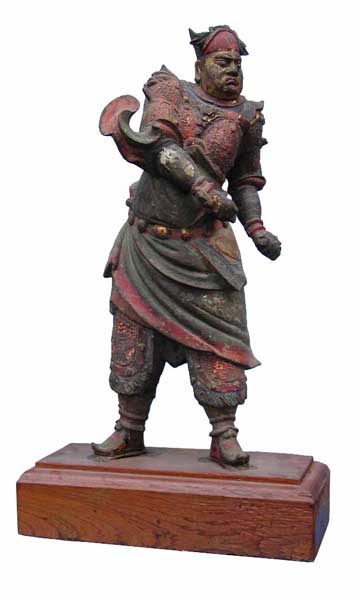
One of the stars of the Big Dipper
2026-04-15 11:51:31
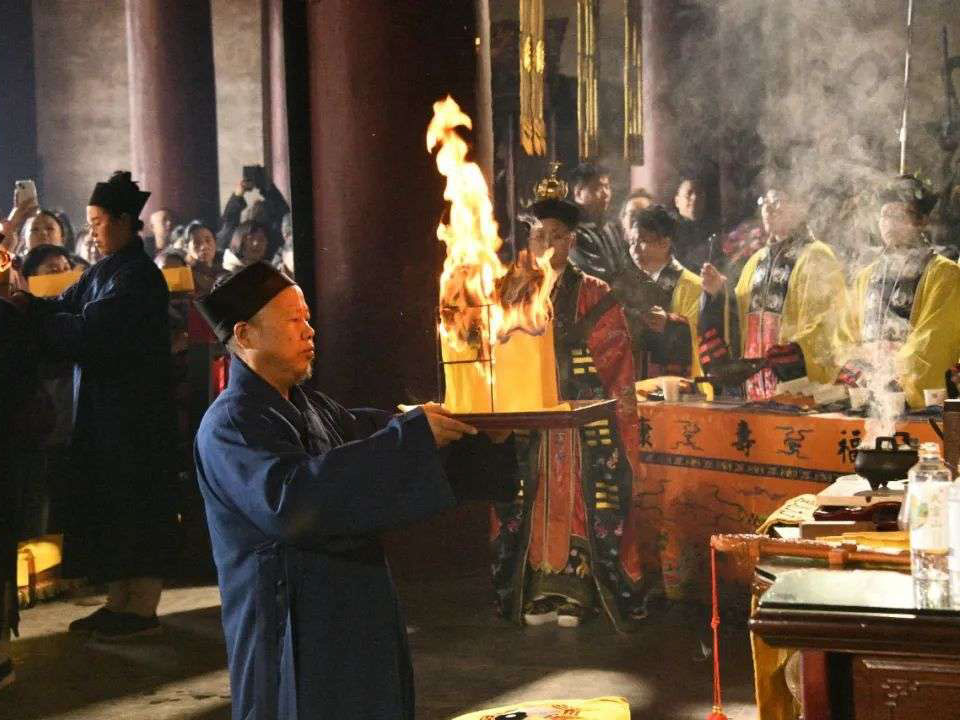
(1) The meaning of the ritual of fasting and Taoist ceremonies
2022-08-20 23:32:13
The original meaning of "zhai" was to be neat, harmonious an...
Yin GUI
2022-08-20 23:32:13
Chapter 27
2022-08-20 23:32:13
Chapter 72
2022-08-20 23:32:13
The couplet of the ancestral hall of the Wudang Mountain Temple
2022-08-20 23:32:13
Chapter 19
2022-08-20 23:32:13