


"Health Preservation master
2022-08-20 23:32:13
【 Solution 】 This is an article discussing the way of health preservation. "Yangsheng Zhu" means the essentials of health preservation. Zhuangzi believed that the key to maintaining good health lies in conforming to nature, forgetting emotions, and not being held back by external things. The entire text is divided into three parts. The first part, from "One can live to the end of one's life", serves as the general outline of the whole piece, emphasizing that the most crucial aspect of health preservation is to follow the principle of "taking the governor as the meridian", that is, to adhere to the principle of emptiness within things and adapt to the changes and development of nature. The second part, from "Attaining health preservation", uses the metaphor of a chef breaking down the body of an ox to illustrate human health preservation. It explains that in dealing with the world and living, one should "follow the natural course" and "conform to the natural law", and also take the void "in the middle" with a certain distance ", so as to be "at ease" and thus avoid the entanglement of right and wrong and conflicts. The remaining part is the third section, further elaborating on the attitude towards life of submitting to fate, conforming to nature, and "going with the flow". The core of Zhuangzi's thought is, first, to be free and at ease without any support, and second, to oppose artificial and natural tendencies. Although this article is discussing health preservation between the lines, it actually reflects the author's philosophical thoughts and life interests. Life is limited, but knowledge is boundless. To follow the boundless with the finite is already perilous. Those who have already gained knowledge are already in danger! Good deeds have no immediate fame, and evil deeds have no immediate punishment. The "Yuan Du" scripture ⑦ can preserve one's health, ensure a full life ⑧, support one's parents ⑨, and prolong one's life ⑩. 【 Note 】 ① "ya" : edge, limit. ② zhi: Knowledge and intelligence. ③ Follow: To follow, to seek. ④ Peril: Danger, here it refers to being extremely exhausted, mentally and physically drained. ⑤ Already: this, thus; Here it refers to the situation mentioned in the previous sentence where one pursues endless knowledge with a limited life. ⑥ Close: Approaching, here it implies pursuit or greed. ⑦ Fate: To follow or adhere to. Du: Middle, the right path. In traditional Chinese medicine, there is a theory of the eight extraordinary meridians. The so-called Du Meridian refers to the central meridian on the back of the body, which has the function of governing all the Yang meridians. "Yuan Du" means to follow the middle Way of nature. Jing: Constant. ⑧ Sheng: Generally expressed as "nature", "Quan Sheng" means to preserve one's natural nature. ⑨ Raising parents: Literally speaking, the context does not connect. The old saying that one should not leave any worries for one's parents also seems far-fetched. Please refer to this for your reference. ⑩ Live to the fullest: Enjoy a long life and avoid premature death. Human life is limited, but knowledge is infinite. To pursue unlimited knowledge with a limited life is bound to be physically and mentally exhausted. If one still keeps on pursuing knowledge, it is truly extremely dangerous! Having done what the world calls good deeds without seeking fame, and having done what the world calls evil deeds without facing the humiliation of being punished. By following the natural path of moderation and taking it as the constant law to conform to things, one can protect oneself, preserve one's nature, avoid leaving worries for one's parents, and enjoy a peaceful old age. When Butcher Ding dissected the ox for Lord Wenhui, the touch of his hand, the lean of his shoulder, the step of his foot, the knee of his foot, 踦⑤, 砉 ran ran ⑥, and the knife he played ran ⑦, all were in the right tone ⑧, in harmony with the dance of the mulberry forest ⑨, which was the meeting at the beginning of the classic ⑩. Munhye-gun daily: "(11), well done! Has the technique reached this point (12)?" Butcher Ding, having put down his knife, replied, "What I love is the Way, and I have advanced my skills." When I first understood the ox, all I saw were whole oxen. Three years later, I never saw a whole ox. At present, I encounter God rather than look at him with my eyes (16), and I know when to stop while God wants to act (17). According to the natural law (18), the major xi (19) is criticized, and the major 窾(20) is guided, because it is inherent (21). There is no such thing as a brilliant and incisive technique (22), and the situation is 軱 (23)! A good chef turns his knife around every year (24), meaning to cut. Zu Pao Yue Geng Dao (25), Zhe Ye (26). Now my sword has been in use for nineteen years and has cut thousands of oxen, yet its blade seems to be newly sharpened (27). Those who are upright have leisure (28), while those who are sharp have no thickness. If one enters a state of leisure with no thickness, there will surely be room for maneuver (29). Therefore, after nineteen years, the blade remains as if it were newly sharpened. Although, every time I reached the tribe (30), I saw it was difficult to do and was alarmed (31), I stopped watching, acted late, and made very few moves. Youdaoplaceholder0 then I have already understood (32), such as the earth and the earth (33). Standing with a knife in hand, looking around for it, full of ambition (34), being good at keeping the knife hidden (35). Lord Wenhui said, "Well done!" After hearing the words of Butcher Ding, I have gained insights into health preservation. (36)" 【 Note 】 ① pao: kitchen. "Pao Ding" refers to a chef. It is said that "Pao" refers to a chef and "Ding" is his name. wei: to replace, to give. Wenhui Jun: In the old theory, it referred to King Hui of Liang. Solution: To cut open or decompose. ② Touch: to come into contact. ③ Yi: To lean on. ④ Lu: To step on or tread. ⑤踦 (yǐ) : press with your knee. ⑥砉 (hua) ran: the sound of flesh and skin separating. Xiang: Generally pronounced as "xiang" (xiang), sound. "Xiang (xiang) ran", the appearance of multiple sounds responding to each other. ⑦ Zou: Advance. Youdaoplaceholder0 (huo) ran: the sound of cutting a cow rapidly with a knife. ⑧ zhong: In accordance with; "Middle tone" means in accordance with the rhythm of music. ⑨ Sanglin: The name of a legendary piece of music from the Shang Dynasty. "Sanlin Dance" means a dance accompanied by Sanlin music. ⑩ Preface: The name of a piece of music from the era of Emperor Yao in legend. Can: music scale, rhythm. (11) (xi) : an alternative form of the character for "xi". (12) Gai: Generally pronounced as "he", it means "what" or "how". One interpretation is that it is an interjection in a sentence, pronounced like "gai". (13) Explanation: Let go. (14) Good: Preference. Dao: The law of things. (15) Advance: To advance one level, containing the meaning of surpassing or surpassing. Hu: Yu, by analogy. (16) God: Spirit, mind. (17) Official: Organ, here referring to the eyes. Knowledge: Perception, here it refers to vision. (18) Natural grain: The natural texture, here referring to the natural structure of the ox's body. (19) PI: Ji: xi (xi) : Generally used as "gap", here it refers to the gaps between the tendons and bones of a cow's body. (20) Guide. Guide, direct. Youdaoplaceholder0 (ku n) : empty, here it refers to the larger void between the joints of a cow's body. (21) Yin: to rely on, to follow. Surely: Naturally, the original form. (22) Ji: Generally used as "zhi", it refers to the branch. Jing: Meridians. "Ji Jing" refers to the place where meridians converge. Ken: The flesh attached to the bone. Qing (qǐ) : a place where bones and flesh are tightly connected. Never: Never. Taste: to try. (23)軱 (gu) : large bone. (24) years old: Every year. Change: Replace. (25) Clan: Many; "Zu Pao" refers to an ordinary chef. (26) Zhe: to break; Here it refers to cutting off bones with a knife. (27) Fa: to come out, here it refers to just being ground off the whetstone. Whetstone. (28) Xian: seam, gap; This meaning was later written as "jian" by later generations. (29) Vastness: broad. "Blade: A rotating blade." (30) Group: It refers to the area where joints and tendons converge and interweave. (31) Dazed: To be cautious and prudent. (32)謋 (huo) : the sound of a cow's body disintegrating. (33) Commission: Piling up. (34) Hesitation: A carefree and contented appearance. "Manzhi: Fulfilling one's heart." (35) Shan: Here it means to fiddle with or wipe. (36) Health preservation: A post-provincial central term, meaning "the way of health preservation". When the chef slaughtered the ox for Lord Wenhui, the place where his hands touched, the place where his shoulders leaned, the place where his feet stepped, and the place where his knees pressed all made a sound of 砉砉. The sound of the swift cutting was like a beautiful musical melody, in harmony with the rhythm of the sanlin dance and the melody of the jingshou music. Lord Wenhui said, "Hehe, wonderful!" How did the technology reach such a superb level? The chef put down the knife and replied, "What I enjoy is exploring the laws of things, which is a step further than ordinary techniques and skills." When I began to disassemble the cow's body, everything I saw was a whole cow. A few years later, I never saw the overall excellence again. Now, I only use my mind to touch rather than my eyes to observe. The faculties of my eyes seem to have come to a standstill, while the spiritual world is still in constant operation. According to the natural physiological structure of the cow's body, strike the large gaps between the muscles and bones, guide the knife towards the large voids between the joints, and dissect along the natural structure of the cow's body. The areas where meridians converge and where bones and flesh are closely connected have never been touched, let alone those big bones! Excellent chefs change their knives once a year because they are cutting meat with knives. Ordinary chefs change their knives every month because they are using them to cut bones. The knife I have been using for nineteen years now has slaughtered over a thousand cattle, and its blade is as sharp as if it had just been sharpened on a whetstone. There are gaps between the joints and the various combined parts of a cow, and the blade has almost no thickness. Inserting a thin blade into the gaps between the joints and the combined parts is so spacious and flexible for the movement and rotation of the blade. So my knife has been in use for nineteen years, and the blade still looks as if it had just been sharpened on a whetstone. Even so, whenever I encounter places where tendons and joints converge and interweave, I find it difficult to make a cut. For this reason, I am especially cautious and dare not be careless. My eyes are focused, my movements are slow, and my cuts are very slight. The cow's body was completely disintegrated, just like a pile of soil piled up on the ground. So I stood there with the knife in my hand, looking around for it and feeling full of confidence. Only then did I wipe the knife clean and put it away. Lord Wenhui said, "Wonderful! After hearing what the chef said, I have gained some insights into health preservation." When Gongwen Xuan saw the Right master, he was astonished and asked, "Who is it?" How evil is this? "Heaven and man?" " He said, "Heaven is not man." The creation of heaven is for solitude ③, while human appearance is for harmony ④. From this, one can understand that it is heaven, not human. The pheasant pecks every ten steps and drinks every hundred steps, not as good as livestock. Though God is king, he is not good. Lao Dan died ⑧, Qin lost his hanging ⑨, and the third emerged ⑩. The disciple said, "Are you not a friend of the master?" It is said: "Ran." "Then, is it okay to hang like this?" " He said, "Yes." At first, I thought it was this person (11), but now it's not. He came to me and hung there (12), and some elders wept over him as if he were weeping for his own son. The young weep as if they were their mother. The reason why they understand it (13) must be that they do not hesitate to speak and do not hesitate to cry. It is to escape the heavens and double one's emotions (14), to forget what one has suffered (15), and in ancient times it was called the punishment of escaping the heavens (16). Shi Lai (17), Fu Zi Shi (18); When one goes at the right time, the master follows suit. When one is at ease with The Times and goes with the flow, neither joy nor sorrow can enter. In ancient times, this was called the understanding of the emperor's county (19). It refers to reaching a state of qi (20), where the fire spreads and one does not know its end. 【 Note 】 ① Gongwen Xuan: It is said that he was from the Song Dynasty. His compound surname was Gongwen and his given name was Xuan. Right Teacher: Official title. In ancient times, it was common to address someone by their official title. ② Jie: Alone, having only one foot. Some say that "jie" is taken as "wu", losing the meaning of a foot. Here, it refers to the situation where there is only one foot in the body. Du: Only one foot. ④ With: The old annotation explains it as "together", and the so-called "having with" means walking on both feet together. When it comes to "and", it should be referred to as "fu yu", meaning that a person's appearance should be the fu of nature. ⑤ Pheasant (zhi) : A pheasant, commonly known as a wild chicken. ⑥ qi: To pray, to hope. Livestock: To raise. Fan: Cage. ⑦ wang: Flourishing. This meaning was later written as "wang" by later generations. ⑧ Lao Dan: Said to be Laozi, a native of Chu, his surname was Li and his given name was Er. ⑨ Qin Shi (yi) : Also written as "Qin Yi", a friend of Lao Dan. ⑩ : Here it refers to crying loudly. (11) Person: Refers to the weeping one who conversed with Qin Shi. Both Lao Dan and Qin Shi regarded life and death very lightly. In Qin Shi's eyes, Lao Dan's disciples should all be people capable of transcending material things. However, crying so sorrowfully for such a long time was clearly excessive grief and contrary to Lao Dan's style. (12) Xiang: Just now. (13) "Bi Qi" : Refers to the weeping person, namely the "old one" and the "young one" in the first four lines. So: It is said as "..." The reason. Hui: Gather, come together. (14) Escape: to evade or violate. Bei: Generally pronounced as "back", it means to abandon or turn one's back. The word "double" is said to be "plus", which means to increase or enhance. (15) Forget what one has received: The general meaning is to forget the principle of being entrusted with one's destiny by heaven. Zhuangzi believed that the human body is endowed with nature, which is why there is birth and death. If one loves life and hates death, it would forget the principle of being ordained by heaven. (16) Punishment: Negligence. The "Heavenly Punishment" means that excessive sentimentality is bound to violate the natural way and bring about mistakes. When the word "xing" is mentioned, it means punishment or humiliation. (17) Appropriate: By chance. "Come: To come into the world, in contrast to the" go "in the next sentence, which means to leave this world." Here, "coming" and "going" actually refer to a person's life and death. (18) Master: Refers to Lao Dan. (19) Emperor: Heaven, the master of all things. County (xuan) : The same as "xuan". "Di Zhi Xian Jie" means "natural liberation". In Zhuangzi's view, one cannot enter with joy or sorrow, nor can one be bound by life or death. By achieving "contentment with The Times and going with the flow", one naturally breaks free from the shackles, just like being liberated from the suffering of being upside down. (20) The meaning of this sentence has always been interpreted in various ways and failed to grasp the essence. According to the previous text, it can be understood in this way: "Zhi" and "xin" refer to the fat and firewood, also known as the candle and firewood, which are used to illuminate objects. "Qiong" means to exhaust. The fat burns out in the soaked firewood, but the flame will not go out and will be passed on endlessly. Gong Wen Xuan was greatly surprised to see You Shi and said, "Who is this person?" Why is there only one foot? Was it because they were born with only one foot or did they lose one foot artificially? The Right master said, "It was created by heaven, not by man." Heaven gave birth to me with such a form, leaving me with only one foot. A person's appearance is completely bestowed by heaven. So knowing is innate, not man-made. The pheasant by the marsh has to walk ten steps to peck at a bite of food and a hundred steps to drink a sip of water, but it doesn't pray at all to be raised in a cage. Living in a cage, although one doesn't have to struggle to find food, even if one's energy is extremely abundant, it is still very unpleasant. Lao Dan passed away. His friend Qin lost the mourning, cried a few times and then left. Lao Dan's disciple asked, "Aren't you a friend of our teacher's?" Qin Shi said, "Yes." The disciples asked again, "Then is it okay to pay respects to a friend like this?" Qin Shi said, "All right." I used to think that after following the teacher for many years, you were all detached people. Now it seems that it's not the case. Just now I went into the mourning room to pay my respects. There were elderly people crying for him, just like parents crying for their own children. There were young people crying for him, just like children crying for their own parents. The reason why they gathered here must be that someone who didn't want to say anything couldn't help but express it, or who didn't want to cry couldn't help but burst into tears. To be so fond of life and so averse to death is against common sense and a betrayal of true feelings. They have all forgotten the principle that human beings are endowed with nature and entrusted with the mandate of heaven. In ancient times, people called this kind of behavior a fault that deviates from nature. Your teacher came into this world by chance and was born at the right time. Your teacher passed away by chance. If one is content with the natural order and the ordinary, and follows nature and changes, neither sorrow nor joy can enter one's heart. In ancient times, people called doing so natural liberation, as if relieving the suffering of being upside down. The candle that illuminates the light will eventually burn out, but the flame will be passed on and never go out.
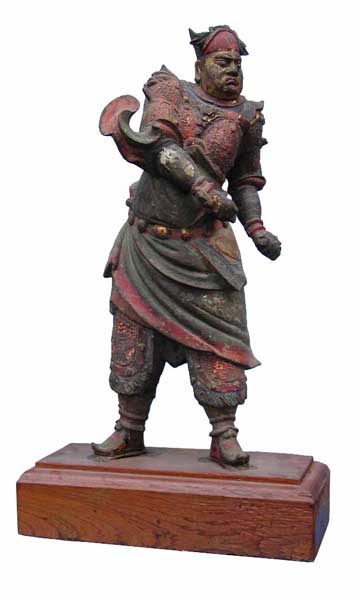
One of the stars of the Big Dipper
2026-04-15 11:51:31
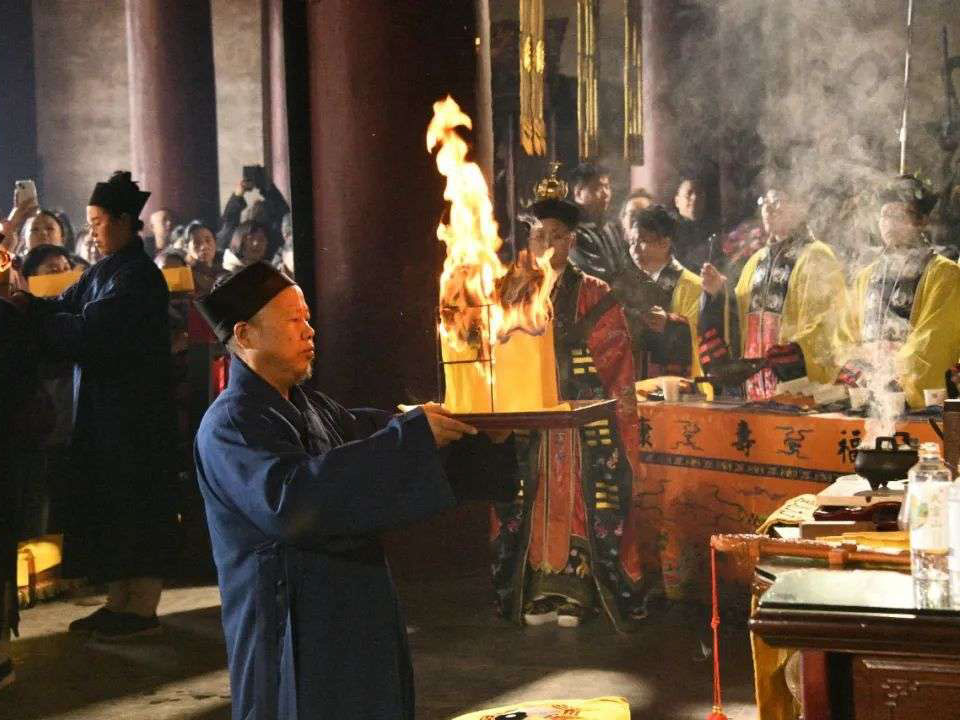
(1) The meaning of the ritual of fasting and Taoist ceremonies
2022-08-20 23:32:13
The original meaning of "zhai" was to be neat, harmonious an...
Yin GUI
2022-08-20 23:32:13
Chapter 27
2022-08-20 23:32:13
Chapter 72
2022-08-20 23:32:13
The couplet of the ancestral hall of the Wudang Mountain Temple
2022-08-20 23:32:13
Chapter 40
2022-08-20 23:32:13