


The "Wudang" dynasty
2022-08-20 23:32:13
Zang Kejia
Sitting on a large wooden boat, I crossed the Three Gorges and looked up at the twelve peaks of Wushan. Four years have passed, and I have tasted the beauty of Sichuan. Today, when I recall the impression of my old visit to Wudang with my memory, the mountain scenery and scenic spots have become as hazy as a mist. In the late autumn of the 29th year, I made up my mind to leave the "Fifth War Zone" and went to pay my respects to "Wudang", so as not to leave any regrets. Just like in the past, I had lived in Qingdao for five years but never climbed "Donghai Lao" once! It's very convenient to get from "Laohekou" to "Junxian". It only takes a few hours by car to reach "Junxian". This small city is desolate and cold, but it is very eager to me. For there were two times when the enemy drove us here, and the city was filled with people. In spring, there are often people who starve to death by the roadside, and the local people in the nearby mountains never get a single grain of salt throughout the year. This city, called "Jingle Palace", takes up most of it. Although the walls are dilapidated, the stone tablets over ten feet high carried by the dogs and turtles inside still stand majestically there, telling the story of the emperor's might in the past. In "Jun County", one can look up and see the "Wudang" Mountain toppled. Five miles along the road stands a temple, stretching from the foot all the way to the "Golden Summit" which is over eighty miles long. It is said that it took seven years' worth of money and grain from Jiangnan to build these palaces back then. In order to fulfill one of Emperor Yongle's dreams, he himself came to play once, leaving behind many legends in the mouths of the elderly to this day. Leaving the city and heading southwest, after driving for a while on the road, it's time to switch to the mountain path and ascend step by step. Not long after walking, I looked back and saw a stretch of ruins, which were gradually being invaded by the plows and harrows. This ruin plough conceals a story: Back then, there were thousands of construction workers who worked non-stop throughout the year. Afraid that they would make money and lose their desire to return home, a "Green Flower Lane" was set up here. It was full of people who wore makeup and green to sell their laughter. The workers enjoyed themselves here for a while, emptied their wallets, and had to go back to suffer the years of hard work. They, these poor women, like flowers, attract those hardworking worker bees. Further up, there was a stop every five li, a place for people to rest. However, the only thing that has always remained in my memory is that "Grinding Needle Well". The immortal "Wudang" left home to study Taoism but failed to master it. Instead, he encountered countless hardships and difficulties! His heart turned cold. Right here, he came across an old woman grinding a big iron rod on a stone. Out of curiosity, he asked, "Old lady, what are you here?" "I'm grinding a needle." He was pondering the meaning of this sentence when, in the blink of an eye, the old woman vanished. The immortal "Wudang" finally succeeded. To this day, he still has a well and an iron rod to encourage people. That day, we stopped at "Zixiao Palace", which was a central point. Although it was still early, we couldn't rush forward any further. A vast expanse of glazed tiles makes one feel as if they have stepped into the Forbidden City of Peiping. At the mountain gate, there are signs welcoming the "Commander". The "power" has reached the ancient temple deep in the mountains. When compared with the ancient pines, red leaves, and the mountain light and the rosy glow, it is so dazzling. Entering the "West Palace", a "deacon" offered tea and asked me to sit for a short while, allowing me to rest in the "East Palace". The large courtyard is paved with square bricks. The tables and chairs in the room are neatly arranged and quite clean. In the evening, I served vegetarian dishes and white rice, which tasted extremely good. A teenage Taoist priest was smart and attentive. "Your rice is really good." " "Very good, but we can't eat it." " He replied to me dejectedly. It was from his words that I learned that monks had also brought their status and social class into the palace. In the main hall, there is a large piece of fir wood placed on a frame. If you tap it gently from one side with your finger, you can hear the sound from the other side. If you forget this stroke, you won't be able to complete the "Eight Scenic Spots of Wudang". Those who have swum through Wudang will never forget to buy two steamed buns when crossing Wuya Ridge. Standing on the ridge top and calling out "Old Crow, Old Crow" a few times, the old crow will come into the air in a hoarse voice, coming from somewhere unknown. If you smash the broken steamed bun hard upwards, it won't fall to the ground. Look at the crows chasing it like arrows. Some catch it in mid-air, while others fall into the valley with it. From a distance, one mountain peak after another looks like brothers of similar height. But when one reaches the golden summit, one feels that everything below is supreme. There is a golden room on the golden Summit. The walls seem to be all gold (in fact, they are made of copper), but no money can knock on the door. The deacon held a key in one hand and a collection book in the other. On the top of the mountain, there is a temple and inside the temple, there is a tea house. When I go back, I take a few bags of tea as gifts. Although this kind of tea is not very famous, it is very delicious. However, it is produced on the "Wudang" mountain. Let's talk about burning "dragon head incense". Behind a large temple, there was a bottomless ditch. A stone dragon as thick as a bucket stretched out its body over ten feet long. Each step on the dragon's body was carved with patterns, and a large incense burner was placed on top of its head. Every time there is a grand incense festival, thousands of devout men and women, in groups, with flags, gongs, incense and paper money, travel thousands of miles to light an incense stick and kowtow their heads in front of the "Patriarch". Some, for their fathers or for themselves, made great vows and walked step by step along the carvings on the dragon's body to the dragon head. They inserted an incense stick in the censer and then turned around and walked back. How many filial sons and how many believers fell into the deep gullies that made people dizzy at the sight of them. Let the flood in June of the following year wash the corpse away for dozens of miles. In the end, they even earned a "lack of sincerity". Now, there is a fence that locks the faucet, with an edict prohibiting "burning faucet incense" pasted on it, and the names of the "Commander-in-chief" and the ministers of the Imperial Qing Dynasty are placed on it together. Many people felt it was a pity because there was no more excitement to watch. I came down the mountain and bought a walking stick for one yuan. This walking stick was produced on the peak of "Wudang". Don't believe it? There is a ballad as evidence: "Seventy-two peaks, each facing Wudang, if not one, a thousand of your hairs will be plucked in a year."
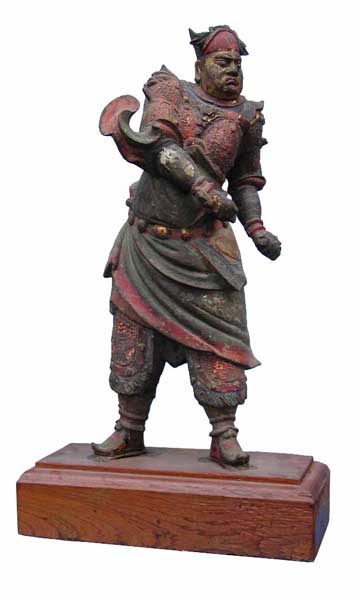
One of the stars of the Big Dipper
2026-04-15 11:51:31
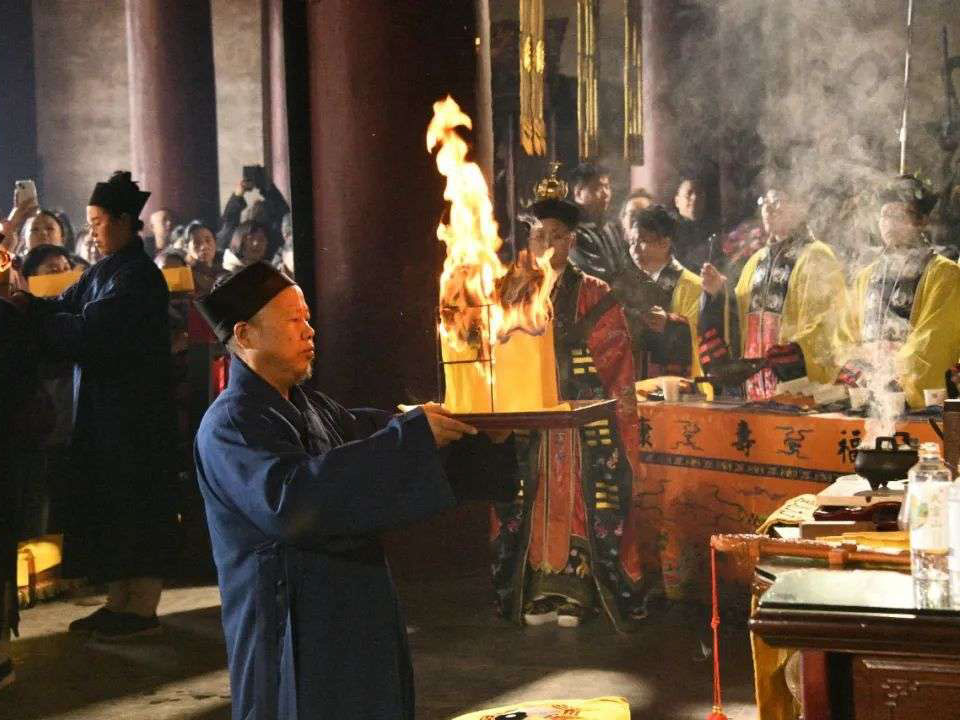
(1) The meaning of the ritual of fasting and Taoist ceremonies
2022-08-20 23:32:13
The original meaning of "zhai" was to be neat, harmonious an...
Yin GUI
2022-08-20 23:32:13
Chapter 27
2022-08-20 23:32:13
Chapter 72
2022-08-20 23:32:13
The couplet of the ancestral hall of the Wudang Mountain Temple
2022-08-20 23:32:13
The Wudang Taoist couplet congratulating the Rain
2022-08-20 23:32:13