


Ren Ziyuan
2022-08-20 23:32:13
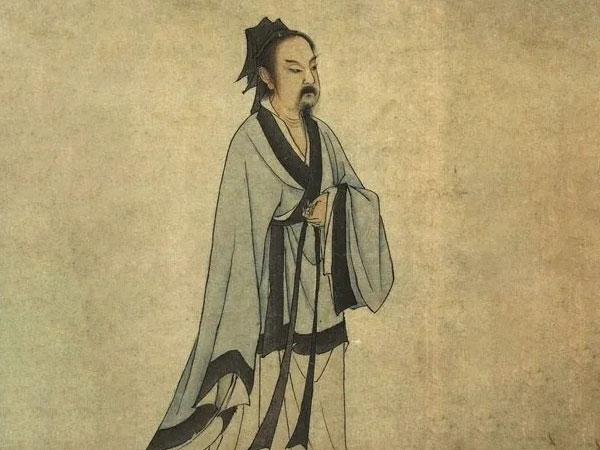
Ren Ziyuan, styled Yiyu, with the pseudonym Chanyu. A native of Yunyang, Jingkou (now Zhenjiang City, Jiangsu Province). He was a fellow townsman of Qian Ruowu and a renowned Taoist priest on Wudang Mountain during the Ming Dynasty. According to the "Great Mountain Taihe Mountain Annals" of the Ming Dynasty, Ren Ziyuan was exceptionally intelligent since childhood and had a special connection with the Tao. He thoroughly read the Six classics and conducted in-depth research. He then became a monk at the Yuanfu Wanning Palace on Maoshan Mountain and practiced in seclusion at the place where Tao Daojing lived at the foot of Jinji Mountain in Juqu. Having endured hardships for over twenty years, he deeply grasped the essence of the esoteric teachings and thus gradually gained fame. In the ninth year of Yongle (1411 AD), he was recommended as an official of Maoshan. Later, I was ordered to interview the ancient sites and spiritual altars. In the 11th year of Yongle (or the 13th year according to some accounts), due to the shortage of staff in the Taoist position at Wudang Palace, Zhang Yuqing, the 44th Celestial Master, recommended him to the court and appointed him as the director of Yuxu Palace. (Note: Yuxu Palace is the first of the eight palaces of Wudang, and I have the authority to lead the mountain.)" In the 17th year of Yongle (1419 AD), the Wudang Temple was completed. Ren Ziyuan went to the capital to express his gratitude and completed the Golden Throne Feast at the Hongen Lingji Palace for seven days and nights. After the feast, Emperor Yongle bestowed upon more than seven hundred Taoists, among whom Ren Ziyuan received the most generous rewards. Around the 18th year of Yongle, Ren Ziyuan was ordered to lead the compilation of the Daozang in the capital. The Daozang was completed in the 20th year of Yongle (1422 AD). The imperial court rewards all those who are capable of compiling the Daozang. Later, Ren Ziyuan returned to Wudang and was promoted to the position of commander-in-chief of the Yuxu Palace. In the third year of the Xuande reign (1428 AD), he was appointed as the chief of the Taichang Temple by Ziyuan Bi and was in charge of Taoism throughout the country. In the third month of the sixth year of the Xuande reign, Ren Ziyuan collected ancient records and visited the elders, recorded his observations and writings, and compiled the fifteen-volume "Annals of the Imperial Construction of Mount Taihe", which was published in the world. (Note: The "Great Mountain Taihe Mountain Annals" cited in this book is mainly the version by Ren Ziyuan, which is the authoritative version among the mountain annals of all dynasties.)" Ren Ziyuan passed away after the sixth year of the Xuande reign and was buried in the Jijin Mountain in Juqu. The year of death and the time of passing away are unknown. Fang Sheng's "Brief Account of the Great Mount Taihe" states that Ren Ziyuan finally completed the construction of the Great Mount Taihe in the fifth year of the Xuande reign. In contrast to the historical fact that he compiled the "Annals of the Imperial Construction of the Great Mount Taihe" in the sixth year of the Xuande reign, this is actually a misjudgment. Before his death, Ren Ziyuan was on Wudang Mountain, and many people presented him with poems. Hu Yan of Yuzhang presented a poem titled "The Song of Chan Yu", which reads: "The vast expanse of the eight directions makes the sky clear; the stars of the silver Han are few and the solitary moon shines bright." The smoke of tea has dissipated and the crane has just fallen asleep. Through the cloud window, a void has emerged. The Taoist priest sits and adorns himself with golden scriptures, his nose tip is white but his heart is empty. "Zhaoyao" here refers to the rising red sun and the condensed moonlight in the crimson palace. The return air mixes and flows back to the Yellow Court. The Heavenly Gate opens at night, refreshing and invigorating. The palace in the cold and bright sky shines brightly, and the graceful dress echoes the early spring light. The moth has medicine but doesn't need to taste it; the osmanthus tree is green but grows old later. Yin fire flows like gold emerging from the Great Abyss; do not laugh at the confusion of the five elements. The Xuan Gu Valley, with its empty name, is immortal; every night, its moon light pierces the sky. This poem records Ren Ziyuan's martial arts realm. The Taoist priest Xibi presented the poem "Chan Yu", saying: "The immortal who plays the tune is a fisherman." I left home long ago to study under the master of Xu Bai, and I lived in seclusion to talk about my own comfort. The lofty pavilions and jade buildings are cold, but the emptiness and serenity are confined to a small space. The elixir of immortality, which is known as "Gu GUI Yao", is kept within 扃 and returned. Yan qi rides the wind and clouds, that companion mee 麇. With one life to serve as the Taoist priest, one feasts to search for the true immortals. With the roar as the chariot and the neon as the cover, the cave heaven, the sea and the mountains should all be within reach. Returning to the golden gate with a painting, the leader Taihe Mengdi 赍. The lofty Mount Taihe attracts Yao, and the gold and silver pavilions stretch far into the sky. The rainbow light ripples as the true ruler descends, and the misty fragrance fills the mountains with the spirit of the dawn. By the Mozhen Stream, the water is clear and refreshing; beneath the Langmei grove, the fragrance of flowers lingers. When the flowers bloom in the morning, the bells and chimes ring clear; at night, the stone altar pays homage to the stars. Wang Qiaoniao flew away, and Yin respectfully looked at Tongyu. The jade seal is opened together, and the Lin Palace ritual is truly miraculous. Dressed in crimson crimson clouds and adorned with green jade, the music plays the immortal melody of Luang Ao Du. The phoenix soars and the crane dances, evoking a sense of auspiciousness. The imperial edict bestows the yellow hemp award upon our family. The celestial record of the proofreader borrowed the Xuan Cao, and the green amaranth illuminated the palace's brocade robe at night. The days of friendship and correspondence have passed for a long time, and the spirit of mutual affection is as high as mountains. Holding the scroll of Chan Yu, I request the poem of Chan Yu. But I am not talented enough. How could I be so extraordinary? In August, the west wind sings of white dew; osmanthus flowers blow their fragrance and fall in the vast cold. The moonlight shines through the room, untainted by the dust; the curling stone shines brightly, opening up a vast world. At this time, the swallow sits in a state of deep concern, but only the cloud platform remains as bright and clear as ever. The fine smoke from the seal fire and the warmth of the stove fire, as well as the sharp knife and the GUI that enter the mouth, are like a sudden enlightenment. On the day of Yi, I will reach the path of gratitude and honor. At dawn, I wish the steps to be smooth. In his later years, he met Gongxing Zhuo and rode the toad Ling Taiqing. This poem, by recounting Ren Ziyuan's life story, highly praises his moral character, cultivation skills and the great undertakings he has engaged in throughout his life. The poem also records that Ren Ziyuan's teacher in his early years was named Xu Bai. King Zhu Ying of Ming 'an presented a poem titled "Chan Yu", saying: "Above there is no color, below there is no deep pool; within, the light has already been revealed." The heat is more refined and grand, blending the Tai Chi in a perfect circle. This poem, by praising Ren Ziyuan's cultivation, unintentionally points out his Tai Chi elixir skills. Since Tai Chi Dan Gong involves both dynamic and static cultivation, and the dynamic exercises are called boxing exercises, it can be inferred that Ren Ziyuan was also proficient in Tai Chi. King Yongxing of the Ming Dynasty presented a poem titled "Chan Yu", which reads: "The starry river is clear and bright in the sky; in an instant, a ship sets sail in the sea." Despite the cold wind and dew in the vast expanse of the sun, who might share the same sentiment at this moment? [Note] The "Imperially Built Great Mountain Taihe Mountain Annals" written by Ren Ziyuan that still exists on Wudang Mountain today is no longer Ren's original work. As the lower limit of the "Imperial Edict of the Great Ming Dynasty" recorded therein is the fifth year of the Jingtai reign (i.e., 1454 AD), it has been nearly thirty years since he left his post and passed away. Moreover, the "Great Ming Imperial Edict" volume records the passing of Ren Ziyuan. Therefore, the version we see today is actually a revised version. In addition, the "Imperial Edict of the Great Ming Dynasty" records that Ren Ziyuan passed away three years after the Xuande reign and six years before it, which is an estimated statement. However, the "Great Yue Zhi Lue" by Fang Sheng of the Qing Dynasty states that it was the fifth year of the Xuande reign. However, in the preface of the "Imperial-Ordered Construction of the Great Mountain Taihe Annals", it is stated that Ren Ziyuan compiled and inscribed the mountain annals in the sixth year of the Xuande reign. Take the latter as your faith.
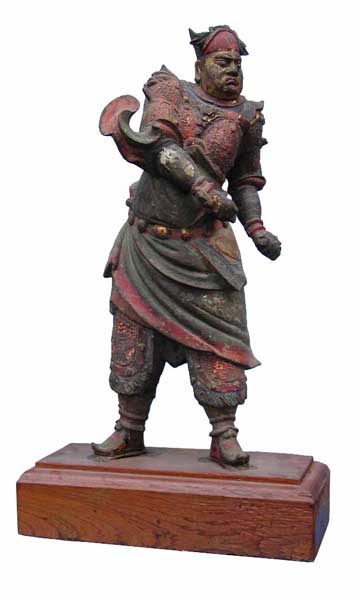
One of the stars of the Big Dipper
2026-04-15 11:51:31
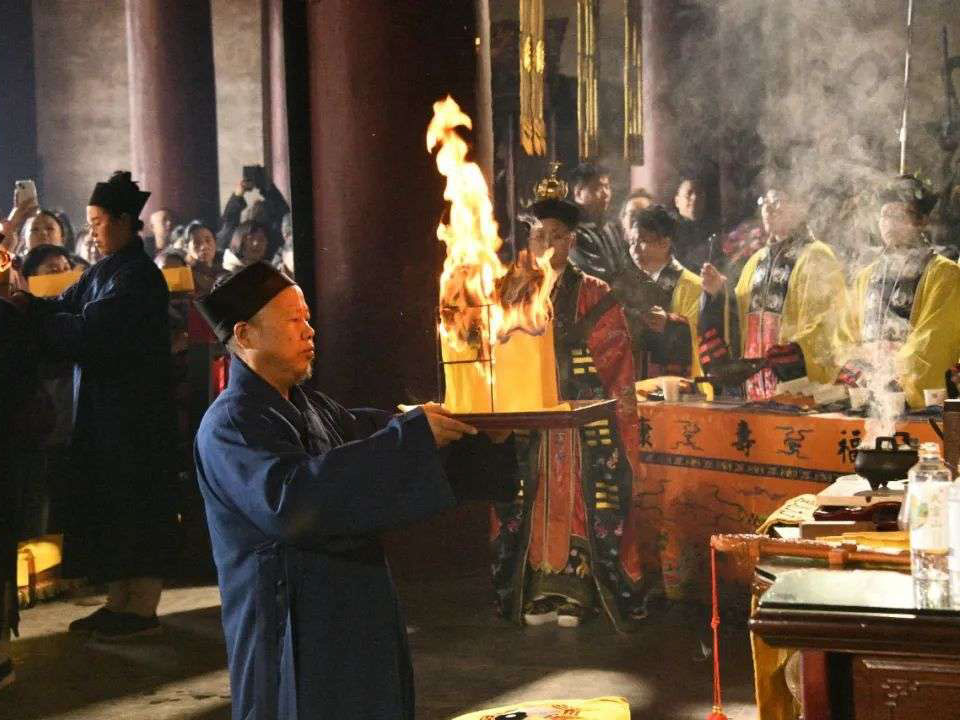
(1) The meaning of the ritual of fasting and Taoist ceremonies
2022-08-20 23:32:13
The original meaning of "zhai" was to be neat, harmonious an...
Yin GUI
2022-08-20 23:32:13
Chapter 27
2022-08-20 23:32:13
Chapter 72
2022-08-20 23:32:13
The couplet of the ancestral hall of the Wudang Mountain Temple
2022-08-20 23:32:13
Chapter 19
2022-08-20 23:32:13