


Sun Simiao
2022-08-20 23:32:13
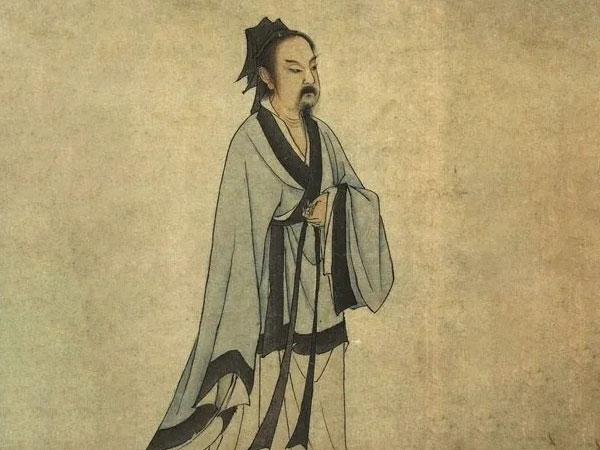
Sun Simiao was from Huayuan (now Yao County, Shaanxi Province). According to the historical mountain Chronicles of Wudang Mountain and the old Chronicles of Junzhou, this person was born with great intelligence and could recite over a thousand ancient poems by the age of seven. After growing up, he devoted himself to the study of Laozi and Zhuangzi. Later, he retired to Taibai Mountain (there were three ancient Taibai Mountain sites). One is Taibai Mountain in the southwest of Shengxian County, Zhejiang Province today, one is Changbai Mountain today, and one is Tiantong Mountain in the east of Yinxian County, Zhejiang Province today. According to his place of origin, it might be Changbai Mountain. He has delved deeply into the art of saving lives and enlightening the world, excelling in astronomy, calendar, numerology, and medicine. Sun Simiao was very kind. Legend has it that once, he came across a shepherd boy who was harming a little snake. So he took off his clothes, redeemed the little snake and took it home for treatment. After the doctor was cured, the little snake was released. Later, something strange happened. A dozen days later, suddenly a young man in white came to invite Sun Simiao to his home as a guest. He was puzzled and couldn't make excuses, so he went. He followed the young man into a residence that looked like an imperial palace. An old man immediately ordered a young man in a green robe to come and express his gratitude for saving his life. Upon inquiry, he learned that the little snake in Qingyi was the one he had saved. This place was originally the Dragon Palace of the Jing River. To express his gratitude to Sun Simiao for saving his son, the Dragon King of Jing River presented him with a large amount of gauze, silk, gold, silver and jewels. But Sun Simiao insisted on not accepting it. Later, the Dragon King took out the three thousand strange prescriptions hidden in the palace and gave them to him. These three thousand extraordinary prescriptions were later compiled by him into his comprehensive medical work, "Thousand Gold Prescriptions". Sun Simiao later secluded himself in Lingxu Rock, southwest of Wulong Peak on Wudang Mountain, to cultivate. In the tenth year of Yongle in the Ming Dynasty (1412 AD), an imperial edict was issued to build the Lingxu Rock Hall, where a statue of Sun Simiao was enshrined. Sun Simiao authored over thirty medical books throughout his life, including the "Thousand Gold Prescriptions", as well as Taoist books such as the "Treatise on Nourishing and Preserving" and the "Essentials of the Taqing Danjing". He was a renowned Taoist scholar and medical expert in the history of traditional Chinese culture. In his later years, Sun Simiao was invited by Emperor Taizong of Tang to the capital Chang 'an. In the third year of Eizheng (652 AD), he was still in Kyoto. One day, after taking a bath and fasting, I sat upright and passed away. More than a month after death, her appearance was as fresh as ever. It is said that later generations placed him in a coffin and found that only his empty clothes remained, which was actually a corpse that had passed away. According to the New Book of Tang and the Old Book of Tang, Sun Simiao was born in the Dading period of the Northern Zhou Dynasty of the Northern and Southern Dynasties (i.e., 581 AD) and died in the Yongchun period of the Tang Dynasty (i.e., 682 AD). Calculated this way, he was 102 years old at the time of his death.
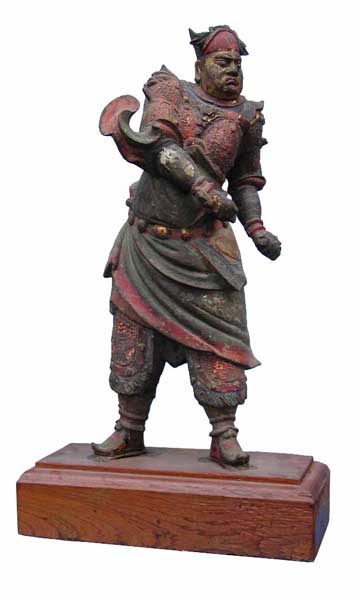
One of the stars of the Big Dipper
2026-04-15 11:51:31
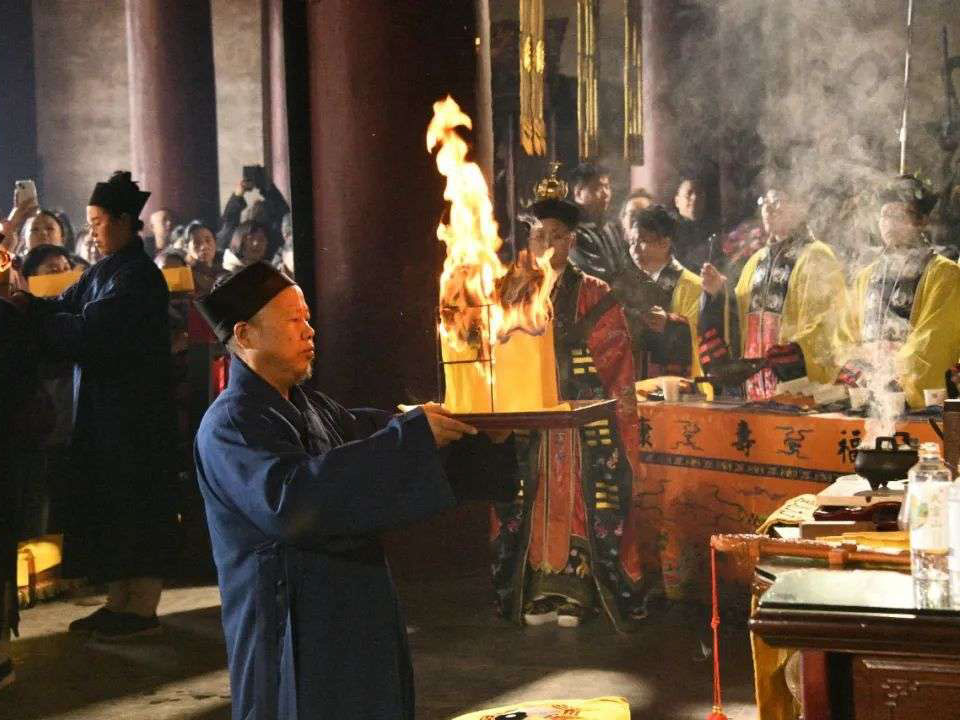
(1) The meaning of the ritual of fasting and Taoist ceremonies
2022-08-20 23:32:13
The original meaning of "zhai" was to be neat, harmonious an...
Yin GUI
2022-08-20 23:32:13
Chapter 27
2022-08-20 23:32:13
Chapter 72
2022-08-20 23:32:13
The couplet of the ancestral hall of the Wudang Mountain Temple
2022-08-20 23:32:13
Chapter 19
2022-08-20 23:32:13