


The seven levels of Tai Chi
2022-08-20 23:32:13
There are many methods for practicing Jin Xingxiang's Tai Chi, but there must be a main thread, that is, to take combat as the soul and run "hitting" through the entire process. From the lower levels to the higher levels to the perfection of kung fu, in summary, it can be divided into seven levels of kung fu, which are briefly described as follows: First, basic skills. The aim is to unblock the major joints and meridians within the body and enhance the body's resistance, especially the striking force and endurance of the fists. For instance, when shooting with firearms, real bullets are essential; cotton or plastic bullets are not acceptable. This is the art of making bullets. There are mainly two methods: one is "passing through the three checkpoints", that is, to unblock the "waist", "shoulder" and "elbow" joints. The force is generated from the legs. Only by minimizing the loss of force when passing through the "waist", "shoulder", "elbow" and other joints as much as possible can the impact surface of the fist be reached to the greatest extent, and the efficiency will be the highest. ? quot; During the process of "Passing the Three Passes", the fist should be adjusted from loose to tight in five steps. If "loose" is taken as 0 and the fist should be tightened to 100 when it can no longer be tightened, then the force levels of the five steps in "Passing the Three Passes" are 0, 25, 50, 75, and 100 respectively. Through repeated exercises, not only are the main joints and meridians in the body unblocked, but also the hardness of the fist is enhanced. The striking force and load-bearing capacity have naturally increased, and the psychological quality and adaptability in handling emergencies have also improved accordingly. The second type is "squatting", which mainly involves unblocking joints such as the hips, knees, and ankles. The intensity can be divided into five levels, and for each level, one can find a reference object to exercise. When it is loose, it feels as if the legs are stepping on an ice block about to melt, with no force at all. When it is tight, it feels as if the legs are stepping on a wooden stick being pulled by someone else, without any relaxation. Through continuous up and down squatting, The entire body was like a willow tree, swaying in the wind without any force, gradually getting rid of the stiffness on the body. Only by achieving the maximum flexibility of the body can the degree of injury from the strike be minimized to the greatest extent. Two. Stick, connect, follow, and follow. By making contact with the body (hands), or further, through the contact with instruments (swords, sticks), master the four methods of sticking, connecting, following and following. Carefully savor the feeling of glue sticking, the expression of cotton thread connecting, the form of walking first and then following, the mentality of being content with whatever comes and having no belonging, and detect the flow of the opponent's "strength" and "energy". This is a kind of "knowing the enemy" skill. It is also a kind of "self-contained" force. Two people can use methods such as pushing hands or sticking swords and sticks together, but when alone, pushing a "bucket" is the best. The "bucket" is the teacher, the "bucket" is the method, and the strength of the "bucket" is the purest. Three, a needle hidden in cotton. How to evenly add beautiful pigments to a piece of ice? How to integrate a piece of xun iron into an iron sword? Only by melting ice into water can various colors be mixed in. Only when the molten iron boils can various rare elements be added. Only in this way can various alloys be smelted and mixed into different colors, and the properties of the alloys will inevitably be different from those of natural ironware. The color mixed out is definitely different from the original color. The approach is not to abandon the skills of sticking, connecting, following and following, but to incorporate new thinking methods. When pushing the hand, sticking the sword and connecting the staff, respectively determine the five forces. No matter how the opponent forces or withdraws, always maintain a certain force, and temper oneself. Fourth, it converges into the bones. While unblocking the meridians and joints, further focus the mind on the bone marrow. Walk along the bone marrow path. The appearance is like a withered tree, without a sense of flow, but deep in the bone marrow, it is constantly flowing without stopping. The appearance remains unchanged, but the internal breathing does not stop. The change lies in that when striking, no bone mass can be found, and there is no point of force application. When practicing, the main methods are still sticking, connecting, following and following. The difference lies in that the mind follows the bone marrow all the way, achieving the goal of eliminating the coarse and retaining the fine, eliminating the false and retaining the true, and removing all the stiff and dross from the bone marrow, leaving the true force (manifested as human hardness or empty force) omnipresent throughout the entire body. Five. Empty force Push hand. The attainment of the above-mentioned skills is largely attributed to "touch", but it is still far from combat. Just like the development process of communication, it is currently still at the stage of wired communication. Without the connection of lines, nothing can be discussed. However, in combat, offense and defense, everything takes place without contact. At this point, what must be done? quot; The evolution of "touch" to "perception" is just like how wired communication must evolve into wireless communication. Direct hand pushing (hand to hand, sword to sword, stick to stick, etc.) must develop into empty force hand pushing. Only in this way can one appreciate the spirit of combat, and only through this stage of cultivation can the fighting spirit of Tai Chi be reflected. This is called in the common saying of Tai Chi: "When the force is broken, the mind remains unbroken; when the mind is broken, the spirit can be connected." Vi. Quenching and sharpening of swords. After the first five layers of hammering, a sword has begun to take shape. But at this point, the sword could not be used yet, for it did not have any sharpness. Swords must be quenched and sharpened before they can be used. Tai Chi Chuan is based on the practice of pushing hands with empty force. Through the actual practice of punching, sword thrusters, and stick strikes, one can choose any form without changing it, strike the opponent effortlessly, and the sharpness of one's own attack always does not leave the opponent's vital points. It can be both tough and soft, combining hardness and softness. Softness is boneless, while hardness is invincible. Seven. Groundless speculation. Tai Chi emphasizes "using softness to overcome hardness" and "using four ounces to move a thousand pounds". In combat, one's figure must appear to the opponent as elusive and unpredictable as a ghost, with no fixed place. In practice, one must be able to withstand the strikes and thrusts of bricks, sticks and sharp swords without applying any force in order to reach a higher level of proficiency. The seven-level skills of Tai Chi Chuan by Jin Xingxiang: There are many methods in practicing Tai Chi Chuan, but there must be a main thread, that is, taking combat as the soul and running "hitting" through the entire process. From the lower levels to the higher levels to the perfection of kung fu, in summary, it can be divided into seven levels of kung fu, which are briefly described as follows: First, basic skills. The aim is to unblock the major joints and meridians within the body and enhance the body's resistance, especially the striking force and endurance of the fists. For instance, when shooting with firearms, real bullets are essential; cotton or plastic bullets are not acceptable. This is the art of making bullets. There are mainly two methods: one is "passing through the three checkpoints", that is, to unblock the "waist", "shoulder" and "elbow" joints. The force is generated from the legs. Only by minimizing the loss of force when passing through the "waist", "shoulder", "elbow" and other joints as much as possible can the impact surface of the fist be reached to the greatest extent, and the efficiency will be the highest. ? quot; During the process of "Passing the Three Passes", the fist should be adjusted from loose to tight in five steps. If "loose" is taken as 0 and the fist should be tightened to 100 when it can no longer be tightened, then the force levels of the five steps in "Passing the Three Passes" are 0, 25, 50, 75, and 100 respectively. Through repeated exercises, not only are the main joints and meridians in the body unblocked, but also the hardness of the fist is enhanced. The striking force and load-bearing capacity have naturally increased, and the psychological quality and adaptability in handling emergencies have also improved accordingly. The second type is "squatting", which mainly involves unblocking joints such as the hips, knees, and ankles. The intensity can be divided into five levels, and for each level, one can find a reference object to exercise. When it is loose, it feels as if the legs are stepping on an ice block about to melt, with no force at all. When it is tight, it feels as if the legs are stepping on a wooden stick being pulled by someone else, without any relaxation. Through continuous up and down squatting, The entire body was like a willow tree, swaying in the wind without any force, gradually getting rid of the stiffness on the body. Only by achieving the maximum flexibility of the body can the degree of injury from the strike be minimized to the greatest extent. Two. Stick, connect, follow, and follow. By making contact with the body (hands), or further, through the contact with instruments (swords, sticks), master the four methods of sticking, connecting, following and following. Carefully savor the feeling of glue sticking, the expression of cotton thread connecting, the form of walking first and then following, the mentality of being content with whatever comes and having no belonging, and detect the flow of the opponent's "strength" and "energy". This is a kind of "knowing the enemy" skill. It is also a kind of "self-contained" force. Two people can use methods such as pushing hands or sticking swords and sticks together, but when alone, pushing a "bucket" is the best. The "bucket" is the teacher, the "bucket" is the method, and the strength of the "bucket" is the purest. Three, a needle hidden in cotton. How to evenly add beautiful pigments to a piece of ice? How to integrate a piece of xun iron into an iron sword? Only by melting ice into water can various colors be mixed in. Only when the molten iron boils can various rare elements be added. Only in this way can various alloys be smelted and mixed into different colors, and the properties of the alloys will inevitably be different from those of natural ironware. The color mixed out is definitely different from the original color. The approach is not to abandon the skills of sticking, connecting, following and following, but to incorporate new thinking methods. When pushing the hand, sticking the sword and connecting the staff, respectively determine the five forces. No matter how the opponent forces or withdraws, always maintain a certain force, and temper oneself. Fourth, it converges into the bones. While unblocking the meridians and joints, further focus the mind on the bone marrow. Walk along the bone marrow path. The appearance is like a withered tree, without a sense of flow, but deep in the bone marrow, it is constantly flowing without stopping. The appearance remains unchanged, but the internal breathing does not stop. The change lies in that when striking, no bone mass can be found, and there is no point of force application. When practicing, the main methods are still sticking, connecting, following and following. The difference lies in that the mind follows the bone marrow all the way, achieving the goal of eliminating the coarse and retaining the fine, eliminating the false and retaining the true, and removing all the stiff and dross from the bone marrow, leaving the true force (manifested as human hardness or empty force) omnipresent throughout the entire body. Five. Empty force Push hand. The attainment of the above-mentioned skills is largely attributed to "touch", but it is still far from combat. Just like the development process of communication, it is currently still at the stage of wired communication. Without the connection of lines, nothing can be discussed. However, in combat, offense and defense, everything takes place without contact. At this point, what must be done? quot; The evolution of "touch" to "perception" is just like how wired communication must evolve into wireless communication. Direct hand pushing (hand to hand, sword to sword, stick to stick, etc.) must develop into empty force hand pushing. Only in this way can one appreciate the spirit of combat, and only through this stage of cultivation can the fighting spirit of Tai Chi be reflected. This is called in the common saying of Tai Chi: "When the force is broken, the mind remains unbroken; when the mind is broken, the spirit can be connected." Vi. Quenching and sharpening of swords. After the first five layers of hammering, a sword has begun to take shape. But at this point, the sword could not be used yet, for it did not have any sharpness. Swords must be quenched and sharpened before they can be used. Tai Chi Chuan is based on the practice of pushing hands with empty force. Through the actual practice of punching, sword thrusters, and stick strikes, one can choose any form without changing it, strike the opponent effortlessly, and the sharpness of one's own attack always does not leave the opponent's vital points. It can be both tough and soft, combining hardness and softness. Softness is boneless, while hardness is invincible. Seven. Groundless speculation. Tai Chi emphasizes "using softness to overcome hardness" and "using four ounces to move a thousand pounds". In combat, one's figure must appear to the opponent as elusive and unpredictable as a ghost, with no fixed place. In practice, one must be able to withstand the strikes and thrusts of bricks, sticks and sharp swords without applying any force in order to reach a higher level of proficiency.
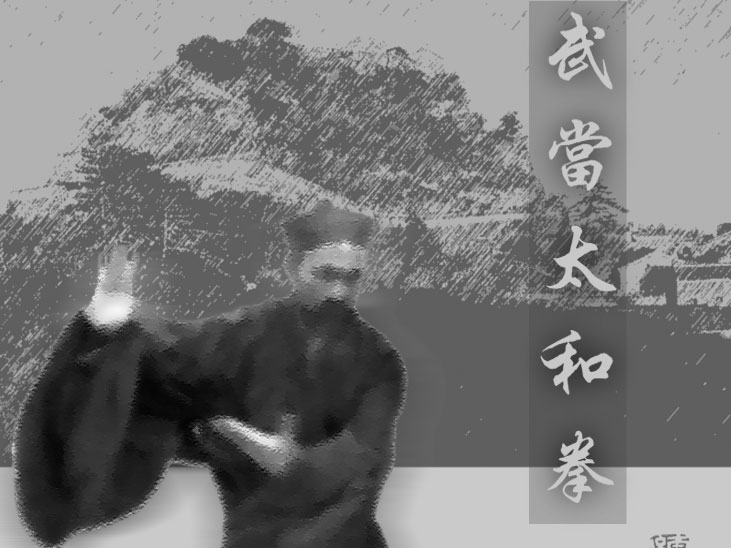
Verified by Zhang Sanfeng with the same name and pronunciation
2022-08-20 23:32:13
The main hall of Taizi Rock
Annotations on the 24 Poems of Jin Dan ⑥
2022-08-20 23:32:13
The tomb statue of Taoist Priest in Wulong Palace
Commentary on the Taiji Elixir Classic: "A Simple Explanation of Dao Yan" ①
2022-08-20 23:32:13
The white tiger in the Dragon and Tiger Hall of Fuzhen Templ...
"Xuan Yao Chapter - Part 1: A Song about Taoist Love.
2022-08-20 23:32:13
The dougong brackets in the main hall of Fuzhen Temple