


On the Fitness Principles of the Five and Twelve Forms of Xingyi Quan
2022-08-20 23:32:13
Author: Shen Huazhang Xingyi Quan is one of the internal martial arts in China. Over the course of several hundred years of development, it has gradually been created, refined and developed to the rich and colorful present. The author has been engaged in the practice of Xingyi Quan for decades and has cultivated hundreds of champions in provincial martial arts competitions and fifty champions in national second-class competitions. In the national fitness activities, thousands of patients with chronic diseases have been treated with Xingyi Quan. Gradually, the relationship between the five and twelve forms of Xingyi Quan and the meridians of the human body has been realized. For this reason, I studied traditional Chinese medicine for another four years at Shanxi Medical University, sought advice from many masters and conducted numerous experiments, which proved that Xingyi Quan surpasses any other martial art in terms of fitness. This article only discusses the movement characteristics and fitness principles of the Five Elements and Twelve Forms. The combat techniques and training methods of the Five and Twelve Forms will be written separately later. 1. Fist Splitting Fist Splitting Fist belongs to metal in the Five Elements Theory. The key points of its guidance are: the Ren and Du meridians and the Hand Taiyin (lung) and hand Yangming (large intestine) meridians. The lung governs respiration and qi. It serves as the gateway for eliminating turbidity and absorbing clear heat, and also acts as the driving force for the circulation of true qi. The rise and fall of the punches all originated from the Central Mansion and the Cloud Gate. Both of these acupoints are important points on the Lung Meridian. When performing the split, the thumb and index finger should be rounded to allow the lung qi to directly pass through the Shaoshang Meridian and enter the Shangyang point of the Large Intestine Meridian. Shao Shang is the well point of the Lung Meridian and is directly related to the treatment of all respiratory system diseases. The entry, exit, insertion and flipping of both hands engage the intercostal and subcostal muscles, lifting and pulling the ribs up and down. This increases the contraction and expansion of the chest cavity during breathing and also boosts lung capacity, playing a role in nourishing the lungs. Practicing Tai Chi can bring the qi back to its root, exchange the She Ren and Du meridians, and invigorate the circulation of true qi, which is beneficial to the improvement of the physiological functions of the whole body. When one reaches a certain level of skill in practicing martial arts, the movement of true qi, one form, one cycle. When the fist emerges (inhaling), the true qi descends along the Ren meridian to the dantian. At the same time, the pores all over the body were perching, clear and unobstructed. Second, Drill Fist Drill Fist belongs to water in the Five Elements Theory. The key points of its guidance are: the Ren and Du meridians, the foot Shaoyin (kidney), the foot Taiyang (bladder), the hand Shaoyang (heart), the hand 劂 Yin (heart, bao), and the hand shaoyin (triple burner) meridians. It has the functions of benefiting the kidneys, replenishing essence, restoring essence and nourishing the brain. When practicing the Drill Fist, the upper and lower parts of the body follow each other, the hands and feet look at each other, the hands move in circles, and the elbows alternately wrap and squeeze towards the midline of the body, forming a movement form dominated by the waist throughout the body. This makes the entire spine constantly contract and exercises the kidneys very well. The kidneys are responsible for storing essence and water, and they store internal fire. Essence can transform into qi. When the kidney essence is abundant, the true qi will be lively and vigorous. Practicing the Drill Fist can open the three passes, and the Ren and Du meridians will be unobstructed It has the effect of invigorating qi and generating essence, and also has the function of restoring essence and nourishing the brain. At the same time, the water in the kidney is moist to nourish the heart fire, forming a virtuous cycle. The kidney and the bladder are exterial-interior related, and the function of the bladder is the work of kidney Yang, with qi transformation and self-regulation. When practicing the Drill Fist to a certain level, the true energy at the Du Meridian's life gate becomes the most lively. The true energy travels directly to Baihui with the exhalation, making the mind clear and the mood pleasant. Iii. Bengquan Bengquan, belonging to the wood element in the Five Elements theory, focuses on guiding the Ren and Du meridians, including the foot 劂 Yin (liver), foot shaoyang (gallbladder), and foot shaoyin (kidney) meridians. It has the effect of soothing the liver and promoting gallbladder function. When making progress in practicing Bengquan, the heel of the big toe on the back foot exerts special force. The inner side of the big toe is the Yinbai point, the starting point of the spleen meridian, and the outer side is the Dadun point, the starting point of the liver meridian. Therefore, when changing steps, it is certain that the qi of the spleen and liver meridians can be stimulated by these two points, causing them to rise along the inner side of the leg, achieving the effect of "the qi of the liver and spleen should rise". Rub your ribs as you move your arms in and out, and constantly stroke the Qimen and Zhangmen acupoints. Zhangmen is a key point of the liver Meridian, a gathering point of the Spleen Meridian, and one of the eight meeting points. Qimen is the gathering point of the liver Meridian, and Dadun is the well point of the liver Meridian. Therefore, practicing Bengquan can soothe the liver. When the liver qi is smooth, the heart blood is abundant; when the fascia is strong and the spleen qi is open, the muscles are plump. When one practices Bengquan to a certain level of skill, qi will naturally arise from the roots, spread from the waist and spine to the limbs, giving the impression of thick arms and large fists, and the sides will feel relaxed and the steps will be light and agile. Four. Pao Quan Pao Quan belongs to fire in the Five Elements Theory. The key points of guiding: Chong Meridian, Ren and Du Meridian, hand Shaoyin (heart), hand 劂 Yang (pericardium), hand Taiyang (small intestine), etc. It has the effect of calming the mind and soothing the spirit. Practicing the Cannon Fist, with one punch flipped upwards, can activate the qi of the heart meridian from the Jiquan point under the armpit through Shaohai, Shenmen, and Shaofu all the way to the Shaochong point on the radial side of the little fingertip. At the same time, it also mobilized the qi of the pericardium Meridian from the Tianchi point on the outer side of the papilla, along the inner side of the arm, through the Zhengzhong meridians Quze, Neiguan, and Laogong, to reach the Zhongchong point at the tip of the middle finger. Another punch was delivered to the flanks, mobilizing the qi of the liver wood to enhance the might of the heart fire. Alternating left and right, the cycle of life and vitality continues. When the two meridians are unobstructed, the heart qi is harmonious and smooth. When the heart qi is harmonious and smooth, it can nourish the heart blood. The heart and the small intestine are exterior-interior related, and heart fire is closely related to small intestine fire. The heart and the kidney are in a state of water and fire, opposite the heart. The interaction between the heart and the kidneys depends on exhalation to lower the heart fire and inhalation to raise the kidney water. When practicing the cannon Fist, it all depends on one's heart. Keep calm and composed, balance movement and stillness, and when the spirit is responsible, all limbs will obey. Five. Horizontal Fist Horizontal Fist, in the Five Elements theory, belongs to earth. The key points of guiding: Ren and Du meridians, Dai meridians, foot Taiyin (spleen), foot yangming (stomach), foot 劂 Yin (liver), foot shaoyang (gallbladder), etc. It has the functions of strengthening the spleen and stomach. When practicing the horizontal fist, push the back foot diagonally, touch the ground with the big toe, and twist both arms in like taps, transforming Yin and Yang. The Yinbai point on the inner side of the big toe is the starting point of the Spleen Meridian. The large Intestine Meridian, Small Intestine Meridian and Sanjiao Meridian are distributed along the Yin and Yang of the two arms. By kicking the feet and twisting the arms, the qi of the Bi Meridian is lifted, and the qi of the large and Small Intestine meridians also flows smoothly. It is the middle way that enables the transformation of water and capacity to be vigorous. Only through long-term practice can one's appetite increase and weight gain. The spleen and stomach are the foundation of the body after birth and the source of life and metabolism. When practicing this fist to a certain level, the qi will flow freely, the momentum will be like a spring gushing out, the body will be agile and strong, and it has the effect of lightening the body and losing weight, as well as purifying the intestines and stomach. The theory of the Twelve Forms in comparison with the meridians: First, the Dragon Form. The dragon form exercises the extension, contraction, rise and fall of the body movements, the crawling, turning, bending and stretching of the hand movements, and the winding and transformation of the footwork. Therefore, it is required that the rising and falling dragon ascend to the sky and the falling dragon flip through the waves, reflecting the wonderful use of the dragon's bone-searching method. When the dragon retracts, the qi from the dantian rushes straight to the coccyx, the bow at the back, the two kidneys will move, and the life gate will open. In this way, the qi of the kidney and the qi of the dantian converge and ascend along the spine, thus unblocking the Governor Meridian. The dragon forms a long body and descends, allowing the qi to sink to the dantian and unblocking the Ren meridian. Therefore, it can treat diseases caused by the obstruction of the Ren and Du meridians. The rise and fall as well as the extension and contraction of the dragon shape all require the extension and contraction of the soles of its feet. When inhaling, the Yongquan acupoint retracts upwards. He rose in mid-air. When exhaling, the body descends and a spring gushes out, which unblocks the kidney meridian. It enables the clear qi in the human body to rise and the turbid qi to fall, thus it can treat the disharmony of qi and blood in the upper and lower parts and the imbalance of Yin and Yang. When practicing the dragon shape, you need to pull your fingers and toes out as far as possible. Especially the extension of the big toe stimulates the Dadun point and the Xingjian point. And the stretching of the toes causes the qi of the Dadun point to ascend along the foot 劂 Yin liver meridian to the first gate point. Therefore, this scripture can be understood. Second, tiger-shaped: The tiger is the king of beasts, with the ferocity of pouncing on food and the might of shaking its fur. The force of the tiger form originates from the coccyx and ascends along the Governor Vessel, replenishing the brain and reaching the Ren and Governor vessels. When practicing the tiger form and inhaling, the qi is stored at the life gate (the opening of the uterus for women and the gate where essence is stored for men). When the coccyx rises, the internal qi follows the Governor meridian and ascends. It is called refining essence, transforming qi and nourishing the brain. When exhaling, both hands are thrown forward. With this rise and fall, the internal qi circulates around the Ren and Du meridians, which is called "pulling, Kan, bu and li". The meaning of the intersection of water and fire. At the same time, practicing the tiger form can also unblock the Chong meridians. When changing steps and inhaling, both hands are pulled back with the fists facing upwards. But when exhaling and striking out, the fists become palms and are twisted out. With each inhalation and exhalation, the hands change from Yin to Yang. The relationship from the outside to the inside stimulates the Chong meridian of the Shaoyin and Sanjiao in the hand, thereby exercising the internal body. Three. Monkey-shaped Monkeys have the characteristics of being light, flexible, dodging and leaping. When practicing, it is required to be both quick and powerful, as well as nimble and agile. One should pay attention to maintaining a stable, composed, continuous, complete, coordinated and smooth posture to ensure that the whole body is flexible and unobstructed, with qi and blood flowing throughout the body. Therefore, all twelve meridians and eight extraordinary meridians must be fully opened. The monkey is a Yin person in nature, which is attributed to the spleen. When the spleen and stomach are in good condition, they can transform grains, gain weight and build muscle. Therefore, when starting to practice the Monkey form, it is necessary to do it slowly and first unblock the Foot Taiyin Meridian. When practicing the Monkey Shape, a single weight is often used. The big toe of the weak foot touches the ground, aiming to hide the Bai point. When performing the movement, the internal qi flows upward along this point and intersects with the Heart Meridian. The tension and relaxation of the muscles throughout the body naturally massage the internal organs. Then, in combination with other forms, gradually unblock the meridians throughout the body, and only then can one achieve: opening the two and six linked pins, a glimmer of inspiration hanging on the eyebrows. Therefore, the Boxing classic states: "It is not a flying immortal's body that is self-luminous, but rather flashes like lightning, astonishing people." Look at him, with an unrestrained air, leaping over mountains and streams, full of spirit. Fourth, the horse shape: The horse has the meaning of drooping its whip, the might of shaking its fur, the skill of swift hooves, and the courage to break through mountains and jump over streams, all of which are derived from its own body. The inner part is the intention, which comes from the heart. When practicing the horse form, it is required that the upper part be weak and the lower part be solid, the chest be contained, the mind be relaxed, and the intention be expressed at the Zhongfu point in the middle dantian. When inhaling, the internal qi descends from the heart to the dantian. When lifting the qi, it should be in harmony with the Chong meridian, pass through the two flanks, and reach Jiquan (the mouth of the armpit). When exhaling, the qi of Jiquan flows along the meridians to the Shaochong point on the little finger. Following the path of the internal qi's circulation, strike your fists forward forcefully to massage and exercise the Heart Meridian. Five. The Shape of the Alligator: The alligator is a creature in water. It not only has the ability to float on water but also possesses the power to overturn rivers and seas. When practicing, it is required to take the waist as the axis and use the strength of the waist to drive the movements of the limbs. Long-term practice of the turtle form can eliminate the floating fire in the heart, the mutual fire of the two rib life gates, and help store kidney water and relax all the meridians. It also has the effect of transforming clumsiness into agility and changing stiffness into dexterity. Practicing the inhalation and exhalation of the alligator shape, the stretching and contracting of the two flanks are like the gills of a fish. The twisting of the waist causes intense pulses in the belt pulse. It can enhance waist strength and lateral strength. At the same time, by practicing this form, the left and right rolling of both arms, the mutual transformation of Yin and Yang, and the mutual twisting and friction of the two bones, the three Yin and three Yang meridians of the hand are fully regulated and harmonized. Six. Chicken-shaped Rooster is a creature of wisdom and strategy. It is naturally good at fighting and has the ability to stand alone, the skill of grasping and kicking, the might of shaking its feathers, the agility of announcing the dawn, and the courage to bully and fight. When practicing the chicken shape, one has to stand on one foot independently, and the heel is strenuous, leading directly from the heel to the central nervous system of the brain. Every movement and every step involves the simultaneous exertion of the Foot Sun Bladder Meridian, the Yang Wei Meridian, and the Yang Qiao Meridian. Therefore, practicing the Rooster shape can benefit all three Yang meridians at the same time. Seven. Kite Shape: The kite belongs to the genus of birds and is fierce, brave and agile. It has the dexterity of turning over, the wonder of entering the forest, the might of spreading wings, the ability to Pierce the sky and the agility of binding oneself to catch objects. When practicing the eagle form, when inhaling, focus your mind on the Zhongfu point. When binding your body, the qi converges at the Tianchi point in the fourth intercostal space (in traditional Chinese medicine, the chest is called one of the four seas, the sea of Qi), which is the place where the main qi gathers. When the movement is in the forest and the body is in motion, the internal qi is influenced by the pulses of Chong, Ren, Du and Dai, and flows smoothly along the blood of the pericardium Meridian, reducing the burden on the heart. Viii. Swallow Shape The swallow is the most dexterous and agile among all birds. It has the ability to Pierce the sky, the ingenuity of catching water, the wonder of moving silently, and the beauty of soaring high. Practicing the shape of a swallow, it rises and falls, capable of both diving into water and soaring through the sky. Therefore, it is required that all the joints and bones of the body be unobstructed and flexible, with a large range of undulations and rotations. It is easy to unblock the Foot Shaoyang Gallbladder Meridian and also the hand Shaoyang Sanjiao Meridian. Once these two meridians are unblocked, the clumsy strength of the body can be eliminated and transformed into dexterous power, allowing the upper and lower parts to follow each other. Ix. Snake-shaped Snakes are the most dexterous creatures among reptiles. They possess the skills of tail-tail response and tail-head correspondence, as well as the ability to pull grass and circle around. They walk in a zigzag manner, swallowing and exhaling freely, stretching and retracting rapidly, and must not show any signs of stiffness. When practicing the snake form, as the body twists and contracts, when inhaling, the front feet swing outward, and when swallowing the body and adjusting the arms, the movements are quite large, thereby stimulating the 劂 Yin liver meridian of the feet. X. (Left "bird", right "platform") Shape (left "bird", right "platform") has the ability to "open the air with its vertical tail and strike objects with its downward force". It mainly relies on the combined force of its two wings to strike various objects, and its two claws have the shape of touching objects. The (left "bird" and right "platform") shape mainly exercises the flexibility of the shoulder and elbow joints as well as the elasticity of the back and buttock muscles. Particular emphasis is placed on exerting force at the coccyx, ensuring that both shoulders and the upper body are fully exerted. When practicing the (left "bird" and right "platform") form, clench your fists with both hands, sometimes tight and sometimes loose, and open and close your arms like wings. As you breathe, your lung capacity increases, and the expansion and contraction of your lung lobes exercise your lungs. Due to the rise and fall of the chest, the movement of the diaphragm directly affects the abdomen. Twist and turn your fists in and out as you breathe. This further causes the Hand Taiyin Lung Meridian and the Hand Yangming Large Intestine Meridian to be directly rubbed against each other, thereby achieving great circulation. Eleven. Eagle-shaped Eagles have the ability to catch objects accurately and hunt bravely. Its claws are sharp and its eyes are acute. When training the eagle form, it is even more important to demonstrate the eagle's swift descent to catch objects. For two days, one should keep a close eye on the falling hand. An expert in Xingyi Quan once said, "When practicing Xingyi Quan, one should never let go of the eagle's claws or the chicken's legs." When practicing the eagle form, the first step is to train the ten fingers of both hands, that is, the tips of the tendons. Tendons belong to the liver among the five internal organs. During the practice, one should alert the three Yin and three Yang, integrate the meridians and tendons, and ensure that the strength of the fingers is solid. Seeking straightness within the curve, the qi penetrates the tips of the fingers, thus first connecting the three Yang meridians of the hand. Twelve. Bear-shaped bears possess the power to stand upright, the strength to stand sideways, and the might to emerge from their burrows. His body movements should demonstrate the power of his upright head and the majesty of his dominance in the wilderness, as well as his determination to compete with the eagle and his alertness in guarding. The ancient boxing manual states: "The eagle and the bear compete in their aspirations, taking the hair as the priority, the harmony of Yin and Yang, the source of form and meaning." The Bear Training form requires the entire body to be in a state of unified energy, all of which are pure Yang forces. The force of shaking the ultimate force, the shaking force and the explosive force are combined into one force. It seems to be using the strength of the upper limbs and arms, but in fact, it is contracting the body and kicking the feet to stimulate the internal force of the pulses of the Three Yang Meridians. The inside should be lifted and the outside should follow. The inside is the source of force and the outside is the effect of force. The feet are the key to force and the hands are the junction of force. Therefore, when practicing the bear form, the first step is to unblock the three Yang meridians of the feet.
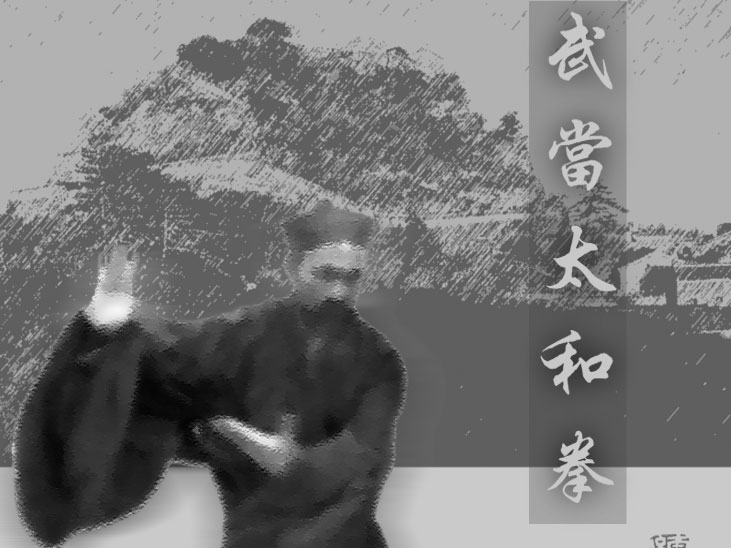
Verified by Zhang Sanfeng with the same name and pronunciation
2022-08-20 23:32:13
The main hall of Taizi Rock
Annotations on the 24 Poems of Jin Dan ⑥
2022-08-20 23:32:13
The tomb statue of Taoist Priest in Wulong Palace
Commentary on the Taiji Elixir Classic: "A Simple Explanation of Dao Yan" ①
2022-08-20 23:32:13
The white tiger in the Dragon and Tiger Hall of Fuzhen Templ...
"Xuan Yao Chapter - Part 1: A Song about Taoist Love.
2022-08-20 23:32:13
The dougong brackets in the main hall of Fuzhen Temple