


A Tentative Discussion on the Force of Tai Chi (Abstract)
2022-08-20 23:32:13
Shao Shankang Tai Chi Chuan is one of the outstanding styles of Chinese martial arts, which has been continuously improved, enriched and developed by generations of predecessors. It has formed a unique style of boxing, won the love of the broad masses of the people, and has been performed continuously for a long time, remaining popular and enduring. Tai Chi has always developed in the form of coexisting routine movements in the form of dance practice and push hand movements in the form of combat. Even in the practice of routines, the inner strength of Tai Chi is everywhere, and the offensive and defensive awareness of Tai Chi is everywhere. The Classic of Tai Chi Chuan states :" The greatest extreme is born from the boundless; it is the mother of Yin and Yang." When in motion, there is division; when at rest, there is unity. To be neither too much nor too little, to bend and stretch as one pleases, when others are firm but I am gentle, it is called "walking", and when I go along with others and back to them, it is called "sticking". Respond promptly when the movement is urgent and follow slowly when it is slow. Though there are countless changes, the principle remains consistent. One gradually understands the essence through familiarity. From understanding the force to reaching the divine realm, yet without the long-term application of force, one cannot suddenly understand it. (1) The difference between force and power: From the boxing classics, we know that in Tai Chi Chuan, apart from being proficient in the form, one must also understand force. To understand the force in Tai Chi Chuan, it is first necessary to clarify the difference between force and power. Simply put, due to the contraction of muscles, the human body generates force by bending and extending joints, and this force is an inherent ability of the human body. From the perspective of the upper limbs, since the shoulders and arms cannot be relaxed, this force cannot reach the distal joints, and thus cannot exert its due function. The force is a flexible force generated by the natural stretching and contracting of ligaments and muscles after people exercise and relax all the joints of the body. It can reach all four extremities and its power is far greater than the inherent force of the human body. (2) Various Forces of Tai Chi: Compared with other martial arts styles, Tai Chi has its own unique and diverse types of forces. There are techniques such as sticking, listening, melting, grasping, releasing, guiding, lifting, sinking, pulling, covering, smoothing, squeezing, pressing, picking, arranging, elbow, leaning, rubbing, cutting, and cold force, etc. However, due to the abstract nature of internal force, its numerous complex actions, and the varying understandings of different individuals, there are numerous and inconsistent explanations for each type of force. For instance, what is "canopy strength"? Some people explain that "Peng Jin is a kind of force that is neither too loose nor too loose, soft yet firm, flexible yet heavy, rich in elasticity and toughness, and has the functions of adhesion, transformation, coercion and binding. It is also called internal force." Some people say, "The force of Tai Chi is the 'peng force', and the movements follow a spiral." The author believes that these explanations are not comprehensive enough. The "Peng Jin" is just one of the various force techniques in Tai Chi. It is a flexible, arc-shaped force that can both dissolve incoming force and bounce it out. (3) The manifestation of the force in Tai Chi in the Pushing hands: The various force techniques of Tai Chi are generally manifested in the pushing hands. When two sides are in a competitive confrontation, from responding to the enemy to defeating them and achieving victory, they all need to go through four processes: listening, transforming, seizing and distributing. Listening to the force is to perceive it through the sense of touch of the skin all over the body. It includes methods such as touching, sticking, connecting and following. Through the sense of the body, the direction of the opponent's force is determined, thereby controlling the opponent. This is an important means in pushing hands. The "Hua Jin" is composed of the "sticky force" and the "moving force". Its main purpose is to neutralize the opponent's incoming force, emphasizing the failure of the introduction and the failure of the opponent's attack. The key points are: when the opponent is strong, I am soft; when I follow the opponent's lead, I do not throw or push; adapt to the opponent's feelings, advance or retreat, look left and right, complement each other without leaving. The neutralization should be timely; if it is too fast, it cannot lead the opponent into the bamboo shoot; if it is too slow, it still cannot be neutralized. The highest requirement of "Hua Jin" is to neutralize the opponent's force. Therefore, the transformation of force is quite important in a pusher. Pulling the force is the force that follows the other party. Unconsciously, it turns oneself from passive to active, thereby putting the other party at a disadvantage or in a dangerous situation. Grasping the force is actually the vanguard of exerting force. If one cannot grasp it, one cannot exert force. The failure to exert force accurately is entirely due to inaccurate grasping. Therefore, grasping the force is also very important. Exerting force is the key to defeating the enemy. Once you take the initiative and capture the opponent, gather all your strength, focus on one point, launch an attack and win in one fell favor. However, while exerting force, one must also master the opportunity, direction and timing well; otherwise, the expected effect cannot be achieved. The brilliant force is controlled by the mind and is a natural response of the nerves. First, examine the root cause to make the opponent unable to dissolve or avoid it, and thus completely subdue the opponent. The eight types of force in Tai Chi Push hands are generally referred to as the "peng", "luo", "squeezing" and "pressing", as well as the "CAI", "lie", "zhu" and "Kuo" in the "Da Luo" style. Although they have obvious differences in form. In fact, they are just eight methods in the process of listening, transforming, grasping and exerting force, so they are called the Eight methods of Tai Chi Pushing Hands. Together with advancing, retreating, looking left, looking right and stabilizing in the middle, they are collectively known as the Thirteen postures of Tai Chi. In conclusion, the force in Tai Chi is an internal force that can change with the transformation of consciousness, characterized by its hardness and softness, speed and slowness, and flexibility in contraction and release.
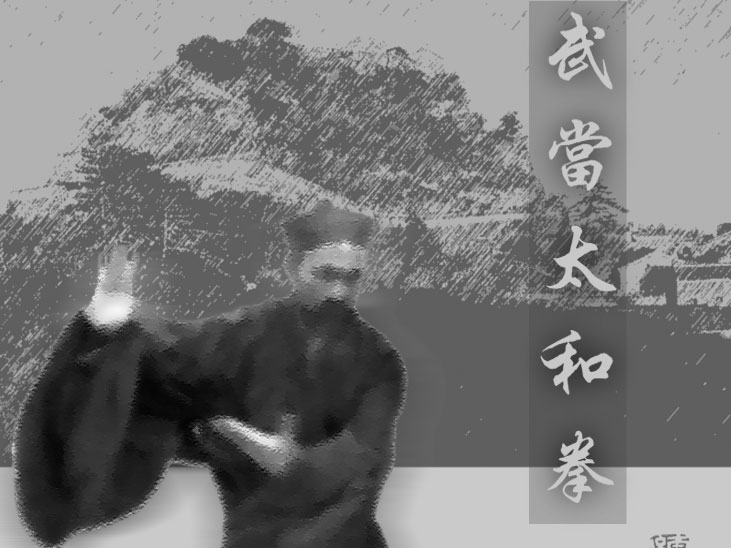
Evidence that Zhang Sanfeng created Tai Chi
2022-08-20 23:32:13
The plaque of the Golden Summit Lingguan Hall
Yan Men SAN Tang Zhong SAN Road
2022-08-20 23:32:13
The Golden Boy of the Wansheng Pavilion in Taihe Palace
Zhang Sanfeng's original style Tai Chi
2022-08-20 23:32:13
Zhenwu of the Wansheng Pavilion in Taihe Palace