


Tai Chi
2022-08-20 23:32:13
"Taiji" is a term in Chinese philosophy, referring to the origin that gives rise to all things. Tai Chi Chuan is a kind of martial art based on the principles of Tai Chi. In ancient times, alchemists used the double-fish-shaped Taiji diagram to represent the principle of Taiji. The Tai Chi Chuan, which was first introduced in Chenjiagou, Wen County, Henan Province, explains the principles and standardizes the techniques based on this diagram. The ancients believed that Yin and Yang are inseparable, waxing and waning, and transforming into each other, giving rise to all things, and this principle is contained in all things. In Tai Chi, it is manifested as a state of unity of opposites such as movement and stillness, hardness and softness, emptiness and fullness, opening and closing. Tai Chi emphasizes achieving movement within stillness through "seeking movement in stillness". That is, the body is in a relatively static state, and it is required that the mind and energy flow freely, presenting an image of external stillness and internal movement. This is specifically reflected in the preparatory and closing postures during the practice of boxing. It also emphasizes seeking stillness within movement to achieve stillness within movement. That is, when the limbs are in motion, the inner mind should be focused and concentrated, the internal qi should be smooth and consistent, and a relative state of inner tranquility should be achieved. At present, there are six schools of Tai Chi: Chen-style, Yang-style, Sun-style, Wu-style, Wu-style and Zhaobu style. At first, Chen Wangting from Chenjiagou created Tai Chi, which has since been passed down from generation to generation. Yang Luchan, in order to learn the Chen family's Tai Chi, humbled himself as a servant of the Chen family. He peeked at Chen Changxing practicing Tai Chi through a crack in the wall and secretly began to practice. Later, Chen Changxing was deeply moved by him and officially took him as his disciple. After Yang Luchan learned Chen-style Tai Chi, he made improvements and promoted it in his hometown of Hebei Province, thus forming the Yang-style Tai Chi. Tai Chi movements are slow and smooth. When practicing Tai Chi, one should keep the waist straight, the jaw drawn in, the back straight, and hang down, creating a sense of floating and soaring like clouds. In the Qing Dynasty, boxing masters said, "Boxing is like the sea, surging ceaselessly." Tai Chi also attaches great importance to the cultivation of qi. The so-called "qi" refers to the cultivation of one's own mental power, which reflects the characteristics of its internal martial arts.
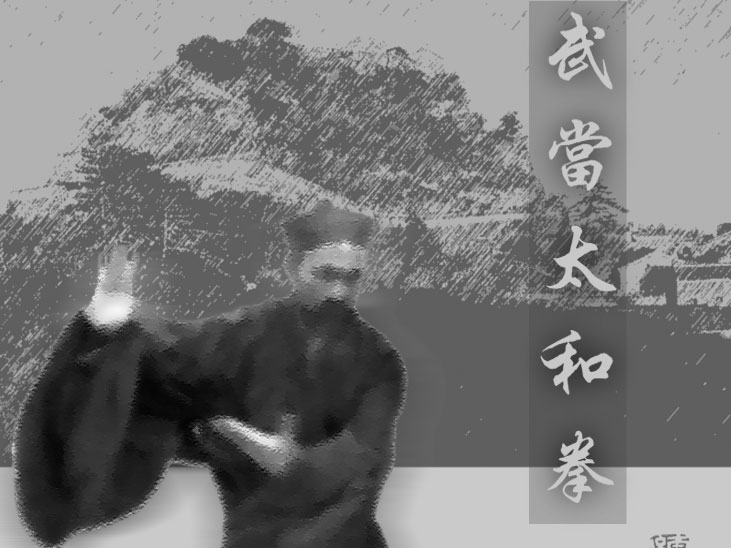
Evidence that Zhang Sanfeng created Tai Chi
2022-08-20 23:32:13
The plaque of the Golden Summit Lingguan Hall
Yan Men SAN Tang Zhong SAN Road
2022-08-20 23:32:13
The Golden Boy of the Wansheng Pavilion in Taihe Palace
The hand of Yu Yu from the Dan Gong Sect
2022-08-20 23:32:13
Zhao Caishen in the Wansheng Pavilion of Taihe Palace
Zhang Sanfeng's original style Tai Chi
2022-08-20 23:32:13
Zhenwu of the Wansheng Pavilion in Taihe Palace
Wudang Divine Skill: Two-Finger Zen
2022-08-20 23:32:13
Taiqing in the Liangyi Hall of Nan Yan Palace
Verified by Zhang Sanfeng with the same name and pronunciation
2022-08-20 23:32:13
The main hall of Taizi Rock