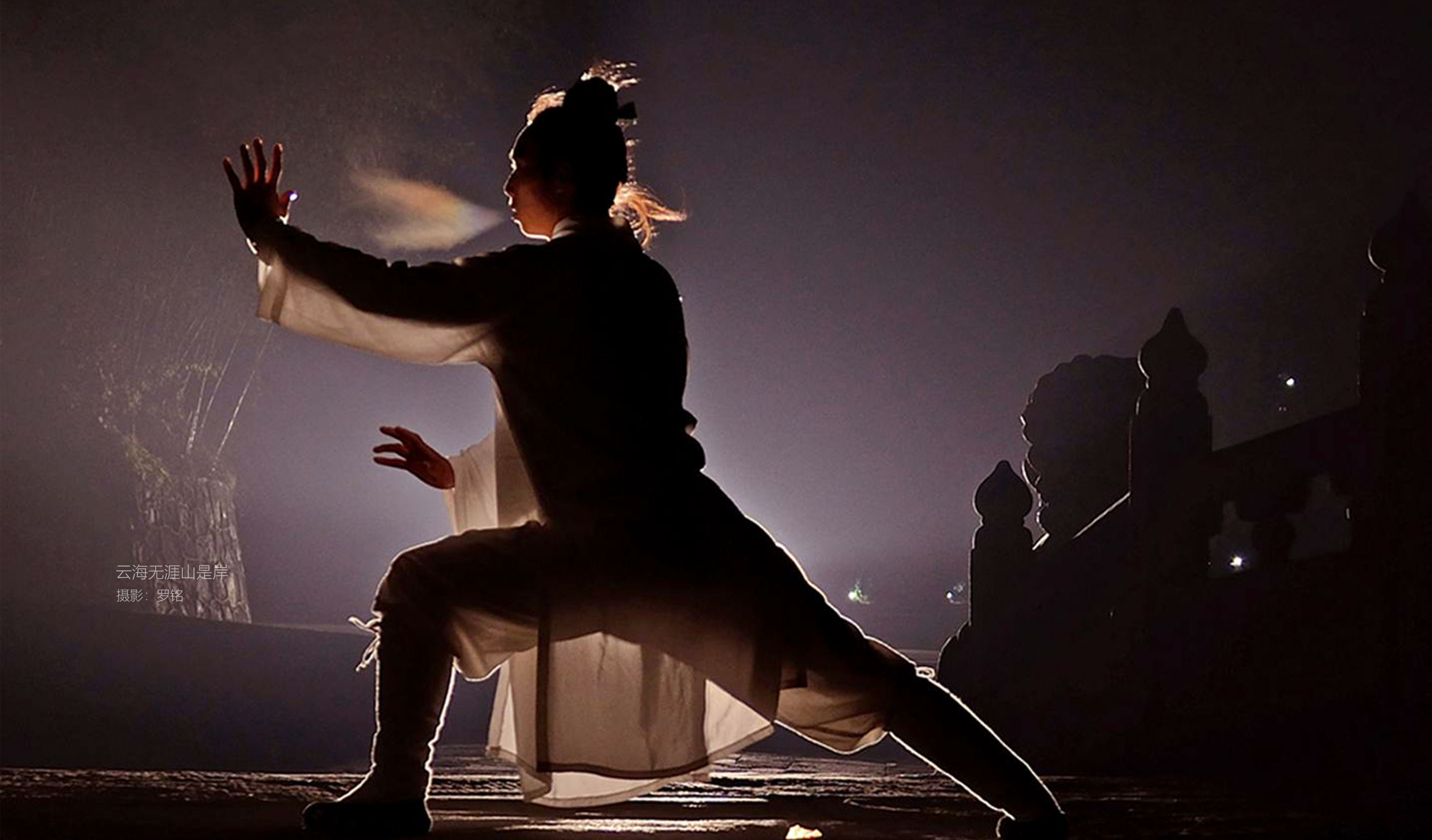
How to master Tai Chi Sword well
#Inheritance
·2022-08-20 23:32:13
The author: Hu Kaiping. Tai Chi sword is different from ordinary swords. Its movements are both delicate and graceful, elegant, graceful and steady. It has both combat and fitness value as well as appreciation value. How can one master Tai Chi sword well? Now let me share my experience. In a nutshell, during the practice of Tai Chi Sword, it is important to pay attention to the requirements of hands, eyes, body, methods and steps for each movement. Specifically, in the practice, it should be divided into the beginner stage and the advanced stage.
I. Primary Stage At the primary stage, it is required to have clear swordsmanship, correct movements and basically continuous movements. To practice Tai Chi Sword accurately, one must first understand the characteristics, requirements, and key points of various sword techniques, as well as the differences among them. When you first practice, it's best to practice according to the names of the movements. 2. Basic continuity of movements To achieve basic continuity of movements, it is necessary to master the transitional movements between each swordsmanship.
Second, the improvement stage Requirements for the advanced stage: Accurate swordsmanship and coordinated movements; Relaxed and natural, with smooth force. The speed is appropriate and the rhythm is distinct. Continuous and elegant; Though there are no rivals, we can defeat powerful ones. Each one has its own unique charm and style. At the beginner stage, only clear swordsmanship and correct movements are required for accurate swordsmanship and coordinated actions. In the advanced stage, it is required that the swordsmanship be accurate. One must not only understand the swordsmanship but also have a clear understanding of the swordsmanship principles. Swordsmanship movements are rather complex and have high demands on the coordination of the human body. Coordination is the foundation of beauty and also the basis for enhancing strength. How can one achieve coordination? ① Relax the whole body: Relax the whole body to facilitate coordination. ② With the waist as the axis: With the waist as the axis, it is easier to coordinate other parts of the body through the rotation of the waist. ③ Sword finger coordination: When practicing Tai Chi Sword, it is necessary to understand the function of the sword lift, the movement route, and the opening and closing of the sword fingers and the sword should be in perfect harmony and natural coordination. ④ When practicing Tai Chi Sword, it is also necessary to pay attention to the changes in the mind. When taking a step forward, the center of gravity should remain unchanged at the beginning. First, take a virtual step forward, and then the center of gravity gradually changes to the next movement. The change of the center of gravity should be in place simultaneously with the fixed movements, and coordination is required. When practicing and feeling uncoordinated or having difficulty applying force smoothly, it is necessary to check whether the coordination of the upper and lower limb movements is appropriate. Whether the rotation of the waist and the movements of the limbs are coordinated: Are the specifications of the swordsmanship and the routes of the movements correct? Whether the timing of acceleration is appropriate or not, etc. 2. Be relaxed and natural, with force meeting the requirements. Relax the waist and lower the span, and perform the movements steadily. The force of the swordsmanship is accurate and coordinated. The force starts from the waist and runs through the arms and wrists. 3. Appropriate speed and distinct rhythm: At the beginning, the speed should not be too fast. Focus on clarifying the movement route and paying attention to the correctness of the posture. Later, when the movement becomes proficient, you can increase the speed. At the same time, pay attention to the rhythm of the Tai Chi sword. This rhythm is the combination of hardness and softness, as well as the ups and downs of the Tai Chi Sword movements. The lightness, heaviness, slowness and speed of the force, as well as its varying magnitudes; A kind of rhythm expressed by the alternating fast and slow speeds. When practicing Wudang Tai Chi Sword, it is particularly important to alternate between fast and slow speeds. When practicing competition routines, one can first master the speed according to the corresponding music. 4. Continuous and elegant: At the beginner stage, movements are required to be basically continuous, while at the advanced stage, continuous and elegant movements are demanded. This requires meticulous study of the connection between each movement. The key is to use the strength of the waist well and pay attention to the minute movements of opening and closing. 5. Even without an opponent, one can defeat a powerful adversary. Tai Chi Sword is a type of martial arts weapon, the king of all weapons, with extremely strong offensive and defensive implications. So, what is the combat effect of the swordsmanship used in each movement? Everything should be thoroughly understood and studied. Even though it is a solo practice in daily life, there should be a strong sense of offense and defense. 6. Each school's style and charm stand out. Each type of Tai Chi sword has its own style and characteristics, and each person also has their own unique style. When practicing, one should grasp the characteristics of various styles, develop one's own style, pay attention to the requirements of movement specifications when practicing competition routines, and try to be relaxed and graceful.
Iii. Common Problems that may Occur when First practicing Tai Chi Sword 1. If the swordsmanship is not distinguishable, it is incorrect. Some swordsmanship cannot be distinguished. Pay attention to the following easily confused swordsmanship: point sword and split sword. Blocking swords and sweeping swords; Swinging the sword and sweeping the sword; Stabbing the sword and holding the sword. 2. When practicing Tai Chi Sword, just like Tai Chi Chuan, the body should not move up and down, and one must not practice standing straight. Older people can stand taller, but their gait should meet the requirements. 3. When practicing Tai Chi Sword, many people fail to walk the sword in a standing circle when hanging and lifting it. The reason is that one is not clear about the route of the swordsmanship movements or does not turn the waist enough. 4. Unclear usage of the sword finger: For beginners learning Tai Chi Sword, they may not know where to place the sword finger or follow the wrong route. The reason for this is that they are not clear about the function of the sword finger and the route to follow. The sword lift is generally used to stimulate force, lead force, or coordinate with the opening and closing of the sword. 5. Incoordination and incoherence Coordination and incoherence are the basic requirements for practicing Tai Chi Sword. Those who practice Tai Chi Sword should make great efforts in this aspect. 6. The armpits should not be empty when practicing Tai Chi Sword. Just like Tai Chi, the armpits should be empty. For instance, the hand holding the sword should not be too straight; it should be held round. 7. Holding the sword too tightly When practicing Tai Chi Sword, the sword should be held loosely so that the wrist can be flexible, which is conducive to performing various sword techniques well. 8. Look Down When practicing Tai Chi Sword, your eyes should follow the sword or look straight ahead or at the opponent. Beginners of Tai Chi Sword should not develop the bad habit of looking down.
Four. Hand, Eye, Body, Method and Step 1. Hand shape and sword finger 1) The correct posture of the sword finger ① The middle index finger should be straight and brought together, and then curved towards the back of the hand. ② Press the nails of the ring finger and the little finger with the mother finger and spread them out round. 2) The functions of the sword finger ① Leading the force examples: flat belt, blocking sword, cloud sword, etc. ② Examples of driving force: independent thrusting, flat belt, etc. ③ Point the sword directly at the opponent. ④ Coordinate with the sword and maintain a balanced movement. 2. Technique ① Generally starts from the right hip, passes through the left hip, and reaches the left front of the head. ② Protect the wrist to exert force. ③ Use the waist to drive the sword fingers to lead the force. ④ Fixed pattern: The sword finger points forward, forming a straight line with the arm, the sword finger is on the wrist, and the sword finger is placed on the left front of the head. 3. Eye Technique ① In the fixed form, look straight ahead or at the tip or finger of the sword. When changing movements, follow the body's rotation and keep your mind fully concentrated, your spirit following the movement, and your expression natural. 4. The body shape of Tai Chi Sword is the same as that of Tai Chi Chuan. From the head to the knees, the following requirements should be noted: Hollow leading and top force - the head should be lifted with the chin pulled in, not stiff or stiff, not tilted, and not wobbly. The neck muscles should be relaxed, not tense, not extended forward, and not tilted. Lower the shoulders and elbows - Keep the shoulders loose and heavy. Do not shrug them, do not spread them outward, and do not turn them inward. Elbows should be naturally lowered, not stiff, not turned outward, and not raised. Tuck in the chest and pull out the back - The chest should be relaxed and natural, not protruding outward, not contracting inward, and not being stiff. Back, stretch and stretch, do not be tense, do not arch the back, and do not tilt. Relax the waist without hips - The waist should be naturally relaxed, not stiff, not pushed forward, and not bent backward. The hip should be loose, heavy and upright. It must not protrude, tilt or sway. Tuck in the buttocks and open the knees - Tuck in and straighten the buttocks. Do not protrude the buttocks, do not tilt them, and do not sway them. The knees should be naturally flexible and not stiff. They should not extend beyond the toes and must not be crooked. 5. The body movements are the same as those in Tai Chi. They should be upright and natural, neither leaning to one side nor to the other, expansive and generous, with loose and flexible rotations. There should be no sudden rises or falls. The movements should be centered around the waist, driving the upper and lower parts, and be seamlessly connected. 6. The step shapes include parallel step, lunge step, virtual step, lunge step, ding step, rest step, independent step, parallel step, cross step, etc. 7. The footwork is similar to that of Tai Chi, including upward steps, backward steps, retreat steps, cover steps, insert steps, jump steps, walking steps, swing steps, hook steps, and rolling steps, etc. The transitions between advance and retreat are clear and distinct, light and steady. When advancing, the heel touches the ground first; when retreating, the front part of the foot touches the ground first. It should not be heavy, sluggish or sudden. The center of gravity should move smoothly, evenly and clearly. The distance and width between the two feet should be appropriate. The soles and heels of the feet should rotate in harmony, and the knees should be relaxed and natural, not stiff or stiff. 8. Leg techniques include kicking, splitting, swinging, shaking, and raising the legs backward, etc. The support should be stable. The knee joint must not be stiff or stiff. The upper body should remain upright and not lean forward or backward, or tilt left or right. 9. Requirements for swordsmanship: The swordsmanship should be clear, the force should be smooth and smooth, the force point should be accurate, the body and the sword should be coordinated, and the method should be correct. When practicing Tai Chi Sword, it is required to understand the swordsmanship and the principles of the sword. When performing movements, one should be clear about the differences between swordsmanship and sword techniques. Beginners of Tai Chi Sword are prone to confusion.
V. Swordsmanship 1. Sword Point ① Action: Relax your wrist and suddenly bend it and lift it up. ② Point of force: The tip of the sword. ③ Force: From the waist through the shoulders to the arms and then to the wrist. ④ Key points: Relax your wrists and gather strength, slightly bend and lift your elbows, and lower your shoulders. ⑤ Eye: The tip of the sword. 2. Thrust Sword ① Action: Move the tip of the sword in one direction, directly targeting the opponent. The arm stretched out from flexion, forming a straight line with the sword. ② Point of force: The tip of the sword. ③ Force: From the waist through the shoulders to the upper arm and then to the forearm. ④ Key point: Use the strength of your waist and bend your elbows to increase the Angle between your upper and lower arms from small to large. ⑤ Eye: The target that the tip of the sword is piercing. 3. Split Sword ① Action: Stand the sword upright, with the sword and the arm in a straight line, and move it forcefully from top to bottom. ② Point of force: The sword strikes. ③ Force: From the waist through the shoulders to the arms. ④ Key point: Use the strength of your waist. ⑤ Eye: The target slashed by the sword blade. 4. Sword Hanging ① Action: Hook the tip of the sword backward, and stand the sword in a square pattern from the front to the upper or lower back to attack the opponent. ② Force point: The front part of the sword blade. ③ Force: From the waist through the shoulders to the arms and then to the wrist. ④ Key points: Tuck your chest in, turn your waist, and walk with the sword close to your body in a circle. ⑤ Eye: The tip of the sword. 5. Lifting the Sword ① Movement: Stand with the sword and lift it from the back, front and top to counter the opponent's attack. ② Force point: The front part of the sword blade. ③ Force: From the waist through the shoulders to the arms. ④ Key points: Tuck in the chest, turn the chest, and move the sword close to the body in a circle. ⑤ Visual inspection: Sword tip, target of the opponent. 6. Cloud Sword ① Movement: The flat sword is placed in a circle above or in front of the head, used to repel the opponent's attack. ② Force point: The blade of the sword. ③ Force: From the waist through the shoulders to the arms and then to the wrist. ④ Key points: Slightly tilt your head back, with the sword slightly close to your head but not exceeding the back of it. The circle should be smooth, with the wrist as the axis. When turning the wrist, it should be loose and use the strength of the waist. ⑤ Eye: The tip of the sword. 7. Sword smearing ① Action: Keep the sword flat from left to right or from right to left. ② Force point: The blade of the sword, sliding along the sword. ③ Force: From the waist through the shoulders to the arms and then to the wrist. ④ Key point: Use the waist and coordinate. 8. Sword Carrying Action ① : Pull the flat sword back from the front to the side and rear. ② Force point: The blade of the sword. ③ Force: From the waist through the shoulders to the arms and then to the wrist. ④ Key point: First send, then flip the wrist and draw the lone back. 9. Sword Breaking ① Action: Stand with the sword and peck upwards with the tip of the blade. ② Point of force: The tip of the sword blade ③ Force: From the waist through the shoulder to the arm and then to the wrist. ④ Key point: The wrist suddenly sank. 10. Twisting the sword ① Movement: Keep the sword flat and make small vertical circles around the tip of the sword in a clockwise or counterclockwise direction. ② Force point: The front part of the sword blade. ③ Force: From the waist through the shoulders to the arms and then to the wrist. ④ Key points: Wrist relaxation, coordination, and waist strength. The circle drawn should not be too large. 11. Holding the sword and supporting it ① Action: Stand the sword and lift it upwards, higher than the head. ② Force point: The blade of the sword. ③ Vision: Forward. ④ Key points: The blade of the sword should be level. The cross-step or forward step should be synchronized with the sword's movement. The sword should be close to the body and move in a circle. The movement should be coordinated with the rotation of the waist. When holding the sword upwards, be careful to separate it from the Wudang Tai Chi's practice of leading the sword with separate feet. 12. Sword Interception ① Action: Stand the sword or draw it flat and use the blade to cut through. Cut the opponent with the inner edge, and form a diagonal line on the sword body. ② Force point: The front part of the sword blade. ③ Force: From the waist through the shoulders to the arms and then to the wrist. ④ Key point: Use the lateral force of the wrist, and pay attention to using the strength of the waist. 13. Sword Drawing ① Action: Stand with the sword and draw a circle from the front to the upper or lower back. ② Force point: Slide along the blade of the sword. ③ Key points: Relax the waist, keep the shoulders relaxed and heavy, coordinate, and maintain a strong waist belt. The sword should not be too close to your body; hold it round in your hand. 14. Sword Piercing ① Action: When standing with a sword, one can lay it flat and Pierce the tip of the sword in the same direction as the leg, arm or body. ② Point of force: The tip of the sword. ③ Key points: Relax your waist. The movement of threading the sword should be coordinated with walking and the rotation of your waist. 15. Sword Lifting ① Action: Stand the sword or lay it flat, bend the wrist and lift the hilt upwards to make the tip of the sword point downward. ② Point of force: hilt of the sword. ③ Force: From the waist through the shoulders to the arms and then to the wrist. ④ Key points: Use the waist and coordinate. 16. Holding the sword or holding the sword ① Action: Stand with the sword or hold it flat with both hands in front of the body. ② Key points: Relax your waist, don't make the sword too close to your body, and hold your hands in a round shape. 17. Sweeping Sword ① Action: Swing the sword horizontally to the left and right. ② Force point: The blade of the sword. ③ Key points: Use the strength of your waist, keep the sword in a straight line with your arm, and coordinate your footwork and techniques with the rotation of your waist. 18. Sword Slaying ① Action: Swing the sword horizontally to the left and right. ② Force point: The blade of the sword. ③ Key points: The sword and the arm should be in a straight line. The footwork and techniques should be coordinated with the rotation of the waist. Use the waist to drive the arm and apply lateral force. 19. Sword blocking ① Action: Stand the sword diagonally upwards and support it. ② Force point: Located at the middle and rear part of the sword blade. ③ Force: From the waist through the shoulders to the arms and then to the wrist. ④ Key points: Use the waist, coordinate, and slightly tilt the tip of the sword towards the center. 20. Sword Slicing ① Action: Lay the sword flat, pass it from the lower side of the opposite side through the chest towards the upper front side of the same side, with the tip slightly higher than the head. ② Force point: The blade of the sword. 21. Wrist Flower ① Movement: Use the wrist as the axis to make the sword circle around the inner or outer side of the arm. ② Key points: Hold the sword loosely, relax your wrist, form a circle when the sword is circled, and keep the sword close to your body when it is circled.