


Commentary on the Taiji Elixir Classic: "A Simple Explanation of Dao Yan" ⑥
2022-08-20 23:32:13
Although the way of alchemy is said to be easy to know but hard to put into practice, one must not seek the place where knowledge is applied. If one knows how to be upright, where can one go in one's conduct? If one's knowledge is not refined, where can one's conduct enter? Knowing but not knowing, Xi Yun's mnemonic? Although it is easy to understand the principles and methods of cultivating golden elixirs, it is very difficult to put them into practice. However, one should not think that because it is easy to understand, one should not seek a thorough understanding and thus let the practical process fall into confusion. If what is understood is incorrect, how can one know in practice where the direction and goal lie? If one doesn't have a detailed understanding, how can one know where to start with specific cultivation? If we don't even understand the principles and methods clearly, how can we talk about using mnemonic rhymes? [Explanation] The saying that it is easy to know but hard to act in the practice of Taoism means that knowledge comes first and action follows. Without knowledge, one cannot act. Therefore, it is said that it is easier said than done. And because "knowledge" is something that requires the use of the brain rather than the body, when the brain is used, the body remains still and the shoulders do not waver. It is rather arduous and troublesome to put it into practice with one's own body. That is why it is said that knowing is easy but doing is hard. For instance, there has always been a group of eloquent talkers who can talk about the esoteric with such depth and fluency, but when it comes to their actual skills, they show no sign at all. Why don't you have the time? It is because the practice is time-consuming and laborious. However, when it comes to the truth, knowing is both easy and easy, but knowing is also difficult and doing is hard. Those who truly understand and put into practice find it easy to act upon what they know. A lazy person finds it hard to know and hard to act. It is easier said than done to know the lazy. Therefore, it is particularly emphasized that one must know before acting. What is harmony? It's all about the law. Principle is the essence and law is the application. Without essence, one cannot understand law; without application, principle cannot be revealed. Principles are consistent, but methods can vary in countless ways. Consistency is the way and nature. All things are different. People are different from each other, so the methods can be flexible and adaptable. Flexibility is not about taking shortcuts, but about finding effective methods that suit oneself. For instance, if a cultivator originally had an illness, Zhang SAN had a headache, Li Si had a back injury, Wang Wu had sores, and Zhao Liu had typhoid fever... If one tries to achieve a state of tranquility through meditation all the time, it won't work. One must first find a suitable method to cure the illness before achieving a state of tranquility through meditation. For instance, when meditating and entering a state of tranquility, many people are filled with distractions and cannot calm down. However, there are a thousand kinds of distractions. Some are just thoughts, thinking about family affairs, state affairs and world affairs. Some have evil thoughts, always thinking about stealing money and harming others. Therefore, to deal with these different distractions, different methods should be adopted. Some should be cut off, some tamed, some persuaded, and some transformed. And the mnemonic rhymes are all formulated for different situations. The mnemonic rhymes passed down by predecessors were constantly summarized by them based on their own practical experience. If one's own situation is different from that of the predecessors, as long as one understands the principles, one can also set certain mnemonic rhymes by oneself. So, if one can't even understand the principles, what's the point of memorizing the rhymes of predecessors by heart? Those who study the Tao must have a clear mind and a pure heart to obtain the true and pure medicine. Do not display the nature of one's temperament, do not exert the spirit of thought, do not use the breath of breathing, and do not employ the essence of empathy. However, when the true essence moves, where the true spirit is born, where the true energy flows, and where the true nature is nurtured are all things that cannot be clearly distinguished and elaborated upon in detail by the discerning. Only when a person who practices Taoism achieves purity of heart and tranquility of mind can he obtain the innate medicine for health preservation. For this reason, one should not let go of the nature of the acquired temperament, should not manipulate the spirit of the acquired thinking, should not force the breath of the acquired breathing, and should not use the essence of the acquired sexual intercourse. However, when the true essence moves, in what realm the true spirit occurs, along what route and according what law the true qi operates, and where the true nature is nurtured, all these cannot be constantly discerned. Because a slight deviation can lead to a huge mistake. To clearly distinguish all this, one cannot rely on one's own speculation, nor can one easily believe the casual words of others. Instead, one needs the detailed guidance of a wise teacher with practical experience. [Explanation] The so-called true clear medicine refers to the innate true spirit, innate true nature, innate true essence, and innate true qi that give birth to and nourish human life. The relationship between innate nature and acquired nature is that innate nature precedes acquired nature. Once acquired nature is frequently and intensely utilized, innate nature will be concealed. Therefore, if one desires to obtain the innate, one must eliminate the acquired. A clear mind and a clear mind are the conditions that can be obtained from the innate after the acquired. The nature of one's temperament refers to the habitual biased personality formed by being contaminated by external things in the later stage of life. The spirit of thought is the consciousness that is constantly busy and depletes the primordial spirit. The breathing air refers to the air inhaled through the mouth and nose. It originates from the natural breath at first. However, due to the physical and mental activities of the human body after birth, the natural breath is insufficient to absorb and expel it. Therefore, the mouth and nose at the end of the breath are used to draw in oxygen and expel waste gas from the outside world. However, taking in oxygen from the outside world through mouth and nose breathing is fundamentally different from directly taking in the primordial energy of the universe and nature through true breathing. That is, the two are one clear and the other turbid. The clear one can be directly utilized, while the turbid one needs to undergo complex and cumbersome processing before it can be used. Sympathetic sperm, that is, male sperm and female egg, both belong to the acquired condition. The essence acquired after birth is not limited to male sperm and female eggs, but also includes tears in the eyes, saliva in the mouth, blood in the veins, marrow in the nose, skin, fat in the skin, and sweat in the pores. Among them, the male sperm and female egg are the most essential. Since any movement that affects the postnatal state harms the innate state, those who practice Taoism and wish to obtain the innate state must eliminate the postnatal state completely. Logically speaking, since one can obtain the innate nature after the postnatal period, why is there still the distinction of "when does the true essence move? Where does the true spirit come from? Where does the true energy flow? Where does the true nature grow?" When a person is in the womb, that innate naturalness is all naturally formed by the mother. Those who practice Taoism consciously return to their innate nature in the postnatal period and artificially create the innate nature of the mother's womb. This not only requires the means and methods of return but also the ability to distinguish the innate from the false in the postnatal period. The critical point between nature and nurture is extremely delicate. Without a high level of discernment and control skills, one either remains stuck in nurture without transformation or, despite the arrival of nature, misses the opportunity right in front of it. Even less do they know the methods of refinement, transportation, bathing, mixed cultivation and sealing, and the great way will never be achieved. The Golden Elixir Path originated from the exploration and practice of ancient people tens of thousands of years ago. Through the experience summary and practical verification of generations of cultivators, explorers and practitioners, it has formed a profound theoretical system and a step-by-step movement procedure. Therefore, only those who have experienced it themselves can recognize the truth and distinguish it clearly. They may have taken many detours in their cultivation and practice. However, it is precisely because they have taken these detours that they can guide later scholars to take fewer or no detours. Therefore, throughout history, the subtle skills of Taoist cultivation have only been imparted by a wise master through oral instruction of the mind. In "The Rootless Tree", the Patriarch Sanfeng said, "When persuading the virtuous, do not act obedient; do not force guesses without understanding the wise teacher." This fully demonstrates the significance of "speaking in detail from a clear perspective". A person with wise qi has a clear mind. Qi is the manifestation of the spirit when a person is alive. What's so hard to know about it? The mind is especially restless and the ears are not calm. Entering the air is the first crucial step in spiritual cultivation. If one does not carefully observe it, one cannot know the beginning and the end. How can one then start? In a state of confusion, knowing this but not that, the mind is busy with both, and thus there are always trivial thoughts that cannot be united. Therefore, when one's original mind is divided into several, how can one focus on the effort? All those who study the Tao must be sincere and consistent. Dismount with one shot to avoid fighting another battle. When the qi is clear, the spirit naturally becomes enlightened. The "qi" mentioned here refers to the vitality and temperament that a person's demeanor constantly displays. What's so hard to know about it? The most worrying thing is that the heart cannot be calm and composed, and thus the essence of this qi cannot be revealed. Qi is crucial for maintaining a person's vitality, so collecting and taking in qi is the first and most important step in spiritual cultivation. However, if one does not carefully contemplate the key points of gas extraction and intake, one will not know which is the end of the post-air flow and which is the beginning of the pre-air flow. How can one make efforts in this case? If one acts in a muddled manner or only knows one aspect but not the other, constantly raising question marks and thinking about methods in one's mind, the overall and vague, chaotic heart that should be maintained will be fragmented and unable to reunite. Therefore, if the original mind is divided into several minds, how can one devote oneself wholeheartedly to the practice? From this, it can be known that the heart of learning the Tao must always be sincere and unwavering. Once it enters the state of practice, it is like fighting on the battlefield. One must win every battle and stab the enemy off the horse with one shot. One should not hesitate or retreat at the last minute, so as not to repeat the previous battle next time. [Explanation] The qi of qi and wisdom precedes the weather. In the process of cultivation, the heavy turbidity descends, while the light clarity ascends. The turbidity follows the weather, and the clarity precedes it. To descend does not mean to come down to the body, but to subdue one's potential. The term "ascend" does not refer to reaching the top, but rather to being evenly distributed. To eliminate potential is to retreat; to evenly distribute is to advance. Only by retreating from the weather can one advance from it. Before the weather moves in, there is a clear and ethereal scene, and the spirit is naturally clear within it. Those with a clear mind are the gods before the heavens. When the weather recedes, the gods of the next heaven will also recede. When the gods of the next heaven recede, the gods of the first heaven will appear. When comparing the divine with the qi, the divine represents the generals and the qi represents the soldiers and provisions. When troops are well-stocked and provisions are abundant, generals and commanders can display military might, which is called having a divine presence. When troops are weak and provisions are insufficient, the military might of generals and commanders cannot be restored. This is what is called having no spirit. A person who is listless in spirit is due to a deficiency and weakness of qi. A person with an uplifted spirit is one who is full of vigor and vitality. However, there is a combination of innate and acquired energy. Those with strong weather conditions will have a harmonious and clear spirit, be wise and well-informed, and be approachable and approachable, generating respect and love for others. When the weather is strong, the spirit is rough and naughty, with a wicked nature and dangerous emotions, which makes people both detest and hate them, and they are afraid to develop evil. This is also what is meant by "qi is the manifestation of a person's spirit and time." The most important thing in The Times is to keep a calm mind. First, the gods will love you; first, the gods will see you. First, the weather will retreat; first, the weather will advance. Those who know the end know the weather after the retreat. Those who know "the beginning" know the weather before progress. Those who understand "this" know how to calm their minds and nourish their spirits. To know "the other" is to know the message of the advancing qi. Only by calming the mind can one nourish the spirit and gain energy. Therefore, a calm heart is the unity of sincerity. The conditions for a peaceful mind lie in two aspects: one is to know how to eliminate the deluded thoughts of the spirit, and the other is to understand the key points of the sequence. If one knows how to eliminate deluded thoughts but does not know the key points of the sequence, and when qi arises, one does not know how to collect, refine and transport the various methods, one will be flustered and at a loss, and still cannot have a peaceful mind. Knowing both of these, one must tame and adjust them again and again. Only through persistent and pure efforts can one achieve unity and sincerity. Therefore, one deliberately pursues sincerity and unity, but fails to do so. The mind is like a balance. One can only subtract weights from both ends of the mind. One must never add weights from both ends. This is the most important way to calm the mind. When practicing martial arts and sitting in meditation, one should achieve both mental and physical tranquility and enter the realm of void and chaos. This state of mind seems beyond the comprehension of even ghosts. In conclusion, the key to making efforts lies in one's own self-awareness and an honest attitude. Only by doing so can one gain something. This is what is meant by being honest with oneself and not deceiving oneself. If you do martial arts honestly in your heart, the effect of your martial arts will be reflected in your physical form. Therefore, the most valuable quality of a Taoist is that he can work hard alone in a lonely environment where no one is around and without external supervision. [Explanation] The mind and spirit are originally one. How can there be such a thing as two kinds of stillness? This is also a metaphorical method. The heart is like a candle, and the spirit is like a candlelight. The heart is like the seed of a fruit, and the spirit is like the flesh. When the heart is calm, so is the spiritual civilization. Therefore, it is called "two silences". It is truly stillness. A person with a calm mind cannot think of anything from within or receive anything from outside. They have neither internal nor external thoughts, yet they do not return to the state of stillness and emptiness. Just like a storage battery, it stores electricity but does not use it. The practice of the Great Way is the practice of real cultivation, real refinement, real verification and experimentation. It allows no falsehood. Every bit of practice has its own verification, and every bit of practice has its own verification. Therefore, one can deceive others but must not deceive oneself. Those who can deceive others are nothing more than those who can claim that you are the successor of a certain sect for several generations, that you have studied under a famous master, that you have cultivated for so many years, and that you have reached a certain level. Those who don't know the truth will believe it, and thus can deceive others. In fact, this can only deceive the layman. If an expert listens to your words and points out that at what level of practice there should be what kind of fulfillment, with every needle seeing the blood, you will not be able to deceive others. Therefore, deceiving others is actually deceiving oneself. Every beginner who has not refined themselves thoroughly is prone to this problem. As the saying goes, "A full bottle does not make a sound, but a half bottle makes a clanging sound." Those who are self-filial respect their own conscience as their parents do. A confident person is honest and loyal to himself. Whether one is alone or not, this is what is meant by "being cautious when alone". The author, Mr. Kong De, authorizes this website for exclusive publication and recording. All rights reserved. Reproduction or use for other purposes is prohibited.
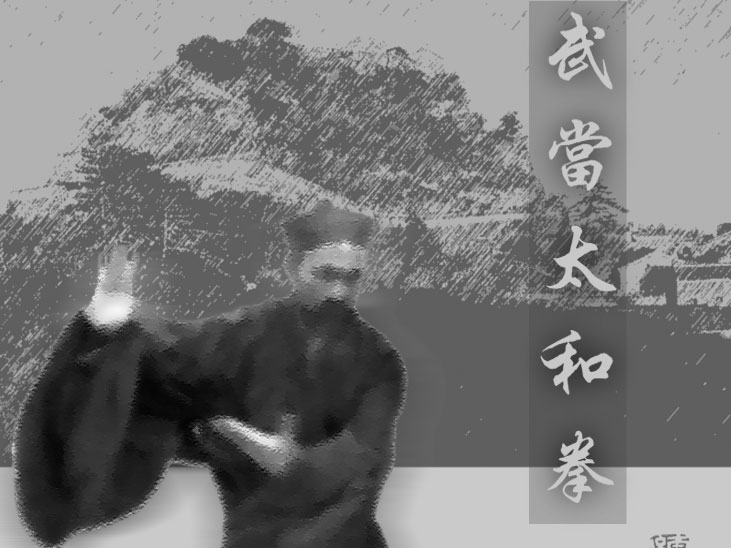
Verified by Zhang Sanfeng with the same name and pronunciation
2022-08-20 23:32:13
The main hall of Taizi Rock
Annotations on the 24 Poems of Jin Dan ⑥
2022-08-20 23:32:13
The tomb statue of Taoist Priest in Wulong Palace
Commentary on the Taiji Elixir Classic: "A Simple Explanation of Dao Yan" ①
2022-08-20 23:32:13
The white tiger in the Dragon and Tiger Hall of Fuzhen Templ...
Evidence that Zhang Sanfeng created Tai Chi
2022-08-20 23:32:13
The plaque of the Golden Summit Lingguan Hall