


The "latecomer strikes first" tactical theory
2022-08-20 23:32:13
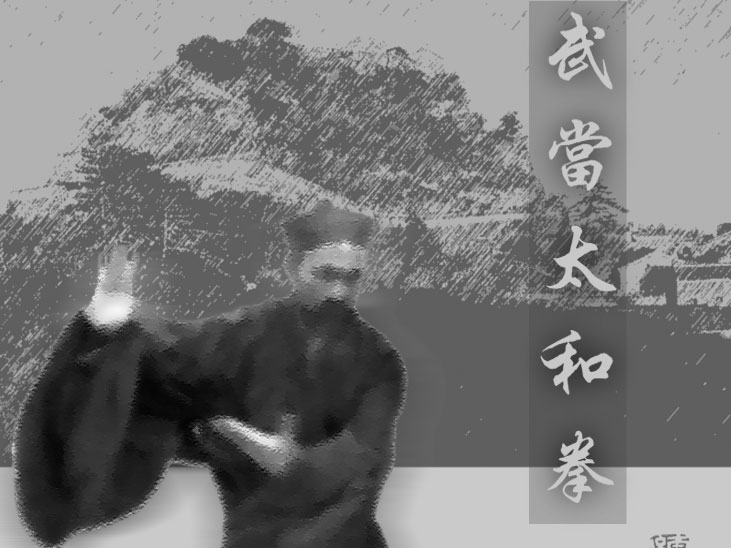
Wudang martial arts takes "striking after the opponent" as its tactical principle, which is in line with the Taoist ideas of "non-action", "no trouble", "no desire" and "not daring to be the first in the world". Laozi put forward the idea of having few selfish desires and desires, believing that the way to govern a country should be to make the common people "empty their hearts, fill their stomachs, weaken their wills and strengthen their bones". Laozi also said, "When I do nothing, the people will transform themselves; when I am quiet, the people will be upright; when I do nothing, the people will be rich; when I have no desires, the people will rest." (Tao Te Ching, Chapter 57) This is Zhezi's proposition of "governing by non-action". On this basis, the idea of "not daring to be the first in the world" was further put forward. He said, "I have three treasures that I hold and protect. The first is kindness, the second is frugality, and the third is not daring to be the first in the world." "Compassion" means to love the people, to care for the common folk as parents do for their children. "Frugality" means having no extravagant desires, having a clear mind and few desires, and being indifferent and self-disciplined. Under the influence of the idea that "not daring to be the first in the world" means being modest and harmonious, and "not daring to advance an inch but retreating an foot", in the tactics of Wudang Boxing, the principle of "responding after the enemy strikes" is emphasized. If the enemy intends to attack us, we should remain calm in our hearts, wait for the right moment, and respond with the slightest movement. "When the other party remains still, I remain still; when the other party moves slightly, I move first" (Explanation of the Thirteen Postures in Action), and it is said that "When the later ones develop, the earlier ones reach their peak" (Detailed Commentary on the Tai Chi Chuan Classic). Tai Chi Chuan mainly focuses on moving before striking. When encountering an enemy's attack, it first uses the force to neutralize them. Once they become unstable and strike again, it then uses the force to release. (Xu Zhiyi, "On Tai Chi Chuan") The 八卦掌 method does not obstruct. When the hand wants to abandon and take, it follows the middle to achieve success. When the hand exits, it should choose a nearby path. The skill is presented later and earlier. (八卦掌 Forty-eight Instructions) When I strike, if he doesn't move, then I won't move either, just waiting for him. If that person moves slightly, then the movement must have a direction. I aim ahead of that person and move in that direction, then that person will surely fall out. All these discussions emphasize the principle of "coming later but achieving first". The reason why a latecomer can reach the top first is that it avoids the strong and focuses on the weak, and the introduction fails. In his book "Characteristics of 八卦掌", Di Zhaolong made a incisive summary: "Its strategic thinking, first, does not emphasize the subjective but respects the objective. All its activities are carried out to adapt to the other party." Second, it is necessary to strive for the initiative, especially to take the initiative in a passive situation. The tactical thinking is to neither block nor defend, to introduce when the opponent fails, to attack where the opponent does not want to, to attack where the opponent does not expect, to avoid the strong and attack the weak, and to win the battle.
Wudang Divine Skill: Two-Finger Zen
2022-08-20 23:32:13
Taiqing in the Liangyi Hall of Nan Yan Palace
Verified by Zhang Sanfeng with the same name and pronunciation
2022-08-20 23:32:13
The main hall of Taizi Rock
Wudang snake-shaped sword
2022-08-20 23:32:13
The Jade Maiden of the Wansheng Pavilion in Taihe Palace
The hand of Yu Yu from the Dan Gong Sect
2022-08-20 23:32:13
Zhao Caishen in the Wansheng Pavilion of Taihe Palace
Zhang Sanfeng's original style Tai Chi
2022-08-20 23:32:13
Zhenwu of the Wansheng Pavilion in Taihe Palace