


The strategic theory of "maintaining softness and dealing with femininity"
2022-08-20 23:32:13
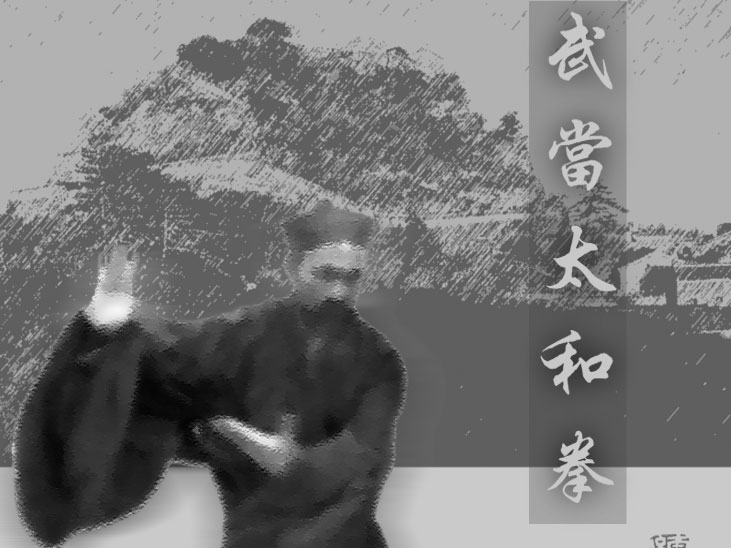
Wudang martial arts, based on the principle of "opposing is the power of the way", absorbed the reasonable core of various military strategies and formed the strategic theory of "maintaining softness and dealing with femininity". Philosophers believe that things are not only opposing and unified, but also moving, developing, and changing in the opposite direction. "Righteousness turns into wonder, goodness turns into demon." "Misfortune may be a blessing in disguise, and blessing may hide misfortune." (Laozi, Chapter 58) Laozi believed that a regular formation can be transformed into a strange one, kindness can be turned into evil, misfortune is accompanied by signs of fortune, and fortune hides the seeds of misfortune. Based on the understanding of this transformation law, the viewpoint that "the opposite is the merit of the Dao, and the weak is the use of the Dao" (Laozi, Chapter Forty) was put forward. It means that the movement of the Tao is "reverse", a transformation in the opposite direction. When things become powerful, they will age. Intentionally making things powerful is against the principles of the Tao, because it will promote their early end of life. "A strong beam cannot die" (Laozi, Chapter 30). It is believed that it is best to always be in a position of ease and weakness, without having to become strong, so as to avoid the ending of death. Laozi said, "The highest good is like water. Water benefits all things but does not contend." (Laozi, Chapter Eight) Since water does not contend with it, "the world cannot contend with it" (Laozi, Chapter 66). It is also said: "Know the strength and guard the femininity", "Know the honor and guard the disgrace", "Know the whiteness and guard the blackness" (Laozi, Chapter 28). Laozi knew well what it meant to be strong and powerful, but was content to guard the femininity and softness. Although he knew well what it meant to be glorious, he was content to be humble and humiliated. This idea of valuing softness and femininity, as well as weakness and humility, has had a significant impact on the principles and techniques of Wudang martial arts, forming the distinctive features of Wudang martial arts such as "valuing intention over force, valuing transformation over resistance, and valuing movement over confrontation", which emphasize softness while maintaining femininity. Wudang martial arts emphasize softness and gentleness in combat techniques, not relying on strength to defeat others. Therefore, in cultivation, it mainly focuses on nurturing qi. The so-called sinking of qi to the dantian is also formed naturally through the ease and harmony of movements, and there is absolutely no need for forced methods. When practicing boxing, the most important thing is to avoid applying force. Make sure your whole body is relaxed and your qi and blood flow smoothly. Over time, you will naturally develop internal strength. This inner strength is very gentle. When encountering an enemy, it shows no resistance and can stretch and contract according to the enemy's strength. It is said that there is elasticity within softness. "In Taiji martial arts, the exterior is soft while the interior is firm and hard. It is not the firmness of the heart, but the softness of the heart." (Explanation of Taiji Shi Shi) (2) The ultimate goal of Wudang martial arts is not to maintain softness while being weak. The ultimate goal is to overcome hardness with softness. "Leaping but not fighting, falling even more astonishingly, the other side is fierce and brave, encircling the enemy." "Use softness to overcome hardness, speed to overcome slowness, stillness to await movement, and curvature to achieve straightness." (Secrets of Wudang Boxing: The Method of Practicing Hands) In the combat techniques of Wudang martial arts, the main principle is often to use small force to overcome large force, weak force to counter strong force, weak force to overcome strong force, and gentle force to overcome hard force. The principle of victory is: "The enemy's strength must be enhanced by our own body to be effective. If we can control them properly, we should seize the moment when their use is just beginning, adapt to the situation, capture them, and restore their strength. Then, although we are weak, we will often be in a position of controlling them." "Even if the enemy is powerful, they are often in a controlled position and find it difficult to develop freely. Even if their strength is immense, they will be greatly exploited." (Xu Yusheng, "Detailed Commentary on the Classic of Tai Chi Chuan") The artistic realm of using softness to overcome hardness poses higher demands on martial arts practitioners. For instance, in terms of body movements: One should be flexible, like a swimming dragon, like a flying phoenix, and as light as a gentle breeze. Technique: Emphasize that the hand should move according to the heart's desire, striking like lightning, with the hand not visible. Footwork: The feet should follow the heart when stepping, with the steps being straight and upright in all directions and the celestial steps in the nine palaces, so that the opponent does not see their head when meeting them, and then does not see behind them. Psychologically: One should not be afraid of being close, tough or fierce, follow the natural course, and guide the situation accordingly. If the other side does not move, I will not move; if the other side moves, I will move first. Joints: It is required that the neck, spine, waist, shoulders, elbows, wrists, knees, hips, ankles, etc. can move flexibly, reaching a degree that is not just a circle but better than a circle. As the saying goes, "Like a pearl walking on a jade basin, it returns to its original state after nine turns." Inner strength: It requires the cultivation of essence, qi and spirit within, with the three elements converging at the top of the head, and the external training of strength, speed and variation, to achieve the state of mind moving and form emerging, with spirit reaching the enemy's ultimate level. When exerting force, it seems as soft as cotton, but in fact, it is as hard as iron. If one can achieve this, it means that the internal strength and the external strength have merged into one. When engaging in battle, one should respond with flexibility, adapt to the circumstances, change freely, and act as one desires. One should be both attacking and defending, as well as releasing and reclaiming. Just as water can reach everywhere and qi cannot enter anywhere, when facing the enemy, one will feel no discomfort; when defeating the enemy, one will be invincible. Only in this way can the goal of using softness to overcome hardness, the weak to defeat the strong, and stillness to move movement be achieved.
Wudang Divine Skill: Two-Finger Zen
2022-08-20 23:32:13
Taiqing in the Liangyi Hall of Nan Yan Palace
Verified by Zhang Sanfeng with the same name and pronunciation
2022-08-20 23:32:13
The main hall of Taizi Rock
Wudang snake-shaped sword
2022-08-20 23:32:13
The Jade Maiden of the Wansheng Pavilion in Taihe Palace
The hand of Yu Yu from the Dan Gong Sect
2022-08-20 23:32:13
Zhao Caishen in the Wansheng Pavilion of Taihe Palace
Zhang Sanfeng's original style Tai Chi
2022-08-20 23:32:13
Zhenwu of the Wansheng Pavilion in Taihe Palace