


Taiyi Five Elements Boxing
2022-08-20 23:32:13
I. Origin and Development
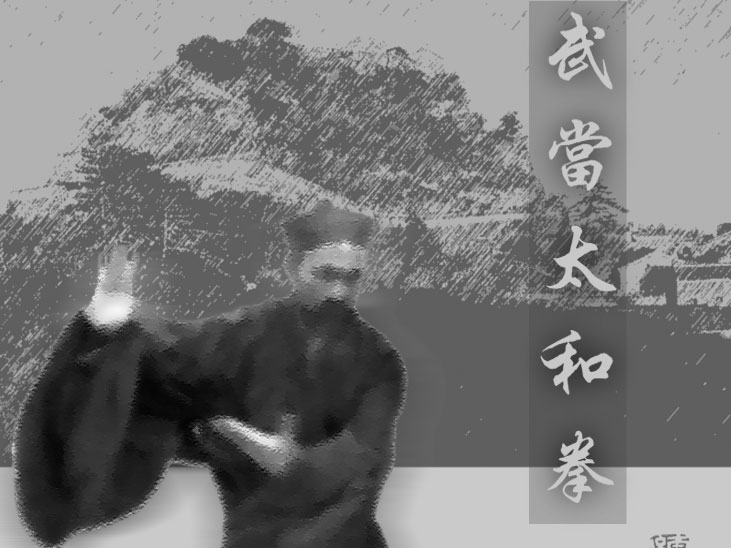
Wudang Taiyi Five Elements Boxing (originally named Wudang Taiyi Five Elements Capture and Throw 23 Forms) is one of the main boxing styles of Wudang martial arts. This boxing style was developed during the Hongzhi period of the Ming Dynasty (1488-1504) during the reign of Emperor Xiaozong Zhu You Tang. It was created by Zhang Shouxing, the 8th generation master of the Longmen School of Taoism on Wudang Mountain, based on the "Thirteen Forms of Taiji" by Wudang Alchemist Zhang Sanfeng, and traced back to the "Five Animal Exercises" by the famous Han Dynasty physician Hua Tuo, as well as the breathing exercises, guiding exercises, and technical exercises from the Taoist schools.
In 1929, Aisin Gioro Pu Huan (Han name Jinzitao), who was 24 years old at that time, spent over seven months in the Zixiao Palace. By chance, he caught sight of Taoist Master Li Helin practicing Taiyi Wuxing Quan and wanted to learn from him. Due to the Taoist regulations and precepts, Master Li firmly refused. But Mr. Jin Zitao was sincere and genuine. He burned incense to become a disciple and knelt before the statue of Emperor Xuanwu, vowing that once he mastered the art, he would never pass it on to others. Eventually, he moved Daoist Master Li Helin of Zixiao, who learned this martial art and practiced it all his life, thus grasping its true essence.
In 1980 and 1981, Mr. Jin Zitao of the Zhejiang delegation practiced this martial art twice at the National Wushu Observation Conference in Taiyuan and Shenyang. It was then made public and attracted widespread attention from the wushu community, earning high praise. In order to explore, sort out, study and popularize this routine, the Wuhan Sports Commission established a sorting team and invited Mr. Jin Zitao to give a lecture in Wuhan. During this period, the Sports Commission of Danjiangkou City specially invited Mr. Jin to visit Wudang Mountain several times, pay a visit to Daoist Master Wang Jiaohua, discuss Wudang Quan extensively and hold classes to teach it. Yang Qunli, Zhao Jianying and others learned this quan. In his excitement, Mr. Jin was filled with countless emotions and composed a poem: "Reclimbing the Zixiao Palace of Mount Xuan, recalling the past is like a hazy memory. Fifty-two years of vicissitudes and tears, today I have become a decayed old man. The Five Elements of Taiyi have contributed, and there will be successors to carry on the legacy of the previous generation. Reviving the fitness art of Wudang, it surpasses the evergreen pine on Mount Huangshan."
Ii. Principles
The ancient Chinese sages abstracted five substances with different properties - water, fire, wood, metal and earth - from the material world as the elements that constitute all things, which they called the "Five Elements". Furthermore, by using the relationship of mutual generation and mutual restraint among the Five Elements, the laws of interdependence and mutual restraint among things can be explained.
Taiyi is the primordial energy. A person's life depends entirely on the accumulation of his true qi. The predecessors of Wudang martial arts were precisely based on traditional cultural theories. Based on concepts such as Yin-Yang, the Five Elements, the Eight Trigrams, and the Nine Palaces, it explains the principles of boxing and exercise rules by combining the Five Elements with boxing forms and the human body.
Firstly, based on the forms, properties and directions of the Five Elements, the basic boxing styles are composed into a Five Elements system, which serves as the fundamental elements of each style of boxing: for instance, the five directions of the human body - front, back, left, right and center - are defined as "progress, retreat, left look, right look and center stability". Taiyi Wuxing Quan, in terms of its movement arrangement and route, closely adheres to the principles of the Five Elements and moves in an orderly manner through the Nine Palaces.
Secondly, it combines the Five Elements with the human body. The commonly used ones include matching the five internal organs with the Five Elements, interconnecting the internal and external Five elements, and also linking them with martial arts. The internal five elements should be in harmony and the external five elements should be in harmony. "Let the mind and breath coexist naturally." According to the numbers of mutual generation and mutual restraint among the five elements, the balance of Yin and Yang is regulated. It is precisely because human beings have Yin and Yang, which are formed by the Five Elements, guided by principles, with the aim of health preservation and martial arts as their secondary learning. It embodies the Taoist viewpoint of "the unity of heaven and man", aiming to pursue nature and return to simplicity and authenticity. "Taking stillness as the foundation and softness as the form", the organic combination of health preservation and combat skills is the basic guiding ideology of Taiyi Wuxing Quan.
Thirdly, standardize boxing techniques based on the principle of mutual generation and mutual restraint among the Five elements. The Taiyi Five Elements Fist spins and circles, looks around in all directions, divides Yin and Yang to determine the Five Elements, steps on the Eight Trigrams, and passes through the Nine Palaces. "Wherever the strength reaches, the posture follows." Where the posture reaches, the strength should be exerted. Each move and posture interweaves Yin and Yang, transforming in a thousand ways within 八卦阵, changing in the taiji circle and the four corners, forming a pattern of nine palaces flowing through. The hands are in a hugging position, the feet are in a brackets position, the waist follows the hips, the shoulders and hips face each other, the hips are rotated and the shoulders are twisted. In the area of the abbess, the energy flows like clouds and water, boundless and unceasing. According to the meaning of the five elements (circulation) of the human body, the primordial energy is distributed smoothly and gathers, which is conducive to the formation of inner strength. This refinement and elevation of the unity of the inside and outside, and the harmony between heaven and man. This is the purpose of cultivation: first, to nourish the body and keep fit; second, to defend against enemies and protect oneself.
Iii. Basic Techniques
With stillness as the foundation and softness as the form, the spirit is abundant while the meaning is far-reaching
Use stillness to control movement, use softness to overcome hardness, and value intention over force
Seek stillness within movement and movement within stillness, emphasizing meaning over form
The spirit, energy, strength and form should follow each other, and the mind and breath should not be forced to resist
The defense lies in the millimeter of size, and the braking is closed by the capture
Iv. Basic Characteristics
The pile structure is stable and the stance is compact
The waist follows the hips, and the shoulders and hips face each other
Cross your arms and walk with your feet in an arc
Soft and winding, smooth and round
It moves like a snake and is as soft as a silkworm spinning a cocoon.
V. Health Preservation Characteristics
Breathe naturally and relax your whole body. Calm mind and focused focus, with a spirited and energetic demeanor.
The internal and external aspects are integrated, with each step seamlessly connected. Let Yin and Yang prevail, and maintain a balanced and upright posture.
When the mind follows, the qi flows freely. Internal and external unity, spirit and form in harmony;
The eight extraordinary meridians flow freely throughout the body. The Five Elements of Taiyi aim to nourish the body.
Yang Qunli
April 2002
Verified by Zhang Sanfeng with the same name and pronunciation
2022-08-20 23:32:13
The main hall of Taizi Rock
Annotations on the 24 Poems of Jin Dan ⑥
2022-08-20 23:32:13
The tomb statue of Taoist Priest in Wulong Palace
Commentary on the Taiji Elixir Classic: "A Simple Explanation of Dao Yan" ①
2022-08-20 23:32:13
The white tiger in the Dragon and Tiger Hall of Fuzhen Templ...
"Xuan Yao Chapter - Part 1: A Song about Taoist Love.
2022-08-20 23:32:13
The dougong brackets in the main hall of Fuzhen Temple