


Wudang Sword
2022-08-20 23:32:13
The sword is an important component of Chinese martial arts and holds a high status in traditional Chinese martial arts. It is regarded as the god of weapons and embodies the demeanor of a gentleman.
Since ancient times, swordsmen have walked with swords, refined and noble people have carried swords, and generals and commanders have carried swords. From this, it can be seen that the sword is the essence of martial arts culture and the measure of the profoundness of martial arts.
The sword also holds an important position in Taoism. In Taoist religious activities, the "sword" is a divine object for subduing demons and monsters. In the consciousness of Taoist inheritance, the "sword" also represents "Dharma". The sword represents righteousness and determination. When a young Taoist went on a journey, his master would give him a sword and warn him to always remember the style of Taoism, not to be burdened by anything. If he encountered worldly concerns, he should make a prompt decision to cut off all worldly ties. Later, the sword became an essential item for Taoists to carry when they went on a journey. The sword has a long history in Taoism. During the Tang Dynasty, Lu Dongbin, one of the Eight Immortals of Taoism and one of the Five Ancestors of the North, was called the "Sword Immortal".
The Wudang sword is a light weapon of the kind. Its techniques mainly include hooking, hanging, dotting, picking, stabbing, flicking and splitting. During practice, it is required to carry the sword with one's body. When applying it, one should ensure that the sword is in harmony with the body, the body is in harmony with the qi, and the qi is in harmony with the spirit.
The Wudang Sword School has a wide variety of swordsmanship techniques. The main ones on Wudang Mountain include: Taiji Sword, Taiyi Xuanmen Sword, Nine Palaces and Eight Trigrams Sword, Eight Immortals Sword, Xuan Gong Sword, Longhua Sword, etc.
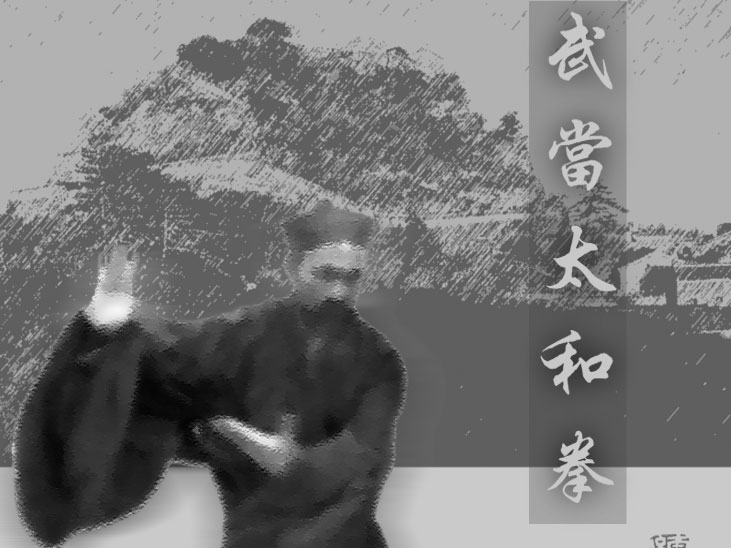
Verified by Zhang Sanfeng with the same name and pronunciation
2022-08-20 23:32:13
The main hall of Taizi Rock
Annotations on the 24 Poems of Jin Dan ⑥
2022-08-20 23:32:13
The tomb statue of Taoist Priest in Wulong Palace
Commentary on the Taiji Elixir Classic: "A Simple Explanation of Dao Yan" ①
2022-08-20 23:32:13
The white tiger in the Dragon and Tiger Hall of Fuzhen Templ...
"Xuan Yao Chapter - Part 1: A Song about Taoist Love.
2022-08-20 23:32:13
The dougong brackets in the main hall of Fuzhen Temple