


Outside the South Heaven Gate of the Golden Summit
2022-08-20 23:32:13
In the fourteenth year of the Yongle reign of the Ming Dynasty, that is, in 1416 AD, the Golden Hall was built on the summit of Tianzhu Peak on Wudang Mountain. At that time, there was no circle of city wall around Tianzhu Peak as we see it now. By 1419, Emperor Chengzu Zhu Di of the Ming Dynasty ordered Zhang Xin, the Marquis of Longping, and Mu Xin, the Marquis of the Imperial Consort, to build the Zijin City on Tianzhu Peak. Emperor Chengzu of the Ming Dynasty issued an edict demanding the construction of city walls, stating: "The Golden Summit should be built with city walls around it. The mountain itself should not be altered, and the construction of the walls should follow the elevation of the terrain..." It must be strong and sturdy. The entire project took five years to complete. The city wall, built with huge stone slabs, was both perilous and stable, leaving people in awe. Four Heavenly gates were set up on the city wall of Zijin City, symbolizing the Heavenly Gate. The three gates of Heaven, east, west and North, stand in the void of the clouds and are the gates for immortals to enter and exit. To ordinary people, they are merely symbolic and cannot be opened. Although the South Heaven Gate was also set up for the entry and exit of immortals, two small gates were built on both sides, namely the Human Gate and the Ghost Gate. During the Yongle period of the Ming Dynasty, entering and leaving Zijin City was very strict. Although there were gates for people to enter and exit, ordinary people were absolutely not allowed to enter. At that time, there was a saying that "In the north there is the Forbidden City, and in the south there is the Zijin City", which shows that the status of the Golden Summit of Wudang Mountain at that time was equivalent to that of the imperial palace in Beijing. Outside the South Heaven Gate, we can see a group of ancient buildings arranged in an orderly manner. This is the Taihe Palace. The Taihe Palace complex fully exploits the imposing momentum of the towering Tianzhu Peak, ingeniously arranged in sequence following the architectural style of the Ming Dynasty's imperial court, highlighting the supreme power of the divine and imperial authorities.
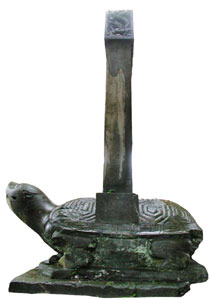
Wulong Palace Imperial Stele Pavilion No. 1
2022-08-20 23:32:13
Wulong Palace Imperial Stele Pavilion No. 1
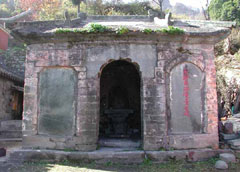
The Middle view of the Yuan Dynasty stone hall
2022-08-20 23:32:13
The Middle view of the Yuan Dynasty stone hall

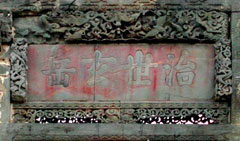
The Mystic Mountain for governing the world
2022-08-20 23:32:13
The Mystic Mountain for governing the world
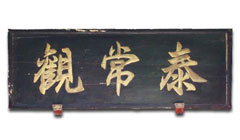
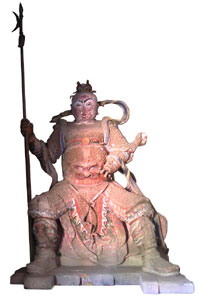
The white tiger in the Dragon and Tiger Hall of Zixiao Palace
2022-08-20 23:32:13
The white tiger in the Dragon and Tiger Hall of Zixiao Palac...
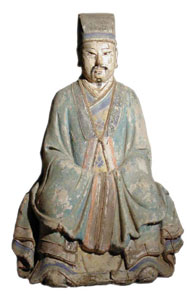
The main hall of the Five Dragons Palace has three statues
2022-08-20 23:32:13
The main hall of the Five Dragons Palace has three statues
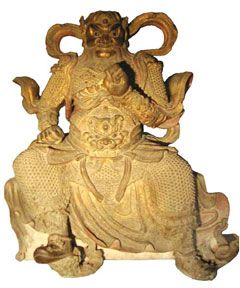
The main deity statue in the main hall of Yuanhe Temple
2022-08-20 23:32:13
The main deity statue in the main hall of Yuanhe Temple